Famous Renaissance Painters: A Catalogue of 100 Masters
Among the Renaissance painters, Леонардо Да Вінчі (1452–1519) holds the first place, celebrated for Мона Ліза (Джоконда) and ІЧ-рефлектографія — Дама з горностаєм. Мікеланджело Буонарроті, Альбрехт Дюрер, Рафаель Санті and Джотто follow. The catalogue spans 100 masters, from Чімабуе (born 1240) to Лука Джордано (born 1634), across 6 countries.
TFrom the TopImpressionists.com catalogue
About this catalogue. This catalogue gathers the artists whose works our collection records as Renaissance, ordered by our fame ranking. Artists born after 1955 with no Wikidata record await verification. Beside each name, the number of our 32 languages in which Wikipedia devotes an article to the artist.
НідерландськийBorn in ГертогенбосСюрреалізм, СимволізмWikipedia, 32 of 32 languages
«Сімкляття смертних гріхів», що зберігається в Музеї Прадо в Мадриді, розглядає моральну деградацію через структурований візуальний нарис. Близько 1500 року він створив «Корабель дурнів» — твір, що втілює безглуздість людського існування. Його здатність майстерно передавати гротеск ще яскравіше проявляється у «Спокусі святого Антонія», одній із його визначних робіт. «Триптих «Воза з сіном» також є знаковим зразком у його творчому спадку, представляючи світ, застиглий у нескінченному циклі спокуси та суду.
ІталійськийBorn in ФлоренціяВізантійський та РенесансWikipedia, 28 of 32 languages
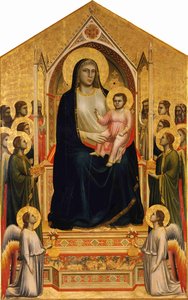
He was a child of the Florentine streets, growing up in a landscape where the heavy, golden formality of the East met a new, restless desire for something more human.
On view at To follow the path of his brush is to travel across the great cities of Europe and beyond.
ІталієцьBorn in ВенеціяВенеціанський РенесансWikipedia, 30 of 32 languages
In his youth, his brush followed the strict, linear precision of the International Gothic style, where every edge was clearly defined and every form was contained by a sharp outline. While many of his contemporaries still relied upon the quick-drying tempera, Bellini was among the first Venetian artists to fully exploit the unique potential of oil.
On view at To walk through the halls of the Gallerie dell'Accademia di Venezia is to encounter the very heart of his legacy, for this collection holds twenty-four of his works.
ІталійськийBorn in ФлоренціяРанній РенесансWikipedia, 31 of 32 languages
The Sassetti Chapel in Santa Trinita stands as a testament to this skill, showcasing a comprehensive cycle illustrating the life of St. The Adoration of the Magi in the Uffizi Gallery further exemplifies his exceptional talent, showcasing a vibrant and detailed depiction brimming with symbolism and artistic flair. The pontiff sought to assemble a team of Florence’s most accomplished artists – including Botticelli, Perugino, and Rossetti – to adorn the walls of the newly constructed Sistine Chapel.
НімецькийBorn in РегенсбургДанська школа, РенесансWikipedia, 28 of 32 languages
Born around 1480 in Regensburg, a vibrant city nestled on the banks of the Danube River – a location that would profoundly influence his artistic sensibilities – Altdorfer emerged from a family steeped in artistic tradition.
“Мадонна з немовлям” (бл. 1460), написана незабаром після цієї зустрічі, є прикладом цього зрушення, демонструючи більш гармонійну колірну схему та більшу елегантність, ніж його попередні роботи. Найзнаменитіші картини Антонелло – включаючи “Святого Єроніма в кабінеті” (бл. 1475) і “Благовіщення” (бл. 1475) – є свідченням його художньої майстерності.
ІталійськийBorn in ПеруджаРенесансWikipedia, 28 of 32 languages
His work in the Piccolomini Library in Siena, completed shortly before his death in 1513, showcases a clarity of form and color that foreshadows the High Renaissance style.
ФламандськийBorn in ГентРанній нідерландський живописWikipedia, 25 of 32 languages
Van der Goes’s artistic signature lies in his ability to infuse religious scenes with a startling sense of immediacy and emotional weight. The influence of Jan van Eyck’s meticulous detail is evident, but Van der Goes transcends imitation, forging a style uniquely his own. Perhaps Van der Goes’s most celebrated work is the Portinari Altarpiece, commissioned by Tommaso Portinari, an Italian banker residing in Bruges.
ІталійськийBorn in ВенеціяРенесанс, МаньєризмWikipedia, 29 of 32 languages
However, a sojourn in Rome brought him into contact with the art of Raphael, imbuing his work with a newfound clarity of form and compositional balance. He studied the precise lines and balanced arrangements of Raphael's frescoes in the Vatican, adopting a greater sense of order and perspective. Later, during his extended stay in Bergamo, he absorbed elements of Lombard realism, adding a grounded physicality to his figures—a shift away from the purely idealized forms often found in Venetian painting.
НімецькийBorn in Швебіш-ГмюндРенесанс, МанеризмWikipedia, 25 of 32 languages
The pivotal moment in Baldung's development arrived in 1503 when he became a workshop apprentice to Albrecht Dürer in Nuremberg. However, while deeply influenced by Dürer—evident in early works showcasing precise draftsmanship and Northern realism—Baldung quickly began to forge his own artistic identity. His father, Johann Baldung, a respected jurist serving the Bishopric of Strasbourg, envisioned a similar future for his son, but young Hans chose to pursue the brush and burin, embarking on an artistic journey that would distinguish him as one of the most distinctive and enigmatic figures of the German Renaissance.
НідерландськийBorn in АудеватерРанньонідерландське живописWikipedia, 22 of 32 languages
Early works reveal a clear debt to painters like Jacob Janszoon, Dieric Bouts, and Geertgen tot Sint Jans – artists who instilled in him a meticulous attention to detail and a sensitivity to religious narrative.
ІталійськийBorn in ПізаБароко, КараваджізмWikipedia, 22 of 32 languages
The turn of the 17th century marked a turning point in Gentileschi’s artistic trajectory. However, he wasn’t merely an imitator; rather, he filtered Caravaggio’s innovations through his existing artistic sensibilities. The revolutionary naturalism of Caravaggio burst onto the Roman art scene, challenging established conventions with its dramatic use of light and shadow – tenebrism – and unflinching realism.
ФранціяBorn in ТурРенесанс портретна живописняWikipedia, 21 of 32 languages
Jean Clouet, originating from the Southern Netherlands, brought with him to the French court the meticulous detail and realistic approach characteristic of Flemish painting. He mastered the Flemish style's ability to render textures and forms with astonishing accuracy, mirroring Jean Clouet’s dedication to realism. Born around 1510 in Tours, France, his life unfolded against a backdrop of evolving artistic sensibilities and the opulent world of the Valois monarchy.
ІталієцьBorn in СієнаПізня готика, Сієнська школаWikipedia, 17 of 32 languages
The Ecstasy of St Francis: Глибоке дослідження духовного екстазу, де він використовує багату палітру синіх, червоних та жовтих кольорів для зображення трансформаційної сили віри. The Arte della Lana Altarpiece: Одна з його найперших достовірних робіт, що демонструє технічну витонченість, яка згодом стане його підписом.
ІталієцьBorn in ВенеціяПізня готика, Венеційська готикаWikipedia, 23 of 32 languages
Crivelli’s work is defined by a technical virtuosity that sought to bridge the gap between the sacred and the tangible. He was a master of trompe l'oeil, using paint to mimic the physical world with startling accuracy. Even as the Renaissance progressed toward different ideals of perspective and proportion, Crivelli remained committed to his meticulous, highly detailed vision, ensuring his place as one of the most distinctive voices of his era.
ІталійськийBorn in СієнаПізня готична / Ранній ренесансWikipedia, 22 of 32 languages
This decision profoundly shaped his artistic identity, imbuing it with an introspective quality and directing him toward subjects of spiritual significance. It was during this period that Monaco adopted the name Lorenzo Monaco—a moniker signifying “Lawrence the Monk”—reflecting his unwavering devotion to God and his commitment to upholding monastic traditions. Lorenzo Monaco's formative years were spent honing his craft in the bottega of Agnolo Gaddi—a workshop renowned for its patronage of Giottoesque painting and its commitment to upholding the stylistic conventions of the International Gothic style.
ІталійськийBorn in ФлоренціяГотичний, Ранній ренесансWikipedia, 20 of 32 languages
Where Giotto often favored robust simplicity, Gaddi embraced a more refined elegance, incorporating intricate details and a heightened sense of decorative flourish. Consider The Last Supper, painted in 1395 – a scene imbued with both solemnity and exquisite detail. Agnolo Gaddi, born in Florence around 1350, occupies a fascinating, pivotal position in the history of Italian painting.
ІталійськийBorn in ДуменцаРенесанс, МаньєризмWikipedia, 20 of 32 languages
Luini's artistic development wasn't defined by a wholesale replication of Da Vinci’s methods; rather, it was a sensitive assimilation of the master’s techniques filtered through the lens of his own Lombard sensibility. Early works like The Adoration of the Magi (c. 1505), painted for San Pietro in Luino, already hint at this emerging style – showcasing a delicate handling of light and shadow, a masterful use of perspective, and a growing sense of spatial depth.
ІталійськийBorn in Сан-ГоденцоРанній РенесансWikipedia, 24 of 32 languages
The Last Supper fresco at Sant’Apollonia in Florence, completed around 1447, stands as a monumental achievement—a testament to his unparalleled skill and vision. Cosme Tura, Francesco del Cossa, and Ercole de’ Roberti all absorbed Castagno's innovations, carrying forward his legacy of naturalistic representation and psychological depth.
НідерландськийBorn in ЛейденРанній нідерландський стильWikipedia, 20 of 32 languages
Geertgen tot Sint Jans distinguished himself through several key artistic innovations. Unlike many of his contemporaries who used landscapes merely as backdrops, Geertgen’s settings are imbued with symbolic meaning and contribute significantly to the overall emotional impact of the work. The tumultuous history of Haarlem, particularly the devastating siege of 1573 during the Eighty Years' War, resulted in the destruction of numerous artworks, including a significant portion of his production.
ІталійськийBorn in ФлоренціяРанній РенесансWikipedia, 28 of 32 languages
In 1401, Florence held a contest of unparalleled significance – the selection of an artist to create new bronze doors for the city’s magnificent Baptistery. Lorenzo Ghiberti, a young man brimming with ambition and talent, entered this arena alongside some of the era's most formidable minds, including Filippo Brunelleschi, a rival whose architectural genius would challenge Ghiberti’s own creative vision. Lorenzo di Bartolo – a name that would forever be intertwined with artistic innovation – was born near Florence, Italy, in 1378.
“Here, he learned to command the delicate medium of egg tempera and the demanding art of mosaic design, skills that would define his long career as both a painter and a designer of mosaics.” — from our biography of Чімабуе (#18).
Who are the pioneers of Renaissance art?
The earliest-born painter in this list is Чімабуе (#18), born in 1240.