Ательє — Безкоштовна доставка по всьому світу — Доставка: 2–6 тижнів
      Вільям Ніколсон, 1872 – 1949

      Вільям Ніколсон's 100 Most Famous Paintings

      Sara Bernhardt (1844–1923) (1897) is the painting Вільям Ніколсон is best remembered for. Chairing the Feathers The Eynsham Morris at the Gates of Blenheim Palace (1902) and Album Copies of Old Masters and other Paintings (no.28, p.13) complete the trio of best-loved canvases. Our catalogue counts 242 works by Вільям Ніколсон. Here are the 100 most famous, with the year, the museum and the story of each canvas.

      Ranked by our popularity score, which combines the searches, visits and orders for each work. Updated Жовтень 2026. Each painting on this page can be ordered as an oil reproduction painted by hand on linen canvas, or as a fine art print, made to the size you choose.

      Portrait of Вільям Ніколсон
      Вільям Ніколсон · 1872 – 1949
      Born · died
      1872 – 1949, Ньюарк-он-Трент
      Movement
      Impressionistic realism
      Works in our catalogue
      242
      Most famous
      Sara Bernhardt (1844–1923) (1897)
      Most works at
      Royal Scottish Academy of Art - Architecture

      The ten best-loved paintings by Вільям Ніколсон

      Sara Bernhardt (1844–1923) (1897) by Вільям Ніколсон
      1

      Sara Bernhardt (1844–1923)

      1897 · Woodcut

      In this evocative monochrome portrait from 1897, Sir William Nicholson captures the magnetic presence of the incomparable Sara Bernhardt. The painting transcends a mere photographic likeness, offering instead a soulful meditation on fame, elegance, and the ephemeral nature of performance. As Bernhardt stands poised upon the stage, draped in an exquisite long dress and crowned with a sophisticated hat, the viewer is transported to the height of the Belle Époque.…

      Chairing the Feathers The Eynsham Morris at the Gates of Blenheim Palace (1902) by Вільям Ніколсон
      2

      Chairing the Feathers The Eynsham Morris at the Gates of Blenheim Palace

      1902 · Oil On Canvas · English Folk Dance And Song Society, London

      This captivating scene, "Chairing the Feathers The Eynsham Morris at the Gates of Blenheim Palace," transports the viewer directly into a moment of genteel celebration from the early twentieth century. One can almost hear the murmur of conversation and the rustle of fine fabrics surrounding this gathering. At the heart of the composition sits a distinguished gentleman, his attire suggesting an occasion of considerable importance or festive revelry. The magnificent…

      Album Copies of Old Masters and other Paintings (no.28, p.13) by Вільям Ніколсон
      3

      Album Copies of Old Masters and other Paintings (no.28, p.13)

      Oil On Canvas · Royal Scottish Academy of Art - Architecture, Единбург

      Sir William Newzam Prior Nicholson, a name perhaps less familiar than some of his contemporaries, nevertheless possessed an extraordinary artistic vision. His "Album Copies" – intimate renderings of masterworks created for private collections – offer a unique window into his meticulous technique and profound understanding of light, composition, and the human form. This particular piece, depicting a man standing beside a dog, is not merely a reproduction; it’s a distillation…

      Album Copies of Old Masters and other Paintings (no.5, p.5) by Вільям Ніколсон
      4

      Album Copies of Old Masters and other Paintings (no.5, p.5)

      Oil On Canvas · Royal Scottish Academy of Art - Architecture, Единбург

      Sir William Newzam Prior Nicholson's "Album Copies of Old Masters and other Paintings" represent a fascinating intersection of artistic reverence and accessible art production. This particular piece, an exquisite rendition of Anthony van Dyck’s iconic portrait “Charles I with M. de St Antoine,” offers a captivating glimpse into the Victorian era’s fascination with classical art while simultaneously showcasing Nicholson's remarkable skill as both a painter and a keen observer of…

      Sir William Henry Bragg (1862–1942) (1932) by Вільям Ніколсон
      7

      Sir William Henry Bragg (1862–1942)

      1932 · Oil On Canvas · The Royal Institution, Лондон

      The room feels still, held in a moment of profound contemplation. Seated in a chair against a wall of subtle, textured plaster, an older gentleman meets the viewer's gaze with a directness that feels both heavy and light. There is a quiet dignity in his posture, a sense of a mind that has spent decades untangling the invisible structures of the universe. The light, streaming in from the upper left,…

      Field Marshal J. C. Smuts (1923) by Вільям Ніколсон
      8

      Field Marshal J. C. Smuts

      1923 · Oil On Canvas · Фитцвільямський коледж, Кембридж

      In the quiet, commanding presence of Sir William Nicholson’s 1923 masterpiece, Field Marshal J. C. Smuts, one finds much more than a mere historical record; one encounters a profound meditation on the weight of leadership and the grace of experience. This evocative oil painting captures the essence of a man who stood at the crossroads of history, portraying the South African statesman not just as a military strategist, but as…

      Lord Horder (1871–1955), FCVC, MD, FRCP, Physician to Five Successive British Monarchs (Edward VII to Elizabeth II) (1938) by Вільям Ніколсон
      9

      Lord Horder (1871–1955), FCVC, MD, FRCP, Physician to Five Successive British Monarchs (Edward VII to Elizabeth II)

      In this 1938 portrait, we encounter Lord Horder, a man whose life was defined by a quiet, steadfast proximity to the British monarchy. He sits with a composed, almost guarded posture, legs crossed in a manner that suggests both comfort and a disciplined restraint. His gaze is directed away from the viewer, fixed upon a distant point that implies a mind preoccupied with matters of state or the heavy weight…

      Title (Original): A Reduced Chart of Bombay Harbour, to form as an Index for the large one of Eight Sheets, by William Nichelson, Master of his Majesty’s Ship Elizabeth. (1763) by Вільям Ніколсон
      10

      Title (Original): A Reduced Chart of Bombay Harbour, to form as an Index for the large one of Eight Sheets, by William Nichelson, Master of his Majesty’s Ship Elizabeth.

      1763 · Print · Kalakriti Archives, Hyderabad

      To gaze upon "A Reduced Chart of Bombay Harbour" is to embark on a voyage through time, transported back to the mid-1760s when the tides of the Indian Ocean carried the weight of colonial ambition and maritime discovery. This exquisite piece of cartography, derived from the meticulous surveys of Captain William Nichelson around 1763, serves as much more than a mere navigational tool; it is a profound historical document that…

      Вільям Ніколсон: canvases 11 to 100 of the ranking

      An Old Glass Bottle (1920) by Вільям Ніколсон
      #18

      An Old Glass Bottle

      1920 · Leeds Art Gallery

      In this 1920 composition, we find ourselves in a space of profound quietude. The subject is a humble glass bottle, its surface marked by age and a slight…

      Bring this light home →
      Hampstead Heath, Flagstaff (1908) by Вільям Ніколсон
      #28

      Hampstead Heath, Flagstaff

      1908 · Bristol Museum - Art Gallery

      William Nicholson's "Hampstead Heath, Flagstaff," painted in 1908, isn’t merely a depiction of a London landscape; it’s a carefully constructed tableau brimming with quiet observation and subtle emotional…

      Have it painted by hand →
      Mushrooms (1927) by Вільям Ніколсон
      #30

      Mushrooms

      1927 · Nottingham Castle Museum And Art Gallery

      To gaze upon Sir William Nicholson’s depiction of mushrooms is to encounter a moment suspended between the wild forest floor and the cultivated elegance of a dining table.…

      Order this canvas →
      Santa Lucia, Malaga (1935) by Вільям Ніколсон
      #32

      Santa Lucia, Malaga

      1935

      In the quietude of 1935, Sir William Nicholson captured a moment of profound stillness in his evocative landscape, Santa Lucia, Malaga. This exquisite piece invites the viewer into…

      Have it painted by hand →
      William Henry Davies (1928) by Вільям Ніколсон
      #33

      William Henry Davies

      1928

      In this evocative 1928 portrait, Sir William Nicholson captures more than just the likeness of a man; he captures a profound sense of quietude and introspection. The painting,…

      Bring this light home →
      Music (1890) by Вільям Ніколсон
      #34

      Music

      1890 · Newark Town Hall Museum And Art Gallery

      To stand before "Music" is to be enveloped in a moment suspended between sound and silence. This exquisite portrait, dating from 1890, captures not merely the act of…

      Have it painted by hand →
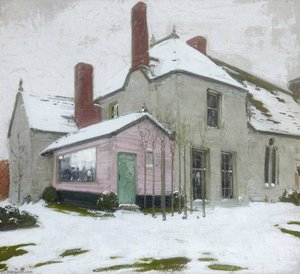
      Sutton Veny in Snow (1924) by Вільям Ніколсон
      #35

      Sutton Veny in Snow

      1924 · Royal Scottish Academy of Art - Architecture

      In the quietude of a frozen landscape, Sir William Nicholson captures a moment of profound stillness in Sutton Veny in Snow. Painted in 1924, this evocative oil on…

      Have it painted by hand →
      La Place du Petit Enfer, Dieppe (1908) by Вільям Ніколсон
      #37

      La Place du Petit Enfer, Dieppe

      1908 · Національна Trust

      This evocative black and white scene, capturing "La Place du Petit Enfer" in Dieppe, transports the viewer directly into the bustling rhythm of early twentieth-century French street life.…

      Have it painted by hand →
      Still Life (1885) by Вільям Ніколсон
      #38

      Still Life

      1885 · Newark Town Hall Museum And Art Gallery

      In the quiet corners of art history, few masters captured the profound beauty of the mundane as gracefully as Sir William Nicholson. His 1885 masterpiece, Still Life, serves…

      Order this canvas →
      Hawking (1902) by Вільям Ніколсон
      #39

      Hawking

      1902 · Національна Trust

      William Nicholson’s “Hawking,” painted in 1902, isn't merely a portrait; it’s a carefully constructed tableau of Victorian sensibilities layered with subtle anxieties and burgeoning modernity. The subject, a…

      Have it painted by hand →
      The stack, Hoar's Fields (1927) by Вільям Ніколсон
      #49

      The stack, Hoar's Fields

      1927 · Галерея Нового Південного Уельсу

      The stack, Hoar's Fields is a painting by Sir William Nicholson. Executed in 1927, the work reflects the artist's established approach to form and composition during the interwar…

      Order this canvas →
      Portrait of an Unidentified Gentleman by Вільям Ніколсон
      #53

      Portrait of an Unidentified Gentleman

      Royal Scottish Academy of Art - Architecture

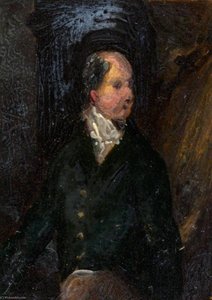
      Sir William Nicholson’s “Portrait of an Unidentified Gentleman,” painted circa 1868, is more than just a likeness; it's a carefully constructed tableau of understated elegance and contemplative melancholy.…

      Bring this light home →
      The Rose crested Cockatoo (1917) by Вільям Ніколсон
      #55

      The Rose crested Cockatoo

      1917 · Ашмолеанський музей мистецтва та археології

      Sir William Nicholson's 1917 painting, “The Rose-Crested Cockatoo,” isn’t merely a depiction of an exotic bird; it’s a carefully constructed meditation on observation, illusion, and the subtle interplay…

      Have it painted by hand →
      The Paper Poppies (1919) by Вільям Ніколсон
      #57

      The Paper Poppies

      1919 · The National Trust For Scotland

      In the quietude of “The Paper Poppies,” painted in 1919, Sir William Nicholson invites the viewer into a sanctuary of stillness that belies the profound turbulence of its…

      Bring this light home →
      Thomas Hamilton (1784–1858), RSA by Вільям Ніколсон
      #59

      Thomas Hamilton (1784–1858), RSA

      Royal Scottish Academy of Art - Architecture

      Sir William Nicholson’s “Thomas Hamilton (1784–1858), RSA” is more than a mere likeness; it's a carefully constructed tableau of 19th-century British identity, imbued with the quiet strength and…

      Have it painted by hand →
      Matadero, Segovia (1935) by Вільям Ніколсон
      #64

      Matadero, Segovia

      1935 · Фитцвільямський коледж

      William Newzam Prior Nicholson’s “Matadero, Segovia” isn't merely a depiction of a building; it’s a portal. Painted in 1935, this oil on panel captures the essence of a…

      Bring this light home →
      Armistice Night (1918) by Вільям Ніколсон
      #86

      Armistice Night

      1918 · Фитцвільямський коледж

      Sir William Nicholson's "Armistice Night," painted in 1918, isn’t merely a depiction of a wartime scene; it’s a visceral embodiment of the complex emotions swirling within a nation…

      Have it painted by hand →

      Вільям Ніколсон's canvases, period by period

      What Вільям Ніколсон painted most

      The four subjects that return most often on these canvases, each with its best-loved example.

      Where Вільям Ніколсон's canvases hang

      The 8 museums that hold the most of the paintings on this page.

      Museum City Works by Вільям Ніколсон Paintings from this list
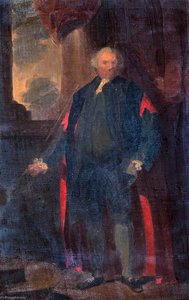
      Royal Scottish Academy of Art - Architecture, ЕдинбургRoyal Scottish Academy of Art - Architecture Единбург 102 Album Copies of Old Masters and other Paintings (no.28, p.13), Album Copies of Old Masters and other Paintings (no.5, p.5), Album Copies of Old Masters and other Paintings (no.98, p.43)
      Національна Trust, ЛондонНаціональна Trust Лондон 8 Master Anthony Bacon, Aged 3 (Anthony W. Bacon, Son of Thomas W. Bacon, 1873–1950, of Ramsden Hall, Essex), La Place du Petit Enfer, Dieppe, Hawking
      Фитцвільямський коледж, КембриджФитцвільямський коледж Кембридж 7 Field Marshal J. C. Smuts, Matadero, Segovia, Armistice Night
      Newark Town Hall Museum And Art Gallery, NewarkNewark Town Hall Museum And Art Gallery Newark 4 Music, Still Life, Boy with the Caroline Mug
      Національна галерея Канади, ОттаваНаціональна галерея Канади Оттава 3 Glass and Fruit, The Blue Gloves
      Fitzwilliam MuseumFitzwilliam Museum 3 Armistice Night, 1918, Still-life, fruit on a dish
      Nottingham Castle Museum And Art Gallery, НоттінгемNottingham Castle Museum And Art Gallery Ноттінгем 3 Mushrooms, Miss Wish Wynne (1882–1931), Actress, in the Character of Janet Cannot for the Play 'The Great Adventure'
      Fenton House, LondonFenton House London 2 Hawking (La chasse au falcon), Francis and Christopher Bacon (Sons of Thomas Walter Bacon (1873-1950) of Ramsden Hall, Essex)

      Вільям Ніколсон's most famous canvas, decade after decade

      1. 1880s
        Still Life (1885) by Вільям Ніколсон
        38 of 100

        Still Life

        Age 8 – 17 · Newark Town Hall Museum And Art Gallery

        In the quiet corners of art history, few masters captured the profound beauty of the mundane as gracefully as Sir William Nicholson. His 1885 masterpiece, Still Life, serves…

      2. 1890s
        Sara Bernhardt (1844–1923) (1897) by Вільям Ніколсон
        Ranked 1 of 100

        Sara Bernhardt (1844–1923)

        Age 18 – 27

        In this evocative monochrome portrait from 1897, Sir William Nicholson captures the magnetic presence of the incomparable Sara Bernhardt. The painting transcends a mere photographic likeness, offering instead…

      3. 1900s
      4. 1910s
      5. 1920s
        Field Marshal J. C. Smuts (1923) by Вільям Ніколсон
        8 of 100

        Field Marshal J. C. Smuts

        Age 48 – 57 · Фитцвільямський коледж

        In the quiet, commanding presence of Sir William Nicholson’s 1923 masterpiece, Field Marshal J. C. Smuts, one finds much more than a mere historical record; one encounters a…

      6. 1930s
        Glass and Fruit (1938) by Вільям Ніколсон
        5 of 100

        Glass and Fruit

        Age 58 – 67 · Національна галерея Канади

        In this 1938 oil on canvasboard, titled Glass and Fruit, the British artist William Nicholson explores a highly distilled approach to the still life. The work represents a…

      Вільям Ніколсон's canvases, question by question

      Which canvas is Вільям Ніколсон most remembered for?Read the answer

      Sara Bernhardt (1844–1923) (1897), followed by Chairing the Feathers The Eynsham Morris at the Gates of Blenheim Palace (1902) and Album Copies of Old Masters and other Paintings (no.28, p.13).

      Sara Bernhardt (1844–1923): how old was Вільям Ніколсон when it was painted?Read the answer

      Вільям Ніколсон, born in 1872, was 25 years old: Sara Bernhardt (1844–1923) dates from 1897.

      What are Вільям Ніколсон's ten most famous canvases?Read the answer

      Sara Bernhardt (1844–1923), Chairing the Feathers The Eynsham Morris at the Gates of Blenheim Palace, Album Copies of Old Masters and other Paintings (no.28, p.13), Album Copies of Old Masters and other Paintings (no.5, p.5), Glass and Fruit, The Front Door and Porch of Chartwell, Sir William Henry Bragg (1862–1942), Field Marshal J. C. Smuts, Lord Horder (1871–1955), FCVC, MD, FRCP, Physician to Five Successive British Monarchs (Edward VII to Elizabeth II) and Title (Original): A Reduced Chart of Bombay Harbour, to form as an Index for the large one of Eight Sheets, by William Nichelson, Master of his Majesty’s Ship Elizabeth.. Each canvas in the ranking above comes with its year and its museum.

      How many paintings did Вільям Ніколсон create?Read the answer

      242 works by Вільям Ніколсон are in our catalogue, dated 1885 to 1938.

      Where do Вільям Ніколсон's most famous canvases hang today?Read the answer

      Mostly in Royal Scottish Academy of Art - Architecture (Единбург), Національна Trust (Лондон) and Фитцвільямський коледж (Кембридж); the list above names each museum and its canvases.

      When did Вільям Ніколсон paint the most famous canvases?Read the answer

      In 1910s, which gave 24 of the 100 works on this page, Walter Greaves (1846–1930) among them.

      Which famous Вільям Ніколсон canvas came first, and which came last?Read the answer

      The earliest canvas here is Still Life (1885); the latest is Glass and Fruit (1938).

      Which subjects did Вільям Ніколсон paint most?Read the answer

      Portrait (22), Victorian era (10) and British art (9), across the 100 works on this page.

      Which medium appears most in Вільям Ніколсон's paintings?Read the answer

      Oil On Canvas, used in 19 of the 100 works on this page.

      Which movement is Вільям Ніколсон associated with?Read the answer

      Impressionistic realism, as the canvases on this page show.

      Which paintings by Вільям Ніколсон are held by the Royal Scottish Academy of Art - Architecture?Read the answer

      The Royal Scottish Academy of Art - Architecture, Единбург holds 13 of the works on this page, among them Album Copies of Old Masters and other Paintings (no.28, p.13), Album Copies of Old Masters and other Paintings (no.5, p.5) and Album Copies of Old Masters and other Paintings (no.98, p.43).

      Where can I buy a reproduction of a Вільям Ніколсон painting?Read the answer

      Yes. Every painting on this page can be ordered from its own page as an oil reproduction painted by hand, or as a fine art print, in the size you choose.

      Meet the painter: Вільям Ніколсон

      Early Life and Artistic Beginnings

      Sir William Newzam Prior Nicholson, born on February 5, 1872, in Newark-on-Trent, Nottinghamshire, emerged from a background that skillfully blended the pragmatic realities of industrial life with a deep appreciation for artistic tradition. His father, William Newzam Nicholson, was a successful engineer and a prominent Conservative Member of Parliament representing Newark; this instilled within young William a strong sense of discipline and responsibility. Simultaneously, his mother’s lineage connected him to the artistic heritage of Oxfordshire, specifically to the traditions of landscape painting rooted in the work of Sir Joshua Reynolds. From a remarkably early age, Nicholson demonstrated an innate talent for art, nurtured by private drawing lessons with William Cubley, a local painter who himself traced his artistic roots back to the esteemed Sir Joshua Reynolds. This formative exposure laid the groundwork for a career that would span diverse mediums and styles – from striking woodcuts and posters to elegant portraits and evocative landscapes. A brief but pivotal period at Hubert von Herkomer’s art school in Bushey proved instrumental, not only honing his technical skills but also introducing him to Mabel Pryde, who would become his wife and a crucial collaborator in shaping his artistic journey. Through Mabel, he met her brother, James Pryde – a partnership that would soon redefine the landscape of British graphic design.

      The Beggarstaffs and a Revolution in Poster Art

      The collaboration between William Nicholson and James Pryde, known collectively as “J. & W. Beggarstaff,” represents a watershed moment in British visual culture. Rejecting the ornate, heavily detailed aesthetic that dominated Victorian poster design, they forged a radically new style characterized by bold silhouettes, flat planes of color, and a deliberate rejection of traditional perspective. Their posters weren’t merely advertisements; they were carefully constructed graphic statements – powerful, instantly recognizable images that captured the public's imagination with remarkable efficiency. Designs for productions like Don Quixote (originally intended for Sir Henry Irving’s 1895 production but never used on the hoardings), Harper’s Magazine (1895), and Rowntree’s Elect Cocoa (1896) became iconic symbols of their era, influencing a generation of artists and designers. The Beggarstaff partnership wasn't simply about commercial art; it was fundamentally about redefining how visual communication functioned – stripping away unnecessary embellishment to deliver a direct, impactful message. Their work challenged established conventions, paving the way for modern graphic design and firmly establishing Nicholson’s reputation as an innovator and a pioneer of contemporary style. The influence of their approach extended beyond posters, subtly shaping illustration and even painting with its emphasis on strong form and deliberate composition.

      From Woodcuts to Portraits: A Developing Style

      Following the dissolution of the Beggarstaff partnership – a relatively short but intensely productive period – Nicholson embarked on a crucial phase of stylistic exploration and refinement. He turned his considerable talents towards woodcut and wood-engraving, techniques that allowed him to further develop his mastery of line, form, and texture. This period was profoundly influenced by the guidance of James McNeill Whistler, who recognized Nicholson’s potential and encouraged him to explore the expressive possibilities of these mediums. Under Whistler's mentorship, Nicholson embraced woodcuts with a renewed sense of purpose, producing intricate and evocative prints that showcased his growing artistic maturity. These works demonstrated an extraordinary ability to distill complex ideas into their essential forms – a characteristic that would become a defining feature of his style throughout his career. Simultaneously, Nicholson began to establish himself as a portrait painter, receiving commissions from a diverse range of prominent figures in British society. His portraits weren’t merely photographic likenesses; they were insightful studies of character, revealing the inner lives and personalities of his subjects through subtle nuances of expression, gesture, and pose. Works such as *Lady in Furs* exemplify this skill, capturing not just physical appearance but also a sense of social standing, personality, and even mood – elevating the portrait from a simple representation to a profound artistic statement.

      Still Life, Landscape, and Lasting Legacy

      In the later stages of his career, Nicholson increasingly focused on still life and landscape painting, continuing to refine his techniques and deepen his artistic vision. His still lifes, such as *The Lowestoft Bowl*, are celebrated for their exquisite attention to detail, harmonious color palettes, and a quiet sense of intimacy – inviting viewers into a world of subtle beauty and contemplation. He imbued everyday objects with a poetic quality, elevating them beyond mere representation to become symbols of elegance, craftsmanship, and the fleeting nature of time. His landscapes, often depicting scenes from his travels in Spain and Italy, reveal a sensitivity to light, atmosphere, and the inherent poetry of the natural world – capturing the essence of place with remarkable skill and evocative power. Throughout his prolific career, Nicholson remained a remarkably versatile artist, constantly experimenting with new techniques and approaches, always seeking to expand the boundaries of his artistic expression. He authored children’s books, designed for theatrical productions, and continued to produce prints alongside his paintings, demonstrating an unwavering commitment to his craft. Sir William Nicholson's influence extends far beyond his own impressive body of work; he inspired generations of artists with his dedication to craftsmanship, his innovative spirit, and his ability to find beauty in the most unexpected places. His legacy remains a testament to the power of art to illuminate the human experience and transform our perception of the world around us – a vibrant reminder that even the simplest objects can hold profound meaning. He died in 1949, leaving behind a rich artistic legacy that continues to resonate with audiences today.

      Useful Links

      All 242 works by Вільям Ніколсон →