Chiura Obata (1885-1975): Celebrated Japanese-American Painter, UC Berkeley Professor, & Master of Sumi-e
Chiura Obata’s life was a remarkable tapestry woven from threads of tradition and innovation, marked by profound artistic synthesis and unwavering resilience. Born Zoroku Sato in Okayama Prefecture, Japan, on November 18, 1885, he embarked upon an artistic journey that would transcend geographical boundaries and leave an indelible mark on the landscape of American art history. His formative years were steeped in the meticulous discipline of sumi-e – Japanese ink painting—a practice instilled by his adoptive brother Rokuichi, who himself was a respected artist. This early training fostered not merely technical proficiency but also a deep communion with nature and a philosophical underpinning that would guide Obata’s artistic endeavors throughout his life. Despite initial inclinations toward military service influenced by his brother's aspirations, Obata possessed an irrepressible yearning for creative freedom—a desire that propelled him to abandon home at fourteen and pursue formal studies in Tokyo under the tutelage of masters such as Tanryo Murata, Kogyo Terasaki, and Gaho Hashimoto. These formative years exposed him to both the refined aesthetics of Japanese culture and the burgeoning currents of Western artistic thought, shaping his distinctive style and preparing him for a transformative relocation across the Pacific Ocean.Early Artistic Training & Influences
The influence of Tanryo Murata, Kogyo Terasaki, and Gaho Hashimoto proved pivotal in establishing Obata’s foundational understanding of Japanese art principles. Their teachings emphasized observation, meticulous technique, and the harmonious representation of natural forms—values that would become central to his artistic vision. Specifically, Murata's focus on capturing subtle tonal variations within ink washes instilled a sensitivity to nuance and texture that would characterize Obata’s later works. Similarly, Hashimoto’s exploration of expressive brushstrokes encouraged experimentation with dynamic compositions and emotional resonance. These masters championed the use of *wabi- sabi*, an aesthetic philosophy rooted in imperfection and acceptance of natural decay—a concept that resonated deeply with Obata's worldview and informed his artistic approach. Furthermore, exposure to European Impressionism broadened Obata’s horizons, introducing him to techniques of plein air painting and a fascination with capturing fleeting moments of light and color. This synthesis of Eastern and Western influences would ultimately result in a singularly original artistic style—one that distinguished him from his contemporaries and cemented his place as a visionary artist.Immigration & Early Career: Illustration & Design
In 1903, Obata embarked upon a new chapter when he immigrated to the United States with ambitious aspirations of studying American art before continuing his artistic pursuits abroad. Initially prioritizing practical necessities, he secured employment as an illustrator for Japanese newspapers like *The New World* and *The Japanese American*, diligently documenting significant historical events—most notably the devastating 1906 San Francisco earthquake through evocative sketches that captured both the grandeur and fragility of urban life. Simultaneously, his design skills found expression in collaborations with prominent department stores such as Gump’s and The Emporium, where he crafted elegant visual merchandising displays reflecting Japanese sensibilities alongside Western standards of beauty. These early experiences honed Obata's versatility—demonstrating his ability to adapt to diverse cultural contexts while maintaining a steadfast commitment to artistic excellence.The Yosemite Inspiration & Landscape Series
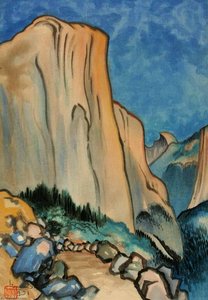
A transformative sketching expedition to Yosemite National Park in 1927 irrevocably altered Obata’s artistic trajectory. The awe-inspiring majesty of the Sierra Nevada mountains ignited within him an enduring passion for landscape painting—a passion that would define his subsequent creative output and establish him as one of California's foremost artists. He meticulously documented Yosemite’s towering granite cliffs, verdant meadows, and cascading waterfalls—capturing their grandeur with breathtaking precision and conveying a profound sense of reverence for the natural world. This period culminated in the creation of his celebrated “World Landscape Series”—thirty-five exquisitely detailed colored woodblock prints depicting vistas from across the globe, including Yosemite National Park. Produced with painstaking craftsmanship at Takamizawa Print Works—a collaboration that underscored Obata’s dedication to preserving traditional artistic techniques—these prints garnered international acclaim and solidified his reputation as a master of sumi-e combined with Western color palettes.Internment & Artistic Resilience During WWII
The Second World War brought an abrupt halt to Obata's burgeoning career, triggering the unjust incarceration of Japanese Americans following Pearl Harbor. Despite facing immense hardship and displacement—first at Tanforan Detention Center and subsequently at Topaz Relocation Center in Utah—Obata steadfastly maintained his artistic spirit. Recognizing the importance of creative expression amidst adversity, he established an art school within Topaz Camp, offering instruction to over ninety-five students weekly—a testament to his unwavering belief in the transformative power of art. This remarkable initiative served as a beacon of hope for fellow detainees and underscored Obata’s commitment to preserving cultural identity during times of national crisis. The support from UC Berkeley ensured that this vital artistic endeavor continued uninterrupted, highlighting Obata's enduring legacy as an artist who championed creativity even under oppressive circumstances. ## Legacy & Enduring Influence Chiura Obata’s artistic contributions extended far beyond the confines of his individual oeuvre—leaving a lasting impact on American art and fostering cross-cultural dialogue. His distinctive style—characterized by meticulous detail, tonal subtlety, and harmonious integration of Eastern and Western influences—continues to inspire artists today. Furthermore, his establishment of an art school within Topaz Camp stands as a poignant symbol of resilience—demonstrating the transformative potential of artistic expression during periods of social upheaval. Obata’s unwavering dedication to preserving traditional techniques while embracing contemporary subject matter cemented his place as a visionary artist who bridged cultures and championed human creativity—a legacy that resonates powerfully across generations. His work serves as a reminder that art can transcend borders, fostering understanding and celebrating the beauty inherent in diverse perspectives.Питання та відповіді
Звідки родом Чиура Обта?
Чиура Обта народився у Японія.
Де можна знайти роботи Чиура Обта, згруповані за кольоровою палітрою?
Щоб знайти роботи Чиура Обта у певній палітрі, скористайтеся сторінкою художника за За кольоровою палітрою.
Чи можу я переглянути роботи Чиура Обта за кольоровим спектром?
Роботи Чиура Обта можна переглянути за кольором на сторінці Колірний спектр митця.