工作室 — 全球免运费 — 预计2–6周送达
      Jerzy Faczynski, 1917 – 1943

      69 幅最著名的 Jerzy Faczynski 作品排名

      Jerzy Faczynski 最受喜爱的画作是 Ballerina。 紧随其后的是读者最熟悉的 Abstract Woman 和 Shepherd 画作。 我们的目录收录了 Jerzy Faczynski 的 69 件作品:以下是其中最著名的 69 件,每件作品均包含创作年份、馆藏机构及其艺术特色。

      排名依据为我们的热度评分,该评分综合了每件作品的搜索量、访问量及订单量。更新于 November 2026。 此页面上的每幅画作均可订购为手工绘制在亚麻画布上的油画复制品,或根据您选择的尺寸制作的高级艺术版画。

      Jerzy Faczynski 肖像
      Jerzy Faczynski · 1917 – 1943
      生卒年份
      1917 – 1943
      目录中的作品
      69
      最知名
      Ballerina

      Jerzy Faczynski 十大名画:家喻户晓的传世杰作

      更多 Jerzy Faczynski 帆布画,从 11 到 69

      Jerzy Faczynski 的代表作

      这些画布上最常出现的四个主题,以及各自最受喜爱的代表作。

      关于 Jerzy Faczynski 的画布:为您答疑解惑

      Jerzy Faczynski 最著名的画作是哪一幅?查看答案

      Ballerina,其次是 Abstract Woman 和 Shepherd。

      Jerzy Faczynski 最著名的10幅画作是什么?查看答案

      Ballerina, Abstract Woman, Shepherd, Faces, Nude, Nude, Nude, Ballerina, Woman 及 The Madonna And Child。上述排名中的每幅画布均附有创作年份及馆藏博物馆信息。

      Jerzy Faczynski 总共创作了多少件作品?查看答案

      我们的目录中收录了 69 件 Jerzy Faczynski 的作品。

      Jerzy Faczynski 最常创作的主题是什么?查看答案

      Women (11), Nudes (7) 及 Buildings (6),共计 69 件作品。

      我可以购买 Jerzy Faczynski 的帆布复刻画吗?查看答案

      是的。本页面的每一幅画作都可以在其详情页进行定制,您可以根据所需尺寸,将其订购为手工绘制的油画复制品,或精美的艺术版画。

      Jerzy Faczynski:画笔下的生命历程

      A Life Forged in Conflict and Creation


      The life of Jerzy Faczynski was a profound testament to the resilience of the human spirit amidst the wreckage of the twentieth century. Born in 1917 in Yenakiieve, Ukraine, to Polish parents, his early years were steeped in an atmosphere of artistic appreciation, nurtured by his mother, Marian, a dedicated artist and teacher. This foundational connection to beauty would later become his sanctuary during the darkest chapters of his life. When the shadows of World War II descended upon Europe, Faczynaryski’s path took a dramatic turn from the studio to the cockpit, as he enlisted in the Polish Air Force. His journey was marked by the harrowing realities of war, including capture by Nazi forces and a daring, resolute escape that mirrored the very strength found in his later architectural designs. As a refugee in Britain, he did not merely survive; he sought to rebuild the cultural identity of a displaced nation, joining the Polish School of Architecture in Liverpool—a vital beacon of intellectual life for the Polish diaspora.

      The Architecture of Faith and Modernity


      Faczynski’s architectural legacy is defined by a singular mission: to translate the eternal essence of the Catholic faith into the language of modern form. His work represents a masterful intersection of Art Deco elegance and the rigorous, functional principles of Modernism. Drawing deep inspiration from the Bauhaus movement, he sought to strip away the superfluous, focusing instead on how light, space, and structure could evoke spiritual transcendence. This pursuit led him to design more than fifty churches, works that stand as monuments to both his technical precision and his liturgical devotion. His architectural vocabulary was not merely about stone and mortar but about creating sacred spaces that resonated with the contemporary era, blending historical reverence with an innovative, forward-looking aesthetic that sought to capture the very soul of the liturgy.

      A Versatile Hand: From Ink to Expressionism


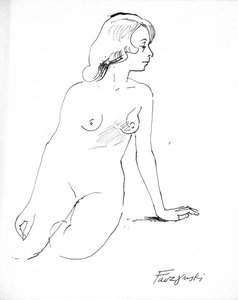
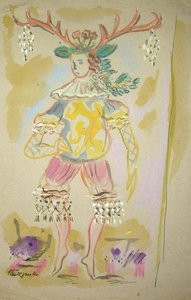
      While his architectural achievements provided a structural legacy, his graphic works offered a window into his emotional landscape. Faczynski’s artistry was remarkably diverse, ranging from the delicate precision of monochrome sketches to the raw, emotive power of watercolor and ink. In pieces such as Manor House, one observes a captivating, almost nostalgic exploration of historical themes through impressionistic detail. Conversely, his more experimental works reveal a fascination with the psychological depths of the human condition. His haunting watercolor, Man With A Cigarette, utilizes expressive distortion and vibrant color to evoke profound feelings of isolation and vulnerability, bordering on the realms of Surrealism. Similarly, his ink drawings, such as the Reclining Woman, utilize the dynamic, fragmented lines of Abstract Expressionism to capture raw emotion. Through these varied mediums, Faczynski remained a lifelong witness to the beauty and the turbulence of the world, leaving behind a body of work that continues to resonate with historical depth and artistic brilliance.