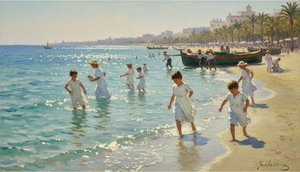
الإرث المشرق لإيليسيو ميفريين إي رويغ
في الغسق الذهبي للقرن التاسع عشر، اجتاحت طاقة تحولية عالم الفن الأوروبي، محطمة القيود الصارمة للتقاليد الأكاديمية لتعانق الجمال العابر للضوء والأجواء. وفي قلب هذه الحركة في كتالونيا، برز إيليسلو ميفريين إي رويغ، الفنان الذي استطاعت ريشته التقاط جوهر المناظر الطبيعية المتوسطية. وُلد ميفريين في برشلونة عام 1859، وكانت رحلته عبارة عن تحول عميق؛ فبالرغم من أنه سلك في البداية طريق الطب، إلا أن النداء الذي لا يقاوم للوحة الرسم دفعه للتخلي عن العلم سعياً وراء الحقيقة الجمالية. هذا القرار المبكر هو ما رسخ مكانته في النهاية كرائد للمدرسة الانطباعية الكتالونية، وكأستاذ قادر على ترجمة الرقصة العابرة لأشعة الشمس فوق سطح الماء إلى روائع زيتية خالدة.
وضعت أسس ميفريين الفنية في مدرسة Escola de la Llotja في برشلونة، حيث درس تحت الأنظار الساهرة لأساتذة مثل أنطونيو كابا ورامون مارتي ألسينا. وقد غرس فيه هؤلاء الموجهون الأوائل حساسية رومانسية، متجذرة في الملاحظة الدقيقة واحترام التكوين الكلاسيكي. ومع ذلك، فإن المحفز الحقيقي لثورته الأسلوبية جاء في عام 1879 مع انتقاله إلى باريس. فمن خلال انغماسه في الأجواء النابضة بالحياة والطليعية لعصر "البل إيبوك"، التقى ميفريين بالتقنيات الرائدة لكل من كلود مونيه وكاميل بيسارو. وهنا، تبنى ممارسة الرسم en plein air (في الهواء الطلق)، متعلمًا كيفية تجاوز لوحات الألوان الباهتة والكئيبة لمدرسة باربيزون نحو طريقة رؤية أكثر إشراقاً وعفوية. وقد ضخ هذا التأثير الباريسي في أعماله حرية جديدة، مما سمح له بالتقاط القوام العابر للسحب، ورذاذ البحر، والظلال المتغيرة.
رحلة عبر الضوء والمناظر الطبيعية
اتسعت آفاق رؤية ميفريين بشكل كبير بفضل رحلاته، التي سمحت له بنسج تأثيرات جغرافية متنوعة في أسلوب واحد متماسك. فقد منحت له رحلاته إلى إيطاليا تقديراً عميقاً للعظمة الكلاسيكية، بينما قدم له وقته في جزر الكناري ومايوركا وجزر البليار مجموعة واسعة من المشاهد البحرية والساحلية. وبصفته فناناً متخصصاً في الرسم البحري، امتلك قدرة نادرة على تجسيد النبض الإيقاعي للمحيط والسكون الهادئ للموانئ المتوسطية. وغالباً ما تعمل أعماله كنوافذ على لحظات زمنية محددة، حيث يبدو هواء الملح والشمس الدافئة ملموساً تقريباً من خلال ضربات فرشاته الغنية بالملمس.
طوال مسيرته المهنية، تميز تطور ميفريين بالانتقال من الدقة الأكاديمية إلى السيولة الانطباعية التعبيرية. وبينما قد تكون أعماله المبكرة قد مالت نحو المناظر الطبيعية المنظمة التي تلقاها في تدريبه، فإن فترته الناضجة تتحدد من خلال:
- لوحات ألوان مضيئة: الابتعاد عن الرمادي والألوان الترابية نحو الأزرق النابض، والأبيض الساطع، وتدرجات غروب الشمس الدافئة. <تأثيرات جوية: استخدام الضوء لخلق شعور بالرطوبة والضباب والهواء الثقيل والعذب للقرى الساحلية.
- حيوية الملمس: تقنيات "الإمباستو" (الطلاء الكثيف) التي تمنح وزناً مادياً لقمة الموجة أو السطح الوعر لمنحدر بحري.
- الرنين العاطفي: القدرة على إثارة مشاعر الحنين أو السلام أو الجمال الشجي لغسق يتلاشى.
الأهمية التاريخية والروح الخالدة
بعيداً عن إنجازاته التقنية الفردية، يحتل إيليسيو ميفريين إي رويغ مكانة ذات أهمية تاريخية هائلة كأحد القنوات الرئيسية للانطباعية في كتالونيا. فهو لم يكتفِ بتبني أسلوب أجنبي، بل قام بتوطينه، حيث ضخ التقنية الفرنسية بضوء وطابع الساحل الإسباني الخاص. كما أن دوره كمدير لمدرسة الفنون في بالما دي مايوركا عزز إرثه، حيث ساعد في رعاية الأجيال اللاحقة من الفنانين ضمن التقاليد المتوسطية. وحتى مع توجه عالم الفن نحو حركات أكثر تجريداً، ظل ميفريين مخلصاً للجمال العميق للعالم الطبيعي.
واليوم، لا تزال لوحاته — التي تتراوح من لوحة Nocturno الموحية إلى المناظر الساحرة في Paisaje de Cadaqués — تأسر المقتنين والمؤرخين على حد سواء. إنه يظل رمزاً للشجاعة الفنية، ممثلاً اللحظة التي خرج فيها الفن الكتالوني من ظلال الأكاديمية إلى الضوء الساطع وغير المقيد للحداثة. إن عمل حياته يقف كشهادة على قوة الملاحظة والجاذبية الأبدية للمناظر الطبيعية، مذكراً إيانا بأن أكثر اللحظات عابرة يمكن التقاطها للأبد من خلال تفاني معلم فذ.
الأسئلة والأجوبة
أين يمكن العثور على أعمال إليسيو ميفريين إي رويغ الفنية مصنفة حسب الحركة الفنية؟
تجمع صفحة كافة المدارس الفنية أعمال إليسيو ميفريين إي رويغ الفنية حسب الحركة الفنية.
ما هي مدينة وموطن ولادة إليسيو ميفريين إي رويغ؟
وُلد إليسيو ميفريين إي رويغ في برشلونة، في إسبانيا.
هل يوجد عرض شامل لجميع الموضوعات التي رسمها إليسيو ميفريين إي رويغ؟
تستعرض صفحة أطلس المواضيع أعمال إليسيو ميفريين إي رويغ الفنية مصنفة حسب الموضوع.
في أي حقبة تاريخية عمل إليسيو ميفريين إي رويغ؟
عمل إليسيو ميفريين إي رويغ خلال حقبة القرن التاسع عشر. وتحدد هذه الحقبة موقع نشاط الفنان في التاريخ.
من أي بلد ينتمي إليسيو ميفريين إي رويغ؟
وُلد إليسيو ميفريين إي رويغ في إسبانيا.
كم عدد الأعمال الفنية المتاحة لتصفحها لـ إليسيو ميفريين إي رويغ؟
يمكنك تصفح 64 أعمال فنية من أعمال إليسيو ميفريين إي رويغ في صفحة جميع الأعمال الفنية.
ما هو مسقط رأس إليسيو ميفريين إي رويغ وسنة ميلاده؟
وُلد إليسيو ميفريين إي رويغ في برشلونة عام 1859.