Ателие — Безплатна доставка по целия свят — Срок на доставка: 2–6 седмици
Sell Your Art Списък с желания Количка
PreviewPreview Купи принт Купи принтКупи картина Купи картина ИзпратиИзпрати
ДетайлиДетайли Добавяне към любими Добавяне към любими ИзтеглянеИзтегляне ПодобниПодобни Рентгенова снимкаРентгенова снимка СлайдшоуСлайдшоу

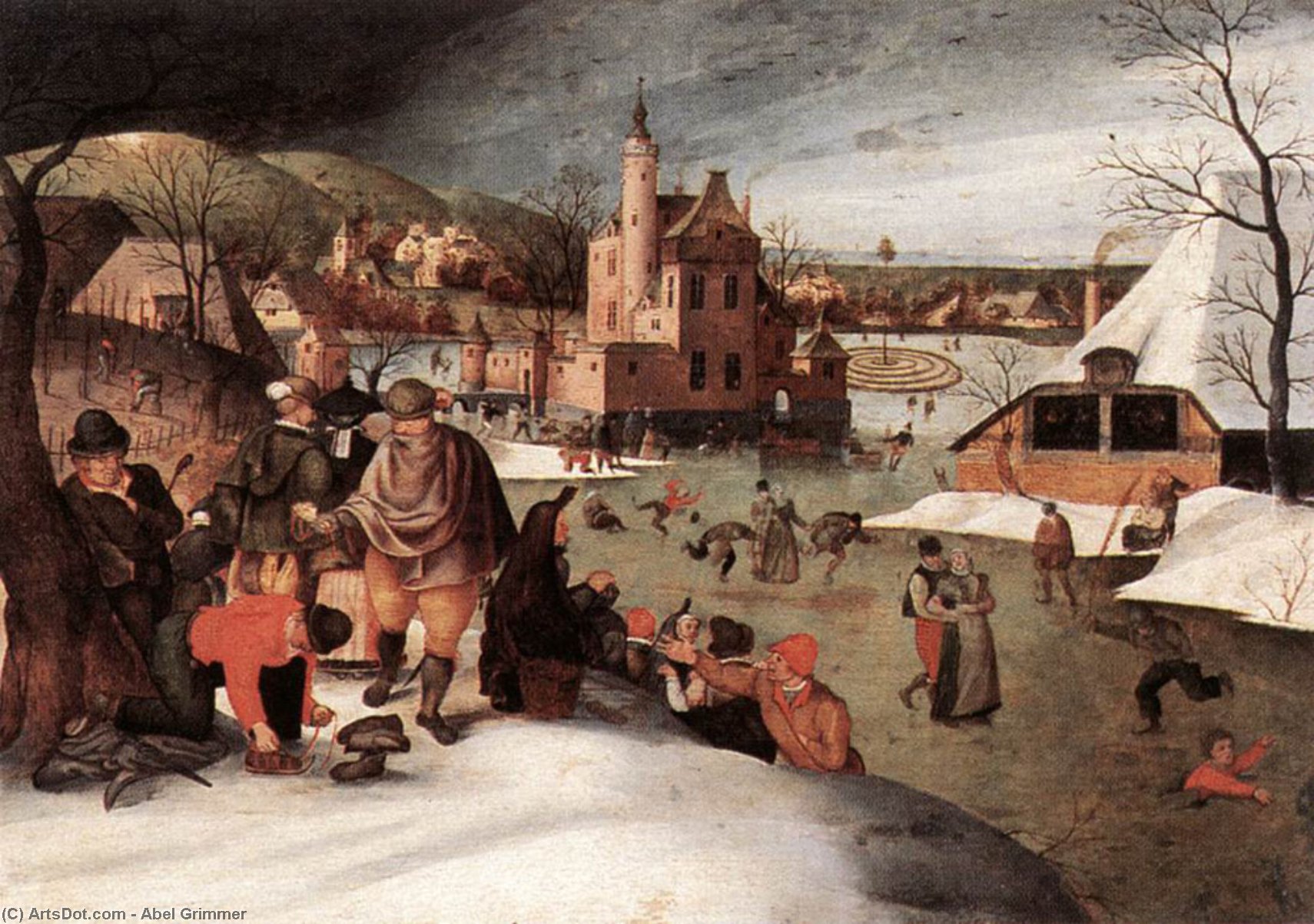
Winter

Discover Abel Grimmer’s ‘Winter’ (1607), a stunning Flemish genre painting of ice skating in Antwerp. Explore its detailed realism, atmospheric light & cultural context.

Abel Grimmer (c. 1570-1620) was a Flemish Renaissance painter known for naturalistic landscapes, biblical scenes & architectural paintings. Influenced by Bruegel, he streamlined technique to create prolific series of the seasons & Tower of Babel.

Закупете дигитално изображение с висока резолюция и подобрени характеристики, значително по-добро от онлайн прегледа.

Всеки файл е щателно подготвен от нашите специалисти с помощта на съвременни инструменти и експертна ръчна ретуш. Гарантираме, че всяко изображение има изключителна яснота, прецизна цветова точност и фини детайли.

Окончателният файл се доставя по имейл в рамките на 72 часа, оптимизиран за незабавна употреба в професионални, редакционни и печатни среди. Това е същото качество, на което се доверяват водещи дизайнерски студия, издатели и галерии.

Дигитално изображение

Изтеглете файл с висока резолюция за лично показване, принтиране и творчески проекти.

Обща цена

$9.99

Включено във всяка поръчка за дигитални изображения

Експресна дигитална доставка, гарантирана

Когато изберете TopImpressionists.com, вие не получавате само изображение – вие получавате професионално подобрена дигитална творба, създадена с прецизност и подкрепена от гаранция за удовлетворение. Ето всичко, което автоматично се включва в вашата поръчка:

shipping_icon
Бърза доставка по имейл

Вашето дигитално изображение с висока резолюция ще ви бъде изпратено по имейл в рамките на 72 часа от поръчката - готово за незабавно използване.

canvas_icon
Дигитален файл с подобрено качество чрез изкуствен интелект

Вашата картина е професионално оптимизирана с помощта на усъвършенствани инструменти за изкуствен интелект и ръчна редакция, осигурявайки максимална детайлност, яснота и точност на цветовете.

insurance_icon
Безплатна доживотна повторна доставка

Изгубили сте или сте премахнали файла си по погрешка? Не се притежнявайте – ще го изпратим отново на Вас по всяко време, безплатно.

tax_icon
Без такки за мито - никога

Всредите си веднага без мита, данъци или такси по доставка - дигителните приложения винаги са без данъчно освободени.

color_icon
Гаранция за точност на цветовете

Гарантираме, че вашето дигитално изображение отразява оригиналните цветове възможно най-точно, използвайки професионални инструменти и управление на цветовете.

return_icon
Гаранция за удовлетвореност от 60 дни

Ако не сте доволни от вашето дигилно изображение, ще го коригираме или ще възмедим 100% в рамките на 60 дни – без никакви въпроси.

guarantee_icon
100% Гаранция за връщане на пари.

Не сте удовлетворени? Получавате пълно възстановяване на сумата в рамките на 60 дни след получаването на вашия цифров файл – без никакви въпроси.

discount_icon
Отстъпки за големи поръчки

Купете 3 изображения, спестете 10% - Купете 5, спестете 15% - Купете 10+, спестете 20%. Отлично за творчески проекти, галерии и агенства.

Бързи факти

  • Location: Koninklijk Museum voor Schone Kunsten Antwerp
  • Movement: Flemish Genre Painting
  • Year: 1607
  • Influences: Pieter Bruegel the Elder
  • Artistic style: Realistic
  • Dimensions: 33 x 47 cm
  • Medium: Oil on panel

Тест за изкуство

Има само един верен отговор за всеки въпрос.

Въпрос 1:
What is the artist’s name?
Въпрос 2:
In what century was Winter created?
Въпрос 3:
Where is the painting currently housed?
Въпрос 4:
What medium was used to create Winter?
Въпрос 5:
The painting depicts a scene of what activity?

Описание на колекционерския предмет

A Frozen Celebration: The Allure of Abel Grimmer's Winter

To gaze upon Abel Grimmer’s Winter is to step directly into the crystalline heart of a 17th-century Flemish town square. This oil on panel, dating from 1607, is far more than a mere depiction of cold weather; it is a vibrant tapestry woven from human resilience, community spirit, and the enduring joy found even in the deepest chill. The scene unfolds with an almost breathless energy, capturing figures engaged in the timeless ritual of ice skating across a frozen expanse. Grimmer masterfully transports us to a moment suspended between the stark beauty of winter and the warmth of shared human experience.

Mastery of Genre and Detail

The painting exemplifies the pinnacle of Flemish genre painting from the early 17th century. Notice, if you will, the meticulous attention paid to every element—from the texture of the snow underfoot to the folds of the passersby's heavy winter garments. The composition is wonderfully complex and crowded, yet it never feels chaotic. Instead, the numerous figures are arranged with a naturalistic grace that guides the eye across the foreground, midground, and into the distance where a grand castle anchors the horizon. Grimmer’s technique relies on an almost scientific observation of light and shadow; the subdued lighting casts deep, evocative shadows that lend profound depth to what might otherwise be a flat scene. The architecture surrounding the skaters, with its characteristic gabled roofs, speaks volumes about the daily life and enduring character of Flemish urban centers.

Symbolism of Endurance and Community

Beyond the surface depiction of leisure, Winter carries a rich symbolic weight. It is an ode to endurance—the ability of community life to flourish even when nature imposes its harshest conditions. The act of skating itself becomes a metaphor for navigating life's inevitable cold spells; it requires balance, coordination, and the support of others. The warmth emanating from the clustered groups, contrasted against the icy blue tones dominating the palette, suggests that human connection is the ultimate source of light and sustenance. It is a celebration of life’s persistent rhythm amidst seasonal dormancy.

A Touch of Dutch Golden Age Realism

While rooted in Flemish tradition, the painting shares an undeniable kinship with the detailed realism characteristic of the Dutch Golden Age masters. Grimmer employs layering and delicate brushwork to build up textures—the slick sheen of ice, the rough weave of wool, the powdery drift of snow. The overall effect is one of profound verisimilitude. For those who appreciate art that feels both historically significant and intimately immediate, this piece offers a perfect confluence of high artistry and relatable human drama. Owning or displaying a reproduction of Winter allows one to bring not just a painting, but an entire atmosphere—a feeling of festive, enduring warmth—into the modern home.


Биография на художника

Abel Grimmer (c. 1570–c. 1620): The Streamlined Landscape Painter

Abel Grimmer (family name variations: 'Grimer' and 'Grimmaert') (c. 1570–c. 1620) was a Flemish late Renaissance painter, mainly of landscapes and, to a lesser extent, of architectural paintings. His works were important in the development towards more naturalism in Flemish landscape painting. Grimmer’s artistic legacy resides not merely in his impressive output but also in his innovative approach—a method that prioritized efficiency and stylistic consistency—which secured him a prominent place within the Antwerp art market during his lifetime. Born and died in Antwerp, he honed his craft under the tutelage of his father, Jacob Grimmer (c. 1526–1590), who himself had established renown by imitating Pieter Bruegel the Elder’s miniature landscapes and distributing them at affordable prices. This familial influence profoundly shaped Grimmer's artistic sensibilities, fostering a dedication to meticulous observation and a masterful command of technique—a commitment that would ultimately define his distinctive style.
  • Early Life & Training: Jacob Grimmer’s workshop served as the crucible for Abel’s formative years, immersing him in the traditions of Flemish landscape painting while simultaneously encouraging experimentation with new approaches.
  • Marriage & Guild Membership: In 1591, Abel married Catharina Lescornet and swiftly ascended to mastership within the Antwerp Guild of Saint Luke—a pivotal moment signifying his recognition as a skilled artist and securing him access to lucrative commissions.
  • Workshop Succession: Following Jacob’s death in 1590, Abel inherited his father's workshop, continuing the family tradition of producing landscape paintings that adhered to established formulas while subtly elevating them through careful simplification and stylistic refinement.

Grimmer’s Artistic Style: Bruegel’s Influence & The Pursuit of Efficiency Grimmer’s artistic style is characterized by a striking convergence of influences—primarily Pieter Bruegel the Elder and Hans Bol—yet simultaneously distinguished by an unwavering commitment to streamlining technique. Unlike his predecessors who often employed elaborate compositions and nuanced color palettes, Grimmer embraced a minimalist aesthetic, prioritizing clarity and visual impact. This stylistic choice stemmed from a pragmatic understanding of the Antwerp marketplace, where affordability and accessibility were paramount considerations. Each pictorial area of his landscapes was meticulously rendered in a single hue—often muted shades of ochre or brown—with minimal modulation to achieve maximum luminosity and reduce varnishing’s effect on surface texture. This deliberate simplification wasn't merely a stylistic preference; it represented a fundamental shift towards a more economical production process, ensuring that Grimmer’s paintings remained competitive within the prevailing artistic landscape.
  • Color Harmony & Light: Grimmer skillfully employed color harmonies reminiscent of Bruegel and Bol, capturing atmospheric light with remarkable accuracy—a hallmark of his oeuvre.
  • Compositional Simplicity: Buildings were depicted as geometric shapes—a deliberate departure from earlier conventions—further enhancing the overall visual impact of his landscapes.
  • Production Technique: Grimmer’s technique involved applying minimal varnishing, eliminating surface reflections and maximizing color vibrancy—a strategy that underscored his dedication to efficiency and artistic precision.

Notable Works & Recurring Themes Grimmer's oeuvre encompasses a diverse range of subjects—primarily landscapes depicting seasonal changes and architectural interiors—but several works stand out for their stylistic innovation and thematic resonance. Among these are the twelve “Months” series (1592), an exact copy of Hans Bol’s prints after designs by Pieter Bruegel the Elder, published by Hans van Luyck in 1585; ‘Spring’ and ‘Summer,’ which mirror two prints by Pieter van der Heyden based on Bruegel's compositions; and depictions of the Tower of Babel—a narrative inspired by Bruegel’s seminal paintings on this subject matter. These artworks exemplify Grimmer’s masterful adaptation of established artistic conventions while simultaneously conveying profound moral messages rooted in biblical allegory. The tower motif, reflecting anxieties about human pride and defiance against divine authority, mirrored the turbulent political climate of Antwerp during Grimmer's lifetime—a city embroiled in conflict with Protestant provinces.

Legacy & Historical Significance Despite criticisms leveled against his stylistic choices—often portraying him as overly reliant on the work of others—Grimmer’s legacy endures as a pivotal figure in the evolution of Flemish landscape painting. His streamlined technique—characterized by single-hue color palettes and geometric building representations—established a precedent for subsequent generations of artists, securing his place within Antwerp's artistic tradition. Furthermore, Grimmer’s unwavering commitment to capturing atmospheric light and faithfully reproducing architectural spaces foreshadowed developments in Dutch interior painting championed by Pieter Saenredam—demonstrating the breadth of his influence on the broader artistic landscape of the Low Countries. Abel Grimmer’s contribution to Flemish art is undeniable: he represents a crucial step toward naturalism, while simultaneously upholding an economical production process that ensured his paintings remained accessible and influential for centuries to come.

Abel Grimmer

Abel Grimmer

1570 - 1620

© TopImpressionists.com — Всички права защитени  ·  100% Ръчно рисувани · Гарантирано удовлетворение · Безплатна доставка до цял свят
VISA MASTERCARD

