


 Преглед в реален мащаб
 Сподели
 Сподели
 Подробности
 Ръководство

 Изтегляне
 Подобни артикули
 Рентгенова снимка
 Слайдшоу
 Статистика
Clouds

Explore Arkhip Kuindzhi’s ‘Clouds,’ a mesmerizing landscape painting of muted tones & atmospheric depth. Impressionistic brushwork evokes mood & tranquility. A unique piece for art lovers.
Аргип Куинджи (1842-1910) е руско-украински пейзажист, известен с драматичното си използване на светлина и цвят, улавящ красотата и атмосферата на Украйна и други региони. Разгледайте емблематични творби като "Вечер в Украйна".
 Разгърни целия текст
Жикле / Художествен принт
Giclée печат или принт върху платно с музейно качество, бързо производство и гъвкави опции за завършен вид. ( Поръчайте ръчно рисувано репродукция на този колекционерски предмет Превключване към дигитално изображение)




































Стандартен размер
по поръчка
CM
INCH
Изберете от нашите предварително зададени размери, които съответстват на оригиналните пропорции на произведението.
Loading sizes...

ширина
височина
Въведете необходимата ширина и височина, за да паснат на вашата рамка или стена. Принтовете могат само да се изрязват, но никога не могат да бъдат по-големи от оригиналната картина, така че при размер с различен формат част от изображението ще бъде загубена. Преди да започнем печат, ще ви изпратим дигитален мок업 за одобрение. Изображението, показано на тази страница, не показва реалното изрязване — само мок업ът го показва.
Доставка по целия свят () в рамките на 2 седмици вместо стандартните 4/5 седмици. (22 Октомври)

Безплатна експресна доставка по целия свят

Висококачествено ленено платно

Пълно застраховане на доставката

Гаранция за възстановяване на митнически такси

Гаранция за пълно съответствие на цветовете

Политика за връщане в рамките на 100 дни (само при дефекти)

100% Гаранция за връщане на сумата

Отстъпка при поръчка на повече произведения
 Опцията със стъкло е налична само за размери под 110 см

Clouds
Жикле / Художествен принт
Размер на репродукцията
-


Крайна цена
€ 61
Свързани произведения


Биография на художника
Arkhip Kuindzhi: The Soul of Ukrainian Light
Arkhip Ivanovich Kuindzhi, a name that echoes through the halls of Russian art history, is revered as one of the most evocative landscape painters of his era. Born in Mariupol, Ukraine, in 1842 (or possibly 1841 – the exact date remains shrouded in subtle mystery), his life was a testament to resilience and an unwavering pursuit of capturing the very essence of light and atmosphere. His journey from humble beginnings—a childhood marked by labor on church construction sites and as a corn merchant’s assistant—to becoming a celebrated artist is a story interwoven with hardship, artistic discovery, and ultimately, profound influence. Kuindzhi's legacy isn't simply about depicting landscapes; it’s about translating the *experience* of being immersed in nature – its warmth, its shadows, its ethereal glow – onto canvas.Early Years and Artistic Foundations
Kuindzhi’s early life was shaped by a unique confluence of circumstances. Orphaned at a young age, he found himself working tirelessly to support his family, gaining practical skills while simultaneously nurturing an innate curiosity about the world around him. A pivotal encounter with a Greek family friend provided him with rudimentary education and sparked a nascent artistic interest. This friendship proved crucial, introducing Kuindzhi to the foundations of art and laying the groundwork for his future endeavors. Interestingly, his initial foray into the professional art world involved retoucher work in Taganrog’s photographic studio – an experience that unexpectedly honed his observational skills and understanding of light and shadow, disciplines he would later masterfully apply to his painting. This seemingly unrelated profession instilled within him a meticulous attention to detail and a deep appreciation for the subtleties of visual perception, qualities that profoundly shaped his artistic vision.From Aivazovsky’s Shadow to Independent Vision
Kuindzhi's early artistic development was significantly influenced by Ivan Aivazovsky, the renowned marine painter. He spent a brief period apprenticing under Aivazovsky in Feodosia, absorbing techniques related to paint mixing and composition. However, Kuindzhi quickly developed his own distinct style, moving beyond mere imitation and forging an independent path. He then sought guidance from Adolf Fessler, a student of Aivazovsky’s, further refining his technical skills before venturing into the world of photography as a retoucher in Taganrog. This period of photographic work proved surprisingly formative, sharpening his eye for detail, understanding of light and shadow, and appreciation for the complexities of visual representation – all crucial elements that would later inform his groundbreaking landscape paintings.The Alchemy of Light: Kuindzhi’s Artistic Breakthrough
Kuindzhi's artistic breakthrough occurred in Saint Petersburg, where he enrolled at the Imperial Academy of Arts. While he primarily studied independently, he gained recognition as a free-lance artist by 1868 and was officially admitted to the academy in 1893. It was during this period that Kuindzhi truly began to explore his signature style – a masterful manipulation of light and color designed to evoke an emotional response in the viewer. He wasn’t simply painting landscapes; he was attempting to recreate the *feeling* of being immersed in nature, capturing its warmth, its shadows, and its ethereal glow. His innovative techniques—including composite methods that created panoramic views and layering pigments to achieve an unparalleled luminosity—were revolutionary for his time. Paintings like “Ukrainian Night” (1876) and “Moonlit Night on the Dnieper” (1880) became instantly iconic, captivating audiences with their dramatic intensity and seemingly supernatural realism. These works weren’t merely representations of scenes; they were immersive experiences, designed to transport the viewer directly into the heart of the landscape.Major Works and Lasting Influence
Kuindzhi's oeuvre is characterized by a remarkable range of subjects and techniques. His early landscapes, such as “Deserted Village” (1874) and “The Chumak Road” (1875), demonstrated his growing social awareness and his ability to imbue his paintings with emotional depth. However, it was with "Birch Grove" (1879) that he truly cemented his reputation as a master of light and atmosphere. His later works, including “Lake Yalpukh” (1883), further showcased his innovative techniques and his ability to capture the fleeting beauty of nature. Kuindzhi’s influence extended far beyond his own lifetime. He became a respected teacher at the St. Petersburg Academy of Arts, shaping the artistic sensibilities of generations of students. His work resonated deeply with artists seeking to break free from traditional academic constraints and explore the emotional power of color and light, foreshadowing elements found in Symbolist painting. His paintings continue to be studied and admired for their technical brilliance and their profound ability to evoke a sense of wonder and awe.A Legacy Illuminated
Arkhip Kuindzhi’s legacy is not merely one of artistic achievement; it's a testament to the power of perseverance, creativity, and an unwavering dedication to capturing the beauty of the natural world. Despite withdrawing from public exhibitions after achieving considerable success, his paintings continue to captivate audiences worldwide, serving as a poignant reminder of the enduring magic of light and its profound impact on our perception of reality. He remains a pivotal figure in Russian art history – a master illuminator who transformed the landscape painting genre and left an indelible mark on the artistic consciousness.
Аргип Куинджи
1842 - 1910 , Украйна
Бързи факти
- Artistic Movement Or Style: Реализъм, Импресионизъм
- Artists Or Movements Influenced By This Artist: ['Символизъм']
- Artists Who Influenced This Artist:
- Иван Айвазовски
- Адолф Фезлер
- Date Of Birth: Януари 1842
- Date Of Death: Юли 1910
- Full Name: Arkhip Ivanovich Kuindzhi
- Nationality: Руски/Украински/Гръцки
- Notable Artworks:
- Вечер в Украйна
- Бряг на Ладога
- Лунен нощен пейзаж
- Place Of Birth: Мариупол, Украйна
Свързани статии
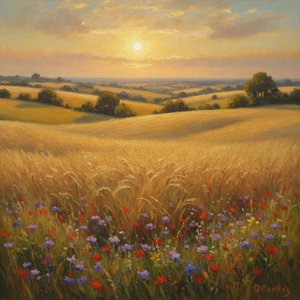
Golden Fields & Sun-Drenched Meadows: Capturing the Soul of Impressionist Landscapes
Immerse yourself in the luminous world of Impressionist landscapes. Discover how masters like Monet and Gauguin captured ephemeral light through plein air painting, and learn to bring the soul of sun-drenched meadows into your home with exquisite, hand-painted oil reproductions.

Capturing the Soul: The Most Emotionally Moving Impressionist and Post-Impressionist Masterpieces
Discover the profound emotional depth of Impressionist and Post-Impressionist masterpieces. Explore how legends like Monet, Van Gogh, and Gauguin captured light and soul through evocative landscapes and vibrant brushwork for a timeless connection to art history.

Beyond the Light: Capturing Raw Emotion and Subjective Vision in Post-Impressionist Landscapes
Explore the profound emotional depth of Post-Impressionist landscapes. Discover how masters like Van Gogh moved beyond light to capture raw human feeling through vibrant color and expressive texture in this expert art history retrospective.

The Beauty of Impermanence: Capturing Decay through Impressionist Eyes
Explore the profound beauty of impermanence through Impressionist and Post-Impressionist eyes. Discover how masters like Monet and Van Gogh captured fleeting light and the poetic essence of nature's transitions in our deep dive into art history and emotional landscapes.

Capturing the Soul of Russia: A Reflective Journey Through the Profound Beauty of Breathtaking Landscape Art
Embark on a soulful journey through Russia's breathtaking landscapes. Discover exquisite, hand-painted oil reproductions of Peredvizhniki masterpieces, meticulously crafted to bring the emotional depth and timeless beauty of Russian fine art into your personal sanctuary.