

Показано: · С рамка:
 Изпрати
 Сподели
 Детайли
 Ръководство

 Изтегляне
 Подобни артикули
 Слайдшоу
 Въпроси и отговори
 Статистика
- 26.0 x 33.0 cm


€ 240
Ръчно изработена маслена репродукция
Ръчно рисувана маслена картина върху платно във вашия размер и рамка, изработена по поръчка от нашите художници. ( Превключване към принт Превключване към дигитално изображение)
Размер
·Стандартен
персонализиран
CM
INCH
Изберете от нашите предварително зададени размери, които съответстват на оригиналните пропорции на произведението.
Зареждане на размерите...

ширина
височина
Въведете необходимата ширина и височина, за да паснат на вашата рамка или стена. Тъй като това е ръчна работа, при избор на размер с различен формат художникът може да нарисува малко повече около картината или да отреже малко от периферията — вие избирате. Преди да започне рисуването, ще ви изпратим дигитален мок업 за одобрение. Картината, показана на тази страница, не е реалният резултат — само мок업ът го показва.
 Прочетете повече
Завърши
·
Бяло €1

Размити краища €1

Разширен €1

P118B €10

P118H €10

P118W €10

P438Z €10

P508JH €12

P508YH €12

P805H €10

P805Z €10

P919BZ €10

P919G €10

P919XJ €10

P959ZH €10

P968JZ €12

W106C €8

W218G €10

W218JH €8

W218Y €10

W307PJ €10

W316G €10

W316PJ €8

W316Y €10

W398PJ €8

W4111J €10

W500HY €15

W500JH €15

W692G €12

W849H €8

W940BG €15

W953PJ €8

H24-GOLD €30

H24-SILVER €30

H36-GOLD €45

H36-SILVER €45
Изпраща се в защитна тръба, готов за поставяне във ваша собствена рамка.
Допълнителни услуги
по изборКакво включват допълнителните услуги?
Примери за това, което може да бъде променено: Замяна на лицето със снимка на клиента; Добавяне на домашен любимец (напр. замяна на котка с куче); Включване на скрито съобщение на фона; Промяна на пейзажа или елементите на фона.
След получаване на поръчката, екипът на TopImpressionists.com ще изпрати имейл до клиента с инструкции и ще предостави примерен макет
След получаване на поръчката, екипът на TopImpressionists.com ще изпрати имейл до клиента с инструкции и ще предостави примерен макет
Доставка по целия свят () в рамките на 3-4 седмици вместо стандартните 5 седмици. (9 Ноември). Без компромис с качеството.
Защитен лак
Етикет с име
Детайли за гравираната бронзова плака
This elegant plaque features the artist's name and the title of the artwork, finely engraved for a timeless presentation.
It is made from bronze with a refined, elegant finish. The text is precisely laser-engraved for a sharp and permanent result. Measuring 9x2 cm, the plaque is compact yet easy to read. It's built to be durable and scratch-resistant, offering a professional, museum-quality look. Mounting is simple thanks to the included adhesive backing.
Детайли за прозрачната акрилна плака
The plaque includes essential engraved details such as the artist's name, the title of the artwork, the date it was created, the type of media used-like oil on canvas or watercolor-a brief description of the piece, and a QR code that links to the complete artwork information.
It is crafted from clear acrylic, offering a sleek, modern appearance. The text is UV-engraved in black to ensure strong visual contrast. With a size of 10x15 cm, it ensures optimal readability. It comes equipped with two metal hooks for secure wall mounting. The plaque is designed to be weather-resistant, making it suitable for various environments, and it includes interactive features that work seamlessly with smartphone scanning.
Детайли за черната акрилна плака
This elegant plaque includes engraved information such as the artist's name, the title of the artwork, the date it was created, the type of media used (like oil on canvas or watercolor), a short description of the artwork, and a QR code for quick access to more information.
The plaque itself is made from refined black acrylic with a premium finish. The text is laser-engraved in white for high contrast and readability. Its size is 10x15 cm, designed to be easy to read. It comes with two metal hooks for professional mounting. The design is sleek and fits any interior style. It is also weather-resistant and durable, with built-in digital integration for mobile compatibility.
Опцията със стъкло е налична само за размери под 110 см
 Опцията със стъкло е налична само за размери под 110 см
- Безплатна експресна доставка по целия свят
- Висококачествено ленено платно
- Пълно застраховане на доставката
- Гаранция за възстановяване на митнически такси
- Гаранция за пълно съответствие на цветовете
- Политика за връщане в рамките на 100 дни (само при дефекти)
- 100% Гаранция за връщане на сумата
- Оферта за отстъпка при поръчка на повече бройки


Описание на колекционерския предмет
Marvel at Benvenuto Cellini's opulent 'Salt Cellar,' a Renaissance masterpiece of gold, enamel, and intricate symbolism—a testament to artistry & luxury from 1543 Vienna.
Биография на художника
БенвеНуто Челини (1500-1571): Майстор златар и скулптор от епохата на маниеризма, известен с 'Персей' и великолепния Соленник на Франсоа I. Открийте неговото изкуство и живот!
Относно картината
A Gilded Echo of Antiquity
Benvenuto Cellini's Salt Cellar, a shimmering testament to the heights of Renaissance goldsmithing, isn’t merely a container for salt; it’s a miniature cosmos, a meticulously crafted allegory brimming with symbolism and technical brilliance. Completed in 1543 for King Francis I of France, this extraordinary object transcends its functional purpose, becoming a profound meditation on the relationship between earth and sea, divinity and humanity. It's a piece that whispers tales of ambition, artistry, and the intoxicating allure of the Italian Renaissance—a world where beauty was paramount and skill elevated to an almost religious pursuit.
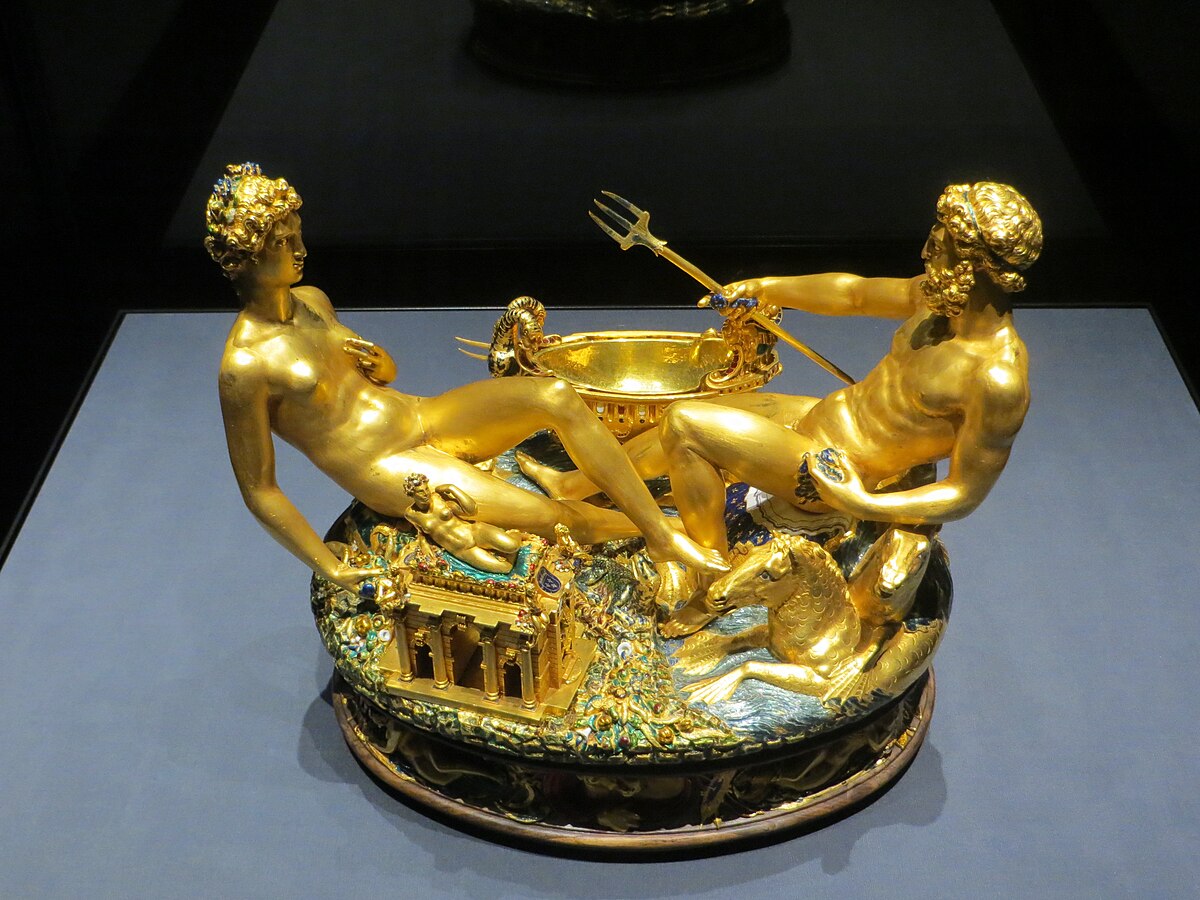
Image of Benvenuto Cellini’s Salt Cellar
The Anatomy of a Masterpiece
Crafted primarily from gold, the Salt Cellar is an astonishing feat of technical mastery. Cellini, renowned for his flamboyant personality and equally impressive skill, eschewed traditional casting methods, instead meticulously hammering the gold into its delicate, flowing form by hand. The base is elegantly fashioned from ebony, providing a striking contrast to the radiant gold, while ivory bearings allow the sculpture to gracefully roll across a banquet table – a deliberate feature designed for display and conversation. But it’s the enameling that truly elevates the piece; intricate scenes depicting figures representing the four seasons and the four winds are painstakingly applied, adding layers of visual complexity and narrative depth. The sheer scale of detail—from the meticulously rendered folds of clothing to the lifelike expressions on the faces of Neptune and Tellus – speaks volumes about Cellini’s dedication and unparalleled skill.
- Material: Gold, Ebony, Ivory, Enamel
- Dimensions: Approximately 10.5 inches (267 mm) tall, 13.1 inches (333 mm) wide
- Technique: Hand-hammered gold, intricate enamel work
A Dialogue with the Divine
The Salt Cellar’s symbolism is as captivating as its aesthetic beauty. At its heart lies a potent allegory of Terra e Mare – Earth and Sea – embodied by the figures of Neptune, god of the ocean, and Tellus, goddess of the earth. These two powerful deities are depicted in an intimate embrace, their legs intertwined, suggesting a harmonious connection between the terrestrial and aquatic realms. The sculpture is further enriched with symbolic details: a small boat carries the salt, representing the flow of commerce and sustenance; a temple dedicated to peppercorns stands alongside Tellus, signifying the pleasures of earthly life. The inclusion of animals—horses, dogs, dolphins—adds another layer of meaning, drawing upon classical iconography and reinforcing the sculpture’s connection to mythology and antiquity.
A Legacy Forged in Ambition
Cellini's autobiography, *Vita*, offers invaluable insight into the creation of this extraordinary piece. He recounts his initial reluctance to accept the commission from Cardinal Ippolito d’Este, dismissing the cardinal’s suggestions with characteristic arrogance and asserting sole credit for the design. The story is rife with anecdotes about Cellini’s daring exploits—including a dramatic escape from bandits while transporting the gold—further cementing his image as a larger-than-life figure of Renaissance Italy. The Salt Cellar, therefore, isn't just an artistic achievement; it’s a reflection of Cellini’s own complex and often contradictory personality – a testament to ambition, skill, and a profound appreciation for beauty. It remains one of the most celebrated examples of Renaissance goldsmithing, captivating viewers with its exquisite detail and enduring symbolism.
Въпроси и отговори
Колко силен е контрастът в „Salt Cellar“ на Бенвентуто Челлини?
„Salt Cellar“ на Бенвентуто Челлини демонстрира Gentle контраст между светлите и тъмните си зони.
Как се съчетават емоцията и поводът за подарък при „Salt Cellar“ на Бенвентуто Челлини?
Reflective тонът на „Salt Cellar“ на Бенвентуто Челлини съответства на препоръчания повод за подарък: Anniversary.
На кой етап от кариерата на Бенвентуто Челлини съответства датата от 1540 на „Salt Cellar“?
Създадена през 1540, „Salt Cellar“ принадлежи към Mature Renaissance на Бенвентуто Челлини.
Бързи факти и арт тест
Относно Бенвентуто Челлини

Бенвентуто Челлини
1500 - 1571, Италия
Биография на художника
БенвеНуто Челини: Ренесансов Гений на Златарството и Скулптурата
БенвеНуто Челини, роден във Флоренция през 1500 година, е фигура, която въплъщава духа на Ренесанса – художник, златар, скулптор, писател, музикант и дори воин. Неговата забележителна автобиография, изпълнена с драматични истории и откровени самооценки, се превръща в ценен документ за епохата, равностоен на неговите художествени постижения. Челини е майстор на маниеризма – стил, който следва високия Ренесанс и се отличава с драматизъм, изящество и сложни композиции.
Ранни Години и Художествено Обучение
Въпреки че е роден в семейство на музикант и строител на инструменти, където музиката заема важно място, Челини от рано проявява страст към изкуството. На петнадесетгодишна възраст той успява да убеди баща си да го обучи като златар при Антонио ди Сандро, известен още като Марконе. Това бележи началото на неговото формално художествено обучение. Животът му в ранните години не е лишен от инциденти – на шестнадесет години той се забърква в сблъсък и е прогонен от Флоренция, където работи известно време под ръководството на златар във Сиена. След това преминава през Болоня, където усъвършенства уменията си като музикант, свирейки на ко̀рнет и флейта, и продължава да се развива като златар.
Шедьоври и Художествен Стил
Челини е известен със своите изключително детайлни и динамични творби. Сред най-известните му произведения е позлатеният солиер, поръчан от френския крал Франсоа I – истински шедьовър на златарското изкуство, съхраняван в Художествено-историческия музей във Виена. Неговата бронзова скулптура "Персей с главата на Медуза" е друг забележителен пример за неговото майсторство – тя улавя движението и емоцията в метала, демонстрирайки умението му да предава драматизъм и сила. Златният медал с изображение на Леда и лебеда, създаден за Габриело Чезарино, показва способността му да съчетава класическата митология с изящна изработка. Негови скици, като проекта за печат, съхраняван в Британския музей, свидетелстват за неговия талант и в областта на рисуването.
Живот Извън Изкуството: Воин, Музикант и Автобиографист
Животът на Челини не се ограничава само до работилницата. Той служи като войник по време на обсади, твърдейки, че е изиграл ключова роля в защитата на Рим от имперските сили. Бил е и опитен музикант, свирещ на ко̀рнет и флейта при папския двор. Но именно неговата автобиография го отличава от останалите. "Животът на БенвеНуто Челини" – откровена и често хвалботна история за живота му, предоставя безценни прозрения за изкуството, културата и обществото през Ренесанса. Тя е завладяващ разказ, изпълнен с анекдоти за покровители, съперници и лични приключения, предлагайки уникална перспектива за епохата.
Наследство и Историческо Значение
БенвеНуто Челини умира във Флоренция през 1571 година, оставяйки след себе си наследство като един от най-значимите художници на маниеризма. Неговите технически умения, артистични иновации и завладяваща автобиография продължават да вдъхновяват художници и ценители на изкуството. Той е пример за ренесансовия идеал – полимат, владеещ множество дисциплини, воден от амбиция и нежелаещ да се подчинява на конвенциите. Неговите творби са ценени заради красотата, майсторството и драматичната си сила, затвърждавайки мястото му като ключова фигура в западното изкуство.
Бързи факти за Бенвентуто Челлини
- Влияещи Артисти: ['Микеланджело']
- Дата На Раждане: 1 ноември 1500 г.
- Дата На Смърт: 13 февруари 1571 г.
- Забележителни Творби:
- Солено зърно на Франсоа I
- Персей с главата на Медуза
- Място На Раждане: Флоренция, Италия
- Националност: Италианец
- Пълно Име: Бенвенето Челини
- Художествен Стил: Маниеризъм
Разгледайте произведения на изкуството, организирани по теми, стилове и характеристики.


Бенвентуто Челлини
Salt Cellar
() ·
С рамка: · Ръчно рисувана с маслени бои върху лен
Общо