

 Преглед в реален мащаб
 Изпрати
 Сподели
 Детайли
 Ръководство

 Изтегляне
 Подобни артикули
 Рентгенова снимка
 Слайдшоу
 Въпроси и отговори
 Статистика
Helena de Kay Gilder

- 79.0 x 53.0 cm


Cecilia Beaux's poignant portrait captures Helena de Kay Gilder mourning her husband, Richard Watson Gilder, symbolizing fidelity and reflecting Beaux’s evolving artistic vision. Explore this intimate depiction of grief and Victorian floral language.
 Прочети повече
Цецилия Боуз (1855-1942) е американска илюстраторка, известна с елегантните си портрети от Гилд Олд Едж. Разгледайте нейните шедьоври и наследство!
Жикле / Художествен принт
Giclée печат или принт върху платно с музейно качество, бързо производство и гъвкави опции за завършен вид. ( Купете ръчно рисувана картина Превключване към дигитално изображение)




P118B €10

P118H €10

P118W €10

P438Z €10

P508JH €12

P508YH €12

P805H €10

P805Z €10

P919BZ €10

P919G €10

P919XJ €10

P959ZH €10

P968JZ €12

W106C €8

W218G €10

W218JH €8

W218Y €10

W307PJ €10

W316G €10

W316PJ €8

W316Y €10

W398PJ €8

W4111J €10

W500HY €15

W500JH €15

W692G €12

W849H €8

W940BG €15

W953PJ €8




Стандартен
персонализиран
CM
INCH
Изберете от нашите предварително зададени размери, които съответстват на оригиналните пропорции на произведението.
Loading sizes...

ширина
височина
Въведете необходимата ширина и височина, за да паснат на вашата рамка или стена. Принтовете могат само да се изрязват, но никога не могат да бъдат по-големи от оригиналната картина, така че при размер с различен формат част от изображението ще бъде загубена. Преди да започнем печат, ще ви изпратим дигитален мок업 за одобрение. Изображението, показано на тази страница, не показва реалното изрязване — само мок업ът го показва.
Доставка по целия свят () в рамките на 2 седмици вместо стандартните 4/5 седмици. (4 Ноември)

Безплатна експресна доставка по целия свят

Висококачествено ленено платно

Пълно застраховане на доставката

Гаранция за възстановяване на митнически такси

Гаранция за пълно съответствие на цветовете

Политика за връщане в рамките на 100 дни (само при дефекти)

100% Гаранция за връщане на сумата

Оферта за отстъпка при поръчка на повече бройки
 Опцията със стъкло е налична само за размери под 110 см

Helena de Kay Gilder
Жикле / Художествен принт
Размер на репродукцията
-


Обща цена
€ 62
A Portrait of Poignant Grace
In the quiet, evocative realm of Cecilia Beaux’s 1911 masterpiece, Helena de Kay Gilder, we encounter more than just a likeness; we enter a profound meditation on grief and enduring devotion. This intimate portrait captures Beaux’s lifelong friend and mentor at a pivotal moment of transition, following the untimely passing of her husband, the celebrated poet Richard Watson Gilder. The painting serves as a tender window into the soul of a woman navigating the heavy shadows of loss while maintaining an aura of quiet dignity. As the viewer gazes upon Gilder, there is an immediate sense of being invited into a private moment of introspection, where the weight of the past meets the resilience of the present.
Beaux’s technical mastery is on full display through her signature blend of academic realism and Impressionistic light. She renders the subject's features with remarkable precision, capturing the subtle, melancholic nuances of a gaze directed outward—a look that seems to pierce through the canvas to touch the viewer's own emotions. The artist employs delicate tonal gradations and a diffused, ethereal light that softens the edges of the figure, creating an atmosphere of dreamlike solemnity. By utilizing a deliberately abstract backdrop, Beaux eschews distracting details, allowing the suggestive brushstrokes to echo the contours of Gilded Age elegance and focus all emotional energy upon the sitter herself.
Symbolism and the Language of Memory
Beyond its formal beauty, the painting is rich with the Victorian language of flowers, a subtle yet powerful tool for communicating deep-seated emotions. Within the composition, Beaux skillfully incorporates geranium ivy, a botanical symbol representing bridal favor and fidelity. This choice is deeply intentional, serving as a silent tribute to Gilder’s enduring love and the unbreakable bonds of marriage even in the face of death. Such symbolic layers transform the portrait from a mere social record into a poetic narrative of remembrance.
For collectors and interior designers, this work offers an unparalleled opportunity to introduce a piece of profound historical depth into a curated space. The somber palette of blacks and muted tones, contrasted with the organic textures of the plants, provides a sophisticated focal point that commands attention without overwhelming its surroundings. Whether placed in a formal study or a contemplative sitting room, a high-quality reproduction of this work brings with it an air of intellectual prestige and emotional resonance, making it an exquisite choice for those who seek art that speaks to the complexities of the human experience.
Въпроси и отговори
Какво настроение и емоция се преплитат в "Helena de Kay Gilder"?
„Helena de Kay Gilder“ на Цецилия Бейкс предава Melancholic усещане в една общо Elegant атмосфера.
Мога ли да видя „Helena de Kay Gilder“ на Цецилия Бейкс под различно осветление?
„Helena de Kay Gilder“ може да бъде разгледан слой по слой на страницата Рентгенови лъчи на произведението – интерактивен преглед, вдъхновен от светлинната маса на реставратор, предлагащ единадесет оптични слоя на изображението.
Как се позиционира „Helena de Kay Gilder“ сред често срещаните теми в творчеството на Цецилия Бейкс?
"Helena de Kay Gilder" изобразява victorian mourning, floral symbolism, female portraiture, domestic interior, symbolic gesture, light & shadow, family legacy, докато утвърдените теми на Цецилия Бейкс са victorian era portraiture, floral language symbolism, female grief remembrance, family legacy preservation, artist’s experimental style. Сравнението между двете показва как произведението се свързва с обичайните сюжети на художника.
Подобни произведения


Биография на художника
A Life Illuminated: The World of Cecilia Beaux
Cecilia Beaux, born Eliza Cecilia Beaux on May 1st, 1855, in Philadelphia, emerged as a pivotal figure in American portraiture during the Gilded Age. Her story is one woven with threads of personal tragedy, determined self-reliance, and an unwavering commitment to artistic excellence. The shadow of early loss fell upon her life when her mother succumbed to puerperal fever just twelve days after Beaux’s birth, leaving a void that would subtly shape her perspective. Raised by her maternal grandmother and aunts in Philadelphia, she experienced a childhood marked by both stability and the quiet absence of parental guidance. Her father, unable to cope with his grief, returned to France for extended periods, creating a somewhat detached familial dynamic. Yet, within this framework, Beaux’s artistic inclinations were nurtured, initially through lessons with her relative Catherine Ann Drinker, an accomplished artist who served as an early role model and mentor. These formative years instilled in her not only technical skills but also a profound understanding of the dedication required to pursue a life devoted to art.Forging a Path: Education and Early Influences
Beaux’s artistic education continued under Francis Adolf van der Wielen, where she honed her skills in perspective and drawing from casts. However, the societal constraints of the Victorian era presented significant obstacles for aspiring female artists; direct study of anatomy was largely denied to women until much later in her career. Undeterred, Beaux persevered, securing a place at the prestigious Pennsylvania Academy of the Fine Arts in 1876. While she maintained a degree of independence from the fervent followers of Thomas Eakins, his progressive teaching philosophy undeniably influenced her approach to art. It was during this period that Beaux began to establish herself as a skilled portraitist, winning several Mary Smith Prizes at the Pennsylvania Academy exhibitions between 1885 and 1892 – accolades that signaled her rising talent and recognition within the artistic community. A crucial turning point came with her decision to study in Paris in 1888, immersing herself in the European art scene and absorbing influences from academic masters like Tony Robert-Fleury and William-Adolphe Bouguereau, as well as the burgeoning Impressionist movement exemplified by artists such as Édouard Manet and Edgar Degas. This exposure broadened her artistic horizons and refined her technique, laying the foundation for her distinctive style. Beaux’s early works often reflected a delicate realism, influenced by the meticulous detail of academic portraiture, but she quickly developed a unique ability to capture subtle nuances of expression and personality.A Master of Society Portraiture
Upon returning to Philadelphia, Cecilia Beaux quickly ascended to prominence as a sought-after portraitist, capturing the essence of America’s social and intellectual elite with remarkable sensitivity and skill. Her portraits weren't merely likenesses; they were insightful studies of character, imbued with psychological depth and an elegant aesthetic sensibility. She possessed an extraordinary ability to convey not only the physical appearance but also the inner lives of her subjects. Her most celebrated works, such as *Portrait of Harriet Sears Amory* (1892), exemplify this mastery. Executed with bravura brushstrokes and a heavy impasto reminiscent of Impressionism, it showcases Beaux’s technical prowess and her ability to capture both the grandeur and vulnerability of her sitter. Along with John Singer Sargent and William Merritt Chase, Beaux became one of the leading portraitists in the United States at the turn of the twentieth century. Chase himself famously declared her “not only the greatest living woman painter, but the best that has ever lived,” a testament to the high regard she held within artistic circles. Her clientele included prominent figures such as First Lady Edith Roosevelt, Admiral Sir David Beatty, and Georges Clemenceau, solidifying her reputation as a chronicler of the Gilded Age. Beaux’s portraits were characterized by their intimate atmosphere, often depicting subjects in relaxed poses and informal settings, reflecting a departure from the stiff formality of traditional portraiture.Breaking Barriers and Lasting Influence
Cecilia Beaux's career was marked by both professional success and personal challenges. Despite facing discrimination as a woman artist, she persevered through sheer determination and talent. She became the first woman to teach at the Pennsylvania Academy of the Fine Arts in 1895, opening doors for future generations of female artists and demonstrating her commitment to nurturing artistic talent. Beaux’s influence extended beyond her own work; she was a respected mentor and teacher, shaping the careers of numerous aspiring painters. Her dedication to her craft earned her numerous accolades, including a gold medal from the National Institute of Arts and Letters and recognition from Eleanor Roosevelt as “the American woman who had made the greatest contribution to the culture of the world.” Her works are now held in esteemed collections such as The Westmoreland Museum of American Art and the Pennsylvania Academy of the Fine Arts, ensuring her legacy endures for generations to come. Beaux’s art continues to resonate with viewers today, offering a glimpse into a bygone era while simultaneously celebrating the enduring power of human connection and artistic expression.Beyond Portraiture: A Diverse Artistic Palette
While primarily known for her portraits, Cecilia Beaux demonstrated versatility in her artistic practice. Her landscapes, such as *Landscape with Farm Building* (1888), reveal an Impressionistic sensibility, characterized by loose brushwork, vibrant colors, and a focus on capturing the fleeting effects of light and atmosphere. These works offer a contrasting perspective to her meticulously rendered portraits, showcasing Beaux’s ability to adapt her style to different subjects and genres. Her exploration of rural American life in these landscapes highlights her interest in depicting the beauty and tranquility of the natural world, further enriching her artistic repertoire. Beaux's willingness to experiment with various styles and mediums underscores her creative spirit and her commitment to continuous growth as an artist.A Final Note
Cecilia Beaux’s legacy is one of innovation, resilience, and artistic excellence. She defied societal expectations and established herself as a leading portraitist during a period when women faced significant barriers in the art world. Her captivating portraits continue to captivate audiences today, offering a window into the lives and personalities of America's most prominent figures. Beaux’s work stands as a testament to her exceptional talent and her enduring contribution to American art history.
Цецилия Бейкс
1855 - 1942 , Съединени американски щати
Бърза информация
- Artistic Movement Or Style: Импресионизъм, Портрети
- Artists Or Movements Influenced By This Artist: ['Импресионизъм']
- Artists Who Influenced This Artist:
- Томас Ейкънс
- Джон Сингър Сърджент
- Date Of Birth: 1 май 1855
- Date Of Death: 17 септ 1942
- Full Name: Cecilia Beaux
- Nationality: Американка
- Notable Artworks:
- Херитат Сейърс Амори
- Жорж Клемансо
- Мъж с котка
- Place Of Birth: Филаделфия, САЩ
Свързани статии

Victorian Naturalism: The Art of Capturing Botanical Precision and Raw Wilderness
Explore the profound beauty of Victorian Naturalism. Discover how 19th-century masters captured botanical precision and raw landscapes through meticulous oil painting techniques and scientific observation.
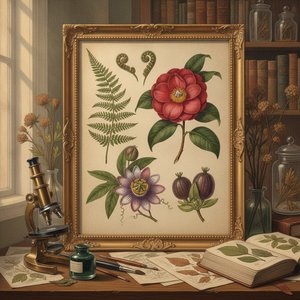
The Timeless Elegance of Victorian Botanical Painting: A Journey Through Nature's Intricate Detail and Scientific Artistry
Discover the exquisite world of Victorian botanical painting, where scientific precision meets profound aesthetic grace. Explore a journey through nature's intricate details, from legendary illustrators to the untamed beauty of Marianne North’s vibrant floral masterpieces.
Разгледайте произведения на изкуството, организирани по теми, стилове и характеристики.