

 Преглед в реален мащаб
 Изпрати
 Сподели
 Детайли
 Ръководство

 Изтегляне
 Подобни артикули
 Рентгенова снимка
 Слайдшоу
 Въпроси и отговори
 Статистика
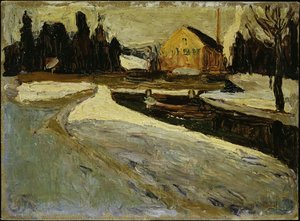
Delaware Canal


A serene winter scene of the Delaware Canal captured by Pennsylvania Impressionist Frederick Roland Wagner features snow-covered landscapes and tranquil boats, inviting you to bring this peaceful moment into your home.
 Прочети повече
Discover Frederick R. Wagner (1860-1940), a pioneering Pennsylvania Impressionist painter. Explore his captivating scenes of Philadelphia – harbors, bridges & everyday life – and learn about his legacy at PAFA & beyond.
Получете файл, готов за печат, който предлага много по-високо качество от уеб прегледа. Всяко дигитално изображение, което предлагаме, е извлечено от висококачествен оригинал в нашата база данни — обикновено с ширина между 5 000 и 15 000 пиксела — така че със сигурност да можете да принтирате в голям формат, да кадрирате тесно или да възпроизведете фините детайли.
Нито един файл не напуска нашето студио без внимание. Дигитален експерт проверява цветовете спрямо оригиналната картина и ги коригира при необходимост, след което подобрява яснотата и детайлите с професионални инструменти за ретуш — винаги оставайки верен на мазките и стила на художника. Резултатът е изображение, което изглежда като самата картина, а не като сканиран образ с филтър.
Одобрявате преди финализиране: нашият експерт ще изпрати изображението по имейл в рамките на 72 часа за ваш преглед. Не сте доволни? Можете да поискате подобрения или корекции, или пълно възстановяване на сумата, ако качеството не отговаря на очакванията ви.
Това е качеството, на което разчитат издателства, дизайн студиа, галерии и печатници.
Дигитално изображение
Изтеглете файл с висока резолюция за лично съхранение, принтиране и творчески проекти. ( Превключване към принт Купете ръчно рисувана картина)
Включено във всяка поръчка за дигитални изображения
Гарантирана експертна дигитална доставка
Избирайки TopImpressionists.com, вие не получавате просто изображение – вие придобивате професионално обработена дигитална творба, създадена с прецизност и подкрепена от гаранция за удовлетворение. Ето какво автоматично е включено във вашата поръчка:

Бърза доставка по имейл
Вашето дигитално изображение с висока резолюция ще бъде изпратено по имейл в рамките на 72 часа от поръчката – готово за незабавно използване.

Дигитален файл с подобрено качество чрез ИИ
Вашата картина е професионално оптимизирана чрез усъвършенствани инструменти с изкуствен интелект и ръчна редакция, което гарантира максимална детайлност, яснота и точност на цветовете.

Безплатна доживотна повторна доставка
Изгубили сте или сте изтрили файла си по погрешка? Не се притеснявайте – ще го изпратим отново на Вас по всяко време, безплатно.

Без митнически такси – завинаги
Насладете се на вашето произведение незабавно, без мита, такси или разходи за доставка – дигиталните изтегляния винаги са освободени от данъци.

Гаранция за цветово съответствие
Гарантираме, че вашето дигитално изображение отразява оригиналните цветове възможно най-точно чрез използването на професионални инструменти и системи за управление на цветовете.

100-дневна гаранция за удовлетвореност
Ако не сте доволни от вашето дигитално изображение, ще го преработим или ще възстановим 100% от сумата в рамките на 100 дни – без излишни въпроси.

100% Гаранция за връщане на сумата
Не сте доволни? Получете пълен възврат на сумата в рамките на 100 дни от получаването на вашия цифров файл – без излишни въпроси.

Отстъпки за големи поръчки
Купете 3 изображения, спестете 10% - Купете 5, спестете 15% - Купете 10+, спестете 20%. Идеално за творчески проекти, галерии и агенства.
Wagner began his studies at the Pennsylvania Academy of the Fine Arts under Thomas Eakins and Thomas Anshutz in the early 1880s. Like many of his New Hope colleagues, the artist preferred painting en plein air, especially winter scenes and specialized in railroad and canal views such as this work. In 1913, Wagner exhibited two works in the landmark Armory Show in New York that introduced Americans to trends in European modernism.
Въпроси и отговори
В кой музей се намира оригиналът на "Delaware Canal"?
Оригиналът на „Delaware Canal“ на Frederick Roland Wagner се съхранява в Reading Public Museum, Рейдинг, United States of America. Репродукцията позволява произведението да бъде изложено у дома.
Какво приложение и какво пространство се препоръчват за „Delaware Canal“ на Frederick Roland Wagner?
„Delaware Canal“ е предложена за Seasonal, а препоръчителното пространство е Hotel Room.
Какъв вид произведение е „Delaware Canal“?
„Delaware Canal“ на Frederick Roland Wagner е класифициран като WallArt. Тази категория описва вида на произведението, което представлява оригинала.
Подобни произведения




Биография на художника
Frederick Roland Wagner: Capturing the Soul of Philadelphia
Born in Port Kennedy, Pennsylvania, in 1860, Frederick Roland Wagner emerged as a pivotal figure in early 20th-century American art, specifically within the burgeoning Pennsylvania Impressionist movement. His life and career were inextricably linked to the vibrant, evolving cityscape of Philadelphia, a subject he relentlessly pursued with a keen eye for detail and an ability to imbue everyday scenes with profound emotional resonance. Wagner’s work wasn't merely documentation; it was a deeply felt exploration of urban life, capturing both its grandeur and its inherent melancholy.
Wagner’s artistic journey began under the tutelage of Thomas Eakins at the Pennsylvania Academy of the Fine Arts, an institution that profoundly shaped his approach to painting. This early immersion in academic training provided him with a solid technical foundation, but it was Wagner's subsequent engagement with the burgeoning Impressionist circle – including Robert Henri and William Glackens – that truly ignited his artistic spirit. These figures encouraged a shift away from rigid realism towards capturing fleeting moments of light and color, emphasizing subjective experience over objective representation. He embraced this new approach, developing a distinctive style characterized by loose brushwork, vibrant palettes, and an intimate portrayal of Philadelphia’s industrial heartland.
Early life and education saw Wagner demonstrating anatomy at the Pennsylvania Academy, showcasing his meticulous observation skills – a trait that undoubtedly informed his ability to render figures and architectural details with remarkable accuracy. He spent time studying in Europe before returning to America, where he honed his craft through independent study and experimentation. His work quickly gained recognition within the Pennsylvania art community, earning him inclusion in prestigious exhibitions such as those of the Pennsylvania Academy and the Corcoran Gallery of Art. These venues provided a crucial platform for showcasing his evolving style and establishing his reputation.
The Urban Landscape: A Philadelphia Portrait
Wagner’s artistic focus centered almost exclusively on scenes within Philadelphia – its canals, bridges, train stations, harbors, and bustling streets. He wasn't interested in grand historical narratives or idealized landscapes; instead, he sought to capture the essence of urban life as it unfolded before him. His paintings of the Delaware Canal, exemplified by “Delaware Canal and Canal at Lumberville,” are particularly noteworthy for their evocative atmosphere and subtle shifts in light and shadow. These works aren’t simply depictions of physical spaces; they're meditations on time, industry, and the human experience within a rapidly changing environment.
His series depicting scenes like “Broad Street Station, Spring” offer a glimpse into the daily rhythms of Philadelphia – the arrival of trains, the flow of pedestrians, the interplay of light and color. Wagner’s compositions often feature figures rendered with remarkable sensitivity, suggesting a quiet awareness of their presence within the larger urban landscape. He skillfully used atmospheric perspective to create a sense of depth and distance, drawing the viewer into the heart of his scenes.
Technique and Style
Wagner's technique was characterized by a loose, expressive brushstroke—a hallmark of Impressionism. He favored working outdoors ("en plein air") whenever possible, allowing him to directly observe and capture the nuances of natural light. His palette was generally bright and vibrant, utilizing complementary colors to create visual excitement and depth. He often employed a technique of applying paint in thin layers, building up color gradually to achieve a luminous effect.
Despite his embrace of Impressionist principles, Wagner’s work retained a strong sense of realism. He meticulously rendered architectural details, figures, and textures, demonstrating a remarkable attention to detail. However, he never sacrificed spontaneity or emotional expression in the pursuit of accuracy. His paintings are imbued with a palpable sense of immediacy—as if he were capturing a fleeting moment in time.
Recognition and Legacy
Wagner’s contributions to American art were recognized throughout his career. He received the Pennsylvania Academy's fellowship prize in 1914, a testament to his artistic merit and dedication. He also earned an honorable mention at the International Exhibition of the Carnegie Institute in Pittsburgh in 1922, further solidifying his place within the broader American art scene. His works are now held in prestigious institutions such as the Philadelphia Museum of Art, the Reading Museum, the Woodmere Art Museum, and the James A. Michener Art Museum, ensuring that his legacy will continue to inspire future generations of artists.
Frederick Roland Wagner’s paintings offer a unique window into the soul of Philadelphia at the turn of the 20th century. His ability to capture the beauty and complexity of urban life—its grandeur, its melancholy, and its inherent humanity—solidifies his position as one of the most important figures in Pennsylvania Impressionism. His work remains a powerful reminder of the enduring appeal of capturing everyday moments with sensitivity and artistic vision.

Frederick Roland Wagner
1860 - 1940 , United States of America
Бърза справка
- Full Name: Frederick Roland Wagner
- Nationality: American
- Date Of Birth: 1860
- Date Of Death: 1940
- Place Of Birth: Port Kennedy, United States of America
- Notable Artworks:
- Delaware Canal
- Canal at Lumberville
- Artistic Movement Or Style: Pennsylvania Impressionist
- Artists Who Influenced This Artist: ['Thomas Eakins']