


 Преглед в реален мащаб
 Изпрати
 Сподели
 Детайли
 Ръководство

 Изтегляне
 Подобни артикули
 Рентгенова снимка
 Слайдшоу
 Q&A
Q&A Статистика
Study of Four Heads
 Oil
Oil- WallArt
- Early Netherlandish Painting
 1500
1500 72.0 x 63.0 cm
 Национална галерия на Канада
Experience Gerard David's 'Study of Four Heads,' a captivating Renaissance portrait showcasing human emotion and masterful technique. Own a stunning reproduction of this iconic masterpiece today!
 Прочети повече
"meta_description": "Гербърд Давид е френски художник от Ренесанса, известен с ярките си цветове и детайлни религиозни картини. Той е важен представител на фламандската школа и повлиява развитието на пейзажа в изкуството."
Жикле / Художествен принт
Giclée печат или принт върху платно с музейно качество, бързо производство и гъвкави опции за завършен вид. ( Купете ръчно рисувана картина Превключване към дигитално изображение)




P118B €10

P118H €10

P118W €10

P438Z €10

P508JH €12

P508YH €12

P805H €10

P805Z €10

P919BZ €10

P919G €10

P919XJ €10

P959ZH €10

P968JZ €12

W106C €8

W218G €10

W218JH €8

W218Y €10

W307PJ €10

W316G €10

W316PJ €8

W316Y €10

W398PJ €8

W4111J €10

W500HY €15

W500JH €15

W692G €12

W849H €8

W940BG €15

W953PJ €8




Стандартен
персонализиран
CM
INCH
Изберете от нашите предварително зададени размери, които съответстват на оригиналните пропорции на произведението.
Loading sizes...

ширина
височина
Въведете необходимата ширина и височина, за да паснат на вашата рамка или стена. Принтовете могат само да се изрязват, но никога не могат да бъдат по-големи от оригиналната картина, така че при размер с различен формат част от изображението ще бъде загубена. Преди да започнем печат, ще ви изпратим дигитален мок업 за одобрение. Изображението, показано на тази страница, не показва реалното изрязване — само мок업ът го показва.
Доставка по целия свят () в рамките на 2 седмици вместо стандартните 4/5 седмици. (29 Октомври)

Безплатна експресна доставка по целия свят

Висококачествено ленено платно

Пълно застраховане на доставката

Гаранция за възстановяване на митнически такси

Гаранция за пълно съответствие на цветовете

Политика за връщане в рамките на 100 дни (само при дефекти)

100% Гаранция за връщане на сумата

Оферта за отстъпка при поръчка на повече бройки
 Опцията със стъкло е налична само за размери под 110 см

Study of Four Heads
Жикле / Художествен принт
Размер на репродукцията
-


Обща цена
€ 61
The Enigmatic Faces: Unveiling Gerard David’s Study of Four Heads
Gerard David's Study of Four Heads, a masterpiece crafted in 1500, isn’t merely a portrait; it’s an intimate exploration of the human condition. Housed within the National Gallery of Canada, this oil painting transcends its simple subject matter to become a profound meditation on emotion, perspective, and the burgeoning humanist ideals of the Northern Renaissance. David, a master of his craft and shrouded in intriguing historical mystery – a figure whose life remains largely undocumented yet whose art speaks volumes – employed a technique that’s both meticulously detailed and remarkably expressive. The painting's power lies not just in its technical brilliance but in its ability to evoke a spectrum of feelings through the subtle shifts in each head’s countenance.
A Symphony of Line and Light: The Artist’s Signature Style
David's distinctive style is immediately recognizable. He was a master of intricate line work, meticulously rendering the textures of skin, hair, and clothing with an almost obsessive attention to detail. His use of shading creates a remarkable sense of depth and volume, lending each head a tangible presence within the frame. The painting’s palette is restrained – primarily dark browns, ochres, and creams – which allows David's masterful manipulation of light and shadow to truly shine. Notice how he uses highlights to accentuate the contours of the faces, drawing the viewer’s eye to the most expressive features. This careful control over line and light is a hallmark of the Early Netherlandish tradition, and David was undoubtedly one of its foremost practitioners.
Deconstructing Emotion: A Study in Contrasts
The genius of Study of Four Heads lies in its ability to convey a range of emotions through subtle variations in expression. The first head, presented in profile, exudes an intensity born from a focused gaze and a strong jawline – a sense of unwavering determination. In stark contrast, the second head, also in profile but facing left, possesses a more contemplative demeanor, with softer features and a gentle expression that suggests serenity. The third head, depicted in a three-quarter view, embodies a heightened state of emotion, marked by furrowed brows and a direct, almost challenging gaze. Finally, the fourth head, shown in a three-quarter view facing right, offers a moment of quiet repose, with closed eyes and a relaxed facial structure – a palpable sense of tranquility. David doesn’t simply depict faces; he captures fleeting moments of human experience, inviting us to contemplate the complexities of emotion.
Historical Context: Bridging Tradition and Renaissance Humanism
Created in 1500, this painting reflects the dynamic artistic landscape of the Northern Renaissance. Gerard David was a pivotal figure who skillfully blended late medieval traditions with the emerging principles of Renaissance humanism. The meticulous detail and realistic portrayal of the heads are reminiscent of earlier Flemish portraiture, while the emphasis on capturing individual expression aligns with the humanist focus on the dignity and complexity of the human being. The painting’s origins – a study for a larger work, likely a panel or altarpiece – further illuminate its significance within the context of Renaissance artistic practice, where preparatory drawings were considered essential tools for artists.
TopImpressionists.com offers a stunning handmade oil painting reproduction of Study of Four Heads, allowing art lovers to own a piece of this remarkable historical and artistic achievement. For more information on Gerard David and his works, please visit our online gallery or explore the resources at Wikipedia.
Въпроси и отговори
Колко хармонично се съчетават цветовете в "Study of Four Heads"?
Цветовият хармонизъм на „Study of Four Heads“ е описан като Unified Palette.
Как се преплитат стилът и епохата в „Study of Four Heads“ на Герард Давид?
„Study of Four Heads“ на Герард Давид се отнася към течението Early Netherlandish Painting, създадено в епохата Ренесанс на своя автор.
Мога ли да видя „Study of Four Heads“ на Герард Давид върху моята собствена стена преди покупка?
Можете да прегледате „Study of Four Heads“ на Герард Давид върху вашата собствена стена чрез страницата за Преглед с AR на произведението, използвайки добавена реалност на съвместимо устройство.
Биография на художника
A Master of Flemish Light: The Enigmatic World of Gerard David
Gerard David, a name that resonates with the brilliance and quiet intensity of early Netherlandish painting, remains an artist shrouded in intriguing mystery. Born around 1460 in Oudewater, Netherlands – a small town now nestled within the province of Utrecht – his life story is pieced together from fragmented archival records and, more importantly, through the profound eloquence of his art. Unlike many of his contemporaries whose lives are meticulously documented, David’s personal narrative remains sparse, allowing his paintings to speak volumes where biographical details fall silent. What emerges is a portrait of an artist deeply engaged with both the traditions of his past and the burgeoning innovations of his time – a master who synthesized influences into a uniquely personal style. His success was considerable, likely managing workshops in both Antwerp and Bruges – vibrant centers of artistic exchange during the Renaissance – and he enjoyed a respected position within the art community until his death in 1523.Formative Influences and Artistic Development
David’s artistic journey began under the careful tutelage of several key figures, shaping the very foundation of his distinctive style. Early works reveal a clear debt to painters who dominated the visual landscape of Northern Europe during his formative years: Jacob Janszoon, Dieric Bouts, and Geertgen tot Sint Jans – masters known for their meticulous attention to detail and their ability to imbue religious narratives with profound emotional resonance. It’s believed he spent a significant period in Haarlem, absorbing these lessons and developing his technical skills before relocating to Bruges in 1484, joining the Corporation of Imagemakers and Saddlers – a pivotal step that solidified his professional standing. Here, David encountered the masterpieces of Jan van Eyck, Rogier van der Weyden, and Hans Memling, artists whose techniques he studied with unwavering dedication while simultaneously forging his own path. Crucially, David didn’t merely imitate; he synthesized these diverse influences into something entirely his own – a style characterized by luminous color, serene compositions, and an increasingly sophisticated understanding of landscape. His early paintings, such as *Christ Nailed to the Cross*, demonstrate this evolution, moving away from the stylized figures of late medieval art towards more sculptural forms grounded in their environment. The influence of Bouts’ spatial construction is particularly evident, creating a sense of depth and drama that was groundbreaking for its time.Innovation in Landscape and Religious Narrative
Gerard David's artistic signature lies not just in his technical skill but in his innovative approach to both landscape and religious subject matter. He wasn’t simply depicting backgrounds; he was crafting immersive environments that profoundly enhanced the emotional impact of his scenes. His landscapes are not merely decorative elements, but integral components of the narrative, often imbued with symbolic meaning – a reflection of the prevailing humanist ideals of the era. Consider *View in a Forest*, one of the outer wings of a triptych housed at the Groeninge Museum in Bruges; it’s not simply a picturesque vista but a world unto itself, rendered with meticulous detail and an atmospheric perspective that suggests both distance and depth. This pioneering use of landscape foreshadowed the development of landscape painting as a distinct genre, influencing generations of artists to come. Within his religious works, David demonstrated a remarkable ability to convey both profound spirituality and relatable human emotion. Paintings like *The Marriage of St. Catherine*, housed in the same museum, exemplify this skill. The scene is rendered with exquisite detail – the rich fabrics, the intricate architecture, the subtle expressions on the figures’ faces – yet it's precisely these details that draw the viewer into the narrative, inviting contemplation and empathy. He possessed a rare gift for imbuing his sacred subjects with a sense of quiet dignity and profound humanity, moving beyond mere iconography to create works that resonate deeply with the viewer. The *Triptych of the Madonna Enthroned and Saints*, now residing in Genoa, is another testament to this mastery – a harmonious composition filled with vibrant color, delicate detail, and a masterful balance between realism and symbolism. Notably, David included a self-portrait within the painting itself – a rare and intimate gesture from an artist of his time, suggesting a deep personal connection to his work.A Unique Contribution: The Self-Portrait and Artistic Identity
What truly distinguishes Gerard David is his willingness to incorporate himself into his own paintings, most famously in *The Virgin Among the Virgins*. This self-portrait, subtly integrated within the composition as an angel, represents a bold departure from traditional artistic conventions. It’s a testament to David's confidence and his desire to establish a unique artistic identity – one that blended technical skill with personal expression. The inclusion of the self-portrait not only elevates the painting’s emotional depth but also serves as a powerful statement about the artist’s role within the religious narrative, suggesting a connection between the divine and the human. This practice was relatively uncommon in his time, setting him apart from many of his contemporaries and contributing to the enduring fascination with his work.Legacy and Enduring Influence
Though his fame diminished somewhat after his death in 1523, Gerard David’s influence on subsequent generations of artists is undeniable. His innovative use of color, his masterful handling of light and shadow, and his pioneering approach to landscape all left an indelible mark on the development of Flemish painting. He successfully bridged the gap between the late medieval tradition and the emerging Renaissance style, creating a synthesis that was both deeply rooted in the past and strikingly modern. David paved the way for artists who would further explore the expressive potential of natural settings – figures like Jacob Patinir and Jacob van Ruisdael – and his work continues to inspire awe and admiration centuries later. His legacy is not simply one of technical skill, but of artistic vision—a testament to a master who captured the light and spirit of his time with unparalleled grace and insight.Exploring Further
* TopImpressionists.com: Discover an extensive collection of Gerard David’s paintings, including *The Adoration of the Magi*. * View in a Forest: Explore this stunning Northern Renaissance landscape painting. * The Early Netherlandish Art Movement: Delve deeper into the artistic context of David’s work.
Герард Давид
1450 - 1523 , Нидерландия
Бърза информация
- Artistic Movement Or Style: Ранно нидерландско изкуство
- Artists Or Movements Influenced By This Artist:
- Ян ван Ейк
- Рогоер ван дер Вейдън
- Ханс Мемлинг
- Artists Who Influenced This Artist:
- Яков Янсоун
- Дирик Боуц
- Геертген то Sint Янс
- Date Of Birth: c. 1460
- Date Of Death: 1523
- Full Name: Gerard David
- Nationality: Нидерландски художник
- Notable Artworks:
- Бракът на св. Екатерина
- Тriptych на Богородица на трона
- Богородица сред Девиците
- Place Of Birth: Oudewater, Нидерландия
Свързани статии
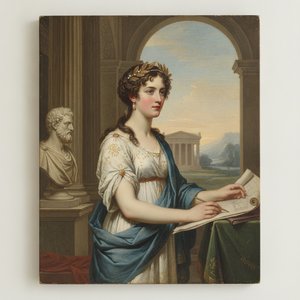
The Revival of Antiquity: Exploring Ideals of Beauty & Power in Neoclassical Portraiture
Explore the captivating world of Neoclassical portraiture! Discover the power & ideals behind masterpieces by David, Girodet & more. Expert analysis, custom reproductions & art appraisal at TopImpressionists.

The Enduring Gaze: Portraiture's Historical & Psychological Evolution
Explore the rich history of portraiture with expert analysis from TopImpressionists. Discover iconic Renaissance masterpieces, symbolism & techniques that shaped identity. Find museum-quality art for your collection.

The Enduring Legacy of Formal Portraiture: Power, Identity & Artistic Exploration
Explore the rich history of formal portraiture & its enduring power to capture identity and shape perception. Discover investment-worthy artworks, expert appraisals, and custom reproduction services at TopImpressionists.

Gerard David: Bridging Late Medieval Tradition with Early Renaissance Humanism
Explore the captivating world of Gerard David, a pivotal figure bridging late medieval artistry with the Early Renaissance. Discover his innovative techniques, religious masterpieces, and enduring legacy – a must-read for discerning art collectors.

Леонардо да Винчи: Топ 25 шедьовъра за вашия дом – Изкуство и Декор от TopImpressionists
Разгледайте топ 25 шедьовъра на Леонардо да Винчи! От Мона Лиза до Тайната вечеря – истории, техники и вдъхновение за вашия дом. Купете репродукции с музейно качество от TopImpressionists.com.
Разгледайте произведения на изкуството, организирани по теми, стилове и характеристики.


