

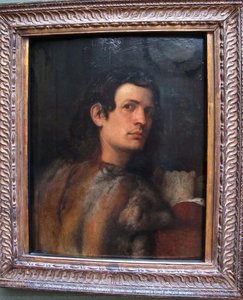
Shown: · With its frame:
 Преглед в реален мащаб
 Изпрати
 Сподели
 Детайли
 Ръководство

 Изтегляне
 Подобни артикули
 Рентгенова снимка
 Слайдшоу
 Q&A
Q&A Статистика
 Oil On Canvas
- WallArt
- High Renaissance
 1510
1510 52.0 x 43.0 cm
 Herzog Anton Ulrich Museum
€ 237
Ръчно изработена маслена репродукция
Ръчно рисувана маслена картина върху платно във вашия размер и рамка, изработена по поръчка от нашите художници. ( Превключване към принт Превключване към дигитално изображение)
Size
·Стандартен
персонализиран
CM
INCH
Изберете от нашите предварително зададени размери, които съответстват на оригиналните пропорции на произведението.
Loading sizes...

ширина
височина
Въведете необходимата ширина и височина, за да паснат на вашата рамка или стена. Тъй като това е ръчна работа, при избор на размер с различен формат художникът може да нарисува малко повече около картината или да отреже малко от периферията — вие избирате. Преди да започне рисуването, ще ви изпратим дигитален мок업 за одобрение. Картината, показана на тази страница, не е реалният резултат — само мок업ът го показва.
 Прочетете повече
Finish
·
White €1

Blurside €1

Extended €1

P118B €10

P118H €10

P118W €10

P438Z €10

P508JH €12

P508YH €12

P805H €10

P805Z €10

P919BZ €10

P919G €10

P919XJ €10

P959ZH €10

P968JZ €12

W106C €8

W218G €10

W218JH €8

W218Y €10

W307PJ €10

W316G €10

W316PJ €8

W316Y €10

W398PJ €8

W4111J €10

W500HY €15

W500JH €15

W692G €12

W849H €8

W940BG €15

W953PJ €8

H24-GOLD €30

H24-SILVER €30

H36-GOLD €45

H36-SILVER €45
Shipped in a protective tube, ready for your own framer.
Above 105 cm the frame is shipped as a kit for a professional framer — read the details.
Extras
optionalWhat do the extras include?
Examples of what can be changed: Replace face with customer photo; Add pet (e.g., replace cat with dog); Include hidden message in background; Change background landscape or elements.
After order, TopImpressionists.com team will email client for instructions and provide a mockup preview
After order, TopImpressionists.com team will email client for instructions and provide a mockup preview
Доставка по целия свят () в рамките на 3-4 седмици вместо стандартните 5 седмици. (30 Октомври). Без компромис с качеството.
Защитен лак
Етикет с име
Детайли за гравираната бронзова плака
This elegant plaque features the artist's name and the title of the artwork, finely engraved for a timeless presentation.
It is made from bronze with a refined, elegant finish. The text is precisely laser-engraved for a sharp and permanent result. Measuring 9x2 cm, the plaque is compact yet easy to read. It's built to be durable and scratch-resistant, offering a professional, museum-quality look. Mounting is simple thanks to the included adhesive backing.
Детайли за прозрачната акрилна плака
The plaque includes essential engraved details such as the artist's name, the title of the artwork, the date it was created, the type of media used-like oil on canvas or watercolor-a brief description of the piece, and a QR code that links to the complete artwork information.
It is crafted from clear acrylic, offering a sleek, modern appearance. The text is UV-engraved in black to ensure strong visual contrast. With a size of 10x15 cm, it ensures optimal readability. It comes equipped with two metal hooks for secure wall mounting. The plaque is designed to be weather-resistant, making it suitable for various environments, and it includes interactive features that work seamlessly with smartphone scanning.
Детайли за черната акрилна плака
This elegant plaque includes engraved information such as the artist's name, the title of the artwork, the date it was created, the type of media used (like oil on canvas or watercolor), a short description of the artwork, and a QR code for quick access to more information.
The plaque itself is made from refined black acrylic with a premium finish. The text is laser-engraved in white for high contrast and readability. Its size is 10x15 cm, designed to be easy to read. It comes with two metal hooks for professional mounting. The design is sleek and fits any interior style. It is also weather-resistant and durable, with built-in digital integration for mobile compatibility.
Опцията със стъкло е налична само за размери под 110 см
 Опцията със стъкло е налична само за размери под 110 см
- Безплатна експресна доставка по целия свят
- Висококачествено ленено платно
- Пълно застраховане на доставката
- Гаранция за възстановяване на митнически такси
- Гаранция за пълно съответствие на цветовете
- Политика за връщане в рамките на 100 дни (само при дефекти)
- 100% Гаранция за връщане на сумата
- Оферта за отстъпка при поръчка на повече бройки


Описание на колекционерския предмет
Биография на художника
Открийте Джорьоне (1477/8-1510), ключов художник на Ренесанса във Венеция. Изследвайте неговите поетични творби, майсторското използване на цвят и атмосфера – като „Ла Темпест“ и „Пасторален концерт“.
About the painting
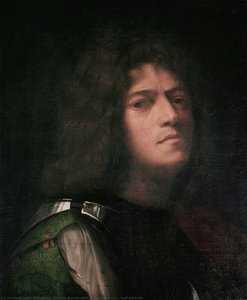
Self-Portrait by Giorgione: An Enigma of Venetian Renaissance
Giorgio Barbarelli da Castelfranco, universally known as Giorgione, remains one of the most elusive figures in the artistic panorama of the High Renaissance. Born around 1477 or 1478 in Castel Franco Veneto – a precise date stubbornly resisted by scholarly debate – his tragically curtailed life, concluding circa 1510 at the age of thirty-two or thirty-three, belies an artistic legacy that continues to fascinate and inspire centuries later. Unlike many contemporaries whose biographies unfold with relative clarity, Giorgione’s story is shrouded in obscurity, pieced together from fragmentary archival records and romanticized accounts primarily attributed to Giorgio Vasari.
His formative years were spent immersed within the vibrant cultural milieu of Venice, a city renowned for its patronage of artistic innovation alongside an ardent appreciation for sensual beauty. Evidence suggests he apprenticed under Giovanni Bellini, a titan of Venetian painting, absorbing the established stylistic conventions before forging his own distinctive voice—a voice characterized by profound introspection and a masterful manipulation of color and light.
Style and Technique: Venetian Luminosity
Giorgione’s artistic approach embodies the quintessential tenets of Venetian Renaissance style. He skillfully blended influences from Leonardo da Vinci's sfumato technique – achieved through subtle gradations of tone to create hazy, atmospheric effects – with Bellini’s meticulous realism. This fusion resulted in a visual language that prioritized mood and emotion over strict anatomical accuracy. The “Self-Portrait,” housed at the Herzog Anton Ulrich Museum in Braunschweig, exemplifies this ethos perfectly.
Executed in oil on canvas, the painting demonstrates remarkable textural detail achieved through deliberate brushstrokes—a hallmark of Giorgione’s oeuvre. Careful observation reveals a masterful rendering of light and shadow, sculpting the face and hair with an expressive dynamism that transcends mere representation. The dark background serves as a counterpoint to the luminous flesh tones, drawing attention to the central figure and amplifying its psychological depth.
Historical Context: Venice at Its Zenith
The painting’s creation coincided with Venice's apex of artistic and economic power during the Renaissance. The Serenissima Republic was a crucible for humanist thought and artistic experimentation, attracting artists from across Europe eager to engage with its intellectual ferment. Giorgione’s Venetian surroundings undoubtedly informed his aesthetic sensibilities, fostering a preoccupation with idealized beauty and conveying a sense of contemplative melancholy—themes prevalent in Renaissance portraiture.
Symbolism: The Face of Uncertainty
The sitter's gaze directs off to the side, avoiding direct confrontation with the viewer – a gesture that speaks volumes about Giorgione’s artistic intention. This subtle compositional choice underscores the inherent ambiguity of human experience and invites contemplation on themes of identity and self-awareness. Furthermore, the garment—a rich green adorned with a scarlet collar—suggests an awareness of aristocratic status and perhaps hints at references to classical mythology, mirroring prevalent artistic conventions of the period.
Emotional Impact: A Window into Renaissance Soul
“Self-Portrait” transcends mere visual depiction; it is a profound meditation on human psychology. Giorgione’s masterful use of color and brushwork evokes a palpable sense of melancholy—a characteristic emotion explored extensively by artists during the Renaissance as they wrestled with questions of mortality and spiritual contemplation. The painting remains an enduring testament to the humanist spirit of its time, inviting viewers to engage in a dialogue about the complexities of human consciousness.
Въпроси и отговори
Какво чувство предава „Self-portrait“ на Джорджоне?
Записаното настроение на „Self-portrait“ на Джорджоне е Elegant, а неговият емоционален тон е Melancholic.
Какъв е форматът на "Self-portrait"?
„Self-portrait“ на Джорджоне е в Portrait формат. Форматът описва пропорциите на композицията.
Какъв е препоръчителният размер за печат на "Self-portrait"?
За произведението „Self-portrait“ се препоръчва печат с размер Large. Налични са и други размери със същите пропорции.
Quick facts and art quiz
About Джорджоне

Джорджоне
1477 - 1510, Италия
Биография на художника
Giorgione (1477/8-1510): A Venetian Enigma
Giorgio Barbarelli da Castelfranco, known to the world as Giorgione, remains one of the most elusive and captivating figures in Renaissance art. Born in the small town of Castel Franco Veneto near Venice around 1477 or 1478 – the exact year is debated – his tragically short life, ending around 1510 at the age of thirty-two or thirty-three, belies an artistic impact that continues to resonate centuries later. Unlike many of his contemporaries whose lives are well documented, Giorgione’s story is shrouded in mystery, pieced together from scant historical records and the often romanticized accounts of Giorgio Vasari. What we do know suggests a man deeply immersed in the vibrant culture of Venice, a city that fostered both artistic innovation and a sensual appreciation for beauty. He likely apprenticed under Giovanni Bellini, a leading Venetian painter, absorbing the established traditions before forging his own unique path. Early commissions included portraits of prominent figures like Doge Agostino Barbarigo, demonstrating an immediate talent for capturing likeness and status. However, it was in his departure from conventional subject matter and his revolutionary approach to painting that Giorgione truly distinguished himself.Early Life and Artistic Training
Giorgio Barbarelli’s origins are relatively obscure. He was born into a family of modest means in Castel Franco Veneto, a region known for its textile industry and burgeoning artistic patronage. While precise details about his childhood remain elusive, biographical sketches indicate he possessed an innate fascination with art from a young age. His formal training began under Giovanni Bellini, arguably the most influential Venetian painter of his time. Bellini’s workshop served as a crucible for artistic experimentation, fostering a tradition of blending Byzantine influences with emerging humanist ideals. Giorgione diligently studied Bellini's techniques – particularly his masterful use of color and glazing – absorbing the stylistic conventions that would shape his own distinctive style. This apprenticeship instilled in him not only technical proficiency but also a profound understanding of Venetian artistic culture.A Revolutionary Style: Color, Atmosphere, and *Sfumatò*
Giorgione’s artistic style represented a radical departure from the prevailing Florentine aesthetic, which prioritized linear perspective and meticulous draughtsmanship. He championed color, atmosphere, and an evocative moodiness that became hallmarks of the Venetian school – a movement characterized by its sensual beauty and emotional depth. Unlike his Florentine counterparts who sought to represent the world as it appeared objectively, Giorgione aimed to capture its essence—its fleeting emotions and spiritual resonance. His technique involved softening outlines, employing subtle gradations of tone – *sfumato* – to create atmospheric effects that blurred boundaries between objects and imbued scenes with a hazy luminescence. This approach wasn’t merely a stylistic preference; it reflected a fundamentally different artistic sensibility rooted in Byzantine art traditions. Giorgione skillfully utilized color symbolism—particularly muted hues—to convey complex psychological states and heighten the emotional impact of his paintings. The result was an unparalleled sense of depth and luminosity, transforming landscapes into immersive experiences for the viewer.Notable Works: Visions of Beauty and Mystery
Giorgione’s oeuvre is remarkably small compared to other Renaissance masters, consisting primarily of a handful of paintings that nevertheless command immense artistic significance. The Tempest (c. 1506-1508), arguably his masterpiece, depicts a soldier and a nursing mother amidst a stormy landscape—a scene fraught with ambiguity and symbolic richness. The painting’s hazy atmosphere and muted colors evoke a profound sense of melancholy and contemplation, prompting viewers to ponder the mysteries of human existence. Similarly, Pastoral Concert (Fête champêtre) presents an idyllic gathering of musicians in a pastoral setting—a celebration not of narrative detail but of harmonious composition and lyrical beauty. Giorgione’s masterful use of color and light creates an ethereal illusion, transporting the viewer to another realm of sensory experience. Other notable works include Sleeping Venus (c. 1509-1510), a sensual depiction of Aphrodite resting on a scallop shell—a testament to Giorgione's ability to convey beauty and emotion with understated elegance; *Judith* (c. 1504), an early example of his evolving style, demonstrating his growing mastery of chiaroscuro—the dramatic interplay of light and shadow—and *Portrait of Lucrezia Borgia* – a psychologically astute portrayal capturing the enigmatic gaze and aristocratic demeanor of one of Venice’s most influential figures.Influence and Legacy
Giorgione's artistic innovations profoundly impacted Venetian painting and exerted considerable influence on subsequent generations of artists. His pioneering use of *sfumato*, combined with his masterful color palette and atmospheric perspective, established a new aesthetic standard that resonated throughout Europe. He served as a mentor to Titian, who would become one of the most celebrated painters of the High Renaissance—carrying forward Giorgione’s stylistic legacy and solidifying Venice's position as a center for artistic excellence. Giorgione’s enduring fascination stems not only from his technical brilliance but also from the profound emotional depth of his paintings—works that continue to inspire awe and contemplation centuries after their creation. He remains an emblem of artistic freedom, innovation, and the pursuit of beauty—a painter who dared to transcend convention and forge a path toward new expressive possibilities.Quick facts about Джорджоне
- Artistic Movement Or Style: Виенцианска школа
- Artists Or Movements Influenced By This Artist: ['Тициан']
- Artists Who Influenced This Artist:
- Джовани Белини
- Мантегна
- Date Of Birth: 1477/78 или 1473/74
- Date Of Death: 1510
- Full Name: Giorgio Barbarelli da Castelfranco
- Nationality: Италиански
- Notable Artworks:
- Ла Темпест
- Мадона от Кастелфранко
- Сънна Венера
- Place Of Birth: Кастелфранко Венеция, Италия
Разгледайте произведения на изкуството, организирани по теми, стилове и характеристики.




Джорджоне
Self-portrait
() ·
With its frame: · Hand-painted in oil on linen
Total