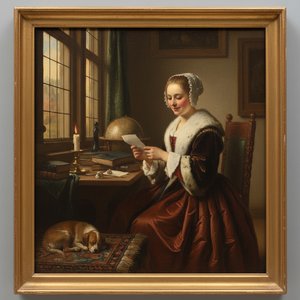
Биография на художника
Ignacio Pinazo Camarlench (1849 - 1916): A Valencian Pioneer of Impressionism
Ignacio Pinazo Camarlench, born in Valencia, Spain, in 1849, emerged from humble beginnings into a family grappling with poverty. From a young age, he shouldered responsibilities beyond his years, contributing to the household income through various trades – silversmithing, tile painting, and fan decoration – demonstrating resilience and adaptability that would characterize his entire artistic journey. The tragic loss of his mother due to cholera and subsequently his father’s passing instilled in him a profound understanding of human vulnerability and shaped his worldview. He found solace and support amongst his grandparents, embarking on a formative period that ultimately led to his enrollment at the San Carlos Academy of Fine Arts in Valencia in 1864, where he diligently pursued his artistic education while simultaneously earning a livelihood as a hatter.
Artistic Development and Influences
Pinazo’s artistic vocation blossomed around age 21, achieving initial recognition in Barcelona three years later – a testament to his talent and perseverance. His early canvases adhered to conventional historical themes, reflecting the stylistic conventions of his time. However, a transformative experience occurred during his pilgrimage to Rome in 1873; this journey ignited within him an ardent desire for innovation and propelled him toward a radically different artistic path. Inspired by the vibrant atmosphere and artistic fervor of the Italian capital, Pinazo embraced painting family subjects, nude figures, and scenes from everyday life – anticipating the groundbreaking style championed by Joaquín Sorolla y Bastida and Francisco Domingo. This stylistic shift signaled a decisive break from academic tradition and foreshadowed the burgeoning Impressionist movement.
A second extended stay in Rome between 1876 and 1881, generously funded by a royal grant, further honed Pinazo’s Impressionistic sensibilities. He meticulously studied the techniques of luminism and plein air painting, mastering the art of capturing fleeting moments of light and color with remarkable precision. His distinctive artistic style distinguished itself through its deliberate use of dark hues – blacks, browns, and earthy tones – juxtaposed against the dazzling palette emblematic of Impressionism. Rapid brushstrokes became his signature, conveying dynamism and immediacy while simultaneously imbuing his paintings with a palpable sense of atmosphere.
Major Achievements and Recognition
Pinazo’s artistic reputation swiftly ascended as he garnered commissions from prominent Valencian families, including the Marchioness of Benicarló – an honor that underscored his stature within the cultural landscape of his era. His unwavering dedication to craft culminated in silver medals awarded at prestigious art exhibitions in 1881 and 1885, followed by gold medals in 1887 and 1899 – accolades that solidified his position as one of Spain’s foremost artists. Notably, he received a royal medal for his artistic contributions, recognizing the significance of his oeuvre within the broader context of Spanish art history. In 1912, the city of Valencia commemorated Pinazo's legacy by erecting a street bearing his name – an enduring symbol of Valencian pride and artistic heritage.
Notable Works
Pinazo’s artistic output encompassed a diverse range of subjects, reflecting his profound engagement with both human emotion and the natural world. Among his most celebrated paintings are *Las hijas del Cid*, a poignant depiction of familial devotion; *Los últimos momentos del rey Don Jaime el Conquistador*, capturing a dramatic historical scene with masterful composition; *El guardavía*, portraying serene religious iconography; and *Barca en la playa*, an evocative seascape imbued with Impressionistic luminosity. These works stand as enduring monuments to Pinazo’s artistic vision, demonstrating his ability to synthesize traditional techniques with innovative stylistic approaches.
## Historical Significance and Legacy
Ignacio Pinazo Camarlench occupies a pivotal place in Valencian art history, bridging the gap between Romantic realism and the burgeoning Impressionist movement. His oeuvre provides invaluable insight into Spanish society during the late nineteenth century – illuminating social customs, artistic tastes, and intellectual currents of the time. The largest collection of his paintings resides at the Institut Valencià d'Art Modern (IVAM), though not all pieces are permanently displayed—a testament to the ongoing effort to preserve and disseminate Pinazo’s artistic legacy. Furthermore, his works grace the halls of the Museo de Belles Arts de València and the Museo del Prado, ensuring that his art continues to inspire audiences worldwide. Ignacio Pinazo Camarlench died in Godella, Spain, in 1916 at the age of 67, leaving behind a remarkable artistic legacy—a testament to his unwavering commitment to artistic excellence and innovation.



 Preview
 Switch to hand made Painting
 Изпрати
 Сподели
 Детайли

 Изтегляне
 Подобни
 Рентгенова снимка
 Слайдшоу
 Прочетете повече






































 Стъклото е налично само в размери под 110 см