


 Преглед в реален мащаб
 Сподели
 Сподели
 Подробности
 Ръководство

 Изтегляне
 Подобни артикули
 Рентгенова снимка
 Слайдшоу
 Статистика
Queens Gate at Aigues-Mortes


Experience Jean Frédéric Bazille's 'Queens Gate at Aigues-Mortes,' a stunning Impressionist landscape capturing timeless beauty & tranquility. Explore the details of this masterpiece!
 Разгърни целия текст
Жан Фредерик Базиел (1841-1870) е ключова фигура на импресионизма, известен с ярките си пейзажи и портрети. Разкрий творчеството му и приятелствата с Моне, Ренуар и Сислей!
Ръчно изработена маслена репродукция
Ръчно рисувана маслена картина върху платно във вашия размер и рамка, изработена по поръчка от нашите художници. ( Избор на принт Превключване към дигитално изображение)




P118B $10

P118H $10

P118W $10

P438Z $10

P508JH $12

P508YH $12

P805H $10

P805Z $10

P919BZ $10

P919G $10

P919XJ $10

P959ZH $10

P968JZ $12

W106C $8

W218G $10

W218JH $8

W218Y $10

W307PJ $10

W316G $10

W316PJ $8

W316Y $10

W398PJ $8

W4111J $10

W500HY $15

W500JH $15

W692G $12

W849H $8

W940BG $15

W953PJ $8




Стандартен размер
по поръчка
CM
INCH
Изберете от нашите предварително зададени размери, които съответстват на оригиналните пропорции на произведението.
Loading sizes...

ширина
височина
Можете да въведете свои собствени размери, за да паснат на конкретна рамка или пространство. Ако избраният от вас размер не съответства на пропорциите на оригиналното изображение, ние ще изрежем произведението или ще разширим картината с допълнителни ръчно рисувани елементи. Дигитален макет ще бъде изпратен за ваше одобрение преди започване на производството.
Моля, обърнете внимание, че предпрогледа на екрана не отразява действителното изрязване или разширяване. Само макетът ще покаже точно финалната композиция.
Въпреки че са налични персонализирани размери, препоръчваме да изберете размер от предварително дефинирания списък, за да запазите оригиналните пропорции.
Примери за възможности за персонализация: Заменете лицето с фотография на клиента; Добавете домашен любимец (например заменете котка с куче); Включете скрито послание на фона; Променете пейзажа или елементите на фона.
След получаване на поръчка, екипът на TopImpressionists.com ще изпрати имейл до клиента с инструкции и ще предостави примерен макет за преглед.
След получаване на поръчка, екипът на TopImpressionists.com ще изпрати имейл до клиента с инструкции и ще предостави примерен макет за преглед.
Доставка по целия свят () в рамките на 3-4 седмици вместо стандартните 5 седмици. (23 Септември). Без компромис с качеството.

Безплатна експресна доставка по целия свят

Висококачествено ленено платно

Пълно застраховане на доставката

Гаранция за възстановяване на митнически такси

Гаранция за пълно съответствие на цветовете

Политика за връщане в рамките на 100 дни (само при дефекти)

100% Гаранция за връщане на сумата

Отстъпка при поръчка на повече произведения
 Опцията със стъкло е налична само за размери под 110 см

Queens Gate at Aigues-Mortes
Техника на репродукция
Размер на репродукцията
-


Крайна цена
$ 269
A Moment Frozen in Light: Jean Frédéric Bazille’s “Queens Gate at Aigues-Mortes”
Jean Frédéric Bazille's "Queens Gate at Aigues-Mortes," painted in 1867, isn’t merely a depiction of a medieval fortification; it’s an exquisite distillation of Impressionist philosophy and a poignant glimpse into the artist’s own fleeting brilliance. This canvas, now residing within the Musée d'Orsay’s collection, transports us to the sun-drenched landscape of southern France, capturing not just the physical structure of Aigues-Mortes but also the ephemeral quality of light and atmosphere that defined Bazille’s artistic vision. The painting immediately draws the eye to the imposing gatehouse, a monumental presence rendered with a remarkable sense of solidity and historical weight – yet it's the subtle interplay of light and shadow, the hazy distance, and the suggestion of human activity in the foreground that truly captivate the viewer.
Impressionistic Techniques: A Dance of Color and Light
Bazille’s mastery lies in his ability to evoke a sense of immediacy and atmosphere through his distinctive Impressionistic technique. He abandons sharp outlines and meticulous detail, instead favoring loose, broken brushstrokes that dance across the canvas. The color palette is deliberately muted – earthy browns, greys, and greens dominate, punctuated by the pale blue-grey of the sky. These colors aren’t blended smoothly; rather, they are applied in short, distinct strokes, allowing them to mingle optically and create a shimmering effect. This technique isn't about photographic realism but about capturing the *impression* of light – how it falls upon the stone, how it softens the edges of distant buildings, and how it transforms the landscape into a living, breathing entity. Notice particularly the way he uses highlights to suggest texture on the weathered stone, creating an illusion of depth and materiality without resorting to precise rendering.
A Glimpse of Life Amidst History: Symbolism and Narrative
Beyond its purely aesthetic qualities, “Queens Gate at Aigues-Mortes” is rich in symbolic meaning. The gate itself represents a connection between the past and the present, linking the medieval fortress to the modern world. The figures in the foreground – likely Bazille’s cousin, Thérèse des Hours, and perhaps others – are not merely decorative elements; they provide scale and human interest, suggesting a moment of leisure amidst the grandeur of history. They embody a sense of tranquility and contentment, inviting us to contemplate the timeless beauty of the landscape. The choice of Aigues-Mortes itself is significant. This fortified town, built by Charlemagne in the 8th century to defend against Moorish incursions, holds a powerful resonance with themes of defense, resilience, and the enduring legacy of the past. Bazille’s decision to paint this particular scene—a quiet moment of repose within such a historically charged location—suggests a desire to find beauty and serenity in the face of time and change.
The Artist's Legacy: A Tragic Beauty
It’s crucial to remember that Bazille’s artistic career was tragically cut short. He died just months after completing this painting, succumbing to illness during the Franco-Prussian War. This untimely death adds a layer of poignant beauty to the artwork – a testament to the brilliance and potential that were lost too soon. His brief but impactful contribution to Impressionism is celebrated through works like “Queens Gate at Aigues-Mortes,” which continues to captivate viewers with its luminous colors, evocative atmosphere, and profound sense of timelessness. Reproductions offer an accessible way to experience this remarkable piece, allowing us to appreciate the artistry and vision of a truly exceptional artist.
Свързани произведения


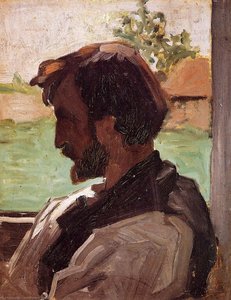


Биография на художника
Jean Frédéric Bazille: A Fleeting Radiance in the Dawn of Impressionism
Jean Frédéric Bazille, a name perhaps less familiar than those of Monet or Renoir, nevertheless holds a crucial place in the genesis of Impressionism. Born in Montpellier, France, on December 6th, 1841, into a family deeply rooted in the wine trade and Protestant traditions, his life was tragically cut short at just 28 years old during the Franco-Prussian War. Yet, within those brief years, Bazille’s artistic vision blossomed, leaving behind a legacy of luminous landscapes and intimate portraits that captured the essence of light and friendship – qualities that would become hallmarks of the Impressionist movement.Early Influences and Parisian Awakening
Bazille's upbringing in Montpellier instilled in him a deep appreciation for the natural world and a keen eye for color, nurtured by his family’s connection to the Languedoc region. However, it was his relocation to Paris in 1862 that truly ignited his artistic journey. Driven by a desire to pursue both medicine and painting – a compromise dictated by his parents – he enrolled at Charles Gleyre's studio, a hub for young artists eager to break free from the rigid constraints of academic art. It was here, amidst the vibrant atmosphere of Parisian studios, that Bazille encountered the giants of Impressionism: Claude Monet, Pierre-Auguste Renoir, and Alfred Sisley. These encounters proved transformative, exposing him to new techniques and a radical approach to painting – *en plein air*, or working outdoors directly from nature. He was profoundly influenced by Eugène Delacroix’s expressive use of color, yet he skillfully synthesized this influence with the burgeoning Impressionist ideals, forging his own distinctive style.A Synthesis of Figure and Landscape
Bazille's artistic approach distinguished itself through a unique integration of figure painting and landscape. Unlike some of his contemporaries who primarily focused on capturing fleeting atmospheric effects, Bazille frequently placed human figures within carefully considered landscapes, imbuing the scenes with emotional resonance. His masterpiece, *Family Reunion* (1867-1868), exemplifies this approach. The painting isn’t merely a depiction of a familial gathering; it's a study in light filtering through the trees, animating the scene and evoking a sense of warmth and intimacy. He demonstrated an ability to capture not just what he *saw*, but also how he *felt* – the emotional impact of color, form, and light. His palette was often richer and more vibrant than that of some other Impressionists, reflecting his connection to the sun-drenched landscapes of his native Languedoc.The Tragedy and Lasting Legacy
Tragically, Bazille’s promising career was abruptly curtailed by the outbreak of the Franco-Prussian War in 1870. Driven by a sense of patriotic duty, he enlisted in the Zouave regiment just months before the conflict erupted. On November 28th, 1870, he fell in action at Beaune-la-Rolande, a young man with immense potential cut short. His untimely death sent shockwaves through the artistic community, depriving them of a generous benefactor and a talented artist. For many years, Bazille’s work remained relatively obscure, overshadowed by the more celebrated figures of Monet and Renoir. However, in recent decades, his contributions have been increasingly recognized and appreciated. Today, his paintings are proudly displayed in prestigious museums like the Musée d'Orsay in Paris, allowing art lovers worldwide to experience the beauty and innovation of his vision. Beyond his artistic output, Bazille embodies the spirit of youthful idealism, unwavering dedication, and the enduring power of friendship – qualities that continue to resonate with audiences today. He remains a poignant reminder of the potential lost, yet also a testament to the lasting impact of a brief but brilliant career.Key Works
- The Pink Dress (c. 1864): A quintessential Impressionist work showcasing Bazille’s ability to capture fleeting moments and the effects of light, featuring his cousin Therese des Hours in a serene landscape setting.
- Family Reunion (1867-1868): Demonstrates Bazille's masterful integration of figure painting and landscape, capturing the warmth and intimacy of a familial gathering through evocative use of light and color.
- Studio in Rue de Furstenberg (c. 1867): A portrait of Bazille’s friend, Édouard Manet, reflecting the artist's interest in capturing personality and atmosphere.
- Bathers (Summer Scene) (c. 1869-1870): An example of Bazille’s ability to capture the beauty of nature and the joy of leisure, showcasing his mastery of light and color.

Жан Фредерик Базиел
1841 - 1870 , Франция
Бързи факти
- Artistic Movement Or Style: Импресионизъм
- Artists Or Movements Influenced By This Artist: ['Импресионизъм']
- Artists Who Influenced This Artist: ['Делакроа']
- Date Of Birth: 6 декември 1841
- Date Of Death: 28 ноември 1870
- Full Name: Jean Frédéric Bazille
- Nationality: Френски
- Notable Artworks:
- Розова рокля
- Семейство
- Place Of Birth: Монпеллье, Франция
Свързани статии

Capturing the Mist: The Timeless Beauty of British Landscape Impressionism
Explore the ethereal beauty of British Landscape Impressionism. Discover how masters captured light and mist through plein air techniques, offering a profound connection to the English countryside's timeless, atmospheric soul.
Разгледайте произведения на изкуството, организирани по теми, стилове и характеристики.

