


 Преглед в реален мащаб
 Сподели
 Сподели
 Подробности
 Ръководство

 Изтегляне
 Подобни артикули
 Рентгенова снимка
 Слайдшоу
 Статистика
Ropemakers
 Oil On Canvas
- WallArt
- Impressionistic Luminosity
 1893
1893- 19th Century
 52.0 x 70.0 cm
Joaquin Sorolla’s luminous Ropemakers captures the vibrant spirit of Spain in 1893 with masterful light and color—a breathtaking depiction of rural labor and collaborative artistry that invites you to explore this iconic masterpiece.
 Разгърни целия текст
Жоан Сорола – испански художник, майстор на светлината и цвета! Завладяващи портрети и сцени от плажа, улавящи същността на средиземноморския живот. Разгледайте неговото наследство днес!
Жикле / Художествен принт
Giclée печат или принт върху платно с музейно качество, бързо производство и гъвкави опции за завършен вид. ( Поръчайте ръчно рисувано репродукция на този колекционерски предмет Превключване към дигитално изображение)




P118B $10

P118H $10

P118W $10

P438Z $10

P508JH $12

P508YH $12

P805H $10

P805Z $10

P919BZ $10

P919G $10

P919XJ $10

P959ZH $10

P968JZ $12

W106C $8

W218G $10

W218JH $8

W218Y $10

W307PJ $10

W316G $10

W316PJ $8

W316Y $10

W398PJ $8

W4111J $10

W500HY $15

W500JH $15

W692G $12

W849H $8

W940BG $15

W953PJ $8




Стандартен размер
по поръчка
CM
INCH
Изберете от нашите предварително зададени размери, които съответстват на оригиналните пропорции на произведението.
Loading sizes...

ширина
височина
Можете да въведете собствени размери, за да паснат на конкретна рамка или пространство. Ако избраният от Вас размер не съвпада с пропорциите на оригиналното изображение, ние ще изрежем произведението или ще разширим изображението с огледален или едноцветен ръб. Дигитален макет ще бъде изпратен за Ваше одобрение преди започването на производството.
Моля, имайте предвид, че предпрегледът на екрана не отразява реалното изрязване или разширяване. Само макетът ще покаже точно финалната композиция.
Въпреки че са налични персонализирани размери, препоръчваме да изберете размер от предварително дефинирания списък, за да запазите оригиналните пропорции.
Доставка по целия свят () в рамките на 2 седмици вместо стандартните 4/5 седмици. (26 Септември)

Безплатна експресна доставка по целия свят

Висококачествено ленено платно

Пълно застраховане на доставката

Гаранция за възстановяване на митнически такси

Гаранция за пълно съответствие на цветовете

Политика за връщане в рамките на 100 дни (само при дефекти)

100% Гаранция за връщане на сумата

Отстъпка при поръчка на повече произведения
 Опцията със стъкло е налична само за размери под 110 см

Ropemakers
Жикле / Художествен принт
Размер на репродукцията
-


Крайна цена
$ 69
A Symphony of Light and Labor: The Soul of Valencia
In the heart of 1893, Joaquín Sorolla y Bastida captured more than just a moment in time; he bottled the very essence of the Valencian spirit. His masterpiece, Ropemakers, serves as a breathtaking window into a bygone era, where the rhythmic toil of manual labor was bathed in the transcendent glow of the Mediterranean sun. This monumental oil on canvas does not merely depict a group of workers engaged in their craft; it orchestrates a profound meditation on human connection and the transformative power of natural light. As one gazes upon the scene, there is an immediate sense of optimism—a feeling that even within the grit and sweat of daily industry, there exists a divine, shimmering beauty.
The painting transports the viewer to an outdoor field where the boundaries between man, animal, and nature seem to dissolve under a radiant sky. A group of individuals works in unison around a specialized machine, their bodies moving with a coordinated grace that speaks to the deep-seated camaraderie of their trade. The presence of horses, positioned thoughtfully within the composition, adds a layer of rustic authenticity, grounding the scene in the physical reality of 19th-century life. For the collector or interior designer, this piece offers a sense of grounded vitality, making it an ideal centerpiece for spaces that seek to evoke warmth, stability, and a connection to heritage.
Impressionistic Brilliance and the Mastery of Light
Sorolla, often celebrated as the Master of Light, employs a technique that pushes the boundaries of Impressionism with a distinctly Spanish fervor. Rejecting the rigid, academic constraints of his predecessors, he embraced a loose, spontaneous brushstroke that allows the canvas to breathe. His approach is characterized by alla prima—the direct application of pigment onto the canvas—which lends the work an unparalleled immediacy. One can almost feel the heat radiating from the golden hues that illuminate the workers' faces and the textured earth beneath their feet. This is not merely light used for visibility; it is light used as a sculptural tool, carving out forms and injecting movement into the very fibers of the rope being spun.
The interplay of texture and color creates a sensory experience that transcends the visual. The subtle contrast between thick impasto highlights and smooth, translucent glazes mirrors the physical textures of the scene: the roughness of the hemp, the coarse dirt of the field, and the soft, filtered light passing through overhead foliage. This technical virtuosity ensures that the painting remains dynamic from every angle, capturing a fleeting atmospheric effect that feels as though it might change if one were to blink. It is this very energy that makes a high-quality reproduction of Ropemakers such a compelling choice for those looking to infuse a room with movement and life.
A Timeless Legacy for the Modern Collector
Beyond its technical brilliance, Ropemakers carries a profound emotional weight. It is a tribute to the dignity of work and the beauty found in collective effort. Sorolla’s ability to find the extraordinary within the ordinary—to see the monumental within a simple field of labor—resonates deeply with the modern viewer. The painting evokes a sense of nostalgia for a slower, more tactile world, yet its vibrant energy feels strikingly contemporary. It is an invitation to pause, to observe the light, and to appreciate the enduring strength of human collaboration.
For those seeking to curate a collection that inspires awe and contemplation, this work stands as a testament to the enduring power of Spanish Impressionism. Whether placed in a sun-drenched gallery or a sophisticated residential study, a reproduction of this caliber brings with it the warmth of Valencia and the legendary touch of Sorolla. It is more than an adornment for a wall; it is an emotional anchor, a piece of history that continues to breathe with the light of a thousand summer afternoons.
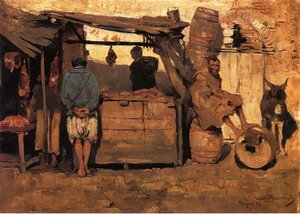


Биография на художника
A Life Bathed in Light: The World of Joaquín Sorolla
Joaquín Sorolla y Bastida, a name synonymous with the radiant light and vibrant energy of Spain, was more than just a painter; he was a chronicler of his nation’s soul. Born in Valencia in 1863, Sorolla's early life was marked by tragedy. Orphaned at the tender age of two following a cholera epidemic that claimed both parents, young Joaquín and his sister were raised by their maternal aunt and uncle. This early experience with loss perhaps instilled within him a profound appreciation for the fleeting beauty of life – a sentiment that would permeate his art. Though hardship shadowed his beginnings, it did not dim the spark of artistic talent that quickly became apparent. He received initial instruction in Valencia, demonstrating an aptitude that led to studies under established artists like Cayetano Capuz and José Benlliure, eventually culminating in a four-year grant to study in Rome. It was there, amidst the classical grandeur of Italy, that Sorolla began to forge his unique artistic path, absorbing influences while simultaneously developing a style distinctly his own.From Historical Narratives to Sun-Drenched Realism
Sorolla’s early work reflected the prevailing academic trends of the time – large-scale historical and mythological scenes. He was initially drawn to grand narratives, producing works like *The Return from Fishing* (1893), a technically impressive depiction of fishermen hauling their boat ashore. However, a pivotal shift occurred as he returned to Spain and began to truly observe the world around him. He found himself captivated by the everyday lives of his countrymen, particularly those along the Valencian coast. The intense Mediterranean sunlight, the shimmering sea, and the vibrant energy of the people became his primary subjects. This transition wasn’t immediate; Sorolla continued to explore social realism with works like *Sad Inheritance* (1899), a powerful depiction of children afflicted by polio bathing in the sea – a painting that garnered significant acclaim but also revealed a darker, more compassionate side to his artistic vision. *Sad Inheritance*, exhibited at the Universal Exhibition in Paris, brought him widespread recognition and cemented his position as a leading figure in Spanish art. Yet, it was his increasingly focused exploration of light and color, inspired by Impressionism though never fully embracing its tenets, that would define his legacy. He wasn’t merely *depicting* light; he was attempting to *capture* its very essence, the way it danced on water, illuminated skin, and transformed ordinary moments into scenes of extraordinary beauty.Master of Luminism: A Unique Artistic Voice
Sorolla's technique became instantly recognizable – a bravura display of brushwork, characterized by loose, energetic strokes that conveyed movement and atmosphere. He worked *en plein air* whenever possible, directly confronting the challenges of capturing fleeting light conditions. This dedication to painting outdoors resulted in canvases brimming with life and immediacy. His beach scenes, perhaps his most iconic works, are not simply picturesque representations of leisure; they are studies in luminosity, reflections, and the joyful interaction between people and their environment. Paintings like *Children on the Seashore* and *Sewing the Sail* exemplify this mastery – figures bathed in golden light, rendered with a remarkable sense of spontaneity and vitality. He wasn’t interested in meticulous detail; rather, he sought to convey the *impression* of reality, prioritizing atmosphere and emotion over precise representation. This approach earned him comparisons to Impressionists like Monet and Renoir, but Sorolla's work possessed a unique Spanish character – a warmth, intensity, and emotional depth that set it apart.The Influence of Spain and Personal Life
Sorolla’s connection to Valencia was profound, both artistically and personally. He returned to his hometown annually, finding inspiration in the light, the atmosphere, and the people. This deep-seated love for his homeland is evident throughout his oeuvre – from the vibrant colors of the coastal scenes to the portrayal of everyday Valencian life. His marriage to Clotilde García del Castillo in 1890 was a significant influence on his work, providing him with a loving partner and muse. Their family life, filled with joy and companionship, is reflected in many of his portraits, particularly those depicting his children. The warmth and intimacy he captured in these familial scenes are rare among artists of his time. Sorolla’s personal tragedies – the loss of his parents at such a young age and later, the debilitating stroke that curtailed his artistic career – undoubtedly shaped his perspective and informed the emotional depth of his work.Legacy and Enduring Influence
By the early 20th century, Joaquín Sorolla was internationally renowned. He exhibited extensively throughout Europe and the United States, receiving numerous accolades and commissions. His most ambitious undertaking, *Vision of Spain* (1912-1928), a series of fourteen monumental murals commissioned by the Hispanic Society of America, remains a testament to his artistic vision and technical skill. Though he suffered a stroke in 1920 that curtailed his painting activity, Sorolla’s influence continued to grow after his death in 1923. His work inspired generations of artists, not only in Spain but around the world. Today, his paintings are held in major museums worldwide, including the Museo Sorolla in Madrid – a former home transformed into a dedicated space for showcasing his art. Sorolla’s legacy extends beyond his technical brilliance; he captured a specific moment in Spanish history and culture, immortalizing the beauty of its landscapes and the spirit of its people. He remains a master of light, color, and emotion—a painter whose work continues to resonate with audiences today, reminding us of the power of art to illuminate our world.Key Achievements & Recognition
- 1892: Gold medal at the National Exhibition in Madrid for *Another Marguerite*.
- 1894: Acclaimed for *The Return from Fishing*, acquired by the Musée du Luxembourg.
- 1899: Grand Prix and medal of honor at the Universal Exhibition in Paris for *Sad Inheritance*.
- 1900-1923: Extensive exhibitions throughout Europe and the United States, establishing international recognition.
- 1912-1928: Commissioned to create *Vision of Spain* for the Hispanic Society of America (completed posthumously).
- Present Day: Works held in major museums worldwide, including the Museo Sorolla in Madrid.

Жоан Сорола
1863 - 1923 , Испания
Бързи факти
- Artistic Movement Or Style: Луменеризъм, Импресионизъм
- Artists Or Movements Influenced By This Artist: ['Импресионизъм']
- Artists Who Influenced This Artist:
- Франсиско Прадилла
- Жуле Бастиен-Лепаж
- Date Of Birth: 27 февруари 1863
- Date Of Death: 10 август 1923
- Full Name: Joaquín Sorolla y Bastida
- Nationality: Испанец
- Notable Artworks:
- Друга Маргарита
- Време за баняне
- Бял трафик
- Place Of Birth: Валенсия, Испания
Свързани статии

Топ 10 шедьоври на импресионизма: История, артисти и красота за вашия дом
Потопете се в света на импресионизма с нашия списък от 10 шедьовъра! От Моне до Реноар, разкрийте историите зад най-емблематичните картини. Вдъхновете дома си с изкуство – купете репродукции на високо качество на TopImpressionists.com

Evocations of Open Air: A Comprehensive Exploration of Outdoor Scenes in Art History
Explore the rich history of outdoor painting! Discover Impressionism, en plein air techniques & renowned landscape artists. Learn about light, color & enduring artistic legacies with TopImpressionists.

Capturing Sunlight: The Radiant Magic and Impressionist Brilliance of Joaquín Sorolla's Masterpieces
Embark on a visual journey through the radiant sunlight of Joaquín Sorolla's masterpieces. Discover the brilliance of Spanish Impressionism and learn how to bring this luminous legacy into your home with museum-quality, hand-painted oil reproductions from TopImpressionists.

Manuel Benedito Vives: A Study of Light, Color & Emotional Resonance in Contemporary Spanish Painting
Explore the captivating world of Manuel Benedito Vives, a celebrated Spanish painter influenced by Sorolla. Discover his masterful portraits, luminous landscapes & enduring legacy – a favorite of the Spanish Royal Family. Art collectors will appreciate this in-depth study.
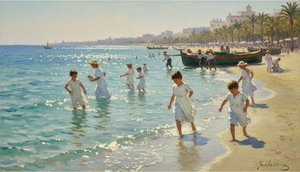
Joaquín Sorolla: Capturing Spanish Light & Life – A Legacy of Impressionism
Explore the luminous world of Joaquín Sorolla, Spanish master of Impressionism. Discover his life, techniques & legacy – a guide for art collectors and enthusiasts. Invest in timeless beauty.
Разгледайте произведения на изкуството, организирани по теми, стилове и характеристики.


