


 Преглед в реален мащаб
 Сподели
 Сподели
 Подробности
 Ръководство

 Изтегляне
 Подобни артикули
 Рентгенова снимка
 Слайдшоу
 Статистика
St. Sauveur
 Drawing
- WallArt
 1848
1848- 19th Century
 46.0 x 27.0 cm
A detailed black and white architectural study of the ornate St. Sauveur church by Victorian polymath John Ruskin captures intricate Gothic carvings and columns, offering a timeless glimpse into 1848 France for your collection.
 Разгърни целия текст
Изследвайте изкуството и писанията на Джон Рускен (1819-1900), викториански полимат, критик на изкуствата и социален мислител. Открийте неговите пейзажни картини, архитектурни анализи и влиятелни есеи върху природата, красотата и обществото.
Ръчно изработена маслена репродукция
Ръчно рисувана маслена картина върху платно във вашия размер и рамка, изработена по поръчка от нашите художници. ( Избор на принт Превключване към дигитално изображение)




P118B €10

P118H €10

P118W €10

P438Z €10

P508JH €12

P508YH €12

P805H €10

P805Z €10

P919BZ €10

P919G €10

P919XJ €10

P959ZH €10

P968JZ €12

W106C €8

W218G €10

W218JH €8

W218Y €10

W307PJ €10

W316G €10

W316PJ €8

W316Y €10

W398PJ €8

W4111J €10

W500HY €15

W500JH €15

W692G €12

W849H €8

W940BG €15

W953PJ €8




Стандартен размер
по поръчка
CM
INCH
Изберете от нашите предварително зададени размери, които съответстват на оригиналните пропорции на произведението.
Loading sizes...

ширина
височина
Можете да въведете свои собствени размери, за да паснат на конкретна рамка или пространство. Ако избраният от вас размер не съответства на пропорциите на оригиналното изображение, ние ще изрежем произведението или ще разширим картината с допълнителни ръчно рисувани елементи. Дигитален макет ще бъде изпратен за ваше одобрение преди започване на производството.
Моля, обърнете внимание, че предпрогледа на екрана не отразява действителното изрязване или разширяване. Само макетът ще покаже точно финалната композиция.
Въпреки че са налични персонализирани размери, препоръчваме да изберете размер от предварително дефинирания списък, за да запазите оригиналните пропорции.
Примери за възможности за персонализация: Заменете лицето с фотография на клиента; Добавете домашен любимец (например заменете котка с куче); Включете скрито послание на фона; Променете пейзажа или елементите на фона.
След получаване на поръчка, екипът на TopImpressionists.com ще изпрати имейл до клиента с инструкции и ще предостави примерен макет за преглед.
След получаване на поръчка, екипът на TopImpressionists.com ще изпрати имейл до клиента с инструкции и ще предостави примерен макет за преглед.
Доставка по целия свят () в рамките на 3-4 седмици вместо стандартните 5 седмици. (12 Октомври). Без компромис с качеството.

Безплатна експресна доставка по целия свят

Висококачествено ленено платно

Пълно застраховане на доставката

Гаранция за възстановяване на митнически такси

Гаранция за пълно съответствие на цветовете

Политика за връщане в рамките на 100 дни (само при дефекти)

100% Гаранция за връщане на сумата

Отстъпка при поръчка на повече произведения
 Опцията със стъкло е налична само за размери под 110 см

St. Sauveur
Техника на репродукция
Размер на репродукцията
-


Крайна цена
€ 232
A Moment Frozen in Graphite: The Vision of St. Sauveur
In the quiet, observant moments of 1848, amidst a journey through the heart of northern France, John Ruskin captured more than just architecture; he captured the very soul of Caen. As he sat by a window in an adjacent café, the world outside transformed into a delicate dance of light and shadow on paper. This exquisite black and white drawing of St. Sauveur serves as a profound testament to the artist's ability to translate the monumental weight of stone into the ethereal lightness of a sketch. The composition is a masterclass in architectural reverence, where every arch, column, and intricate carving is rendered with a precision that speaks to Ruskin’s legendary devotion to truth in art. There is a haunting beauty in how the structural elements emerge from the page, inviting the viewer to step into a bygone era of Victorian exploration and romantic discovery.
The technique employed in this study reveals the meticulous hand of a polymath who believed that seeing was an act of devotion. Through delicate linework and subtle tonal shifts, Ruskin breathes life into the facade of the church, creating a sense of depth that pulls the eye toward the ornate carvings and rhythmic columns. The presence of a solitary bird, perched subtly in the upper right corner, acts as a poetic counterpoint to the permanence of the stone, introducing a fleeting, organic element that softens the architectural rigor. This interplay between the enduring and the ephemeral is what makes the piece so captivating for the modern collector; it is not merely a technical study, but an emotional meditation on the passage of time and the preservation of beauty.
For the discerning interior designer or art enthusiast, a reproduction of St. Sauveur offers a sophisticated touch of historical elegance. The monochromatic palette allows this piece to integrate seamlessly into diverse decor styles, from the moody, academic atmosphere of a classic library to the clean, minimalist lines of a contemporary gallery space. It functions as a window into the nineteenth century, providing a focal point that sparks conversation and invites contemplation. Owning such a work is an opportunity to surround oneself with the intellectual legacy of one of Britain's greatest thinkers, bringing a sense of scholarly grace and timeless tranquility to any curated collection.
Въпроси и отговори
С какво чувство е свързана творбата "St. Sauveur"?
Емоционалният тон, отбелязан за „St. Sauveur“ на Джон Рускен, е Reflective. Той обобщава усещането, което произведението изразява.
С каква техника е изпълнено „St. Sauveur“ на Джон Рускен?
Джон Рускен е използвал/а техниката Drawing за „St. Sauveur“. Тази техника определя материалната природа на оригиналното произведение.
Какво обяснява ситуацията с авторските права на „St. Sauveur“ на Джон Рускен?
Статусът на авторското право върху "St. Sauveur" - в обществено достояние – авторското му право е изтекло - произтича от смъртта на художника през 1900.
Цветовете на „St. Sauveur“ на Джон Рускен наситени или приглушени ли са?
Палитрата на "St. Sauveur" е с Subtle Color наситенe.
Къде мога да намеря статистика за „St. Sauveur“ на Джон Рускен?
Статистиката за „St. Sauveur“ на Джон Рускен се намира на страницата Статистика на произведението: месечни посещения на произведението, посещения на творбите на художника, както и разпределение на последните посетители по държава и език.
Какъв е препоръчаният размер на печат за „St. Sauveur“ на Джон Рускен?
За произведението „St. Sauveur“ се препоръчва печат с размер Small. Налични са и други размери със същите пропорции.
За коя стая се препоръчва „St. Sauveur“ на Джон Рускен?
Репродукция на „St. Sauveur“ се вписва отлично в Office.
Как да открия произведения, подобни на „St. Sauveur“ на Джон Рускен?
Страницата Подобни произведения на „St. Sauveur“ на Джон Рускен представя свързани произведения на изкуството.
Биография на художника
A Polymath of Vision: The Life and Legacy of John Ruskin
John Ruskin, born in London on February 8, 1819, was far more than simply an art critic; he was a Victorian polymath whose influence permeated the realms of aesthetics, social reform, political economy, and environmentalism. His life was shaped by a fascinating duality – the pragmatic commercial world of his father, John James Ruskin, a successful sherry merchant, and the fervent evangelical piety of his mother, Margaret Cock. This contrasting upbringing instilled in him both a keen observational eye for detail and a deeply moral sensibility that would define his entire oeuvre. From an early age, Ruskin’s education was meticulously curated at home, steeped in biblical study and exposure to Romantic literature, particularly the works of Byron and Walter Scott. These formative influences laid the groundwork for a mind that would relentlessly seek connections between beauty, truth, and ethical living. His academic journey continued at Christ Church, Oxford, where he began to articulate his burgeoning ideas about art and its relationship to society.The Dawn of an Art Historian: Early Writings and Influences
Ruskin’s emergence as a significant voice in the art world began with *Modern Painters* (1843-1860), a monumental five-volume work initially conceived as a defense of J.M.W. Turner against what Ruskin perceived as unjust criticism. However, *Modern Painters* quickly evolved into something far more profound – a comprehensive treatise on the nature of art itself. He argued passionately for “truth to nature,” emphasizing that great art wasn’t merely about skillful representation but about an artist's sincere and empathetic engagement with the natural world. This concept was revolutionary at the time, challenging prevailing academic standards and paving the way for new artistic sensibilities. Ruskin didn’t just analyze technique; he delved into the spiritual and moral qualities of art, believing that true beauty reflected a virtuous soul. His meticulous descriptions of landscapes, rocks, and botanical details reveal not only his keen observational skills but also his profound reverence for nature as a manifestation of divine creation. This early work established Ruskin as a formidable critic and set the stage for his later explorations into architecture and social issues. He was deeply influenced by the Pre-Raphaelite Brotherhood, championing their commitment to detailed observation and rejection of academic conventions. They shared a belief that art should aspire to moral elevation and capture the essence of genuine experience—a conviction Ruskin would carry throughout his life’s work.Beyond Aesthetics: Social Commentary and The Guild of St. George
As Ruskin matured, his interests expanded beyond the purely aesthetic realm. Deeply troubled by the social injustices he witnessed during the Industrial Revolution, he began to apply his critical lens to the economic and political structures of Victorian England. *Unto This Last* (1860), a series of essays originally published in *The Cornhill Magazine*, marked a turning point in his career. In this work, Ruskin vehemently critiqued utilitarian economics and advocated for a more humane and equitable social order based on principles of fellowship and craftsmanship. He argued that the dignity of labor was essential to a flourishing society and that true wealth lay not in material possessions but in the quality of human relationships. This conviction led him to establish *Fors Clavigera* (1871-1884), a monthly series of letters addressed “To the Workmen and Labourers of Great Britain,” where he expounded his social and political ideas with characteristic fervor. From these writings emerged the Guild of St. George, founded in 1871, an organization dedicated to promoting craftsmanship, rural industries, and education among working-class communities. The Guild aimed to create a model society based on Ruskin’s ideals, fostering artistic skill, ethical labor practices, and a harmonious relationship with nature—a vision that anticipated many of the concerns shaping contemporary thought.Notable Works & Further Exploration
- Modern Painters (1843-1860): Ruskin’s foundational work, defending Turner and establishing his theories of art.
- The Stones of Venice (1851-1853): A detailed analysis of Venetian architecture, exploring its historical, social, and artistic significance.
- Unto This Last (1860): A powerful critique of Victorian economics and a call for social reform.
- Fors Clavigera (1871-1884): A series of letters addressing the working class, outlining Ruskin’s vision for a more equitable society.
- Dawn, Coniston: A breathtaking watercolor capturing the serene beauty of Coniston Water and demonstrating Ruskin's unparalleled ability to convey emotion through visual art.
- Britannica: https://www.britannica.com/biography/John-Ruskin
- Wikipedia: https://en.wikipedia.org/wiki/John_Ruskin
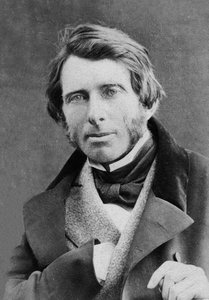
Джон Рускен
1819 - 1900 , Великобритания
Бързи факти
- Artistic Movement Or Style: Викторианско изкуство, Критика на изкуството
- Artists Or Movements Influenced By This Artist: ['Ренесанс']
- Artists Who Influenced This Artist: ['Дж.М.В. Търнър']
- Date Of Birth: Февруари 8, 1819
- Date Of Death: Януари 20, 1900
- Full Name: John Ruskin
- Nationality: Британски
- Notable Artworks:
- Зазоряване, Конистон
- Форс Клавъиера
- Place Of Birth: Лондон, Великобритания
Свързани статии

Shadows & Splendor: A Journey Through the Soul of Gothic Art and Architectural Grandeur
Embark on a profound journey through the spiritual intensity of Gothic art. Explore the architectural marvels, luminous stained glass, and sacred sculptures that define this era of grandeur and human devotion.