

 Преглед в реален мащаб
 Изпрати
 Сподели
 Детайли
 Ръководство

 Изтегляне
 Подобни артикули
 Рентгенова снимка
 Слайдшоу
 Q&A
Q&A Статистика
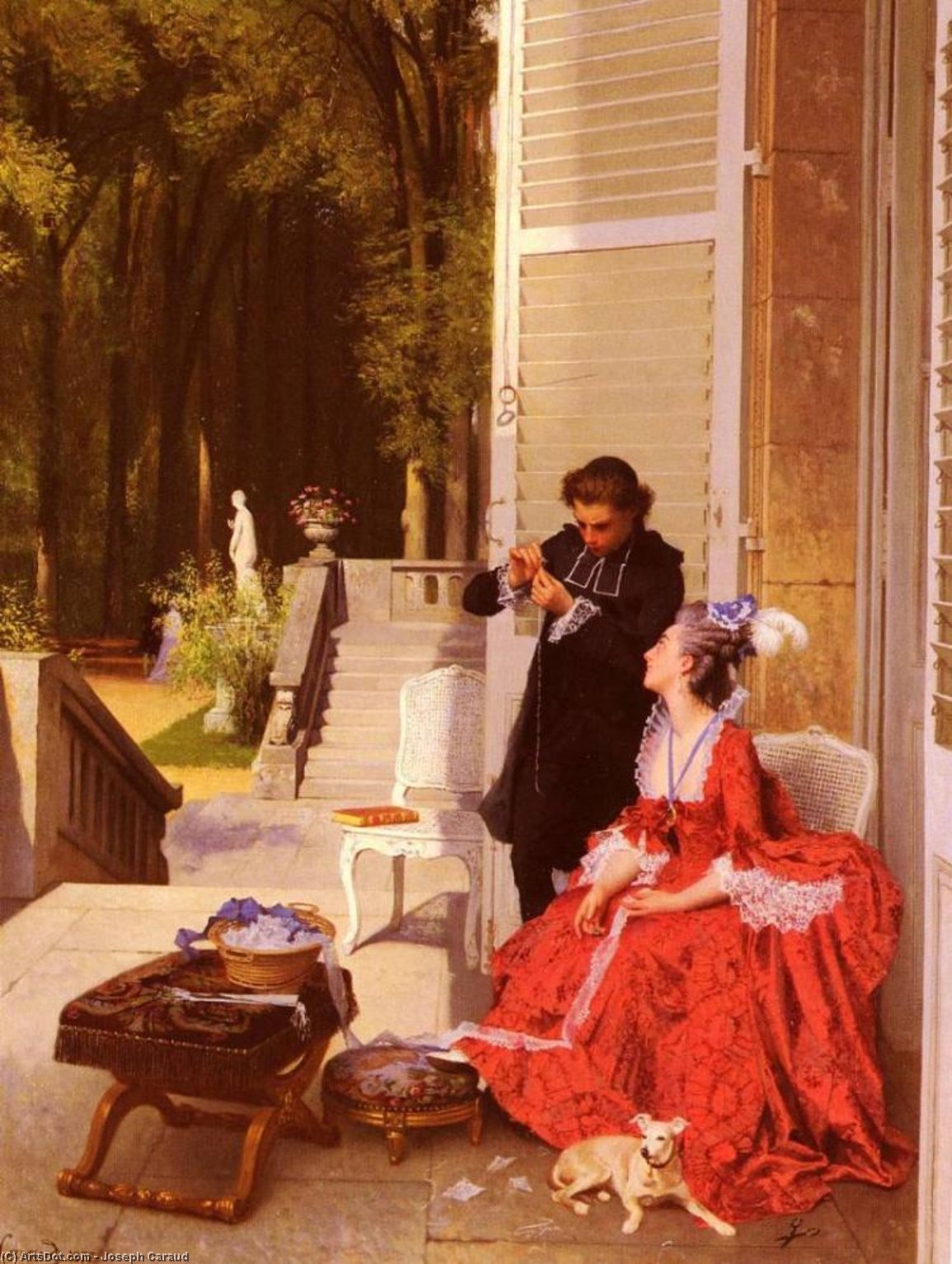
The obliging abbé
Explore the art of Joseph Caraud (1821-1905), a French artist known for his diverse works, including museum connections in Hungary & Austria.
 Прочети повече
Получете файл, готов за печат, който предлага много по-високо качество от уеб прегледа. Всяко дигитално изображение, което предлагаме, е извлечено от висококачествен оригинал в нашата база данни — обикновено с ширина между 5 000 и 15 000 пиксела — така че със сигурност да можете да принтирате в голям формат, да кадрирате тесно или да възпроизведете фините детайли.
Нито един файл не напуска нашето студио без внимание. Дигитален експерт проверява цветовете спрямо оригиналната картина и ги коригира при необходимост, след което подобрява яснотата и детайлите с професионални инструменти за ретуш — винаги оставайки верен на мазките и стила на художника. Резултатът е изображение, което изглежда като самата картина, а не като сканиран образ с филтър.
Одобрявате преди финализиране: нашият експерт ще изпрати изображението по имейл в рамките на 72 часа за ваш преглед. Не сте доволни? Можете да поискате подобрения или корекции, или пълно възстановяване на сумата, ако качеството не отговаря на очакванията ви.
Това е качеството, на което разчитат издателства, дизайн студиа, галерии и печатници.
Дигитално изображение
Изтеглете файл с висока резолюция за лично съхранение, принтиране и творчески проекти. ( Превключване към принт Купете ръчно рисувана картина)
Включено във всяка поръчка за дигитални изображения
Гарантирана експертна дигитална доставка
Избирайки TopImpressionists.com, вие не получавате просто изображение – вие придобивате професионално обработена дигитална творба, създадена с прецизност и подкрепена от гаранция за удовлетворение. Ето какво автоматично е включено във вашата поръчка:

Бърза доставка по имейл
Вашето дигитално изображение с висока резолюция ще бъде изпратено по имейл в рамките на 72 часа от поръчката – готово за незабавно използване.

Дигитален файл с подобрено качество чрез ИИ
Вашата картина е професионално оптимизирана чрез усъвършенствани инструменти с изкуствен интелект и ръчна редакция, което гарантира максимална детайлност, яснота и точност на цветовете.

Безплатна доживотна повторна доставка
Изгубили сте или сте изтрили файла си по погрешка? Не се притеснявайте – ще го изпратим отново на Вас по всяко време, безплатно.

Без митнически такси – завинаги
Насладете се на вашето произведение незабавно, без мита, такси или разходи за доставка – дигиталните изтегляния винаги са освободени от данъци.

Гаранция за цветово съответствие
Гарантираме, че вашето дигитално изображение отразява оригиналните цветове възможно най-точно чрез използването на професионални инструменти и системи за управление на цветовете.

100-дневна гаранция за удовлетвореност
Ако не сте доволни от вашето дигитално изображение, ще го преработим или ще възстановим 100% от сумата в рамките на 100 дни – без излишни въпроси.

100% Гаранция за връщане на сумата
Не сте доволни? Получете пълен възврат на сумата в рамките на 100 дни от получаването на вашия цифров файл – без излишни въпроси.

Отстъпки за големи поръчки
Купете 3 изображения, спестете 10% - Купете 5, спестете 15% - Купете 10+, спестете 20%. Идеално за творчески проекти, галерии и агенства.




Биография на художника
The Luminous Elegance of Joseph Caraud
In the heart of nineteenth-century France, amidst the shifting tides of artistic revolution, Joseph Caraud (1821–1905) carved out a sanctuary of refined grace. Born in the historic town of Cluny, Caraud emerged from a world of classical stability to become a master of the intimate and the anecdotal. While his contemporaries, such as Monet and Degas, were beginning to fracture the traditional canvas with the spontaneous strokes of Impressionism, Caraud remained a steadfast guardian of academic excellence. His work did not seek to disrupt the viewer with the chaos of modern life, but rather to enchant them with a polished, nostalgic beauty that celebrated the quiet dramas of domesticity and the splendor of historical eras.
His artistic foundation was laid within the prestigious halls of the École des Beaux-Arts, where he studied under the watchful eyes of masters like Alexandre Abel de Pujol and Charles Louis Müller. From De Pujol, a disciple of the great David, Caraud inherited a command over dramatic narrative and the poised, sculptural quality of human figures. From Müller, he refined an exquisite eye for intricate detail and the luminous finishes that would become his hallmark. These early influences coalesced into a style that was both technically rigorous and emotionally tender, allowing him to transition seamlessly from grand historical tableaux to the delicate, light-drenched interiors that would eventually secure his fame among the European bourgeoisie.
A Mastery of Light and Intimacy
Caraud’s oeuvre is perhaps most celebrated for its ability to transform a simple room into a stage for silent storytelling. He possessed an unrivaled talent for capturing the soft, filtered light that dances across velvet draperies or illuminates the porcelain skin of a seated subject. His preference for interiors lit by limited, singular sources allowed him to employ a sophisticated use of glazes, creating a warmth and depth that felt almost tactile. This technique gave his paintings a "pastelistic" quality—a softness of hue that evoked a sense of peace and spiritual contemplation.
His subject matter often drifted toward the nostalgic, catering to a Victorian and Edwardian appetite for scenes of the eighteenth-century Regency era. Whether depicting the theatrical episodes of Marie Antoinette or the gentle, colorful charm of Italian domestic life, Caraud infused every scene with an air of sophisticated elegance. His paintings were not merely observations; they were carefully constructed worlds where themes of motherhood, femininity, and grace were woven into the very fabric of the setting. In works such as Feeding the Pigeons or his poignant portraits of women in serene repose, one finds a profound commitment to capturing nuanced emotional states through the careful arrangement of symbolic elements.
Legacy and Recognition
The success of Joseph Caraud was not merely a matter of local acclaim but a widespread European phenomenon. His ability to capture the "small dramas" of daily life resonated deeply with aristocratic families across Hungary and Austria, leading to prestigious commissions that placed his work in notable collections such as the Brodsky House Museum in Saint Petersburg and the halls of Josephplatz in Vienna. His technical prowess was frequently honored by the French state; he was a decorated recipient of several medals at the Paris Salon—including honors in 1859, 1861, and 1863—and was ultimately bestowed with the prestigious Légion d'honneur in 1867.
Beyond the canvas, Caraud’s influence extended through the medium of engraving, as his highly sought-after compositions were reproduced to satisfy a growing demand for fine art. Even as the world moved toward the fragmented reality of the twentieth century, Caraud’s dedication to the beauty of the classical form remained an anchor for those seeking solace in tradition. He passed away in Paris in 1905, leaving behind a legacy of luminous, meticulously crafted windows into a more elegant, tranquil era of European history.

Joseph Caraud
1821 - 1905 , France
Бърза справка
- Full Name: Joseph Caraud
- Nationality: French
- Date Of Birth: 1821
- Date Of Death: 1905
- Place Of Birth: Cluny, France
- Notable Artworks:
- Feeding the Pigeons
- The Yellow Canaries
- Attending to the Bride
- Artistic Movement Or Style: Neoclassical