Ателие — Безплатна доставка по целия свят — Срок на доставка: 2–6 седмици
      Фредерик Базил, 1841 – 1870

      88-те най-известни картини на Фредерик Базил, подредени по популярност

      Най-обичаната картина на Фредерик Базил е Басейни (Лятна сцена) (1869), която се намира в Fogg Art Museum, Кеймбридж. Семейно събиране (1867) и The Pink Dress (1864) следват след тях сред най-познатите картини на читателите. Нашият каталог съдържа 88 произведения на Фредерик Базил: ето 88-те най-известни, всяко с неговата година, неговия музей и това, което го прави незабравимо.

      Класирани според нашия коефициент за популярност, който съчетава търсенията, посещенията и поръчките за всяко произведение. Обновено Октомври 2026. Всяка картина на тази страница може да бъде поръчана като ръчно рисувано маслено репродукция върху ленен хол или като висококачествен арт принт, изработен според избран от Вас размер.

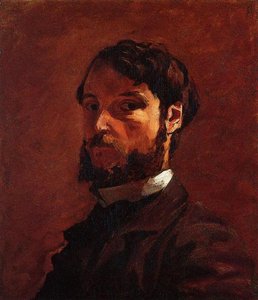
      Портрет на Фредерик Базил
      Фредерик Базил · 1841 – 1870
      Роден · починал
      1841 – 1870, Монпелие
      Движение
      Impressionist landscape
      Работи в нашия каталог
      88
      Най-известни
      Басейни (Лятна сцена) (1869)
      Най-много творби в
      Musée Fabre

      Топ 10 картини на Фредерик Базил: шедьоври, които всеки познава

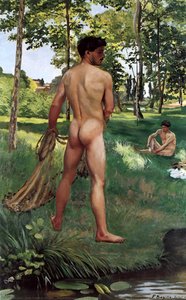
      Басейни (Лятна сцена) (1869) на Фредерик Базил
      1

      Басейни (Лятна сцена)

      1869 · Масло върху платно · Fogg Art Museum, Кеймбридж

      Jean Frédéric Bazille и „Батърси“ – Екзистенциална Симфония на Лятото и Мъжкостта „Батърси“ (Лятна сцена) от Жан Фредерик Базил е произведение на изкуството, което предава духа на импресионизма по начин, който е както технически усъвършенстван, така и дълбоко символичен. Като един от най-значимите представители на този революционен художествен стил, картината е създадена през 1869 г., когато Базил вече е утвърдил мястото си сред водещите фигури на европейската живописна сцена. Това…

      Семейно събиране (1867) на Фредерик Базил
      2

      Семейно събиране

      1867 · Масло върху платно · Музей д’Орсе, Париж

      „Семейно Събиране“ (La Réunion de Famille) от Жан Фредерик Базиел е повече от просто сцена – това е завладяващо изображение на моментност, уловена в светлината на пролетен ден. Създадена през 1867 година, тази картина пресъздава оживен социален сговор под разкрития бряг на голямо дърво, където група хора се наслаждават на разговор и лежерни занимания. Базиел, талантлив художник от южните френски земи, е бил част от вълната на импресионисти, които търсеха…

      The Pink Dress (1864) на Фредерик Базил
      3

      The Pink Dress

      1864 · Acrylic On Canvas · Музей д’Орсе, Париж

      Marilyn Monroe’s “Pink Dress,” designed by William Travilla for Howard Hawks’ 1953 film *Gentlemen Prefer Blondes*, transcends mere costume; it embodies an enduring symbol of glamour, ambition, and the seductive allure of Hollywood. The dress itself—a shocking pink silk satin gown adorned with black satin lining and a large bow—represents more than just fabric and embellishments; it encapsulates a pivotal moment in cinematic history and continues to fascinate audiences today.

      La Toilette (1870) на Фредерик Базил
      4

      La Toilette

      1870 · Acrylic On Canvas · Musée Fabre, Монпелие

      The Painting's Significance and Context La Toilette, an oil-on-canvas painting by Jean Frédéric Bazille, is a remarkable work of art that showcases the artist's skill in capturing intimate moments. Created in 1869-1870, this painting is one of Bazille's last works before his untimely death in the Franco-Prussian War. Composition and Symbolism The painting depicts three women in a room, with one woman lying on a bed while the other two…

      Landscape on the Shore of Lez (1870) на Фредерик Базил
      5

      Landscape on the Shore of Lez

      1870 · Oil

      Landscape on the Shore of Lez is a significant work by Frédéric Bazille, an artist whose life was marked by a brief but intense period of creativity. Born in 1841, Bazille’s career was tragically cut short when he died in 1870. This particular painting, completed in June 1870, represents one of his final artistic statements. It is a large landscape that the artist himself described as an eclogue, a term…

      The Family Gathering (1867) на Фредерик Базил
      6

      The Family Gathering

      1867 · Oil On Canvas · Музей д’Орсе, Париж

      To stand before The Family Gathering is to step directly into a sun-dappled afternoon of pure, unscripted joy. This painting by Jean Frédéric Bazille captures more than just a social assembly; it arrests the very essence of conviviality. One feels the gentle warmth emanating from the canvas, as if the viewer has stumbled upon this private moment in time. The composition is masterfully arranged beneath the generous canopy of a…

      Portrait of an Unknown Sitter as a Troubadour (1875) на Фредерик Базил
      10

      Portrait of an Unknown Sitter as a Troubadour

      1875 · Oil On Canvas · Даллас Музей на изкуствата, Дъблин

      In this intimate oil portrait, we find ourselves drawn into a quiet, private moment with a young man. The composition is a close-up, bust-length study that pushes the subject toward the viewer through a dramatic use of chiaroscuro. A deep, nearly black background provides a void from which the sitter emerges, illuminated by a highly directional light source. This light catches the contours of his face, leaving the other side…

      Още платно от Фредерик Базил, от 11 до 88

      Portrait of Edouard Blau (1866) на Фредерик Базил
      #25

      Portrait of Edouard Blau

      1866 · Национална галерия на изкуствата

      “Portrait of Édouard Blau,” painted by Jean Frédéric Bazille in 1866, stands as a testament to the burgeoning Impressionist movement's fascination with capturing fleeting moments of light and…

      Поръчайте това платно →

      Картините на Фредерик Базил по периоди

      Най-често рисувано от Фредерик Базил

      Четирите найчесто срещани сюжета на тези платна, всеки с най-обичания си пример.

      Къде са изложени картините на Фредерик Базил

      8 музея, които притежават най-голям брой от картините на тази страница.

      Музеи Град Творения на Фредерик Базил Картини от този списък
      Musée Fabre, МонпелиеMusée Fabre Монпелие 23 La Toilette, The Scoter, Petite Italienne chanteuse des rues
      Музей д’Орсе, ПарижМузей д’Орсе Париж 8 Семейно събиране, The Pink Dress, The Family Gathering
      Национална галерия на изкуствата, УокшънтънНационална галерия на изкуствата Уокшънтън 6 Portrait of Edmond Maitre, Portrait of Edouard Blau, Edmond Maître
      Minneapolis Institute of Art, MinneapolisMinneapolis Institute of Art Minneapolis 2 Self-Portrait, The Banks of the Lez
      Art Institute of Chicago, ЧикагоArt Institute of Chicago Чикаго 2 Landscape at Chailly, Self Portrait with Palette
      Fogg Art Museum, КеймбриджFogg Art Museum Кеймбридж 1 Басейни (Лятна сцена)
      Музеят на изкуствата в Хюстън, ХюстънМузеят на изкуствата в Хюстън Хюстън 1 Le petit jardinier, ca Museum of Fine Arts,
      Даллас Музей на изкуствата, ДъблинДаллас Музей на изкуствата Дъблин 1 Portrait of an Unknown Sitter as a Troubadour

      Най-обичаното платно на Фредерик Базил за всяко десетилетие

      1. 1850s
      2. 1860s
        Басейни (Лятна сцена) (1869) на Фредерик Базил
        1 от 88

        Басейни (Лятна сцена)

        Възраст 19 – 28 · Fogg Art Museum

        Jean Frédéric Bazille и „Батърси“ – Екзистенциална Симфония на Лятото и Мъжкостта „Батърси“ (Лятна сцена) от Жан Фредерик Базил е произведение на изкуството, което предава духа на импресионизма…

      3. 1870s
        La Toilette (1870) на Фредерик Базил
        Платно 4 от 88

        La Toilette

        Възраст 29 · Musée Fabre

        The Painting's Significance and Context La Toilette, an oil-on-canvas painting by Jean Frédéric Bazille, is a remarkable work of art that showcases the artist's skill in capturing intimate…

      Относно платното на Фредерик Базил: отговори на вашите въпроси

      Коя е най-известната картина на Фредерик Базил?Прочетете отговора

      Басейни (Лятна сцена) (1869), Fogg Art Museum, Кеймбридж. Следват Семейно събиране (1867) и The Pink Dress (1864).

      На каква възраст е бил Фредерик Базил, когато е нарисувана Басейни (Лятна сцена)?Прочетете отговора

      Фредерик Базил, роден в 1841, е на 28 години: Басейни (Лятна сцена) е от 1869 г.

      Кои са 10-те най-известни картини на Фредерик Базил?Прочетете отговора

      Басейни (Лятна сцена), Семейно събиране, The Pink Dress, La Toilette, Landscape on the Shore of Lez, The Family Gathering, The Scoter, Le petit jardinier, ca Museum of Fine Arts,, Saint-Saveur и Portrait of an Unknown Sitter as a Troubadour. Всяко платно в горната класация е придружено с годината на създаване и музея, в който се намира.

      Колко произведения е създала общо Фредерик Базил?Прочетете отговора

      В нашия каталог са включени 88 произведения на Фредерик Базил, датирани от 1859 до 1870.

      Къде мога да видя най-известните платна на Фредерик Базил?Прочетете отговора

      Предимно в Musée Fabre (Монпелие), Музей д’Орсе (Париж) и Национална галерия на изкуствата (Уокшънтън); списъкът по-горе изброява всеки музей и неговите платна.

      Кога Фредерик Базил е нарисувал най-обичаните си платна?Прочетете отговора

      В 1860s, който включва 54 от 88 произведения на тази страница, Басейни (Лятна сцена) сред тях.

      Кои са най-ранните и най-късните известни картини на Фредерик Базил?Прочетете отговора

      Най-старото платно тук е от Mystic marriage of Saint Catherine (1859); най-новото е от La Toilette (1870).

      Какво най-често е рисувал Фредерик Базил?Прочетете отговора

      Portraits (6), Men (6) и French painting (5), разпределени в 88 произведения на тази страница.

      С коя техника е живописал най-често Фредерик Базил?Прочетете отговора

      Oil On Canvas, използван в 22 от 88 произведения на тази страница.

      Към кое художествено направление принадлежи картината на Фредерик Базил?Прочетете отговора

      Impressionist landscape, както показват картините на тази страница.

      Кои платна на Фредерик Базил се съхраняват в Musée Fabre?Прочетете отговора

      В Musée Fabre, Монпелие се съхраняват 23 от произведенията на тази страница, сред които са La Toilette, The Scoter и Petite Italienne chanteuse des rues.

      Мога ли да купя репродукция на платно от Фредерик Базил?Прочетете отговора

      Да. Всяка картина на тази страница може да бъде поръчана от нейната собствена страница като ръчно рисувано маслено репродукция или като висококачествен арт-принт в избран от Вас размер.

      Фредерик Базил: живот в боядисване

      Jean Frédéric Bazille: A Fleeting Radiance in the Dawn of Impressionism

      Jean Frédéric Bazille, a name perhaps less familiar than those of Monet or Renoir, nevertheless holds a crucial place in the genesis of Impressionism. Born in Montpellier, France, on December 6th, 1841, into a family deeply rooted in the wine trade and Protestant traditions, his life was tragically cut short at just 28 years old during the Franco-Prussian War. Yet, within those brief years, Bazille’s artistic vision blossomed, leaving behind a legacy of luminous landscapes and intimate portraits that captured the essence of light and friendship – qualities that would become hallmarks of the Impressionist movement.

      Early Influences and Parisian Awakening

      Bazille's upbringing in Montpellier instilled in him a deep appreciation for the natural world and a keen eye for color, nurtured by his family’s connection to the Languedoc region. However, it was his relocation to Paris in 1862 that truly ignited his artistic journey. Driven by a desire to pursue both medicine and painting – a compromise dictated by his parents – he enrolled at Charles Gleyre's studio, a hub for young artists eager to break free from the rigid constraints of academic art. It was here, amidst the vibrant atmosphere of Parisian studios, that Bazille encountered the giants of Impressionism: Claude Monet, Pierre-Auguste Renoir, and Alfred Sisley. These encounters proved transformative, exposing him to new techniques and a radical approach to painting – *en plein air*, or working outdoors directly from nature. He was profoundly influenced by Eugène Delacroix’s expressive use of color, yet he skillfully synthesized this influence with the burgeoning Impressionist ideals, forging his own distinctive style.

      A Synthesis of Figure and Landscape

      Bazille's artistic approach distinguished itself through a unique integration of figure painting and landscape. Unlike some of his contemporaries who primarily focused on capturing fleeting atmospheric effects, Bazille frequently placed human figures within carefully considered landscapes, imbuing the scenes with emotional resonance. His masterpiece, *Family Reunion* (1867-1868), exemplifies this approach. The painting isn’t merely a depiction of a familial gathering; it's a study in light filtering through the trees, animating the scene and evoking a sense of warmth and intimacy. He demonstrated an ability to capture not just what he *saw*, but also how he *felt* – the emotional impact of color, form, and light. His palette was often richer and more vibrant than that of some other Impressionists, reflecting his connection to the sun-drenched landscapes of his native Languedoc.

      The Tragedy and Lasting Legacy

      Tragically, Bazille’s promising career was abruptly curtailed by the outbreak of the Franco-Prussian War in 1870. Driven by a sense of patriotic duty, he enlisted in the Zouave regiment just months before the conflict erupted. On November 28th, 1870, he fell in action at Beaune-la-Rolande, a young man with immense potential cut short. His untimely death sent shockwaves through the artistic community, depriving them of a generous benefactor and a talented artist. For many years, Bazille’s work remained relatively obscure, overshadowed by the more celebrated figures of Monet and Renoir. However, in recent decades, his contributions have been increasingly recognized and appreciated. Today, his paintings are proudly displayed in prestigious museums like the Musée d'Orsay in Paris, allowing art lovers worldwide to experience the beauty and innovation of his vision. Beyond his artistic output, Bazille embodies the spirit of youthful idealism, unwavering dedication, and the enduring power of friendship – qualities that continue to resonate with audiences today. He remains a poignant reminder of the potential lost, yet also a testament to the lasting impact of a brief but brilliant career.

      Key Works

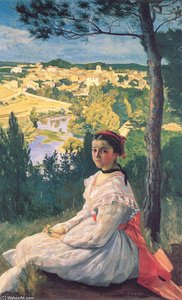
      • The Pink Dress (c. 1864): A quintessential Impressionist work showcasing Bazille’s ability to capture fleeting moments and the effects of light, featuring his cousin Therese des Hours in a serene landscape setting.
      • Family Reunion (1867-1868): Demonstrates Bazille's masterful integration of figure painting and landscape, capturing the warmth and intimacy of a familial gathering through evocative use of light and color.
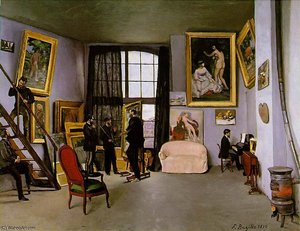
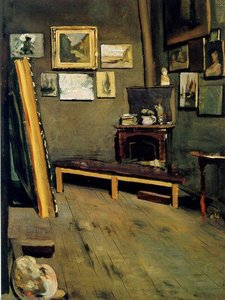
      • Studio in Rue de Furstenberg (c. 1867): A portrait of Bazille’s friend, Édouard Manet, reflecting the artist's interest in capturing personality and atmosphere.
      • Bathers (Summer Scene) (c. 1869-1870): An example of Bazille’s ability to capture the beauty of nature and the joy of leisure, showcasing his mastery of light and color.

      Всички 88 произведения на Фредерик Базил →