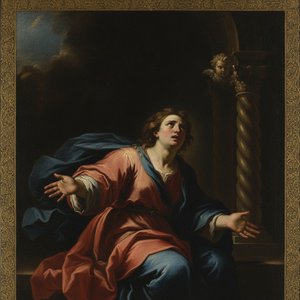
The Shadowed Drama of “Martha and Mary Magdalene”
Michelangelo Merisi da Caravaggio’s “Martha and Mary Magdalene,” painted in 1598–99, is not merely a depiction of two sisters; it's a profound meditation on faith, temptation, and the transformative power of grace. Housed within the hallowed halls of the Detroit Institute of Arts, this arresting canvas immediately commands attention with its masterful use of light and shadow – a signature technique known as *tenebrism* that would forever alter the course of Western art. The painting’s genesis lies in Caravaggio's time spent in the service of Cardinal Francesco Maria Del Monte, a discerning patron who championed innovative artistic approaches. This particular commission reflects the cardinal’s interest in exploring themes of virtue and vice, often interwoven within scenes from the New Testament. Caravaggio, already known for his volatile personality and dramatic style, was tasked with creating an image that would both visually resonate and intellectually stimulate. The scene itself is drawn directly from Luke 10:38-42, where Martha, a devout follower of Jesus, criticizes Mary Magdalene for neglecting their shared responsibilities in favor of indulging in worldly pleasures. The painting captures the precise moment of this confrontation, frozen in an intense exchange of words and emotions.
- Compositional Dynamics: The figures are arranged within a shallow space, creating a sense of immediacy and drawing the viewer directly into the scene. Martha, positioned on the left, is rendered with sharp detail and a forceful presence, her gaze directed at Mary. Mary, on the right, appears more ethereal, bathed in a softer light that suggests vulnerability and regret.
- Color Palette: Caravaggio’s palette is restrained yet impactful. The dominant colors are deep browns, reds, and ochres, punctuated by flashes of white and gold. These hues contribute to the painting's dramatic atmosphere and heighten the contrast between the figures.
- The Mirror Motif: A key element of the composition is the Venetian mirror reflecting Mary’s face. This device serves as a potent symbol of vanity and self-reflection, suggesting that she is contemplating her past choices and the allure of worldly pleasures.
Mastering Tenebrism and Chiaroscuro
Caravaggio's genius lies not just in his subject matter but also in his revolutionary approach to technique. *Tenebrism*, a term coined by art historian Théodore Mommsen, describes his dramatic use of light and dark – a technique known as *chiaroscuro*. He eschewed the traditional, balanced lighting of Renaissance painting, instead plunging much of the scene into deep shadow while highlighting specific figures with intense beams of light. This creates a powerful sense of drama, emphasizing the emotional intensity of the moment and imbuing the figures with an almost sculptural quality. The light doesn’t illuminate; it *attacks*, forcing the viewer to confront the subjects' expressions and gestures. Caravaggio achieved this effect through meticulous layering of thin glazes of paint, building up the highlights gradually until they appeared to glow from within. This technique demanded incredible speed and precision, as he often worked directly onto the wet plaster of the canvas without preliminary sketches.
The Influence of Light:** The light in “Martha and Mary Magdalene” is not merely decorative; it’s a crucial element of storytelling. It highlights Martha's righteous indignation while casting a veil of shadow over Mary, suggesting her moral decline. It also draws attention to the orange blossom held by Mary – a symbol of vanity that she is about to relinquish in favor of a life devoted to Christ.
Symbolism and Narrative Depth
Beyond its technical brilliance, “Martha and Mary Magdalene” is rich in symbolic meaning. The orange blossom, prominently displayed in Mary’s hand, represents the fleeting pleasures of earthly existence – beauty, luxury, and sensual indulgence. It's a deliberate allusion to the temptations that led her astray. The mirror reflects not only Mary’s physical appearance but also her inner state—a reflection of her former self, consumed by vanity and worldly desires. Martha, in contrast, embodies virtue and devotion, her face etched with concern for her sister’s salvation. The setting itself – a simple interior space – reinforces the intimacy of the scene and underscores the personal nature of their conflict.
- Martha's Role: As the elder sister, Martha represents the established order of faith and righteousness. Her passionate plea is not simply a reprimand but an urgent call to repentance.
- Mary’s Transformation: Mary’s hesitant gesture – holding the orange blossom – suggests a glimmer of hope for redemption. It's a subtle yet powerful indication that she is beginning to recognize the emptiness of her former life.
A Legacy of Dramatic Intensity
“Martha and Mary Magdalene” exerted an immense influence on subsequent generations of artists, shaping the trajectory of Baroque painting and beyond. Caravaggio’s innovative use of light and shadow, his dramatic compositions, and his unflinching portrayal of human emotion paved the way for a new era in art history. Artists like Rembrandt van Rijn and Georges de La Tour adopted and adapted his techniques, creating works that continue to captivate audiences today. The painting's enduring appeal lies not only in its technical mastery but also in its timeless exploration of faith, temptation, and the complexities of human relationships. Reproductions of this iconic masterpiece offer a window into Caravaggio’s genius, allowing viewers to appreciate the profound emotional depth and dramatic intensity that define his work.



 Náhled
 Koupit ručně malovaný obraz
 Sdílet
 Sdílet
 Podrobnosti o díle

 Stáhnout
 Podobné položky
 Rentgenové snímky
 Slideshow

 Zobrazit více






































 Skleněná varianta je dostupná pouze u rozměrů menších než 110 cm