

Shown: · With its frame:
 Náhled v interiéru
 Sdílet
 Sdílet
 Podrobnosti o díle
 Průvodce

 Stáhnout
 Podobné položky
 Rentgenové snímky
 Slideshow
 Q&A
Q&A Statistiky

Kč 5844
Ručně malovaná olejová reprodukce
Rukou malované olejné plátno v libovolném rozměru i s rámem, vyrobené našimi umělci na zakázku. ( Přepnout na tisk Přepnout na digitální obraz)
Size
·Standardní velikost
na zakázku
CM
INCH
Vyberte si z našich přednastavených velikostí, které odpovídají původním proporcím díla.
Loading sizes...

šířka
výška
Zadejte šířku a výšku, které potřebujete pro váš rám nebo stěnu. Protože se jedná o ruční malbu, při výběru jiného formátu může umělec kolem obrazu domalovat o něco více, nebo jej mírně oříznout — rozhodnete si vy. Před zahájením malby vám zašleme digitální náhled ke schválení. Obraz zobrazený na této stránce neodpovídá skutečnému výsledku — pouze digitální náhled jej zobrazuje.
 Více informací
Finish
·
White Kč1

Blurside Kč1

Extended Kč1

P118B Kč10

P118H Kč10

P118W Kč10

P438Z Kč10

P508JH Kč12

P508YH Kč12

P805H Kč10

P805Z Kč10

P919BZ Kč10

P919G Kč10

P919XJ Kč10

P959ZH Kč10

P968JZ Kč12

W106C Kč8

W218G Kč10

W218JH Kč8

W218Y Kč10

W307PJ Kč10

W316G Kč10

W316PJ Kč8

W316Y Kč10

W398PJ Kč8

W4111J Kč10

W500HY Kč15

W500JH Kč15

W692G Kč12

W849H Kč8

W940BG Kč15

W953PJ Kč8

H24-GOLD Kč30

H24-SILVER Kč30

H36-GOLD Kč45

H36-SILVER Kč45
Shipped in a protective tube, ready for your own framer.
Above 105 cm the frame is shipped as a kit for a professional framer — read the details.
Extras
optionalWhat do the extras include?
Examples of what can be changed: Replace face with customer photo; Add pet (e.g., replace cat with dog); Include hidden message in background; Change background landscape or elements.
After order, TopImpressionists.com team will email client for instructions and provide a mockup preview
After order, TopImpressionists.com team will email client for instructions and provide a mockup preview
Celosvětová doprava () za 3–4 týdny namísto standardních 5 týdnů. (2 listopad). Bez kompromisů v kvalitě.
Ochranný lak
Popisek díla
Detaily ryté bronzové plakety
This elegant plaque features the artist's name and the title of the artwork, finely engraved for a timeless presentation.
It is made from bronze with a refined, elegant finish. The text is precisely laser-engraved for a sharp and permanent result. Measuring 9x2 cm, the plaque is compact yet easy to read. It's built to be durable and scratch-resistant, offering a professional, museum-quality look. Mounting is simple thanks to the included adhesive backing.
Detaily průhledné akrylové desky
The plaque includes essential engraved details such as the artist's name, the title of the artwork, the date it was created, the type of media used-like oil on canvas or watercolor-a brief description of the piece, and a QR code that links to the complete artwork information.
It is crafted from clear acrylic, offering a sleek, modern appearance. The text is UV-engraved in black to ensure strong visual contrast. With a size of 10x15 cm, it ensures optimal readability. It comes equipped with two metal hooks for secure wall mounting. The plaque is designed to be weather-resistant, making it suitable for various environments, and it includes interactive features that work seamlessly with smartphone scanning.
Detaily černé akrylové destičky
This elegant plaque includes engraved information such as the artist's name, the title of the artwork, the date it was created, the type of media used (like oil on canvas or watercolor), a short description of the artwork, and a QR code for quick access to more information.
The plaque itself is made from refined black acrylic with a premium finish. The text is laser-engraved in white for high contrast and readability. Its size is 10x15 cm, designed to be easy to read. It comes with two metal hooks for professional mounting. The design is sleek and fits any interior style. It is also weather-resistant and durable, with built-in digital integration for mobile compatibility.
Skleněná varianta je dostupná pouze u rozměrů menších než 110 cm
 Skleněná varianta je dostupná pouze u rozměrů menších než 110 cm
- Zdarma celosvětová expresní doprava
- Vysoce kvalitní lněné plátno
- Kompletní pojištění přepravy
- Záruka vrácení celního poplatku
- Záruka věrného barevného souladu
- 100dení lhůta pro vrácení zboží (pouze při vadách výroby)
- 100% záruka vrácení peněz
- Sleva při více objednávkách


Popis sbírného předmětu
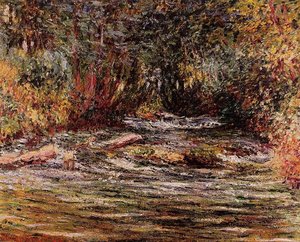
Experience the serenity of Monet's 'The River Epte at Giverny.' This iconic Impressionist painting captures nature’s beauty with vibrant colors & intricate detail. Own a museum-quality reproduction today!
Biografie umělce
Objevte svět Claude Moneta, mistra impresionismu, proslaveného zachycováním prchavého světla a barvy prostřednictvím ikonických krajin, jako jsou Vodní líliany a Seny.
About the painting
A Serene Reflection of Light and Place
Claude Monet’s “The River Epte at Giverny” isn't merely a landscape painting; it’s a distilled moment of tranquility, an invitation to step into the artist’s world. Completed in 1884 during his idyllic years spent transforming the gardens and home at Giverny, this oil on canvas captures more than just a river scene – it embodies Monet’s revolutionary approach to capturing light and atmosphere, a cornerstone of the Impressionist movement. The painting unfolds with a quiet grace, depicting the Epte winding its way through a verdant wooded area, a ribbon of silver reflecting the sky above. The composition is deceptively simple: a gently flowing river framed by the dense foliage of trees lining both banks, yet within this apparent stillness lies an extraordinary depth and vibrancy. It’s a scene that speaks to the restorative power of nature, a theme deeply resonant with Monet's own life and artistic philosophy.
Monet’s genius lay in his ability to render not just what he *saw*, but how he *felt* about what he saw. He wasn’t interested in precise detail or photographic realism; instead, he sought to convey the fleeting effects of light and color upon the landscape. This is brilliantly achieved through his characteristic use of broken brushstrokes – short, distinct dabs of paint applied with a loose, almost haphazard technique. These strokes coalesce to create an illusion of shimmering water, dappled sunlight filtering through the leaves, and the subtle gradations of color that define the changing light throughout the day. The painting’s palette is dominated by greens and blues, punctuated by flashes of yellow and white where the sun catches the surface of the river. The careful layering of these colors creates a remarkable sense of depth and luminosity, drawing the viewer into the heart of the scene.
Impressionism: Capturing the Essence of a Moment
“The River Epte at Giverny” is a quintessential example of Monet’s Impressionist style. He deliberately avoided sharp outlines and meticulous detail, prioritizing instead the subjective experience of seeing. This approach was revolutionary for its time, challenging traditional academic painting conventions that emphasized realism and idealized forms. Monet's focus on capturing the *impression* of light and color – what he called “the vibration of colors” – became the defining characteristic of Impressionism. The painting’s loose brushwork and vibrant palette are direct results of this philosophy, inviting the viewer to share in the artist’s fleeting perception of the scene.
Interestingly, Monet's decision to paint *en plein air* – directly from nature – was crucial to achieving this effect. He would set up his easel outdoors, capturing the changing light and atmosphere as it unfolded before him. This direct observation informed every aspect of his painting process, allowing him to translate the immediacy of his experience onto the canvas. The inclusion of two birds—one soaring above and another perched on a branch—adds a touch of life and movement to the scene, subtly enhancing its sense of tranquility and natural beauty.
A Giverny Legacy: Art, Garden, and Inspiration
“The River Epte at Giverny” is inextricably linked to Monet’s personal journey and his transformation of the gardens at Giverny. He meticulously designed these gardens as a living canvas, carefully selecting plants and arranging them to create a harmonious interplay of color and form. The river itself became a central element of this landscape design, providing a reflective surface that mirrored the sky above and enhanced the sense of serenity. This painting serves as a testament to Monet’s deep connection with nature and his belief in its power to inspire artistic creation.
Today, reproductions of “The River Epte at Giverny” are available through TopImpressionists.com, offering art enthusiasts the opportunity to bring this iconic masterpiece into their homes. Whether displayed as a focal point in a living room or a calming addition to a bedroom, this painting continues to evoke the beauty and tranquility of Monet’s beloved garden at Giverny. It's more than just a beautiful image; it’s a window into the mind of one of art history’s most influential figures.
Related Works by Claude Monet
Otázky a odpovědi
Kde si mohu koupit digitální kopii díla „The River Epte at Giverny“ od Claude Monet?
„The River Epte at Giverny“ je k dispozici jako stažení digitálního obrazu ve vysokém rozlišení, zakoupit jej můžete přímo na stránce Digitální snímek.
Jak lze využít dílo „The River Epte at Giverny“ od Claude Monet při dekorování interiéru?
Dílo „The River Epte at Giverny“ od Claude Monet se doporučuje pro Statement, ideálně do Living Room. Způsob využití a prostor společně určují, kam se reprodukce hodí.
Jaká velikost "The River Epte at Giverny" se doporučuje pro Living Room?
Doporučená kombinace pro dílo „The River Epte at Giverny“ od Claude Monet: tisk o velikosti Large do místnosti typu Living Room.
Quick facts and art quiz
About Claude Monet

Claude Monet
1840 - 1926, Francie
Biografie umělce
Život ponořený do světla: Svět Clauda Moneta
Oscar-Claude Monet, jméno neodmyslitelně spojené s impresionismem, nebyl pouhým malířem krajin; byl kronikářem prchavých okamžiků, básníkem světla a barvy. Narodil se v Paříži 14. listopadu 1840 a jeho raný život nabral nečekovaný směr, když se jeho rodina v pěti letech přestěhovala do Le Havre v Normandii. Zatímco ho otec původně předurčil k obchodní kariéře, mladého Clauda brzy objevila vrozená umělecká nadání, která se projevovala nejprve uhlovými karikaturami prodávanými místním veřejnosti – svědectví jeho dovedností a podnikatelského ducha. Zásadní však bylo setkání s Eugènem Boudinem. Boudin Moneta nenaučil jen jak malovat; vštípil mu revoluční myšlenku malování en plein air – přímo z přírody – praxi, která definovala jeho celou uměleckou cestu.
Monetovo formální vzdělávání začalo v Paříži, krátce na Académie Suisse a později u Charlese Gleyra. Zde navázal trvalá přátelství se spolužáky jako Auguste Renoir, pouto založené na sdílených uměleckých frustracích a touze osvobodit se z okovů tradičního akademického malířství. Jeho rané práce sice prokazovaly technickou zdatnost, ale postrádaly osobitý hlas, který by brzy charakterizoval jeho styl. Následovalo období otřesů – Prusko-francouzská válka Moneta donutila vyhledat útočiště v Londýně, kde se ponořil do díla anglických krajinářských mistrů jako J.M.W. Turner, absorboval jejich atmosférické efekty a inovativní použití barev.
Zrození estetické revoluce
Po návratu do Francie se Monet stal ústřední postavou rozvíjající se umělecké rebelie. Nespokojen s konzervativními standardy Salonu spojil síly s dalšími podobně smýšlejícími umělci a organizoval nezávislé výstavy. Výstava v roce 1874 byla zlomovým okamžikem, nejen pro Moneta, ale i pro celý svět umění. Zde byl vystaven jeho obraz “Impression, soleil levant” (Imprese, východ slunce) – mlhavé znázornění přístavu Le Havre za úsvitu – a z něhož vznikl posměšný termín „impresionismus“. Jméno však ulpělo a vyvinulo se v odznak cti pro hnutí, které usilovalo o zachycení subjektivní imprese scény namísto její přesné reprezentace.
Monetův charakteristický styl rozkvetl v tomto období: volné, viditelné tahy štětcem, živé a často nemíchané barvy aplikované vedle sebe (technika známá jako “rozbitá barva”) a neochvějná snaha o zachycení pomíjivých kvalit světla. Neustále se věnoval své praxi plein air, pracoval rychle, aby zaznamenal své bezprostřední vjemy dříve, než se měnící podmínky změní scénu. Tato oddanost nesloužila jen k zobrazení toho, co viděl, ale spíše toho, jak na to reagoval – radikální odklon od uměleckých konvencí.
Giverny: Ráj světla a odrazů
V roce 1883 se Monet usadil v Giverny, severozápadně od Paříže, a založil si domov a zahradu, které se staly jeho útočištěm i největším zdrojem inspirace. Pečlivě proměnil pozemek na rozsáhlý ráj plný exotických květin, plačících vrb a především rybníka s lekníny překlenutého japonským mostem. Tato zahrada nebyla pouhou dekorací; byla to živá laboratoř, kde mohl Monet studovat účinky světla na vodu, listoví a odrazy za kontrolovaných podmínek.
Poslední desetiletí jeho života se téměř výhradně věnovala malování rybníka s lekníny v Giverny. Pustil se do monumentální série Lektýnů (Nymphéas), vytvářel rozsáhlá plátna, která zobrazovala povrch rybníka jako neustále se měnící tapisérii barev a světla. Nebyla to jen malba květin; byly to pohlcující zážitky navržené tak, aby obklopily diváka světem klidné krásy a kontemplativního ticha. Rozsah těchto děl je dechberoucí, posouvá hranice tradičního malířství a předznamenává abstraktní expresionismus.
Dědictví: Trvalý dopad na dějiny umění
Monetův dopad na dějiny umění je neměřitelný. Nebyl jen zakladatelem impresionismu; zásadně změnil způsob, jakým umělci vnímali a reprezentovali svět kolem sebe. Jeho důraz na subjektivní zkušenost, přijetí malby en plein air a inovativní techniky připravily cestu modernímu zkoumání abstrakce a nereprezentačních forem.
Monet dosáhl během svého života značného komerčního úspěchu – vzácnost pro avantgardní umělce jeho éry. Jeho dílo i nadále inspiruje úžas a okouzluje publikum po celém světě, upevňuje jeho postavení jako jedné z nejdůležitějších postav západního umění. Zemřel 5. prosince 1926 a zanechal odkaz, který rezonuje napříč generacemi umělců a milovníků umění. Významné sbírky jeho mistrovských děl jsou uloženy v prestižních institucích, jako je Musée d'Orsay a Musée Marmottan Monet v Paříži, což zajišťuje, že jeho vize bude i nadále osvětlovat svět.
Klíčové umělecké techniky
- Malba en plein air: Centrální pro jeho vývoj, umožňující přímé pozorování světla a atmosféry.
- Rozbitá barva: Aplikace malých tahů čisté barvy vedle sebe pro optické míchání.
- Sériová malba: Zobrazení stejného motivu za různých světelných podmínek – demonstrující transformační sílu času a světla.
Quick facts about Claude Monet
- Artistic Movement Or Style: Impresionismus
- Artists Or Movements Influenced By This Artist: ['Moderní umění']
- Artists Who Influenced This Artist:
- Eugène Boudin
- J.M.W. Turner
- Date Of Birth: 14. listopadu 1840
- Date Of Death: 5. prosince 1926
- Full Name: Oscar-Claude Monet
- Nationality: Francouzská
- Notable Artworks:
- Impression, východ slunce
- Lekníny
- Seno v mlze
- Place Of Birth: Paříž, Francie
Podobná díla


Prozkoumejte umělecká díla uspořádaná podle témat, stylů a charakteristik.


Claude Monet
The River Epte at Giverny
() ·
With its frame: · Hand-painted in oil on linen
Total