


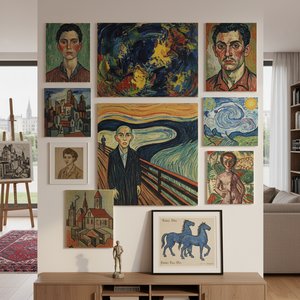
 Zobrazit v interiéru
 Odeslat
 Sdílet
 Podrobnosti
 Průvodce

 Stáhnout obrázek
 Podobné kousky
 Rentgenové snímky
 Slideshow
 Statistiky
Stará kostel Aker


Obraz Edvard Muncha 'Starý kostel Aker' (1881) zachycuje klidnou krásu norské vesnice, ukazuje vlivy expresionismu a podnětnou atmosféru. Prozkoumejte rané dílo mistra!
 Přečíst si více
Edvard Munch (1863-1944): norsk malíř, průkopník expresionismu. Jeho díla zobrazují úzkost, smrt a lidské emoce. Obrazy jako Výkřik jsou ikonické symboly moderní doby.
Giclée / Umělecký tisk
Giclée nebo plátěný tisk muzeální kvality s rychlou výrobou a širokou nabídkou povrchových úprav. ( Objednat ručně malovanou reprodukci Přepnout na digitální verzi obrazu)




P118B $10

P118H $10

P118W $10

P438Z $10

P508JH $12

P508YH $12

P805H $10

P805Z $10

P919BZ $10

P919G $10

P919XJ $10

P959ZH $10

P968JZ $12

W106C $8

W218G $10

W218JH $8

W218Y $10

W307PJ $10

W316G $10

W316PJ $8

W316Y $10

W398PJ $8

W4111J $10

W500HY $15

W500JH $15

W692G $12

W849H $8

W940BG $15

W953PJ $8




Standardní velikost
na zakázku
CM
INCH
Vyberte si z našich přednastavených velikostí, které odpovídají původním proporcím díla.
Loading sizes...

šířka
výška
Můžete zadat vlastní rozměry tak, aby výtvor odpovídal konkrétnímu rámu nebo prostoru. Pokud zvolená velikost nebude odpovídat poměru stran původního obrazu, dílo buď ořížeme, nebo obraz rozšíříme pomocí zrcadlového efektu či jednobarevného okraje. Před zahájením výroby vám bude zaslán digitální náhled k schválení.
Mějte prosím na paměti, že náhled na obrazovce neodráží skutečné oříznutí nebo rozšíření. Pouze digitální náhled přesně zobrazí finální kompozici.
Ačkoliv jsou k dispozici i vlastní rozměry, pro zachování původních proporcí doporučujeme vybrat si rozměr z předdefinovaného seznamu.
Celosvětové doručení () do 2 týdnů namísto standardních 4/5 týdnů. (24 září)

Zdarma celosvětová expresní doprava

Vysoce kvalitní lněné plátno

Úplné pojištění přepravy

Záruka vrácení celního poplatku

Záruka věrného barevného shodu

100dení lhůta pro vrácení zboží (pouze při vadách výroby)

100% garance vrácení peněz

Sleva při více objednávkách
 Skleněná varianta je dostupná pouze u rozměrů menších než 110 cm

Stará kostel Aker
Giclée / Umělecký tisk
Velikost reprodukce
-


Celková cena
$ 69
The Old Church of Aker: A Glimpse into Edvard Munch’s Early Expressionism
Edvard Munch’s “The Old Church of Aker,” painted in 1881, transcends the simple depiction of a rural Norwegian landscape; it represents a pivotal moment in the artist's artistic evolution and foreshadows his later explorations of profound psychological depths. This evocative work offers a fascinating window into Munch’s nascent artistic journey, skillfully blending elements of Realism with the burgeoning seeds of Expressionism that would ultimately define his groundbreaking career. It’s more than just a painting; it’s a distilled essence of Munch's inner world, captured in oil on board with remarkable sensitivity.
Subject Matter and Composition – A Silent Testimony
“The Old Church of Aker” presents a strikingly direct yet profoundly resonant scene: the historic church nestled within a snowy village setting. The composition is deliberately uncluttered, prioritizing clarity and impact over elaborate detail. The church itself dominates the central space, its stark silhouette – a powerful vertical thrust – sharply contrasting against the muted, almost melancholic tones of the surrounding landscape. A winding path, barely discernible in the snow, draws the viewer’s eye inexorably towards the structure, suggesting a journey, perhaps one laden with spiritual significance or simply a contemplative pilgrimage. Scattered figures—a few villagers going about their daily lives—add a subtle layer of human presence to this otherwise serene tableau, hinting at a community rooted in tradition and faith. The sky, heavy with clouds, contributes an atmospheric quality that amplifies the painting’s overall mood – a sense of quiet introspection and perhaps even a touch of foreboding.
Style and Technique: Bridging Realism and Expressionistic Tendencies
While firmly rooted in the principles of Realism, evident in the remarkably accurate depiction of architectural details—the church’s weathered stone, the precise rendering of its roofline—“The Old Church of Aker” already demonstrates Munch's nascent departure towards Expressionism. His brushwork isn’t merely observational; it vibrates with emotional resonance. Notice how he doesn’t meticulously recreate every surface but instead uses short, broken strokes to convey texture and a sense of movement within the snow and clouds. The colors, though predominantly cool – blues, grays, and whites—are strategically employed not for photographic accuracy, but to evoke feeling. The church itself is rendered with warmer hues, creating a subtle visual counterpoint that suggests an inner warmth, a spiritual anchor amidst the surrounding coldness. The painting was executed in oil on board, allowing Munch to build up layers of paint, creating a nuanced and tactile surface—a testament to his deliberate control and expressive intent.
Historical Context and Symbolism – Echoes of Faith and Mortality
Painted during Munch’s formative years, “The Old Church of Aker” reflects both his engagement with the artistic currents of the time and his deeply personal preoccupations. The church itself is a potent symbol—a representation of tradition, enduring faith, and perhaps even mortality. Churches have long served as symbols of stability and continuity in the face of life’s transience, and Munch masterfully captures this duality. The snowy landscape, frequently associated with isolation and introspection, mirrors the artist's own struggles with illness and emotional turmoil during this period of his life. It’s a landscape that speaks to loneliness and contemplation. Interestingly, Old Aker Church has a rich history dating back to the 11th century, adding another layer of historical significance to the artwork—a connection to centuries of faith and community. The church's location near former silver mines also adds an intriguing element, hinting at hidden treasures and perhaps even darker secrets.
Emotional Impact and Legacy – A Window into the Soul
Despite its seemingly serene subject matter, “The Old Church of Aker” evokes a powerful sense of quiet contemplation and melancholy. The painting’s subdued palette and understated composition create an atmosphere that invites viewers to reflect on universal themes—faith, loss, the passage of time, and the human condition. It's not merely a landscape; it’s a distilled emotional experience. This work serves as a crucial stepping stone in Munch’s artistic development, demonstrating his deliberate transition from purely Realist observation towards the emotionally charged Expressionism that would later define him as one of the most influential artists of the 20th century. “The Old Church of Aker” is a testament to Munch's extraordinary ability to imbue even seemingly ordinary scenes with profound emotional depth, offering a glimpse into his soul and inviting us to contemplate our own.
Photo Description: The painting presents a beautiful representation of a snowy village featuring an old church in the background. The scene showcases a large building that appears to be a church, surrounded by several smaller buildings. The sky above the village is filled with clouds, adding an atmospheric touch to the image. In addition to the main church, there are two other churches visible in the painting, one located towards the left side and another on the right side of the scene. A few people can be seen scattered throughout the village, likely going about their daily activities. The overall composition of the painting is quite captivating, with a sense of tranquility and serenity that comes from the snow-covered landscape and the peaceful atmosphere of the village.
Size: Unknown
Date: 1881
Biografie umělce
Život v stínu: Svět Edvarda Muncha
Edvard Munch, narozený roku 1863 v drsné krajině Norska, se stal umělcem ztělesňujícím úzkost a emocionální rozpolcenost moderní doby. Jeho život byl hluboce poznamenán ztrátou a všudypřítomnou melancholií, která sloužila jako pramen jeho silně expresivního umění. Dětství zastíněné brzkými úmrtími matky a sestry – oběti tuberkulózy – v něm probudilo děsivé zaujetí smrtelností, nemocemi a křehkostí lidské existence. Tyto zážitky nebyly pouhými biografickými detaily; staly se jádrem jeho umělecké vize, podněcovaly neúnavné zkoumání vnitřního světa strachu, smutku a touhy. Přísná náboženská víra otce a vlastní boj s duševní nemocí dále přispívaly k pocitu úzkosti, který prostupoval Munchovým světem a formoval nejen jeho osobní život, ale i symbolický jazyk jeho obrazů. Netvořil pouhé scény; externalizoval vnitřní stav, překládal psychickou tísň do vizuální podoby.
Zrození exprese: Vlivy a umělecký vývoj
Munchova umělecká cesta začala formálním studiem na Královské škole umění a designu v Kristianii (Oslo), ale skutečný zápal jeho kreativity zažehl kontakt s bohémskými kruhy a nihilistickou filozofií Hanse Jægera. Jæger Muncha povzbuzoval, aby opustil konvenční akademické styly a ponořil se do hlubin vlastní subjektivní zkušenosti, konceptu, který nazval „malbou duše“. Tento zásadní posun znamenal počátek Munchova osobitého stylu – charakterizovaného syrovými emocemi, zkreslenými formami a odmítnutím naturalistické reprezentace. Jeho cesty do Paříže v 90. letech 19. století ho vystavily rozvíjejícímu se postimpresionistickému hnutí, kde absorboval vlivy umělců jako Paul Gauguin, Vincent van Gogh a Henri de Toulouse-Lautrec. Odvážné použití barev, expresivní štětcování a psychická intenzita těchto mistrů silně rezonovaly s Munchovými vlastními uměleckými sklony. Nenapodoboval jejich techniky; syntetizoval je do něčeho jedinečného – vizuálního jazyka schopného vyjádřit nejhlubší a znepokojivé lidské emoce. Jeho pobyt v Berlíně byl také klíčový, přivedl ho do kontaktu s dramatikem Augustem Strindbergem, jehož zkoumání psychologických témat dále podněcovalo Munchovy umělecké snahy.
Ikonické vize: Hlavní díla a jejich symbolický význam
Munchovo dílo je osídleno obrazy, které se hluboce zakořenily ve společném vědomí. The Scream, možná jeho nejznámější práce, přesahuje status obrazu a stává se univerzálním symbolem existenční úzkosti. Vířící, ohnivá krajina a zkroucená tvář postavy ztělesňují prvotní křik proti lhostejnosti vesmíru. Madonna, kontroverzní a hluboce osobní dílo, s neklidnou upřímností zkoumá témata sexuality, mateřství a smrtelnosti. Opakující se motivy jako The Sick Child – inspirované ztrátou jeho sestry Sophie – slouží jako silné připomínky Munchova dětství trauma a všudypřítomného stínu smrti. Melancholy I & II, mocná zobrazení hlubokého smutku a izolace, odhalují zranitelnost, která je zároveň hluboce osobní i univerzálně srozumitelná. Tato díla nejsou pouhými reprezentacemi vnější reality; jsou okny do duše umělce, nabízející divákům nekompromisní pohled do nejtemnějších zákoutí lidské psychiky. Munch se nesnažil vytvářet krásné obrazy; usiloval o sdělení pravdy – i když byla bolestivá a znepokojující.
Trvalý odkaz: Historický význam a trvající vliv
Munchův přínos modernímu umění je neocenitelný. Zůstává klíčovou postavou ve vývoji expresionismu, připravil cestu umělcům, kteří upřednostňovali subjektivní emoce před objektivní reprezentací. Jeho nekompromisní zkoumání univerzálních lidských zkušeností – lásky, ztráty, úzkosti a smrti – dodnes rezonuje s publikem a upevňuje jeho postavení jako jednoho z nejvlivnějších a trvalých umělců v dějinách umění. Jeho dílo hluboce ovlivnilo následující generace umělců, ovlivnilo hnutí jako německý expresionismus a další. Odvážil se čelit temnější stránce lidské existence, zpochybnil konvenční představy o kráse a umělecké reprezentaci. I po dosažení slávy a uznání – vyvrchulícím založením Munchova muzea v Oslu – jeho osobní život zůstal turbulentní, poznamenaný obdobími duševní nestability a izolace. Přesto i přes to pokračoval ve tvoření a zanechal dílo, které neustále provokuje, vyzývá a inspiruje. Munchův odkaz nespočívá jen v samotných obrazech; spočívá v odvaze čelit složitosti lidské existence a překládat tyto zkušenosti do umění, které oslovuje nejhlubší části našeho bytí.

Edvard Munch
1863 - 1944 , Norsko
Rychlé informace
- Artistic Movement Or Style: Expreisionismus
- Artists Or Movements Influenced By This Artist: ['Německý expresionismus']
- Artists Who Influenced This Artist:
- Gauguin
- Van Gogh
- Toulouse-Lautrec
- Date Of Birth: 12. prosince 1863
- Date Of Death: 23. ledna 1944
- Full Name: Edvard Munch
- Nationality: Norský
- Notable Artworks:
- Výkřik
- Madona
- Nemocné dítě
- Place Of Birth: Ådalsbruk, Švédsko
Související články

Edvard Munch: Top 25 děl mistra – Umění plné emocí pro váš domov | TopImpressionists.com
Prozkoumejte top 25 děl Edvarda Muncha – od ikonického Skřeku po hluboké portréty. Objevte expresionistické mistrovské kousky, techniku a příběhy za nimi. Kvalitní reprodukce obrazů pro váš interiér na TopImpressionists.com

Evoking Tranquility: A Comprehensive Exploration of Serene Landscapes in Art History
Explore the history of serene landscapes in art! Discover renowned artists like Monet & Munch, movements from Impressionism to Tonalism, and find the perfect piece to bring tranquility to your home. Expert insights at TopImpressionists.
Top 10 expresionistických mistrovských děl: Umění a inspirace pro váš domov
Prozkoumejte 10 ikonických děl expresionismu od Muncha, van Gogha a dalších. Objevte příběhy umělců, techniky a emoce v obrazech. Reprodukce obrazů nejvyšší kvality na TopImpressionists.com – inspirace pro váš interiér! Prohlédněte si celou kolekci online.

John Constable: 25 mistrovských děl krajinářské poezie | TopImpressionists.com
Prozkoumejte 25 ikonických děl Johna Constabla, mistra anglického krajinářství a romantismu. Obdivujte jeho olejomalby, plátna s venkovskou atmosférou a inspirujte se pro dekoraci interiéru. Reprodukce obrazů nejvyšší kvality na TopImpressionists.com

Edvard Munch: Anxiety, Modernity & the Dawn of Expressionism
Explore the profound world of Edvard Munch, pioneer of Expressionism. Discover the origins of 'The Scream' & his haunting depictions of anxiety, mortality, and love. Expert analysis & high-quality reproductions at TopImpressionists.
Prozkoumejte umělecká díla uspořádaná podle témat, stylů a charakteristik.


