

Zobrazeno: · Včetně rámu:
 Náhled v interiéru
 Sdílet
 Sdílet
 Podrobnosti o díle
 Průvodce

 Stáhnout
 Podobné položky
 Rentgenové snímky
 Slideshow
 Otázky a odpovědi
 Statistiky

Kč 5832
Ručně malovaná olejová reprodukce
Rukou malované olejné plátno v libovolném rozměru i s rámem, vyrobené našimi umělci na zakázku. ( Přepnout na tisk Přepnout na digitální obraz)
Velikost
·Standardní velikost
na zakázku
CM
INCH
Vyberte si z našich přednastavených velikostí, které odpovídají původním proporcím díla.
Načítání velikostí...

šířka
výška
Zadejte šířku a výšku, které potřebujete pro váš rám nebo stěnu. Protože se jedná o ruční malbu, při výběru jiného formátu může umělec kolem obrazu domalovat o něco více, nebo jej mírně oříznout — rozhodnete si vy. Před zahájením malby vám zašleme digitální náhled ke schválení. Obraz zobrazený na této stránce neodpovídá skutečnému výsledku — pouze digitální náhled jej zobrazuje.
 Více informací
Dokončit
·
Bílé okraje Kč1

Rozostřené okraje Kč1

Prodloužené okraje Kč1

P118B Kč10

P118H Kč10

P118W Kč10

P438Z Kč10

P508JH Kč12

P508YH Kč12

P805H Kč10

P805Z Kč10

P919BZ Kč10

P919G Kč10

P919XJ Kč10

P959ZH Kč10

P968JZ Kč12

W106C Kč8

W218G Kč10

W218JH Kč8

W218Y Kč10

W307PJ Kč10

W316G Kč10

W316PJ Kč8

W316Y Kč10

W398PJ Kč8

W4111J Kč10

W500HY Kč15

W500JH Kč15

W692G Kč12

W849H Kč8

W940BG Kč15

W953PJ Kč8

H24-GOLD Kč30

H24-SILVER Kč30

H36-GOLD Kč45

H36-SILVER Kč45
Dodáváno v ochranné tubě, připraveno k vlastním rámování.
Doplňkové služby
volitelnéCo všechno doplňky zahrnují?
Příklady možných změn: Nahrazení obličeje fotografií zákazníka; Přidání mazlíčka (např. výměna kočky za psa); Skrytá zpráva v pozadí; Změna krajiny nebo prvků v pozadí.
Po přijetí objednávky vám tým TopImpressionists.com pošle e-mail s instrukcemi a poskytne náhled návrhu
Po přijetí objednávky vám tým TopImpressionists.com pošle e-mail s instrukcemi a poskytne náhled návrhu
Celosvětová doprava () za 3–4 týdny namísto standardních 5 týdnů. (5 listopad). Bez kompromisů v kvalitě.
Ochranný lak
Popisek díla
Detaily ryté bronzové plakety
This elegant plaque features the artist's name and the title of the artwork, finely engraved for a timeless presentation.
It is made from bronze with a refined, elegant finish. The text is precisely laser-engraved for a sharp and permanent result. Measuring 9x2 cm, the plaque is compact yet easy to read. It's built to be durable and scratch-resistant, offering a professional, museum-quality look. Mounting is simple thanks to the included adhesive backing.
Detaily průhledné akrylové desky
The plaque includes essential engraved details such as the artist's name, the title of the artwork, the date it was created, the type of media used-like oil on canvas or watercolor-a brief description of the piece, and a QR code that links to the complete artwork information.
It is crafted from clear acrylic, offering a sleek, modern appearance. The text is UV-engraved in black to ensure strong visual contrast. With a size of 10x15 cm, it ensures optimal readability. It comes equipped with two metal hooks for secure wall mounting. The plaque is designed to be weather-resistant, making it suitable for various environments, and it includes interactive features that work seamlessly with smartphone scanning.
Detaily černé akrylové destičky
This elegant plaque includes engraved information such as the artist's name, the title of the artwork, the date it was created, the type of media used (like oil on canvas or watercolor), a short description of the artwork, and a QR code for quick access to more information.
The plaque itself is made from refined black acrylic with a premium finish. The text is laser-engraved in white for high contrast and readability. Its size is 10x15 cm, designed to be easy to read. It comes with two metal hooks for professional mounting. The design is sleek and fits any interior style. It is also weather-resistant and durable, with built-in digital integration for mobile compatibility.
Skleněná varianta je dostupná pouze u rozměrů menších než 110 cm
 Skleněná varianta je dostupná pouze u rozměrů menších než 110 cm
- Zdarma celosvětová expresní doprava
- Vysoce kvalitní lněné plátno
- Kompletní pojištění přepravy
- Záruka vrácení celního poplatku
- Záruka věrného barevného souladu
- 100dení lhůta pro vrácení zboží (pouze při vadách výroby)
- 100% záruka vrácení peněz
- Sleva při více objednávkách


Popis sbírného předmětu
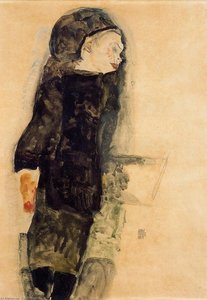
Witness Egon Schiele's haunting 'Child in Black.' This watercolor captures a young figure amidst a somber setting, reflecting the artist’s Expressionist style and exploration of mortality. A poignant portrait from 1911.
Biografie umělce
Egon Schiele: expresivní umělec s temnými motivy, portréty a silnými emocemi. Objevte jeho unikátní styl a díla! Reprodukce nyní.
O malbě
A Fragmented Soul: Egon Schiele’s ‘Child in Black’
Egon Schiele's “Child in Black,” painted in 1911, isn’t merely a portrait; it’s a distilled essence of anxiety and nascent sexuality, a haunting glimpse into the artist’s intensely personal world. Created during a period of profound upheaval – both personally and within European art – this watercolor captures a young figure, likely a girl, rendered with an unsettling directness that speaks volumes about Schiele's fascination with vulnerability and the darker aspects of human experience. The painting immediately draws the viewer in with its muted palette—a symphony of grays, blacks, and subtle blues—creating an atmosphere of quiet contemplation tinged with unease. It’s a visual embodiment of Expressionism’s core tenets: prioritizing emotional impact over realistic representation.
The Artist's Crucible: Schiele’s Biography and the Shadow of Loss
To truly appreciate “Child in Black,” one must understand the turbulent backdrop against which it was created. Born in 1890 in Tulln an der Donau, Austria, Egon Schiele’s life was tragically shaped by illness and loss from a young age. The death of his father, a railway station master, due to syphilis at just fourteen profoundly impacted him, fueling a lifelong preoccupation with mortality and the fragility of existence. This early trauma, coupled with the subsequent loss of his sister Elvira, instilled in Schiele a deep-seated sense of melancholy and an unflinching gaze upon the human condition. His uncle’s guardianship, marked by control and disapproval of his artistic pursuits, further contributed to his independent spirit and rebellious nature – qualities that would become hallmarks of his work. The painting can be seen as a direct reflection of this internal struggle, a visual manifestation of grief and uncertainty.
Expressionist Techniques: Line, Color, and the Unveiling of Emotion
Schiele’s mastery lies in his distinctive technique—a raw, almost violent application of watercolor. Notice the loose, gestural lines that define the child's form; they aren’t precise or idealized but rather convey a sense of immediacy and emotional intensity. The figure is rendered with an unsettling lack of detail, emphasizing its vulnerability and drawing attention to the subtle shifts in expression—a slight tilt of the head, a downward gaze – that hint at inner turmoil. The use of color is equally deliberate: the dominant blacks and grays create a somber mood, while small touches of blue suggest a melancholic longing. The background, with its indistinct wall and cryptic writing (likely a title or description), further isolates the child, intensifying the sense of loneliness and introspection. It’s a technique that prioritizes feeling over form, echoing the core principles of Expressionism.
Symbolic Resonance: Mortality, Innocence, and the Unspoken
“Child in Black” is rich with symbolic potential. The child herself represents innocence—a fleeting, vulnerable state threatened by the encroaching realities of life and death. The black clothing could symbolize mourning or a sense of impending doom, while the hat adds an element of defiance, suggesting a quiet resistance to the forces that seek to diminish her spirit. The painting’s overall atmosphere evokes a sense of unease, prompting viewers to contemplate themes of mortality, loss, and the complexities of human emotion. It's not a cheerful portrait; it’s a poignant meditation on the darker aspects of existence—a subject Schiele explored relentlessly throughout his tragically short career. The ambiguity surrounding the child’s identity further enhances the painting’s power, inviting viewers to project their own anxieties and interpretations onto the scene.
TopImpressionists offers meticulously crafted hand-painted reproductions of “Child in Black,” allowing you to bring this powerful work of art into your home or office. Each reproduction is created by skilled artists using archival-quality materials, ensuring that it captures the essence and emotional depth of Schiele’s original masterpiece. Explore our collection today and experience the haunting beauty of “Child in Black” firsthand.
Otázky a odpovědi
Jaké emoce vyvolává „Child in Black“ od Egon Schiele?
Emocionální náboj díla „Child in Black“ od Egon Schiele je Melancholic. Tento údaj vystihuje pocity, které toto dílo vyjadřuje.
Jakou atmosféru do interiéru přináší „Child in Black“ od Egon Schiele?
S svou Dramatic atmosférou je dílo „Child in Black“ ideální volbou do Living Room.
V jaké technice je vytvořeno dílo „Child in Black“ od Egon Schiele?
„Child in Black“ je dílo vytvořené v technice Acrylic On Canvas.
Rychlá fakta a umělecký kvíz
O umělci Egon Schiele

Egon Schiele
1890 - 1918, Rakousko
Biografie umělce
A Life Forged in Expression
Egon Schiele, narozený v roce 1890 v malebném městečku Tulln an der Donau u Vídně, vedl život plný dramatických zvratů – jeho existence byla spjata jak s mimořádným uměleckým zrakem, tak s hlubokými osobními utrpeními. Jeho rané roky byly ovlivňovány nemocemi a ztrátami; jeho otec podlehl při 14 letech syndromu Krigera (progresivní paralýza), což otřáslo jeho duší a inspirovalo ho k zkoumání témat úmrtí a křehkosti existence. V prvních letech života byl vychováván jeho matkou a poté pod dohledem jeho strážce, Leopolda Czihaceka, což mu poskytlo určitou nezávislost, ale zároveň i chybějící stabilitu. Už v dětství projevoval intenzivní zájem o vlaky – motiv, který se později objevoval ve svých dílech – a talent pro kreslení, byť byl tento jeho zájem původně potlačován otcem, který ho viděl jako odklon od praktičtějších úmyslů. Zvláštní význam měla i smrt jeho sestry Eliry, která zanechala hluboké rány v jeho psychice. Tyto rané zkušenosti formovaly jeho citlivost a emocionální upřímnost, které se staly charakteristickými rysy jeho uměleckého projevu – neustálá konfrontace s životem, smrtí a lidským bytím.The Crucible of Vienna: Artistic Development
Schieleho formální umělecké vzdělání začalo na Kunstgewerbeschule (Škole umění a řemesel) ve Vídni, ale brzy se cítil stísněný jejími konzervativními tradicemi. Přestoupil na Akademie der bildenden Künste (Viedeňskou akademii výtvarných umění), jen aby byl znovu zklamaný jejími rigidními akademickými konvencemi. Tato nespokojenost ho vedla k tomu, že formální vzdělání opustil a zvolil vlastní cestu – důkazem jeho neochvějné umělecké víry. Klíčovým vlivem v těchto raných letech byl Gustav Klimt; Schiele obdivoval Klimtův dekorativní styl a zkoumání symboliky, dokonce získal vedení od tohoto uznávaného umělce. Postupně se však od Klimta odlišil, vyvinul si vlastní, výrazný hlas charakterizovaný upřímností a psychologickou intenzitou. Spolu s dalšími progresivními umělci založil v roce 1909 Neues Wiener Kunstgruppe (Nové vídeňské umělecké skupiny), spojil se s jinými umělci, kteří zpochybňovali tehné umělecké normy. Jeho rané díla – často znepokojivé portréty a autorretráty – představovala silné prohlášení o emocionálním chaosu, vyznačující se zkreslenými postavami a hmatatelným pocitem zranitelnosti. Tyto malby nebyly pouhými reprezentacemi fyzického tvaru, ale prozkoumáváním vnitřního světa – úzkostí, touhou a strachy, které pronáslídkovaly lidské bytí. Snažil se zobrazit ne to, co *viděl*, ale to, co *cítil*.Raw Emotion and Unflinching Truth
Umělecké dílo Egona Schiele je okamžitě rozpoznatelné pro svou upřímnost a psychologickou hloubku. Bez obav se setkával s tématy často považovanými za tabu – sexualita, smrt, úzkost, izolace – s neochvějným pohledem. Jeho charakteristický styl zahrnuje prodlužované postavy, zkroucené postoje a expresivní linie, které vyjadřují pocit nepohody a emocionální intenzitu. Lidský tvar, zejména nahota, stal se jeho hlavním motivem – ne jako objekt idealizované krásy, ale jako nositel prozkoumávání složitostí lidského zážitku. Autorretráty tvoří významnou část jeho tvorby, nabízející intimní pohledy do jeho vnitřního světa – svět často poznamenaný osamělostí a sebepochybem. Nebojil se zobrazit sám sebe v nepříjemných nebo zranitelných pózách, odhalujíc hlubokou úroveň seběznosti a introspekce. Kromě autoritrátů Schiele vytvářel portréty i jiných lidí, zachycující jejich podobnosti s znepokojivou realitou, která se zdála pronikat pod povrch. Jeho krajiny, i když nejsou tak důležité jako jeho figurální malby, demonstrují jeho mistrovství tvaru a barvy, často odrážející stejnou emocionální intenzitu jako jeho portréty. Použití linky je zvláště působivé v Schieleho díle; není to pouhý nástroj pro definování tvaru, ale expresivní síla, která vyjadřuje emoce a psychologickou napětí. Opakující se motivy, jako například *Physalis* (fylloxera) – symbol smrti a přelomu s jeho jemným, papírovým slupkou – dále zdůrazňují tuto obavu o smrtelnost.Major Achievements and Historical Significance
Přestože čelil cenzuře a právním problémům – včetně krátkého vězení za údajné zvrácení dětí svými díly – Schiele získal uznání v avantgardních kruhy Vídeňě. Jeho dílo zpochybnilo konvence doby, vyvolalo jak obdiv, tak odpor. V době své náhlé smrti během španělské chřipky v roce 1918 ve věku dvacetiletého roku si však upevnil pozici jednoho z předních představitelů rakouského expresionismu. Důležité díla, jako například *Self-Portrait with Physalis*, *Couple Embracing* a *Field Landscape (Kreuzberg near Krumau)* jsou svědectvími jeho uměleckého génia. Jeho vliv na další generace umělců je nezpochybnitelný, zejména těch, kteří se zajímali o prozkoumávání psychologických témat a zpochybňování konvenčních uměleckých norem. Schieleho odvážný přístup k tvaru a motivům stále rezonuje s publikem dnes, což z něj činí jednoho z nejdůležitějších a nejvlivnějších postav v raném 20. století. Jeho malby jsou nyní vystaveny ve významných muzejních sbírkách po celém světě, včetně Leopold Museumu ve Vídni a Egon Schiele Art Centra v Českom Krumlově, zajišťujících tak trvalé umělecké dědictví. Nechal za sebou dílo, které není jen esteticky působivé, ale hluboce lidské – důkazem síly umění konfrontovat složitosti existence s upřímností, odvahou a neochvějnou vizí.- Key Themes: Mortality, sexuality, isolation, psychological turmoil.
- Influences: Gustav Klimt, Viennese Secession, personal trauma.
- Style Characteristics: Elongated figures, contorted poses, expressive lines, raw emotion.
Rychlé informace o umělci Egon Schiele
- Artistic Movement Or Style: Výrazismus
- Artists Or Movements Influenced By This Artist: ['Klimt']
- Artists Who Influenced This Artist: ['Gustav Klimt']
- Date Of Birth: 1890
- Date Of Death: 1918
- Full Name: Egon Schiele
- Nationality: Rakouský
- Notable Artworks:
- Portréty
- Samoportréty
- Landscapy
- Place Of Birth: Tulln, Rakousko


Prozkoumejte umělecká díla uspořádaná podle témat, stylů a charakteristik.


Egon Schiele
Child in Black
() ·
Včetně rámu: · Ručně malováno olejem na plátně
Celkem