

Shown: · With its frame:
 Náhled v interiéru
 Sdílet
 Sdílet
 Podrobnosti o díle
 Průvodce

 Stáhnout
 Podobné položky
 Rentgenové snímky
 Slideshow
 Q&A
Q&A Statistiky

Kč 5844
Ručně malovaná olejová reprodukce
Rukou malované olejné plátno v libovolném rozměru i s rámem, vyrobené našimi umělci na zakázku. ( Přepnout na tisk Přepnout na digitální obraz)
Toto umělecké dílo je chráněno autorským právem
Umělecké dílo zobrazené na této stránce je chráněno autorským zákonem, což znamená, že nemůžeme legálně vytvářet ani prodávat jeho identickou reprodukci. Tato ochrana je vymáhána na základě mezinárodních dohod, jako například Berberská úmluva a národními zákony, včetně těch stanovených v Americký autorský zákon – Díl 17. Všechna práva vyhrazena.
Jako etická a právní alternativa nabízíme vlastní, ručně malovaná umělecká díla inspirovaná originálem. Naši zdatní a profesionální umělci si pečlivě studují styl, náladu a uměleckou podstatu originálu, aby vytvořili nové, jedinečné dílo, které vyvolává stejný pocit – přičemž zůstává samostatným originálním tvůrčím dílem.
Tato metoda je plně v souladu s autorským právem, protože nezahrnuje kopírování ani duplikování chráněného díla. Jde o kreativní reinterpretaci – nový obraz, který je inspirován originálem, ale není s ním identický.
 Více informací
Size
·Standardní velikost
na zakázku
CM
INCH
Vyberte si z našich přednastavených velikostí, které odpovídají původním proporcím díla.
Loading sizes...

šířka
výška
Zadejte šířku a výšku, které potřebujete pro váš rám nebo stěnu. Protože se jedná o ruční malbu, při výběru jiného formátu může umělec kolem obrazu domalovat o něco více, nebo jej mírně oříznout — rozhodnete si vy. Před zahájením malby vám zašleme digitální náhled ke schválení. Obraz zobrazený na této stránce neodpovídá skutečnému výsledku — pouze digitální náhled jej zobrazuje.
Finish
·
White Kč1

Blurside Kč1

Extended Kč1

P118B Kč10

P118H Kč10

P118W Kč10

P438Z Kč10

P508JH Kč12

P508YH Kč12

P805H Kč10

P805Z Kč10

P919BZ Kč10

P919G Kč10

P919XJ Kč10

P959ZH Kč10

P968JZ Kč12

W106C Kč8

W218G Kč10

W218JH Kč8

W218Y Kč10

W307PJ Kč10

W316G Kč10

W316PJ Kč8

W316Y Kč10

W398PJ Kč8

W4111J Kč10

W500HY Kč15

W500JH Kč15

W692G Kč12

W849H Kč8

W940BG Kč15

W953PJ Kč8

H24-GOLD Kč30

H24-SILVER Kč30

H36-GOLD Kč45

H36-SILVER Kč45
Shipped in a protective tube, ready for your own framer.
Above 105 cm the frame is shipped as a kit for a professional framer — read the details.
Extras
optionalWhat do the extras include?
Examples of what can be changed: Replace face with customer photo; Add pet (e.g., replace cat with dog); Include hidden message in background; Change background landscape or elements.
After order, TopImpressionists.com team will email client for instructions and provide a mockup preview
After order, TopImpressionists.com team will email client for instructions and provide a mockup preview
Celosvětová doprava () za 3–4 týdny namísto standardních 5 týdnů. (1 listopad). Bez kompromisů v kvalitě.
Ochranný lak
Popisek díla
Detaily ryté bronzové plakety
This elegant plaque features the artist's name and the title of the artwork, finely engraved for a timeless presentation.
It is made from bronze with a refined, elegant finish. The text is precisely laser-engraved for a sharp and permanent result. Measuring 9x2 cm, the plaque is compact yet easy to read. It's built to be durable and scratch-resistant, offering a professional, museum-quality look. Mounting is simple thanks to the included adhesive backing.
Detaily průhledné akrylové desky
The plaque includes essential engraved details such as the artist's name, the title of the artwork, the date it was created, the type of media used-like oil on canvas or watercolor-a brief description of the piece, and a QR code that links to the complete artwork information.
It is crafted from clear acrylic, offering a sleek, modern appearance. The text is UV-engraved in black to ensure strong visual contrast. With a size of 10x15 cm, it ensures optimal readability. It comes equipped with two metal hooks for secure wall mounting. The plaque is designed to be weather-resistant, making it suitable for various environments, and it includes interactive features that work seamlessly with smartphone scanning.
Detaily černé akrylové destičky
This elegant plaque includes engraved information such as the artist's name, the title of the artwork, the date it was created, the type of media used (like oil on canvas or watercolor), a short description of the artwork, and a QR code for quick access to more information.
The plaque itself is made from refined black acrylic with a premium finish. The text is laser-engraved in white for high contrast and readability. Its size is 10x15 cm, designed to be easy to read. It comes with two metal hooks for professional mounting. The design is sleek and fits any interior style. It is also weather-resistant and durable, with built-in digital integration for mobile compatibility.
Skleněná varianta je dostupná pouze u rozměrů menších než 110 cm
 Skleněná varianta je dostupná pouze u rozměrů menších než 110 cm
- Zdarma celosvětová expresní doprava
- Vysoce kvalitní lněné plátno
- Kompletní pojištění přepravy
- Záruka vrácení celního poplatku
- Záruka věrného barevného souladu
- 100dení lhůta pro vrácení zboží (pouze při vadách výroby)
- 100% záruka vrácení peněz
- Sleva při více objednávkách


Popis sbírného předmětu
Explore Georges Braque's masterful still lifes—featuring serene landscapes and subtle color palettes—in *The Poetry of Things*, a London exhibition celebrating his enduring legacy beyond Cubism.
Biografie umělce
Georges Braque (1882-1963): Pionér kubismu & fauvizmu. Objevte jeho inovativní umění, od obrazů z L'Estaque po fascinující koláže. #Braque #Kubismus #Umění
About the painting
A Quiet Revolution in Still Life
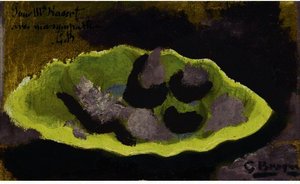
To gaze upon Georges Braque’s “Dead Nature” is to witness a profound moment of stillness within the turbulent currents of modern art history. Created in 1930, this work serves as a masterful testament to the artist's ability to find complexity within simplicity. While at first glance the painting appears to be a humble arrangement of fruit and glass, it is, in truth, a sophisticated exploration of how we perceive the physical world. Braque does not merely present a bowl of fruit; he invites the viewer into a reconstructed reality where the boundaries between object and space begin to dissolve. For the discerning collector or interior designer, this piece offers a captivating focal point that brings an intellectual depth and a sense of timelessness to any curated space.
The composition centers on a ceramic bowl, rendered in soft greenish-yellow tones, which holds a collection of fruit that seems to pulse with a muted, internal light. Beside it, a glass vessel catches the ambient light, its transparency interrupted by the rhythmic application of paint. Braque’s mastery lies in his ability to use geometric planes—subtle cubes and cylinders—to overlap and intersect, disrupting traditional perspective. This technique, a hallmark of his Cubist evolution, forces the eye to move across the canvas, discovering new facets of form with every glance. The interplay of light and shadow is not merely decorative but structural, creating a sense of weight and presence that anchors the entire composition.
The Alchemy of Texture and Tone
Braque’s technical prowess is most evident in his deliberate use of color and texture to evoke emotion. He moves away from the vibrant, almost aggressive palettes of his earlier Fauvist influences, opting instead for a harmonious arrangement of earthy ochres, deep umbers, and subtle creams. These muted tones create a sophisticated atmosphere that feels both grounded and ethereal. The artist employs delicate glazing techniques to build layers of depth, allowing light to seemingly trapped beneath the surface of the paint. This creates a tactile quality; one can almost feel the coolness of the glass and the matte smoothness of the ceramic bowl.
The emotional impact of “Dead Nature” is one of contemplative peace. There is no frantic movement here, only the quiet dignity of objects existing in a state of permanent repose. For those looking to decorate a sanctuary-like environment—perhaps a study, a library, or a minimalist living area—this artwork provides a sense of stability and intellectual rigor. It does not demand attention through loud colors but earns it through its nuanced textures and the subtle tension between its fragmented shapes. It is a piece that rewards slow looking, offering new layers of meaning to anyone willing to linger before its surface.
A Legacy of Visionary Thought
Understanding “Dead Nature” requires acknowledging the historical weight Braque carried as a pioneer of the Cubist movement. Alongside Pablo Picasso, Braque dismantled the "window onto the world" that had defined Western art since the Renaissance. He replaced it with a multidimensional experience, prioritizing how an object is known by the mind rather than just how it is seen by the eye. This painting represents a mature stage of this journey, where the radical experiments of his youth have settled into a refined, poetic language of form.
Owning a high-quality reproduction of such a seminal work allows for the integration of art history into the modern home. It is more than a decorative element; it is an invitation to participate in the dialogue of the avant-garde. Whether placed in a contemporary setting with clean lines or nestled within a classic, traditional interior, “Dead Nature” acts as a bridge between the revolutionary spirit of the early 20th century and the aesthetic sensibilities of today. It remains a profound symbol of how art can transform the mundane into the extraordinary.
Otázky a odpovědi
Proč má dílo „Dead nature“ právě takový autorský status?
Autorskoprávní status díla „Dead nature“ – stále chráněno autorským právem – vyplývá ze smrti umělce v roce 1963.
Jaké je místo díla „Dead nature“ mezi opakovanými tématy umělce Georges Braque?
„Dead nature“ zachycuje bowl, ceramics, reflection, dots, contrast, composition, monochrome, zatímco v díle umělce Georges Braque se setkáváme s tématy jako geometric abstraction, picasso collaboration, formal exploration, minimalist aesthetic, cubist legacy. Porovnání těchto dvou aspektů odhaluje, jak toto dílo navazuje na obvyklá témata tohoto autora.
Jak si mohu prohlédnout „Dead nature“ od Georges Braque ve formě skluzobránku?
K dispozici je sklízivka: stránka Slideshow díla „Dead nature“ od Georges Braque.
Quick facts and art quiz
About Georges Braque

Georges Braque
1882 - 1963, Francie
Biografie umělce
Early Life and Artistic Foundations
Georges Braque, narozený v Argenteuili, Francie, v roce 1882, se vydal na cestu hluboce spjatou s vyvíjejícím se uměleckým prostředím. Jeho dětství v rodině malířů a dekoračních řemeslníků ho nenápadně ne jen naučila technické zručnosti při práci s materiály, ale také brzy ocenil formu a strukturu. I když začal následovat otcovu profesi, Braqueův vrozený umělecký smysl brzy vedl k formálnímu vzdělání na École des Beaux-Arts v Le Havru, což značilo počátek jeho cesty k tomu stát se jedním z nejvlivnějších malířů 20. století. Toto základy – kombinace praktických řemeslných dovedností a akademického studia – se ukázaly jako klíčové, když později dekonstruoval a znovuobjevil tradiční umělecké konvence.
V roce 1902 se Braque přestěhoval do Paříže, kde pokračoval ve studiu na Académie Humbert, ponořil se do pulzujícího uměleckého prostředí města. Zde potkal umělce jako Marie Laurencin a Francis Picabia, což vytvořilo spojení, které ovlivnilo jeho raný vývoj. Jeho počáteční díla odrážela vliv impresionismu a postimpresionismu, ale klíčový setkání s bujnou barvou a expresivní svobodou fauvizmu v roce 1905 zapálilo nový směr ve jeho uměleckém prozkoumávání.
The Embrace of Fauvism and the Dawn of Cubism
Braqueovo přijetí fauvistických principů – charakterizovaných intenzivními, ne-realistickými barvami a emocionálním vyjádřením – je živě ilustrováno díly jako The Patience. Tato éra zahrnovala spolupráci s umělci jako Henri Matisse a André Derain, experimentování s bohatými paletami a zjednodušenými formami. Nicméně Braqueovo zapojení do fauvizmu nebylo pouhým napodobenstvím; vložil do něj jedinečný cit, tlumení pohybuho nadměrné exubance s rezervovanější a analytičtější přístupem.
Klíčovým bodem se stal rok 1907 s jeho vystavením retrospektivní výstavy Paul Cézanneových děl. Cézannova důraz na geometrické formy a více perspektiv hluboce ovlivnila Braquea, což položilo základy pro jeho průlomovou spolupráci s Pablo Picassem. Od roku 1908 se ti dva uměleckí titanové vydali na intenzivní intelektuální dialog, který přinesl zrození kubismu – revolučního hnutí, které zpochybnilo tradiční představy o reprezentaci.
Společně Braque a Picasso vyvinuli analytický kubismus, rozřezávali objekty na geometrické tvary a prezentovali je z několika úhlů pohledu současně, čímž narušili tradiční prostorovou perspektivu a zaměřili se na základní strukturu forem. Díla jako Houses at L'Estaque demonstrují tuto ranou fázi, ukazují radikální odklon od konvenčních perspektiv a důraz na podstatu tvarů.
Innovation Through Fragmentation and Collage
Spolupráce Braquea a Picassa pokračovala v rozšiřování uměleckých možností, což vedlo k vývoji syntetického kubismu kolem roku 1912. Tato fáze zahrnovala zavádění koláže – začlenění reálných materiálů, jako jsou novinové výstřižky a textury, do obrazů. Tato inovace narušila tradiční hierarchii mezi malířstvím a sochařstvím, rozmazávala hranice mezi uměním a životem.
Braqueovo průkopnické používání *papier collé* (přilepených papírů) znamenalo významný obrat v jeho uměleckém vývoji. Integrací fragmentů z každodenního života do svých kompozic narušil iluzivní prostor tradičního malířství a zaváděl novou úroveň materiality a textury. Tato technika nejen rozšířila formální možnosti umění, ale také odrážela rostoucí zájem o vztah mezi reprezentací a realitou.
Later Years and Enduring Legacy
Po válce se Braqueův styl vyvíjel za hranice přísné formalismu raného kubismu, zahrnoval prvky klasické kompozice a znovuobjevil zájem o krajinu. I když si udržel geometrické vlivy, které definovaly jeho dřívější práci, vyvinul zřetelnější a kontemplativnější přístup k malování. Jeho pozdější krajiny a interiéry jsou charakterizovány jejich klidnou atmosférou a jemnými harmoniemi barev.
Během své kariéry se Braque neustále zavazoval k prozkoumávání základních principů formy, prostoru a reprezentace. Pokračoval v experimentování s různými materiály a technikami, rozšiřoval hranice uměleckého vyjádření až do své smrti v roce 1963. Jeho vliv na následné generace umělců je nezměřitelný, formoval průběh moderního umění a inspiroval nespočet malířů, sochařů a kolážistů.
Influences and Notable Works
- Vlivy: Henri Matisse, André Derain, Paul Cézanne
- Klíčová díla: Houses at L'Estaque, The Patience, Violin and Palette, Mandola
- Dopad na uměleckou historii: Revolucionalizoval 20. století prostřednictvím kubismu; zpochybnil tradiční představy o perspektivě a reprezentaci.
Quick facts about Georges Braque
- Artistic Movement Or Style: Kubismus, Fauvizmus
- Artists Or Movements Influenced By This Artist:
- Picasso
- Moderní umění
- Artists Who Influenced This Artist:
- Matisse
- Cézanne
- Date Of Birth: 13. května 1882
- Date Of Death: 31. srvna 1963
- Full Name: Georges Braque
- Nationality: Francouzský
- Notable Artworks:
- Domy v L'Estaque
- Trpělivost
- Violin a štětce
- Place Of Birth: Argenteuil, Francie
Prozkoumejte umělecká díla uspořádaná podle témat, stylů a charakteristik.


Georges Braque
Dead nature
() ·
With its frame: · Hand-painted in oil on linen
Total