
Zobrazeno: · Včetně rámu:
 Náhled v interiéru
 Sdílet
 Sdílet
 Podrobnosti o díle
 Průvodce

 Stáhnout
 Podobné položky
 Rentgenové snímky
 Slideshow
 Otázky a odpovědi
 Statistiky
- 74.0 x 61.0 cm


Kč 5855
Ručně malovaná olejová reprodukce
Rukou malované olejné plátno v libovolném rozměru i s rámem, vyrobené našimi umělci na zakázku. ( Přepnout na tisk Přepnout na digitální obraz)
Velikost
·Standardní velikost
na zakázku
CM
INCH
Vyberte si z našich přednastavených velikostí, které odpovídají původním proporcím díla.
Načítání velikostí...

šířka
výška
Zadejte šířku a výšku, které potřebujete pro váš rám nebo stěnu. Protože se jedná o ruční malbu, při výběru jiného formátu může umělec kolem obrazu domalovat o něco více, nebo jej mírně oříznout — rozhodnete si vy. Před zahájením malby vám zašleme digitální náhled ke schválení. Obraz zobrazený na této stránce neodpovídá skutečnému výsledku — pouze digitální náhled jej zobrazuje.
 Více informací
Dokončit
·
Bílé okraje Kč1

Rozostřené okraje Kč1

Prodloužené okraje Kč1

P118B Kč10

P118H Kč10

P118W Kč10

P438Z Kč10

P508JH Kč12

P508YH Kč12

P805H Kč10

P805Z Kč10

P919BZ Kč10

P919G Kč10

P919XJ Kč10

P959ZH Kč10

P968JZ Kč12

W106C Kč8

W218G Kč10

W218JH Kč8

W218Y Kč10

W307PJ Kč10

W316G Kč10

W316PJ Kč8

W316Y Kč10

W398PJ Kč8

W4111J Kč10

W500HY Kč15

W500JH Kč15

W692G Kč12

W849H Kč8

W940BG Kč15

W953PJ Kč8

H24-GOLD Kč30

H24-SILVER Kč30

H36-GOLD Kč45

H36-SILVER Kč45
Dodáváno v ochranné tubě, připraveno k vlastním rámování.
Doplňkové služby
volitelnéCo všechno doplňky zahrnují?
Příklady možných změn: Nahrazení obličeje fotografií zákazníka; Přidání mazlíčka (např. výměna kočky za psa); Skrytá zpráva v pozadí; Změna krajiny nebo prvků v pozadí.
Po přijetí objednávky vám tým TopImpressionists.com pošle e-mail s instrukcemi a poskytne náhled návrhu
Po přijetí objednávky vám tým TopImpressionists.com pošle e-mail s instrukcemi a poskytne náhled návrhu
Celosvětová doprava () za 3–4 týdny namísto standardních 5 týdnů. (8 listopad). Bez kompromisů v kvalitě.
Ochranný lak
Popisek díla
Detaily ryté bronzové plakety
This elegant plaque features the artist's name and the title of the artwork, finely engraved for a timeless presentation.
It is made from bronze with a refined, elegant finish. The text is precisely laser-engraved for a sharp and permanent result. Measuring 9x2 cm, the plaque is compact yet easy to read. It's built to be durable and scratch-resistant, offering a professional, museum-quality look. Mounting is simple thanks to the included adhesive backing.
Detaily průhledné akrylové desky
The plaque includes essential engraved details such as the artist's name, the title of the artwork, the date it was created, the type of media used-like oil on canvas or watercolor-a brief description of the piece, and a QR code that links to the complete artwork information.
It is crafted from clear acrylic, offering a sleek, modern appearance. The text is UV-engraved in black to ensure strong visual contrast. With a size of 10x15 cm, it ensures optimal readability. It comes equipped with two metal hooks for secure wall mounting. The plaque is designed to be weather-resistant, making it suitable for various environments, and it includes interactive features that work seamlessly with smartphone scanning.
Detaily černé akrylové destičky
This elegant plaque includes engraved information such as the artist's name, the title of the artwork, the date it was created, the type of media used (like oil on canvas or watercolor), a short description of the artwork, and a QR code for quick access to more information.
The plaque itself is made from refined black acrylic with a premium finish. The text is laser-engraved in white for high contrast and readability. Its size is 10x15 cm, designed to be easy to read. It comes with two metal hooks for professional mounting. The design is sleek and fits any interior style. It is also weather-resistant and durable, with built-in digital integration for mobile compatibility.
Skleněná varianta je dostupná pouze u rozměrů menších než 110 cm
 Skleněná varianta je dostupná pouze u rozměrů menších než 110 cm
- Zdarma celosvětová expresní doprava
- Vysoce kvalitní lněné plátno
- Kompletní pojištění přepravy
- Záruka vrácení celního poplatku
- Záruka věrného barevného souladu
- 100dení lhůta pro vrácení zboží (pouze při vadách výroby)
- 100% záruka vrácení peněz
- Sleva při více objednávkách


Popis sbírného předmětu
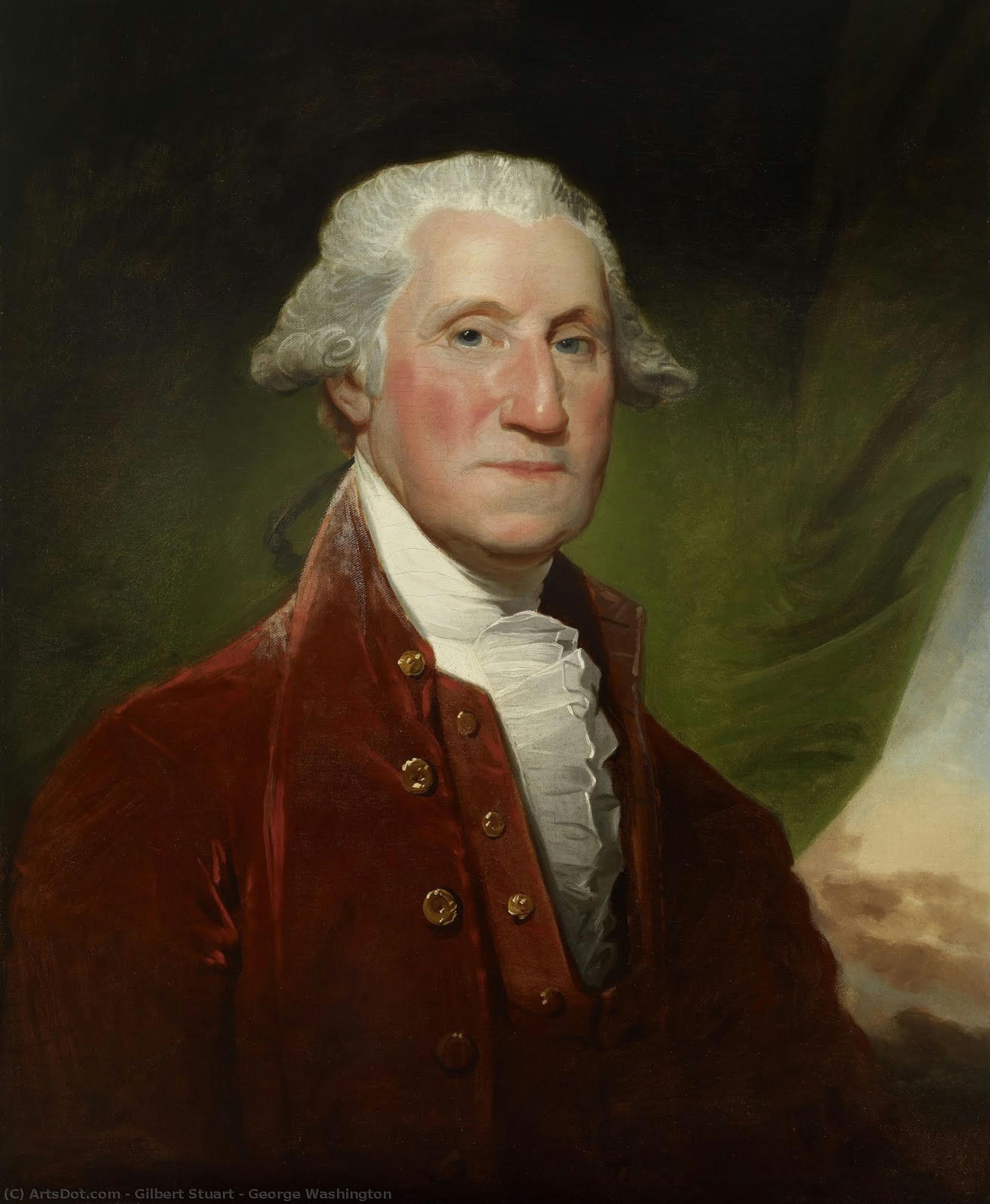
Experience Gilbert Stuart's iconic 1796 portrait of George Washington – ‘The Vaughan Type.’ Admire the neoclassical detail and historical significance of this masterpiece, a key piece of American art.
Biografie umělce
"meta_description": "Gilbert Stuart (1755-1828): Americký malíř nejznámější díky portrétu George Washingtona v stylu národního baroka a jeho významné roli v americkém umění."
O malbě
The Weight of Authority: Gilbert Stuart’s “George Washington”
Gilbert Stuart's "George Washington," painted in 1796, isn’t merely a portrait; it’s a carefully constructed embodiment of the nascent American republic. This remarkable work, now housed within the Frick Collection in New York City, transcends the simple act of representation and delves into the very essence of leadership, virtue, and the weighty responsibility of guiding a new nation. Stuart, a master of his craft, skillfully captures Washington’s dignified presence, imbuing him with an aura of both strength and quiet contemplation – qualities desperately needed in the years following the Revolutionary War.
The painting itself is a testament to Stuart's Neoclassical training, evident in its balanced composition and restrained palette. The muted tones of brown, gray, and green create a sense of gravitas, drawing the viewer’s eye directly to Washington’s face – a study in subtle expressions that convey both resolve and humility. The artist meticulously rendered every detail, from the texture of the fabric of his coat to the delicate lines etched by time around his eyes, revealing an almost obsessive attention to realism. Yet, it's not a literal depiction; Stuart employs chiaroscuro—the dramatic contrast between light and shadow—to sculpt Washington’s form and emphasize his importance within the scene.
A Portrait of a Nation Forged in Virtue
The historical context surrounding “George Washington” is crucial to understanding its significance. Painted just a few years after the end of the Revolutionary War, the portrait coincided with a fervent desire to establish a stable and virtuous government. Stuart’s decision to portray Washington in a formal, three-quarter pose – a departure from earlier, more informal depictions – immediately elevates him to the status of an ideal statesman. The red coat, a symbol of military honor, subtly references his role as commander-in-chief, while the white collar and cravat speak to his adherence to social decorum and respect for tradition.
Interestingly, this particular version – often referred to as the “Vaughan type” – differs slightly from other known portraits of Washington. The subtle shift in the color of the coat is a key distinguishing feature, suggesting that Stuart may have been experimenting with his technique or responding to specific requests from John Vaughan, one of the painting’s patrons. The background, a simple yet evocative landscape, reinforces the idea of Washington as a man deeply connected to the land and its future.
Symbolism Woven into the Canvas
Beyond the obvious symbolism of military rank and civic virtue, “George Washington” is rich with subtle visual cues. The careful arrangement of his hands – one resting on a book, a symbol of knowledge and wisdom, and the other holding a quill pen, representing his role as a writer and communicator – speaks to his commitment to education and informed governance. The slight furrow in his brow suggests a thoughtful consideration of the challenges facing the new nation, while his steady gaze conveys an unwavering determination to uphold its ideals.
Furthermore, the painting’s scale—measuring 74 x 61 cm—contributes to its impact. It's large enough to command attention and invite prolonged contemplation, reflecting the monumental task of building a new nation. The portrait wasn’t simply intended as a likeness; it was designed to inspire confidence and instill a sense of shared purpose within the American populace.
A Timeless Legacy for Art & Design
Gilbert Stuart's “George Washington” remains an enduring masterpiece, admired for its technical brilliance, historical significance, and profound emotional resonance. It’s a painting that speaks to the ideals upon which America was founded – liberty, justice, and self-governance – and continues to captivate viewers centuries later. Today, high-quality reproductions of this iconic portrait offer art enthusiasts and interior designers alike an opportunity to bring a touch of American history and enduring artistic excellence into their homes or offices. The painting’s dignified presence and subtle complexities make it a truly timeless addition to any collection.
Otázky a odpovědi
Jakou převládající barvu v sobě nese dílo „George Washington“ od Gilbert Stuart?
Dominantní odstín díla „George Washington“ od Gilbert Stuart je Ochre to Sepia. Tento odstín tvoří základní tón celé palety.
Patří dílo „George Washington“ mezi slavná děl směru Neoclassical Portraiture?
Dílo "George Washington" je v katalogu hodnoceno jako Iconic mezi díly z období Neoclassical Portraiture.
Je „George Washington“ od Gilbert Stuart portrét, krajina nebo čtvercová kompozice?
Formát díla „George Washington“ je Portrait. Tato informace vám pomůže při plánování umístění reprodukce.
Rychlá fakta a umělecký kvíz
O umělci Gilbert Stuart

Gilbert Stuart
1755 - 1828, Spojené království
Biografie umělce
Gilbert Stuart: Život zasvěcený portrétnímu malířství
- Narozen: 3. prosince 1755, Saunderstown, Rhode Island
- Zemřel: 9. července 1828, Boston, Massachusetts
- Národnost: americká
- Směr: Neoklasicismus
- Proslul zejména: portrétní malbou, zejména portréty významných postav rané americké historie.
Raný život a umělecké vzdělání
Gilbert Stuart přišel na svět v rodině se skotskými kořeny; jeho otec, rovněž jménem Gilbert, byl vynálezce, který založil první mlýn na tabák v Rhode Island. Jeho umělecký talent se projevil již v raném věku, kdy jako dítě vykazoval neobvyklé schopnosti. Již ve čtrnácti letech namaloval dílo „Dr. Hunter's Spaniels“, které naznačovalo jeho budoucí velký potenciál. Kolem roku 1771 odcestoval do Skotska, aby studoval pod vedením Cosma Alexandera, avšak po Alexanderově úmrtí v roce 1775 se musel vrátit zpět. Další zásadní vzdělávací období pro něj představovalo Londýn, kde v letech 1775 až 1780 studoval u Benjamina Westa, významného amerického malíře žijícího v Anglii. Tato éra byla klíčová pro rozvoj jeho vlastního uměleckého stylu a získání uznání v rámci Královské akademie.
Umělecká kariéra a hlavní díla
Stuartova kariéra čelila náročným zkouškám během americké revoluce, což ho v roce 1775 přimělo přestěhovat se do Anglie. Svůj první velký úspěch však dosáhl s portrétem „The Skater“ (1882), který mu definitivně vybudoval pověst mistra. Jeho nejslavnějším dílem zůstává nedokončený portrét George Washingtona, známý jako Athenaeum Portrait (začat v roce 1796). Tento obraz se stal ikonickým symbolem, který se objevuje na amerických bankovkách i poštovních známkách. Stuart pro své klienty v Americe i Evropě vytvořil mnoho kopií tohoto portrétu. Kromě Washingtona namaloval portréty dalších významných postav, jako byli John Adams, Thomas Jefferson či James Madison, a mnoha jiných představitelů federální elity. Jeho styl byl charakteristický neoklasicistickým přístupem, který kladl důraz na realismus a zachycení podobnosti i povahy jeho subjektů, často využíval dramatické světlo a stín pro zvýšení emocionálního dopadu svých děl.
Vlivy a vývoj uměleckého projevu
Základy techniky a kompozice mu položil Cosmo Alexander, zatímco vliv Benjamina Westa byl pro Stuartovo chápání portrétního malířství a uměleckých principů naprosto zásadní. Silnou inspiraci čerpal i z neoklasicistického hnutí, které zdůrazňovalo klasické formy a ideály. Nicméně to, co dalo jeho portrétům skutečnou duši, byly Stuartovy vlastní pozorování a interakce s modely. Snažil se zachytit nejen fyzickou podobnost, ale především psychologickou hloubku, charakter a osobnost lidí, které maloval.
Historický význam a odkaz
Gilbert Stuart je považován za jednoho z nejvýznamnějších amerických portrétistů, který hrál vitální roli při dokumentování počátků Spojených států. Jeho Athenaeum Portrait George Washingtona se stal trvalým symbolem americké identity a vůdcovského ducha. Jeho portréty poskytují nenahraditelný historický pohled na životy a vzhled postav konce 18. a začátku 19. století. Dílo Stuarta je zastoupeno v nejvýznamnějších muzeích po celé Americe i v Evropě, což zaručuje, že jeho odkaz bude vděčným předmětem obdivu dalších generací. Dokázal totiž vytvořit specifický americký styl portrétního malířství, který mistrně propojil evropské techniky s jedinečnou americkou citlivostí.
Rychlé informace o umělci Gilbert Stuart
- Artistic Movement Or Style: Neoklasicismus
- Artists Who Influenced This Artist:
- Cosmo Alexander
- Benjamin West
- Date Of Birth: 3. prosince 1755
- Full Name: Gilbert Charles Stuart
- Nationality: Američan
- Notable Artworks:
- George Washington (Athenaeum Portrait)
- John Adams
- Thomas Jefferson
- Place Of Death: Boston, Massachusetts
Prozkoumejte umělecká díla uspořádaná podle témat, stylů a charakteristik.


Gilbert Stuart
George Washington
() ·
Včetně rámu: · Ručně malováno olejem na plátně
Celkem