Ateliér — Doprava po celém světě zdarma — Dodání za 2–6 týdnů
Obraz z fotky Seznam přání Košík
NáhledNáhled Náhled v ARNáhled v AR Přepnout na tisk Přepnout na tiskPřepnout na ručně malovanou reprodukci Přepnout na ručně malovanou reprodukci SdíletSdílet
Podrobnosti o dílePodrobnosti o díle Přidat do oblíbených Přidat do oblíbených StáhnoutStáhnout Podobné položkyPodobné položky Rentgenové snímkyRentgenové snímky SlideshowSlideshow

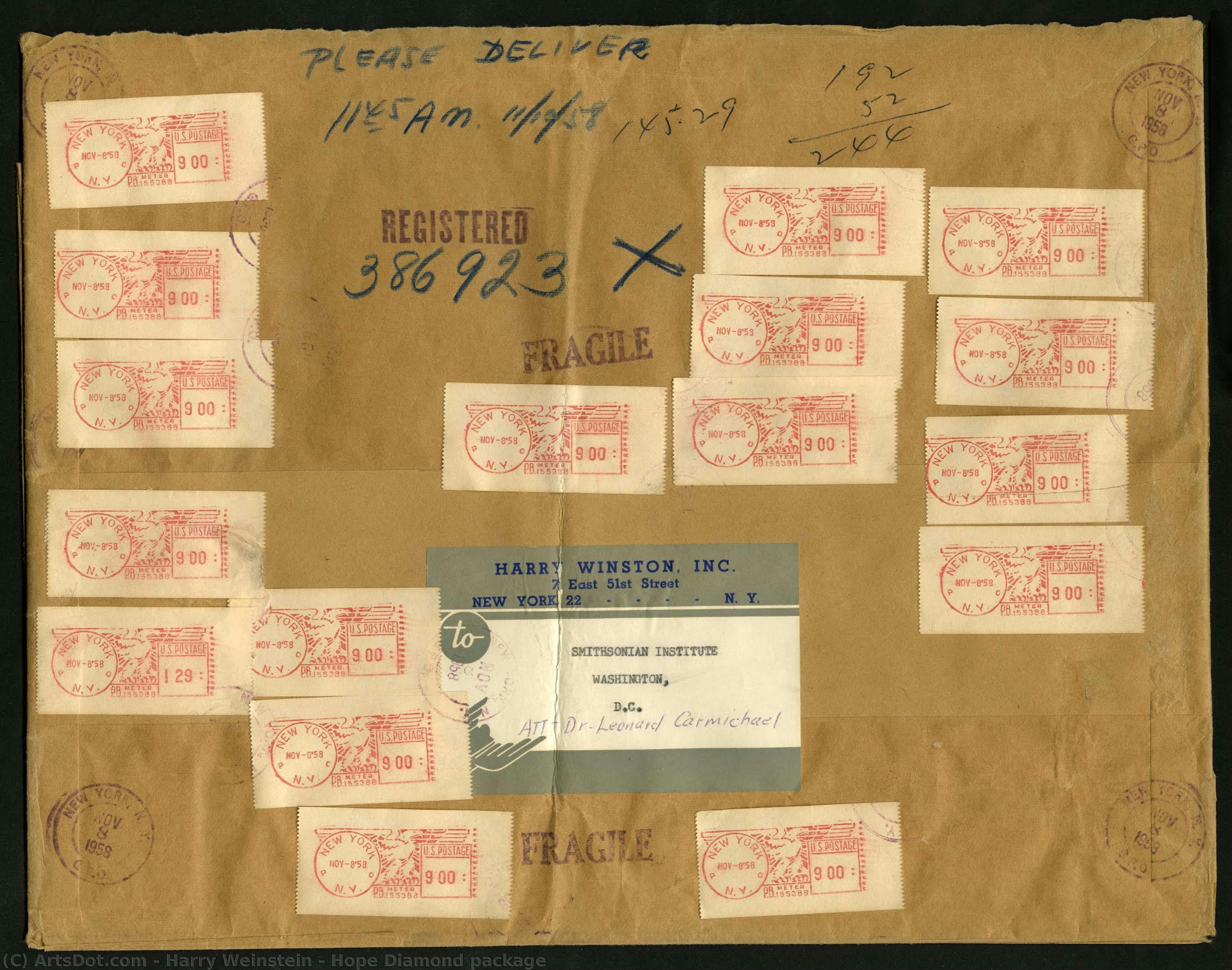
Hope Diamond package

A detailed painting of the historic Hope Diamond mailing wrapper featuring vintage international stamps by Harry Weinstein captures a sense of global mystery that invites you to explore this unique piece of postal history.

Explore Harry Weinstein's unique blend of jewelry design and painting. Discover his artistic legacy, notable works, and influence on modern art.

Koupě vysoce rozlišeného, vylepšeného digitálního obrazu, který je mnohem kvalitnější než online náhled.

Každý soubor je pečlivě připraven našimi odborníky pomocí pokročilých nástrojů a expertní manuální retuše. Zajišťujeme, aby každý obraz disponoval výjimečnou ostrostí, přesnou barevnou věrností a jemnými detaily.

Finální soubor vám bude do 72 hodin zaslán e-mailem, optimalizovaný pro okamžité použití v profesionálním, redakčním i tiskovém prostředí. Nabízíme stejnou kvalitu, které důvěřují špičková designová studia, nakladatelství i galerie.

Digitální obrazy

Stáhněte si soubor ve vysokém rozlišení pro osobní prohlížení, tisk a kreativní projekty. (Přepnout na tisk Přepnout na tiskPřepnout na ručně malovanou reprodukci Přepnout na ručně malovanou reprodukci)

Celková cena

$9.99

Součást každé objednávky digitálního obrazu

Profesionální digitální doručení, zaručeno.

Když si vyberete TopImpressionists.com, nezískáváte pouze obrázek – získáváte digitální umělecké dílo s profesionálně vylepšenými detaily, zpracované s precizností a podpořené zárukou za spokojenost. Zde je vše, co vaše objednávka automaticky obsahuje:

shipping_icon
Rychlé doručení e-mailem

Váš digitální obraz ve vysokém rozlišení vám bude zaslán e-mailem do 72 hodin od objednávky – připraven k okamžitému použití.

canvas_icon
Digitální soubor s využitím AI

Vaše umělecké dílo je profesionálně optimalizováno pomocí pokročilých nástrojů umělé inteligence a manuální úpravy, což zajišťuje maximální úroveň detailu, ostrosti a přesnosti barev.

insurance_icon
Bezplatné doživotní znovuodeslání

Soubor jste omylem smazali nebo ztratili? Žádný problém – kdykoliv vám ho znovu zašleme zcela zdarma.

tax_icon
Bez poplatků za dovoz – navždy

Užijte si své umělecké dílo okamžitě bez celních poplatků, daní nebo nákladů na dopravu – digitální stažení je vždy bez daňových povinností.

color_icon
Záruka přesnosti barev

Pomocí profesionálních nástrojů a správy barev zajišťujeme, aby váš digitální obraz odrážel původní barvy co nejvěrněji.

return_icon
60denní záruka spokojenosti

Pokud nebudete s digitální fotografií spokojeni, provedeme její revizi nebo vám vrátíme 100% během 60 dnů – bez jakýchkoliv dotazů.

guarantee_icon
100% záruka vrácení peněz

Nespokojeni? Získejte plnou částku zpět do 60 dní od přijetí vašeho digitálního souboru – bez jakýchkoliv dotazů.

discount_icon
Slevy při hromadných objednávkách

Koupěte si 3 obrazy, ušetřete 10% - Koupěte si 5, ušetřete 15% - Koupěte si 10+, ušetřete 20%. Ideální pro kreativní projekty, galerie a agentury.

Základní informace

  • Year: 1958
  • Subject or theme: Postal services and international mail
  • Dimensions: 28 x 36 cm
  • Location: Smithsonian National Postal Museum
  • Artist: Harry Weinstein

Popis sběratelského kusu

A Journey in Paper and Ink: The Allure of the Hope Diamond Package

In the quiet intersection of postal history and fine art lies "Hope Diamond package," a captivating work by Harry Weinstein that invites viewers into a world of international intrigue and historical transit. At first glance, the painting presents us with a humble brown envelope, yet beneath its weathered surface lies a rich tapestry of global connection. This is not merely a depiction of mail; it is a window into a moment in time, captured through the meticulous rendering of a mailing wrapper destined for the Smithsonian's National Postal Museum. The piece breathes life into the mundane, transforming a simple object of logistics into a vessel of storytelling and mystery.

The artistry of Weinstein shines through the delicate interplay of texture and detail, where every stamp and postmark serves as a geographical heartbeat. The composition is anchored by the earthy tones of the envelope, providing a grounded canvas for the vibrant, colorful stamps that cling to its surface like fragments of a global mosaic. One can almost feel the tactile quality of the paper and the layered weight of the ink. The inclusion of an Israeli stamp alongside various international postmarks creates a sense of movement, suggesting a long, arduous journey across borders and oceans. This technique of layering historical artifacts within a single frame evokes a profound sense of nostalgia for the era of physical correspondence.

Symbolism and the Weight of History

Beyond its visual charm, the painting carries a heavy symbolic resonance. The handwritten note, "Please deliver registered mail," acts as a poignant reminder of the care and gravity associated with precious cargo. It hints at the legendary status of the Hope Diamond itself, suggesting that even in its most transit-oriented form, the object possesses an aura of importance that demands protection. This tension between the fragility of paper and the permanence of historical legend creates a compelling emotional pull for the observer. The artwork serves as a meditation on communication—how ideas, treasures, and histories are packaged, sent, and eventually preserved for posterity.

For the discerning collector or interior designer, this piece offers a unique opportunity to introduce a conversation starter into a curated space. Its aesthetic is both scholarly and soulful, making it an ideal centerpiece for a library, a study, or a sophisticated gallery wall. As a high-quality reproduction, it brings the meticulous craftsmanship of Weinstein’s era into the modern home, offering a touch of academic elegance and a deep connection to the global heritage of the postal arts. To possess this work is to hold a fragment of a world where every stamp told a story and every envelope carried the weight of the world.


Biografie umělce

John Everett Millais: A Pre-Raphaelite Pioneer of Light and Nature

Born in Southampton, England, on June 8th, 1829, John Everett Millais was a pivotal figure in the vibrant artistic landscape of Victorian Britain. His life’s work, deeply intertwined with the burgeoning Pre-Raphaelite Brotherhood, marked a significant shift away from established academic traditions and toward a renewed appreciation for nature, medieval legend, and the emotional resonance of storytelling. From humble beginnings – his father a gentleman of considerable means – Millais's artistic journey was one of both prodigious talent and personal complexities, ultimately shaping him into one of the most celebrated painters of his era.

Millais’s early education was remarkably advanced for a boy of his age. He received instruction from various tutors, including a governess who instilled in him a love of literature and art, and later studied at Sass's Art School in London, where he quickly distinguished himself with his technical skill and natural ability. His entry into the Royal Academy Schools at just eleven years old was an unprecedented achievement, demonstrating his exceptional promise. This early success foreshadowed a career defined by both critical acclaim and occasional controversy. The influence of his family’s connections – particularly his mother's association with the poet Julian del Casal – provided him with access to intellectual circles that further nurtured his artistic sensibilities.

The Formation of the Pre-Raphaelite Brotherhood

In 1848, at the age of nineteen, Millais played a crucial role in the formation of the Pre-Raphaelite Brotherhood alongside William Holman Hunt and Dante Gabriel Rossetti. Dissatisfied with the prevailing artistic conventions of the Royal Academy – characterized by historical painting dominated by grand narratives and idealized figures – the group sought to revive the spirit of the early Renaissance masters, particularly those before Raphael. They believed in returning to a more direct and truthful representation of nature, rejecting the artificiality and sentimentality prevalent in contemporary art.

The Brotherhood’s manifesto, penned by Rossetti, outlined their core principles: a commitment to truth, sincerity, and the study of medieval literature and legend. Millais's early works, such as *Pizarro Seizing the Inca of Peru* (1849), immediately established him as a key member, showcasing his meticulous attention to detail and dramatic compositions. However, this painting also sparked considerable debate within the Academy, with some critics finding its realism unsettling and its subject matter morally questionable.

Iconic Paintings and Artistic Evolution

Millais’s most celebrated works are arguably *Ophelia* (1851-52) and *Christ in the House of His Parents* (also known as *The Carpenter's Shop*) (1850-52). *Ophelia*, depicting the tragic heroine from Shakespeare’s *Hamlet* drowning in a stream, remains one of the most recognizable images in art history. Its vibrant colors, meticulous rendering of foliage and water, and poignant portrayal of sorrow captivated audiences and cemented Millais's reputation as a master of naturalism. The painting’s initial reception was mixed, with some critics objecting to its perceived lack of moralizing sentimentality.

*Christ in the House of His Parents*, however, proved far more controversial. The depiction of Christ as a young boy working alongside his carpenter father challenged conventional religious iconography and sparked outrage among conservative viewers who found it shockingly realistic. Despite this initial backlash, the painting’s powerful emotional impact and technical brilliance eventually secured its place as a cornerstone of Pre-Raphaelite art.

Later Years and Legacy

As Millais matured as an artist, his style evolved beyond the strict tenets of the Pre-Raphaelite Brotherhood. He increasingly embraced a more lyrical and atmospheric approach, exploring themes of childhood, beauty, and the changing seasons. His portraits, particularly those of prominent figures like Gladstone and Tennyson, demonstrated his growing mastery of capturing personality and character. He also turned to illustration, producing evocative images for publications such as *Once a Week* and *The Illustrated London News*, further expanding his public profile.

John Everett Millais died in London on August 13th, 1896, at the age of 67. His legacy endures as one of the most influential artists of the Victorian era. His pioneering work with the Pre-Raphaelite Brotherhood helped to reshape British art, paving the way for subsequent movements such as Impressionism and Art Nouveau. Millais’s unwavering commitment to truthfulness, his profound appreciation for nature, and his ability to imbue his paintings with emotional depth continue to resonate with viewers today, ensuring that his work remains a vital part of the artistic canon.

harry weinstein

harry weinstein

1896 - 1978 , United States of America

Stručné informace

  • Artistic Movement Or Style: Pre-Raphaelite
  • Artists Or Movements Influenced By This Artist:
    • William Holman Hunt
    • Dante Gabriel Rossetti
  • Artists Who Influenced This Artist: ['Sir John Everett Millais']
  • Date Of Birth: 8 June 1829
  • Date Of Death: 13 August 1896
  • Full Name: John Everett Millais
  • Nationality: English
  • Notable Artworks:
    • Ophelia
    • Christ in the House of His Parents
  • Place Of Birth: Southampton, England
© TopImpressionists.com — Všechna práva vyhrazena  ·  100% Ručně malováno · Spokojenost zaručena · Doprava po celém světě zdarma
VISA MASTERCARD