

 Náhled v interiéru
 Sdílet
 Sdílet
 Podrobnosti o díle
 Průvodce

 Stáhnout
 Podobné položky
 Rentgenové snímky
 Slideshow
 Otázky a odpovědi
 Statistiky
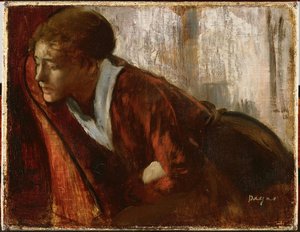
Melancholy


Experience Edgar Degas's 'Melancholy,' a poignant portrait capturing introspection and emotion. This masterpiece from 1874, housed at the Phillips Collection, showcases his signature style & psychological depth.
 Zobrazit více
Edgar Degas: Francouzský malíř, známý svými tanečníčkami, pařížským životem a inovativními technikami – skutečný mistr moderního umění. Jeho díla jsou plná dynamiky a realismu.
Získejte soubor připravený k tisku, který svou kvalitou výrazně převyšuje webový náhled. Každý prodávaný digitální obraz pochází z vysokorozlišeného originálu v naší databázi – obvykle o šířce 5 000 až 15 000 pixelů – díky čemuž můžete tisknout ve velkém formátu, provádět těsný střih nebo si s jistotou užít i ty nejjemnější detaily.
Žádný soubor neopustí naše studio bez úprav. Digitální expert kontroluje barvy v porovnání s původním malířským dílem a v případě potřeby je upravuje, poté pomocí profesionálních nástrojů pro retuš zvyšuje ostrost a detailnost — přičemž vždy zůstává věrný tahům štětcem a stylu umělce. Výsledkem je obraz, který vypadá jako malba, nikoliv jako naskenovaný snímek s filtrem.
Schvalování před dokončením: náš expert vám do 72 hodin zašle obraz e-mailem k revizi. Nejsste spokojeni? Můžete požádat o úpravy či opravy, nebo si můžete vyžádat vrácení peněz, pokud kvalita neodpovídá vašim očekáváním.
Tuto kvalitu využívají vydavatelství, designová studia, galerie i tiskárny.
Digitální obrazy
Stáhněte si soubor ve vysokém rozlišení pro osobní prohlížení, tisk nebo kreativní projekty. ( Přepnout na tisk Koupit ručně malovaný obraz)
Součást každé objednávky digitálního obrazu
Profesionální digitální doručení, zaručené
Když si vyberete TopImpressionists.com, nezískáváte pouze obrázek – získáváte digitální umělecké dílo s profesionálně vylepšenými detaily, zpracované s precizností a podpořené zárukou za spokojenost. Zde je vše, co vaše objednávka automaticky obsahuje:

Rychlé doručení e-mailem
Váš digitální obraz ve vysokém rozlišení vám bude zaslán e-mailem do 72 hodin od objednávky – připraven k okamžitému použití.

Digitální soubor s využitím AI
Vaše umělecké dílo je profesionálně optimalizováno pomocí pokročilých nástrojů umělé inteligence a manuální úpravy, což zajišťuje maximální úroveň detailu, ostrosti a přesnosti barev.

Doživotní bezplatné znovuodeslání digitálních obrazů
Soubor jste omylem smazali nebo ztratili? Žádný problém – kdykoliv vám ho znovu zašleme zcela zdarma.

Bez poplatků za dovoz – navždy
Užijte si své umělecké dílo okamžitě bez celních poplatků, daní nebo nákladů na dopravu – digitální stažení je vždy bez daňových povinností.

Záruka přesnosti barev
Díky profesionálním nástrojům a správě barev zajišťujeme, aby váš digitální obraz odrážel původní barvy co nejvěrněji.

100dená záruka spokojenosti
Pokud nebudete s digitálním obrázkem spokojeni, provedeme jeho revizi nebo vám vrátíme 100% platby do 100 dnů – bez jakýchkoliv dotazů.

100% záruka vrácení peněz
Nespokojeni? Získejte plnou náhradu peněz do 100 dnů od obdržení digitálního souboru – bez zbytečných dotazů.

Slevy při hromadných objednávkách
Koupě 3 obrazů ušetří 10% – Koupě 5 obrazů ušetří 15% – Koupě 10+ obrazů ušetří 20%. Ideální pro kreativní projekty, galerie a agentury.
The Enigmatic Depths of “Melancholy” by Edgar Degas
Edgar Degas, a name synonymous with Impressionism yet profoundly resistant to easy categorization, offers us in "Melancholy" (1874) a work that transcends simple portraiture. Housed within the esteemed Phillips Collection, this painting isn’t merely a depiction of a woman; it's an invitation into the quiet contemplation of the human psyche—a testament to Degas’s extraordinary ability to capture not just appearances but the very essence of emotion. The piece immediately draws the eye with its carefully orchestrated composition: a woman, partially veiled by a curtain, positioned within a space defined by rich, layered colors and subtle gestures. It's a scene pregnant with unspoken narratives, inviting viewers to become active participants in deciphering her inner world.
Degas’s artistic vision is rooted in his meticulous observation of the world around him, a characteristic that aligns perfectly with his self-proclaimed status as a realist. He wasn’t interested in grand historical scenes or idealized beauty; instead, he sought to portray the everyday lives of ordinary people—and here, particularly, the complexities of female experience. The painting's palette is masterfully controlled – the dominant red of the woman’s clothing and furnishings creates a vibrant focal point, expertly balanced against the cooler blues and greens that permeate the background. This interplay of color isn’t merely decorative; it subtly reinforces the mood of introspection and perhaps even sadness that permeates the scene.
Symbolism Woven into the Fabric of the Image
The most striking element of “Melancholy” is undoubtedly the woman herself, her face partially obscured by the curtain. This deliberate concealment isn’t simply a stylistic choice; it functions as a potent metaphor for the barriers we erect between ourselves and our own emotions. The curtain becomes a visual representation of the ‘veil’ separating the external world from the internal landscape—a space where thoughts, feelings, and memories reside in quiet contemplation. Her downward gaze, tilted slightly to the left, is crucial. It speaks volumes about her state of mind: she's not looking outward, but inward, lost in a private reverie.
Beyond this central image, subtle details contribute to the painting’s layered symbolism. The arrangement of furniture—a sofa, a fireplace—suggests a domestic setting, yet it feels strangely sterile and devoid of warmth. This contributes to the overall sense of isolation and melancholy. Even the lighting, with its dramatic interplay of light and shadow, reinforces this mood, casting long shadows that seem to deepen the woman’s solitude.
A Masterpiece within the Context of Symbolism
“Melancholy” is a pivotal work in Degas's oeuvre, firmly situated within the broader context of Symbolist painting. Emerging in the late 19th century, Symbolism sought to explore the realm of subjective experience—the hidden depths of human consciousness and the power of emotions. Artists like Edvard Munch and James Ensor were deeply influenced by this movement’s emphasis on capturing inner states rather than simply representing external reality. Degas, while resisting the label of “Impressionist,” shared many affinities with Symbolists in his interest in portraying psychological complexity and emotional nuance.
The painting's creation coincided with a period of significant social and cultural change—a time when traditional values were being questioned and new forms of artistic expression were emerging. Degas’s willingness to delve into the darker aspects of human experience, as evidenced by “Melancholy,” reflects this broader shift in sensibility. It’s a work that speaks not only to the artist's personal vision but also to the anxieties and uncertainties of his era.
A Legacy Enduring Through Reproduction
“Melancholy” remains a profoundly moving artwork, captivating viewers with its evocative atmosphere and subtle symbolism. Its influence can be seen in countless subsequent works of art—from Expressionist paintings that sought to convey intense emotional states to contemporary artists who continue to explore the complexities of human psychology. For those seeking to experience Degas’s genius firsthand, TopImpressionists offers meticulously crafted hand-painted reproductions of this iconic masterpiece. These high-quality reproductions capture not only the painting's visual beauty but also its emotional depth, allowing you to bring this timeless work into your own home or office.
Beyond “Melancholy,” exploring Degas’s other works—such as “Dancers at the Barre” and “Ballet Rehearsal on the Set”—provides a deeper understanding of his artistic range and his fascination with movement, light, and human interaction. For further insight into Impressionism and Symbolism, we encourage you to visit “Discover the Musée Des Beaux-Arts Tourcoing, France” or consult resources like Wikipedia’s entry on Symbolist Painting.
Otázky a odpovědi
K čemu se doporučuje reprodukce díla „Melancholy“ od Hilaire-Germain-Edgar Degas?
Doporučené využití tisku díla „Melancholy“ je Prohlášení umělce.
Jaká je luminance díla „Melancholy“ od Hilaire-Germain-Edgar Degas?
Luminance zaznamenaná pro dílo „Melancholy“ od Hilaire-Germain-Edgar Degas je Nejtmavší.
Jaká barevná paleta je použita v díle „Melancholy“ od Hilaire-Germain-Edgar Degas?
Barvy díla „Melancholy“ tvoří Zemité tóny paletu. Tato klasifikace popisuje dominantní barevné skupiny.
Podobná díla



Biografie umělce
A Life Immersed in Movement
Edgar Degas, rodným jménem Hilaire Germain Edgar de Gas, se narodil v Paříži v roce 1834 a jeho život byl fascinující směsicí protikladů. Ačkoli je často zařazen mezi impresionisty – Monet, Renoir a další, kteří v pozdní 19. století revolucionalizovali malbu – aktivně se této kategorii vyhýbal, spíše se identifikoval jako realista. Tento závazek vycházel z jeho pečlivého pozorování světa kolem něj a oddanosti zobrazování ho s neochvějnou upřímností. Degasův raný život byl pohodlně buržoazní; jeho otec byl bankéř a matka pocházela z kreolské rodiny v Novém Orleans. Tento původ mu poskytl přístup k vzdělání a uměleckému tréninku, i když často mlátil na akademické omezení. Nejprve se přihlásil na Lycée Louis-le-Grand, ale jeho skutečné vzdělání začalo, když začal kopírovat díla v Louvru, zdokonaloval své dovednosti a zapálil si životlongou vášeň pro klasické umění. Nicméně Degasův cíl nebyl striktní dodržování tradice; byl to neustále zpochybňující a přehodnocovací proces uměleckých norem. Vlastnil nezávislý duch, který definoval jeho celou kariéru.Beyond Impressionism: A Unique Artistic Vision
Zatímco současníci jako Monet pronásledovali mihotavé efekty světla venku, Degas převážně pracoval v rámci svých dílen, pečlivě sestavoval scény z pozorování a paměti. Jeho předmětem zájmu byla moderní podoba – odklon od historických nebo mytologických témat, která preferovali mnozí akademici. Najdi inspiraci v každodenních životech Pařížanů: pranátři, tanečníky kabaretu, klobouničky a především baleríny. Toto fascinování baletem definuje velkou část jeho díla. Degas nevytvořil jen krásné baleríny; zachycoval krutou realitu jejich povolání – nekonečné hodiny zkoušek, fyzickou námahu, krátké okamžiky elegance uprostřed tvrdé práce. Jeho kompozice jsou často nekonvenční, figurky zobrazuje neočekávanými způsoby a využívá asymetrické uspořádání, které vytváří pocit dynamiky a přítomnosti. Byl mistrem v zachycování pohybu, nikoli rozmazanými liniemi nebo mlhavými efekty, ale pečlivým pozorováním a přesným zobrazením tvaru. *Dancer, A Group of Dancers* a *Women Combing Their Hair* jsou příklady jeho oddanosti zobrazování lidského těla v pohybu a odhalování složitostí moderního života. Nebyl zájem o povrchní krásu; toužil po odhalení pravdy pod povrchem.Influences and Artistic Development
Degasův umělecký vývoj byl utvářen rozmanitými vlivy. Jeho rané vzdělání kladlo důraz na klasické principy, zejména díla Jean-Auguste-Dominique Ingresa, jehož zdůraznění draftmanshipu a přesného tvaru zanechalo trvalý dojem. Nicméně Degas obdivoval i realisty, jako Gustave Courbet, kteří podněcovali akademickou konvenci a prosazovali zobrazování současného života. Klíčový okamžik v jeho vývoji přinesla jeho asociace s Camille Pissarro, vedoucím impresionistou, který mu představil další umělce a povzbuzoval ho k experimentování s novými technikami. Byl okouzlán japonskými rytinami – Ukiyo-e – které ovlivnily jeho použití asymetrických kompozic, zploštělých perspektiv a výrazných vzorů. Také přijmul fotografii, rozpoznávaje její potenciál pro studium pohybu a zachycení krátkých okamžiků v čase. Tato ochota integrovat různé vlivy do svého díla je to, co ho odlišuje a přispívá k jedinečné povaze jeho umění. Nebyl si jistý, že se bude držet pouze jednoho stylu; spíše se snažil kombinovat různé prvky a vytvořit něco zcela nového.The Ballet as Central Theme
Degasův zájem o balet byl dominantní tématem v jeho umění po většinu jeho kariéry. Jeho pozorování baletních taneček v Pařížské opeře bylo hluboké a detailní, od zkoušek až po představení. Vytvořil tisíce skic a obrazů, zachycujících tanečníky v různých pózách a situacích – v šatnách, při rozcvičování, během přestávek a na jevišti. Jeho obrazy baletních taneček se odlišují od tradičních portrétů, protože se zaměřují na dynamiku pohybu, expresi a osobnosti tanečníků. Vytvořil ikonické díla jako *Dancer at the Barre*, *The Dying Swan* a *Rehearsal of the Ballet*. Jeho práce nebyly jen esteticky příjemné; snažil se zachytit skutečný život a námahu spojenou s baletem.Legacy and Lasting Impact
Edgar Degas zemřel v Paříži v roce 1917, zanechávaje za sebou dílo, které stále fascinuje a inspiruje publikum po celém světě. Jeho inovativní přístup k kompozici, mistrovské draftmanship a neochvějné zobrazování moderního života měly hluboký dopad na průběh umělecké historie. Otevřel cestu budoucím generacím umělců, kteří se snažili překročit tradiční konvence a prozkoumat nové způsoby reprezentace světa kolem nich. Jeho vliv lze vidět ve dílech Pabla Picassa a Henriho Matisse, mezi jinými. Muzea po celém světě – včetně Musée d'Orsay a Musée de l’Orangerie v Paříži – vystavují významné sbírky jeho obrazů, pastelí, soch a ryteček, zajišťující, že jeho dědictví bude trvat pro budoucí generace. Degas nebyl jen malíř tanečníků nebo koněm; byl pozorným pozorovatelem lidské povahy, mistrem tvaru a pohybu a skutečným inovátorem, který přepsal možnosti umění.
Hilaire-Germain-Edgar Degas
1834 - 1917 , Francie
Stručné informace
- Artistic Movement Or Style: Impresionismus, Realismus
- Artists Or Movements Influenced By This Artist:
- Picasso
- Matisse
- Artists Who Influenced This Artist:
- Ingres
- Courbet
- Pissarro
- Date Of Birth: 1834
- Date Of Death: 1917
- Full Name: Hilaire-Germain-Edgar De Gas
- Nationality: Francouzský
- Notable Artworks:
- Dancer and Tambourine
- The Ballet Class
- Degas in a Green Jacket
- The Collector
- Women Combing Their Hair
- Place Of Birth: Paříž, Francie