

 Náhled v interiéru
 Sdílet
 Sdílet
 Podrobnosti o díle
 Průvodce

 Stáhnout
 Podobné položky
 Rentgenové snímky
 Slideshow
 Q&A
Q&A Statistiky
Racehorses


Experience Edgar Degas's masterful Racehorses – an iconic Impressionist painting capturing movement and elegance with vibrant colors and meticulous detail. Explore its history & significance at TopImpressionists.
 Zobrazit více
Edgar Degas: Francouzský malíř, známý svými tanečníčkami, pařížským životem a inovativními technikami – skutečný mistr moderního umění. Jeho díla jsou plná dynamiky a realismu.
Giclée / Umělecký tisk
Giclée nebo plátěný tisk muzeální kvality s rychlou výrobou a širokou nabídkou povrchových úprav. ( Koupit ručně malovaný obraz Přepnout na digitální obraz)




P118B Kč10

P118H Kč10

P118W Kč10

P438Z Kč10

P508JH Kč12

P508YH Kč12

P805H Kč10

P805Z Kč10

P919BZ Kč10

P919G Kč10

P919XJ Kč10

P959ZH Kč10

P968JZ Kč12

W106C Kč8

W218G Kč10

W218JH Kč8

W218Y Kč10

W307PJ Kč10

W316G Kč10

W316PJ Kč8

W316Y Kč10

W398PJ Kč8

W4111J Kč10

W500HY Kč15

W500JH Kč15

W692G Kč12

W849H Kč8

W940BG Kč15

W953PJ Kč8




Standardní velikost
na zakázku
CM
INCH
Vyberte si z našich přednastavených velikostí, které odpovídají původním proporcím díla.
Loading sizes...

šířka
výška
Zadejte šířku a výšku, které potřebujete pro váš rám nebo stěnu. Tisk lze pouze oříznout, nikdy však nelze zvětšit obraz nad jeho původní rozměr, proto při výběru jiného formátu dochází ke ztrátě části obrazu. Před samotným tiskem vám zašleme digitální náhled k schválení. Obraz zobrazený na této stránce nenabízí skutečný výřez — ten uvidíte pouze v náhledu.
Celosvětové doručení () do 2 týdnů namísto standardních 4/5 týdnů. (1 listopad)

Zdarma celosvětová expresní doprava

Vysoce kvalitní lněné plátno

Kompletní pojištění přepravy

Záruka vrácení celního poplatku

Záruka věrného barevného souladu

100dení lhůta pro vrácení zboží (pouze při vadách výroby)

100% záruka vrácení peněz

Sleva při více objednávkách
 Skleněná varianta je dostupná pouze u rozměrů menších než 110 cm

Racehorses
Giclée / Umělecký tisk
Rozměry reprodukce
-


Celková cena za vybrané možnosti reprodukcí
Kč 1500
The Pulse of the Turf: Degas’s Mastery of Motion
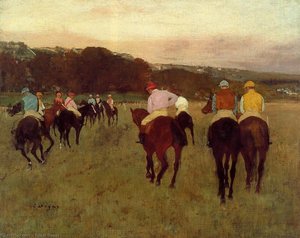
In the heart of 1884, Edgar Degas captured a moment that transcends the mere spectacle of sport, offering instead a profound meditation on vitality and the fleeting nature of time. “Racehorses” is not simply a depiction of a sporting event; it is a rhythmic symphony of muscle, speed, and light. As the jockeys surge across the verdant expanse of the countryside, the viewer is pulled into a world where the boundaries between man and beast blur under the shared intensity of the race. Degas, a master of observing the unscripted moments of modern life, utilizes the landscape not just as a backdrop, but as a stage for an epic display of kinetic energy. The presence of two birds soaring serenely above the fray provides a poignant contrast, a touch of celestial stillness that emphasizes the earthbound thunder of the galloping hooves.
To gaze upon this work is to experience the very essence of Impressionism through a lens of rigorous realism. While many of his contemporaries sought to dissolve form into light, Degas maintained a steadfast devotion to anatomical precision. In “Racehorses,” one can trace the deliberate tension in the horses' limbs and the focused posture of the riders, a testament to his deep study of movement. His technique involves a sophisticated use of broken brushstrokes, applying thin, luminous layers of oil paint that allow light to dance across the textured surfaces of the horses' coats and the lush, grassy terrain. This method creates a palpable sense of depth, guiding the eye from the immediate foreground through a middleground of action into a soft, atmospheric distance.
A Fusion of Traditions and Modernity
The brilliance of this piece lies in its unexpected synthesis of diverse artistic influences. Degas was deeply moved by the Ukiyo-e woodblock prints of Japan, which championed bold outlines and unconventional perspectives. In “Racehorses,” we see the echoes of this Eastern aesthetic in the way he manipulates space and composition, creating a sense of immediacy that feels almost photographic. Yet, beneath this modern arrangement lies a foundation of classical training. His ability to render the subtle shifts in shadow and the rich, earthy palette of the landscape speaks to a lifetime spent studying the masters of the Louvre. This duality—the tension between the structured and the spontaneous—is what gives the painting its enduring emotional resonance.
For the discerning collector or interior designer, “Racehorses” offers more than just aesthetic beauty; it brings an atmosphere of adventure and unbridled freedom into a space. The painting serves as a window into a bygone era of elegance and excitement, making it a commanding centerpiece for any curated collection. Whether placed in a sunlit gallery or a sophisticated study, the work’s vibrant energy and masterful execution invite continuous contemplation. It is an invitation to pause and witness the breathtaking beauty of life caught in mid-motion, a timeless tribute to the spirit of the race.
Otázky a odpovědi
O jaký typ díla se jedná u „Racehorses“?
V katalogu je dílo „Racehorses“ od Hilaire-Germain-Edgar Degas zařazeno do kategorie WallArt, která usnadňuje vyhledávání podobných děl.
Jaký emocionální tón doprovází styl Impressionistic Movement u díla „Racehorses“?
Calm emoce díla „Racehorses“ je doprovázena jeho stylem, který patří k Impressionistic Movement.
Jakým způsobem barvy díla „Racehorses“ od Hilaire-Germain-Edgar Degas navazují na jeho emoce?
Paleta Dark díla „Racehorses“ od Hilaire-Germain-Edgar Degas harmonizuje s jeho Calm emocionálním vyzněním. Barva je jedním ze způsobů, jakými umělecké dílo předává pocity.
Podobná díla




Biografie umělce
A Life Immersed in Movement
Edgar Degas, rodným jménem Hilaire Germain Edgar de Gas, se narodil v Paříži v roce 1834 a jeho život byl fascinující směsicí protikladů. Ačkoli je často zařazen mezi impresionisty – Monet, Renoir a další, kteří v pozdní 19. století revolucionalizovali malbu – aktivně se této kategorii vyhýbal, spíše se identifikoval jako realista. Tento závazek vycházel z jeho pečlivého pozorování světa kolem něj a oddanosti zobrazování ho s neochvějnou upřímností. Degasův raný život byl pohodlně buržoazní; jeho otec byl bankéř a matka pocházela z kreolské rodiny v Novém Orleans. Tento původ mu poskytl přístup k vzdělání a uměleckému tréninku, i když často mlátil na akademické omezení. Nejprve se přihlásil na Lycée Louis-le-Grand, ale jeho skutečné vzdělání začalo, když začal kopírovat díla v Louvru, zdokonaloval své dovednosti a zapálil si životlongou vášeň pro klasické umění. Nicméně Degasův cíl nebyl striktní dodržování tradice; byl to neustále zpochybňující a přehodnocovací proces uměleckých norem. Vlastnil nezávislý duch, který definoval jeho celou kariéru.Beyond Impressionism: A Unique Artistic Vision
Zatímco současníci jako Monet pronásledovali mihotavé efekty světla venku, Degas převážně pracoval v rámci svých dílen, pečlivě sestavoval scény z pozorování a paměti. Jeho předmětem zájmu byla moderní podoba – odklon od historických nebo mytologických témat, která preferovali mnozí akademici. Najdi inspiraci v každodenních životech Pařížanů: pranátři, tanečníky kabaretu, klobouničky a především baleríny. Toto fascinování baletem definuje velkou část jeho díla. Degas nevytvořil jen krásné baleríny; zachycoval krutou realitu jejich povolání – nekonečné hodiny zkoušek, fyzickou námahu, krátké okamžiky elegance uprostřed tvrdé práce. Jeho kompozice jsou často nekonvenční, figurky zobrazuje neočekávanými způsoby a využívá asymetrické uspořádání, které vytváří pocit dynamiky a přítomnosti. Byl mistrem v zachycování pohybu, nikoli rozmazanými liniemi nebo mlhavými efekty, ale pečlivým pozorováním a přesným zobrazením tvaru. *Dancer, A Group of Dancers* a *Women Combing Their Hair* jsou příklady jeho oddanosti zobrazování lidského těla v pohybu a odhalování složitostí moderního života. Nebyl zájem o povrchní krásu; toužil po odhalení pravdy pod povrchem.Influences and Artistic Development
Degasův umělecký vývoj byl utvářen rozmanitými vlivy. Jeho rané vzdělání kladlo důraz na klasické principy, zejména díla Jean-Auguste-Dominique Ingresa, jehož zdůraznění draftmanshipu a přesného tvaru zanechalo trvalý dojem. Nicméně Degas obdivoval i realisty, jako Gustave Courbet, kteří podněcovali akademickou konvenci a prosazovali zobrazování současného života. Klíčový okamžik v jeho vývoji přinesla jeho asociace s Camille Pissarro, vedoucím impresionistou, který mu představil další umělce a povzbuzoval ho k experimentování s novými technikami. Byl okouzlán japonskými rytinami – Ukiyo-e – které ovlivnily jeho použití asymetrických kompozic, zploštělých perspektiv a výrazných vzorů. Také přijmul fotografii, rozpoznávaje její potenciál pro studium pohybu a zachycení krátkých okamžiků v čase. Tato ochota integrovat různé vlivy do svého díla je to, co ho odlišuje a přispívá k jedinečné povaze jeho umění. Nebyl si jistý, že se bude držet pouze jednoho stylu; spíše se snažil kombinovat různé prvky a vytvořit něco zcela nového.The Ballet as Central Theme
Degasův zájem o balet byl dominantní tématem v jeho umění po většinu jeho kariéry. Jeho pozorování baletních taneček v Pařížské opeře bylo hluboké a detailní, od zkoušek až po představení. Vytvořil tisíce skic a obrazů, zachycujících tanečníky v různých pózách a situacích – v šatnách, při rozcvičování, během přestávek a na jevišti. Jeho obrazy baletních taneček se odlišují od tradičních portrétů, protože se zaměřují na dynamiku pohybu, expresi a osobnosti tanečníků. Vytvořil ikonické díla jako *Dancer at the Barre*, *The Dying Swan* a *Rehearsal of the Ballet*. Jeho práce nebyly jen esteticky příjemné; snažil se zachytit skutečný život a námahu spojenou s baletem.Legacy and Lasting Impact
Edgar Degas zemřel v Paříži v roce 1917, zanechávaje za sebou dílo, které stále fascinuje a inspiruje publikum po celém světě. Jeho inovativní přístup k kompozici, mistrovské draftmanship a neochvějné zobrazování moderního života měly hluboký dopad na průběh umělecké historie. Otevřel cestu budoucím generacím umělců, kteří se snažili překročit tradiční konvence a prozkoumat nové způsoby reprezentace světa kolem nich. Jeho vliv lze vidět ve dílech Pabla Picassa a Henriho Matisse, mezi jinými. Muzea po celém světě – včetně Musée d'Orsay a Musée de l’Orangerie v Paříži – vystavují významné sbírky jeho obrazů, pastelí, soch a ryteček, zajišťující, že jeho dědictví bude trvat pro budoucí generace. Degas nebyl jen malíř tanečníků nebo koněm; byl pozorným pozorovatelem lidské povahy, mistrem tvaru a pohybu a skutečným inovátorem, který přepsal možnosti umění.
Hilaire-Germain-Edgar Degas
1834 - 1917 , Francie
Rychlé informace o umělci
- Artistic Movement Or Style: Impresionismus, Realismus
- Artists Or Movements Influenced By This Artist:
- Picasso
- Matisse
- Artists Who Influenced This Artist:
- Ingres
- Courbet
- Pissarro
- Date Of Birth: 1834
- Date Of Death: 1917
- Full Name: Hilaire-Germain-Edgar De Gas
- Nationality: Francouzský
- Notable Artworks:
- Dancer and Tambourine
- The Ballet Class
- Degas in a Green Jacket
- The Collector
- Women Combing Their Hair
- Place Of Birth: Paříž, Francie
Související články

The Noble Steed on Canvas: A Historical & Artistic Exploration of Horse Painting Across Cultures
Explore the rich history of horse painting! Discover masterpieces from Stubbs to Munnings & learn about symbolism, techniques & artists. Find museum-quality reproductions at TopImpressionists.

Impresionismus v obrazech: Top 10 děl, které definují tento revoluční styl
Prozkoumejte 10 ikonických děl impresionismu od Monet, Renoir a dalších. Objevte příběhy za obrazy plnými světla a barev. Reprodukce nejvyšší kvality pro váš interiér na TopImpressionists.com

Top 10 impresionistických mistrovských děl, která změnila svět umění |
Prozkoumejte 10 ikonických děl impresionismu od Monet, Renoir, Degas a dalších. Objevte příběhy za obrazy plnými světla a barev. Najděte perfektní umělecké reprodukce pro váš interiér na .

Edgar Degas: Capturing Modern Life – A Study of Movement, Observation, and the Parisian Belle Époque
Explore the captivating world of Edgar Degas! Discover his innovative techniques, iconic ballet paintings, and unique portrayal of Parisian life in this insightful art history study.

Top 10 impresionistických mistrovských děl, které změnily svět umění | TopImpressionists
Prozkoumejte 10 ikonických děl impresionismu od Monet, Renoir a Van Gogha. Objevte příběhy za slavnými obrazy, techniky a inspiraci pro váš interiér. Kvalitní reprodukce na TopImpressionists.com!
Prozkoumejte umělecká díla uspořádaná podle témat, stylů a charakteristik.


