

 Zobrazit v interiéru
 Odeslat
 Sdílet
 Podrobnosti
 Průvodce

 Stáhnout obrázek
 Podobné kousky
 Rentgenové snímky
 Slideshow
 Statistiky
Like to like
 Oil On Canvas
- WallArt
- Baroque
 1645
1645- Renaissance
 21.0 x 13.0 cm
 Národní galerie v Kodni
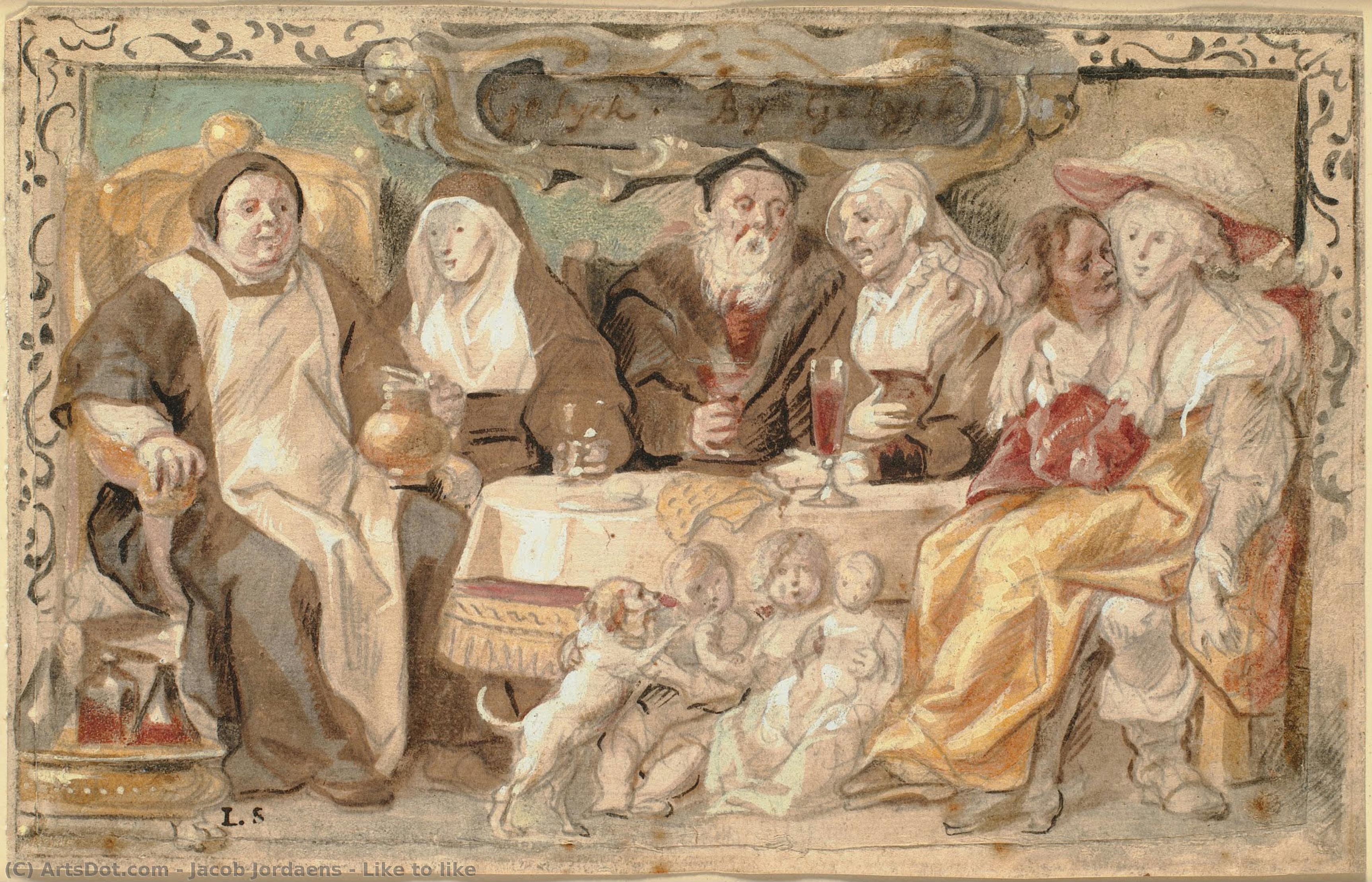
Jacob Jordaens’ ‘Like to Like’ captures a vibrant 17th-century Dutch proverb scene with richly detailed figures and a bustling dining table. This Baroque masterpiece celebrates everyday life, offering a timeless depiction of human connection and social order.
 Přečíst si více
"meta_description": "Jacob Jordaens (1593-1678) byl vydařený flanderský malíř baroka, známý pro živé scény z venkovského života a alegorické obrazy. Jeho dílo odráží radostný život a je inspirováno italskými mistři."
Giclée / Umělecký tisk
Giclée nebo plátěný tisk muzeální kvality s rychlou výrobou a širokou nabídkou povrchových úprav. ( Objednat ručně malovanou reprodukci Přepnout na digitální verzi obrazu)




P118B $10

P118H $10

P118W $10

P438Z $10

P508JH $12

P508YH $12

P805H $10

P805Z $10

P919BZ $10

P919G $10

P919XJ $10

P959ZH $10

P968JZ $12

W106C $8

W218G $10

W218JH $8

W218Y $10

W307PJ $10

W316G $10

W316PJ $8

W316Y $10

W398PJ $8

W4111J $10

W500HY $15

W500JH $15

W692G $12

W849H $8

W940BG $15

W953PJ $8




Standardní velikost
na zakázku
CM
INCH
Vyberte si z našich přednastavených velikostí, které odpovídají původním proporcím díla.
Loading sizes...

šířka
výška
Můžete zadat vlastní rozměry tak, aby výtvor odpovídal konkrétnímu rámu nebo prostoru. Pokud zvolená velikost nebude odpovídat poměru stran původního obrazu, dílo buď ořížeme, nebo obraz rozšíříme pomocí zrcadlového efektu či jednobarevného okraje. Před zahájením výroby vám bude zaslán digitální náhled k schválení.
Mějte prosím na paměti, že náhled na obrazovce neodráží skutečné oříznutí nebo rozšíření. Pouze digitální náhled přesně zobrazí finální kompozici.
Ačkoliv jsou k dispozici i vlastní rozměry, pro zachování původních proporcí doporučujeme vybrat si rozměr z předdefinovaného seznamu.
Celosvětové doručení () do 2 týdnů namísto standardních 4/5 týdnů. (26 září)

Zdarma celosvětová expresní doprava

Vysoce kvalitní lněné plátno

Úplné pojištění přepravy

Záruka vrácení celního poplatku

Záruka věrného barevného shodu

100dení lhůta pro vrácení zboží (pouze při vadách výroby)

100% garance vrácení peněz

Sleva při více objednávkách
 Skleněná varianta je dostupná pouze u rozměrů menších než 110 cm

Like to like
Giclée / Umělecký tisk
Velikost reprodukce
-


Celková cena
$ 69
A Window into Flemish Wisdom: Jordaens’ “Like to Like”
Jacob Jordaens' "Like to Like," painted in 1645, is more than just a group portrait; it’s a meticulously crafted visual sermon, a testament to the enduring power of proverb and social commentary within the vibrant world of Flemish Baroque art. Executed during a period when artists like Bosch and Bruegel had established the tradition of illustrating moral lessons through captivating scenes, Jordaens continues this legacy with remarkable clarity and detail. This particular work, measuring 21 x 13 cm, offers a poignant glimpse into the lives and values of a prosperous Antwerp family, inviting viewers to contemplate their own place within the social order.
- Subject Matter: The painting depicts a gathering around a richly appointed dining table, populated by a diverse cast of characters – men, women, and children – each embodying a specific facet of societal expectation.
- Composition: Jordaens’ masterful composition utilizes theatrical staging, with the figures arranged as if on a stage, their faces turned towards the viewer, drawing us directly into the scene.
- Details: The inclusion of wine glasses, cups, and bowls adds to the sense of conviviality and abundance, while the presence of a boy and girl further emphasizes the theme of familial bonds and generational continuity.
The Language of Proverbs and Symbolism
At its core, “Like to Like” is an illustration of a fundamental proverb: "Stick with one’s own class." This message is powerfully conveyed through the carefully constructed groupings within the painting. Four distinct couples represent this principle – a friar and nun, an elderly married couple, young lovers, and a simple family – each pair visually reinforcing the idea of maintaining social standing and adhering to established norms. The artist's didacticism isn’t heavy-handed; rather, it’s subtly woven into the fabric of the scene, inviting contemplation rather than demanding obedience.
Beyond this central theme, the painting is rich in symbolic detail. The vase positioned near the center adds an element of decorative elegance, while the presence of a boy and dog – or girl and doll – speaks to childhood innocence and the importance of nurturing young generations. Even the clothing worn by each figure contributes to the overall narrative, reflecting their respective social roles and status.
A Masterful Exercise in Technique
Jordaens’ skill as a painter is immediately apparent in the meticulous rendering of textures – from the velvet upholstery of the chairs to the folds of the fabrics worn by the figures. His use of light and shadow creates a sense of depth and realism, while his brushwork is both precise and expressive. The painting demonstrates a mastery of *alla prima* technique, applying paint directly to the canvas in broad strokes, creating a vibrant and dynamic effect. This approach, favored by Rubens himself, contributes significantly to the work’s energetic feel.
Emotional Resonance and Lasting Appeal
"Like to Like" transcends its historical context to offer a timeless meditation on social order, family values, and the enduring wisdom of proverbs. Jordaens' ability to capture human emotion – tenderness, affection, contemplation – ensures that this painting continues to resonate with viewers centuries later. This hand-painted reproduction offers an exceptional opportunity to own a piece of art history, bringing the richness and complexity of Flemish Baroque into your home or office.
Biografie umělce
Jacob Jordaens: A Flemish Master of Life’s Abundance
Jacob Jordaens, narozený 19. května 1593 v Antverpách, byl klíčovou postavou florentského baroka a jeden z nejvýraznějších představitelů vlámského umění 17. století. Jeho dílo se vyznačuje dynamickými kompozicemi, realistickým zobrazením každodenního života a vlivem na další umělce, jako například Jan Steen. Na rozdíl od mnoha svých kolegů, kteří se snažili získat vzdělání v Itálii, zůstal Jordaens pevně zakořeněn ve své rodné Flandře, kde vyvinul jedinečný, robustní a zemský styl oslavující radosti a realitu každodenního života. Jeho otec, úspěšný obchodník s hedvábím, mu zajistil pohodlné vychování, které umožnilo studium umění pod vedením Adama van Noorta – také mistra Petra Paula Rubense. Tato raná výuka vložila do Jordaensovy duše pevné základy techniky a pochopení kompozice, přesto se brzy odlišil a vyvinul svůj vlastní, charakteristický styl. V roce 1616, posilujíc svou vazbu na upevněný antverpský umělecký svět, se oženil s van Noortovou dcerou, Katharinou.Pečovatel o vesnické slavnosti a barokní pompéznost
Jordaensův umělecký rozsah byl mimořádně rozmanitý, zahrnoval náboženské příběhy, mytologické scény, alegorické kompozice, žánrová malby plná života a dokonce i portréty. Přesto je nejvíce zapamatován pro své bouřlivé zobrazení vesnických festivalů a hospodských scén – díla, která vyzařují hmatatelnou energii a nezadržitelné radosti z hmotných záležitostí. Malby jako *Královská hostina* (také známá jako Slavnost Bean Kinga) ilustrují tento charakteristický styl: přeplněné kompozice s robustními postavami zapojenými do živých oslav, zachycené v teplých, zářivých barvách a dramatickém kontrastu světla a stínu. Tyto scény však nebyly jen oslavou zábavy; často byly zatíženy jemnými morálními ponaučeními, odrážející složitý vztah mezi zlehkostí a obezřetností, který byl v 17. století běžný. Přesto Jordaens byl stejně zdatný i při realizaci formálnějších zakázek. Jeho účast na výzdobě paláce Huis ten Bosch poblíž Haagu – společně s prací s Rubensem – ukázala jeho schopnost vytvářet monumentální alegorické díla, která bezproblémově integrovaly malbu a architekturu.Vlivy a jedinečný umělecký hlas
Ačkoli Jordaens nikdy nenastoupil na tradiční cestu do Itálie za účelem studia klasických a renesančních děl, intenzivně studoval tiskové reprodukce italských mistrů dostupných v severní Evropě. Například se mu připisuje studium Ticianových, Veroneseho, Caravaggia a Bassana – umělců, jejichž díla dosáhla Flandry prostřednictvím tištěných obrazů. Vliv Caravaggia je patrný zejména v jeho dramatickém použití světla a stínu, techniky známé jako *tenebrismo*, která zvyšuje emocionální intenzitu jeho scén. Nicméně Jordaens se nespoléhal pouze na kopírování těchto vlivů; syntetizoval je s vlastními flanderskými smysly a vytvořil styl, který byl jedinečný pro něj samotného. Rozlišoval se od Rubense a Van Dycka tím, že upřednostňoval realismus před idealizací a přijímal přímější a hrubší přístup k zobrazení lidské formy. Jeho postavy jsou často robustní, dokonce i svalnaté, jejich tváře zarudlé a zdravé. Tento závazek k realizmu, v kombinaci s jeho mistrovským ovládáním barev a kompozice, jej odlišil od svých současníků a etabloval ho jako jednoho z nejvýznamnějších představitelů vlámského barokního umění.Rozšířená paleta a rozmanitost témat
Jordaensova tvorba se rozprostírá přes širokou škálu žánrů, od náboženských obrazů po mytologické scény a živé žánrové obrazy každodenního života. Jeho dílo je charakteristické bohatou paletou barev, dynamickými kompozicemi a schopností zachytit lidské emoce s přesvědčivostí. Mezi jeho nejznámější díla patří *Vrat k rodině*, která zobrazuje návrat Ježíše, Marie a Josefa z Egypta, a *Zasloužená odměna*, kde se vesničané radují z bohatství. Jordaens byl také uznávaným designérem tapisérií, což svědčí o jeho raném vzdělání jako „malíře vodních barev“. Jeho schopnost kombinovat realismus s alegorií a senzualitu s morálkou z něj činila jedním z nejvýraznějších umělců své doby.Dědictví a trvalý dopad
Během svého dlouhého a plodného života Jordaens vycvičil mnoho žáků – oficiálně byli zaznamenáni 15 žáků v Gildě svatého Lukáše mezi lety 1621 a 1667, ale další šest žáků bylo zaznamenáno v soudních dokumentech a ne v záznamech gildy, takže je pravděpodobné, že měl více žáků než oficiálně zaznamenáno. Mezi nimi byl jeho příbuzný a syn Jacob. Stejně jako Rubens a další umělci té doby se Jordaens spoléhal na pomoc svých asistentů a žáků při tvorbě obrazů. Jeho dílo bylo často reprodukováno pomocí asistentů, což odráží jeho schopnost efektivně využívat zdroje a rozšiřovat svůj dosah.Závěr
Jacob Jordaens zemřel 18. října 1678 v Antverpách na mor. Jeho dílo je svědectvím o bohatství, radosti a složitosti lidského života, a jeho obrazy i dnes fascinují diváky svou energií, vitalitou a upřímným zobrazením lidské zkušenosti.
Jacob Jordaens
1593 - 1678 , Belgie
Rychlé informace
- Artistic Movement Or Style: Baroko
- Artists Or Movements Influenced By This Artist: ['Jan Steen']
- Artists Who Influenced This Artist: ['Adam van Noort']
- Date Of Birth: 1593-05-19
- Date Of Death: 1678-10-18
- Full Name: Jacob Jordaens
- Nationality: Vlach
- Notable Artworks:
- The King Drinks
- Argus a Měšec
- Place Of Birth: Antverpy, Belgie
Související články

Golden Light & Dutch Skies: The Timeless Magic of Dutch Golden Age Landscapes
Discover the breathtaking beauty of Dutch Golden Age landscapes. Explore the mastery of light, chiaroscuro, and 17th-century realism through an expert art history lens, celebrating the enduring legacy of the Dutch Masters for discerning collectors and art lovers.

Mastering Light & Shadow: A Journey Through the Dutch Golden Age's Luminous Legacy
Embark on a cultural journey through the Dutch Golden Age. Explore the masterful interplay of light and shadow in 17th-century masterpieces, from Rembrandt to Vermeer, and discover how this era of profound realism continues to inspire fine art collectors today.
Prozkoumejte umělecká díla uspořádaná podle témat, stylů a charakteristik.


