

Zobrazeno: · Včetně rámu:
 Náhled v interiéru
 Sdílet
 Sdílet
 Podrobnosti o díle
 Průvodce

 Stáhnout
 Podobné položky
 Rentgenové snímky
 Slideshow
 Otázky a odpovědi
 Statistiky


Kč 5861
Ručně malovaná olejová reprodukce
Rukou malované olejné plátno v libovolném rozměru i s rámem, vyrobené našimi umělci na zakázku. ( Přepnout na tisk Přepnout na digitální obraz)
Velikost
·Standardní velikost
na zakázku
CM
INCH
Vyberte si z našich přednastavených velikostí, které odpovídají původním proporcím díla.
Načítání velikostí...

šířka
výška
Zadejte šířku a výšku, které potřebujete pro váš rám nebo stěnu. Protože se jedná o ruční malbu, při výběru jiného formátu může umělec kolem obrazu domalovat o něco více, nebo jej mírně oříznout — rozhodnete si vy. Před zahájením malby vám zašleme digitální náhled ke schválení. Obraz zobrazený na této stránce neodpovídá skutečnému výsledku — pouze digitální náhled jej zobrazuje.
 Více informací
Dokončit
·
Bílé okraje Kč1

Rozostřené okraje Kč1

Prodloužené okraje Kč1

P118B Kč10

P118H Kč10

P118W Kč10

P438Z Kč10

P508JH Kč12

P508YH Kč12

P805H Kč10

P805Z Kč10

P919BZ Kč10

P919G Kč10

P919XJ Kč10

P959ZH Kč10

P968JZ Kč12

W106C Kč8

W218G Kč10

W218JH Kč8

W218Y Kč10

W307PJ Kč10

W316G Kč10

W316PJ Kč8

W316Y Kč10

W398PJ Kč8

W4111J Kč10

W500HY Kč15

W500JH Kč15

W692G Kč12

W849H Kč8

W940BG Kč15

W953PJ Kč8

H24-GOLD Kč30

H24-SILVER Kč30

H36-GOLD Kč45

H36-SILVER Kč45
Dodáváno v ochranné tubě, připraveno k vlastním rámování.
Doplňkové služby
volitelnéCo všechno doplňky zahrnují?
Příklady možných změn: Nahrazení obličeje fotografií zákazníka; Přidání mazlíčka (např. výměna kočky za psa); Skrytá zpráva v pozadí; Změna krajiny nebo prvků v pozadí.
Po přijetí objednávky vám tým TopImpressionists.com pošle e-mail s instrukcemi a poskytne náhled návrhu
Po přijetí objednávky vám tým TopImpressionists.com pošle e-mail s instrukcemi a poskytne náhled návrhu
Celosvětová doprava () za 3–4 týdny namísto standardních 5 týdnů. (6 listopad). Bez kompromisů v kvalitě.
Ochranný lak
Popisek díla
Detaily ryté bronzové plakety
This elegant plaque features the artist's name and the title of the artwork, finely engraved for a timeless presentation.
It is made from bronze with a refined, elegant finish. The text is precisely laser-engraved for a sharp and permanent result. Measuring 9x2 cm, the plaque is compact yet easy to read. It's built to be durable and scratch-resistant, offering a professional, museum-quality look. Mounting is simple thanks to the included adhesive backing.
Detaily průhledné akrylové desky
The plaque includes essential engraved details such as the artist's name, the title of the artwork, the date it was created, the type of media used-like oil on canvas or watercolor-a brief description of the piece, and a QR code that links to the complete artwork information.
It is crafted from clear acrylic, offering a sleek, modern appearance. The text is UV-engraved in black to ensure strong visual contrast. With a size of 10x15 cm, it ensures optimal readability. It comes equipped with two metal hooks for secure wall mounting. The plaque is designed to be weather-resistant, making it suitable for various environments, and it includes interactive features that work seamlessly with smartphone scanning.
Detaily černé akrylové destičky
This elegant plaque includes engraved information such as the artist's name, the title of the artwork, the date it was created, the type of media used (like oil on canvas or watercolor), a short description of the artwork, and a QR code for quick access to more information.
The plaque itself is made from refined black acrylic with a premium finish. The text is laser-engraved in white for high contrast and readability. Its size is 10x15 cm, designed to be easy to read. It comes with two metal hooks for professional mounting. The design is sleek and fits any interior style. It is also weather-resistant and durable, with built-in digital integration for mobile compatibility.
Skleněná varianta je dostupná pouze u rozměrů menších než 110 cm
 Skleněná varianta je dostupná pouze u rozměrů menších než 110 cm
- Zdarma celosvětová expresní doprava
- Vysoce kvalitní lněné plátno
- Kompletní pojištění přepravy
- Záruka vrácení celního poplatku
- Záruka věrného barevného souladu
- 100dení lhůta pro vrácení zboží (pouze při vadách výroby)
- 100% záruka vrácení peněz
- Sleva při více objednávkách


Popis sbírného předmětu
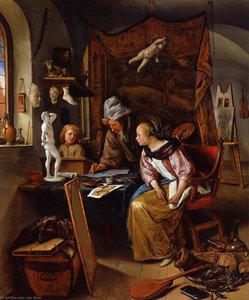
A warm snapshot of Dutch domesticity unfolds in Jan Havickszoon Steen's The Drawing Lesson, capturing a tender family moment from the Golden Age that invites you to bring this masterpiece of human comedy into your home.
Biografie umělce
Jan Steen (1626–1679) byl přední holandský malíř Zlatého věku známý svými živými a humornými scénami z každodenního života. Objevte jeho barevné obrazy plné psychologického vhledu a morálních poselství, které ovlivnily barokní umění.
O malbě
A Window into Dutch Domesticity
In the quiet, sun-dappled corners of a seventeenth-century Dutch home, Jan Havickszoon Steen captures a moment that feels both profoundly intimate and timelessly universal. The Drawing Lesson is not merely a depiction of an instructional afternoon; it is a masterful snapshot of domestic life, where the boundaries between education, leisure, and family connection blur into a single, harmonious scene. As we gaze upon this composition, we are invited into a room filled with the warmth of togetherness, watching as a father guides his children through the delicate art of sketching. The atmosphere is thick with a sense of quiet purpose, yet there is an underlying vitality—a pulse of life that prevents the scene from feeling static or overly formal.
Steen, a true master of the human comedy, had an unparalleled ability to find the extraordinary within the ordinary. While his contemporaries often reached for the grandiosity of mythological legends or the stiff dignity of royal portraits, Steen turned his gaze toward the kitchen, the tavern, and the schoolroom. In this work, he utilizes the textures of everyday objects—the smooth surface of a wooden table, the delicate curve of a ceramic bowl, and the weathered grain of a violin—to ground the viewer in a tangible reality. For the collector or the interior designer, this painting offers more than just visual beauty; it provides a narrative anchor, a piece of history that breathes life into a room through its depiction of shared human experience.
Technique and the Art of Light
The technical brilliance of Steen’s approach lies in his ability to manipulate light and shadow to create psychological depth. Though he was known for his vibrant palettes, his mastery of tonal gradations allows The Drawing Lesson to possess a sculptural quality. He employs a sophisticated understanding of light to illuminate the faces of the learners, drawing our eyes toward the focal point of the instruction. This interplay of light does more than just reveal form; it creates a sense of atmosphere, suggesting the soft, diffused glow of a northern afternoon filtering through a window.
One cannot discuss Steen without acknowledging his innovative use of texture and volume. Through careful layering, he achieves an illusion of depth that makes the objects on the table—the books, the cup, and the scattered art materials—appear almost within reach. This tactile quality is essential for anyone seeking a reproduction that commands attention in a modern space. The painting does not merely sit upon a wall; it interacts with the light of its environment, offering subtle shifts in mood depending on the time of day. It is this technical rigor, paired with his approachable aesthetic, that makes Steen’s work so enduringly captivating for those who appreciate the fine details of Baroque mastery.
Symbolism and Emotional Resonance
Beyond the surface level of a family activity, The Drawing Lesson is rich with the subtle moralizing characteristic of the Dutch Golden Age. In the seventeenth century, the act of learning was often viewed as a metaphor for the cultivation of the soul. The careful guidance of the child mirrors the societal importance of discipline, patience, and the transmission of knowledge across generations. Every element in the room—from the presence of music, suggested by the violin, to the scholarly weight of the books—serves to elevate the domestic scene into a meditation on the virtues of a well-ordered life.
Yet, despite these underlying lessons, the emotional impact of the piece remains profoundly accessible. There is no heavy-handedness here; instead, there is a gentle, rhythmic beauty found in the way the figures lean toward one another. For an art lover, the painting offers a sense of nostalgia for a simpler, more connected era. For an interior designer, it serves as a sophisticated element of storytelling, capable of evoking feelings of warmth, stability, and intellectual curiosity. To possess a reproduction of this work is to bring a piece of the Dutch Golden Age's heart into one's own home, celebrating the enduring beauty of life’s most quiet, instructional moments.
Otázky a odpovědi
Jakým způsobem barvy díla „The Drawing Lesson“ od Jan Steen navazují na jeho emoce?
V díle "The Drawing Lesson" doprovází Earthy barev Reflective pocit.
Jak "The Drawing Lesson" vyvažuje světlo a stín?
U díla „The Drawing Lesson“ od Jan Steen je zaznamenána jasnost deep_shadow při luminanci Dark.
V jakém věku vytvořil/a Jan Steen dílo „The Drawing Lesson"?
Jan Steen vytvořil/a dílo „The Drawing Lesson“ v возрасте 37 let. Umělec se narodil/a v 1626 a dílo je datováno na 1663.
Rychlá fakta a umělecký kvíz
O umělci Jan Steen

Jan Steen
1626 - 1679, Česká republika
Biografie umělce
Jan Havickszoon Steen (1626 – 1679): Mistr všedního života
Jan Havickszoon Steen (1626–1679) se vymyká svým současníkům v holandském zlatém věku jako malíř, který upřednostňoval zachycení živosti a humoru přítomného ve všední lidské zkušenosti. Na rozdíl od mnoha umělců zaměřených na velká mytologická vyprávění nebo historické portréty se Steen věnoval zobrazování scén z domácího života – rodin zemědělců, hospodských setkání, školních tříd – prosycených psychologickým vhledem a subtilními morálními ponaučeními. Tento osobitý přístup upevnil jeho pověst jako jednoho z nejoriginálnějších hlasů své doby a hluboce ovlivnil barokní umění. Narodil se v Leidenu, Nizozemsko, Steenovo rané umělecké vzdělání bylo poněkud nekonvenční; učil se u Hendricka Jacobsz. Stoffelse, malíře známého portréty a krajinami, který mu poskytl základní dovednosti, ale také ho vystavil stylistické tradici, která by později ovlivnila jeho vlastní osobitý styl. Steen si však rychle vyvinul nezávislou vizi, upřednostňoval žánrovou malbu – rozvíjející se umělecké hnutí – před prestižnějšími tématy. Toto rozhodnutí odráží širší kulturní posun směrem k oceňování realismu a zobrazování složitosti lidských vztahů v srozumitelných souvislostech. Steenovo dílo se vyznačuje mistrným použitím *chiaroscuro*, dramatických technik osvětlení, které umocňují emocionální dopad a vytvářejí hloubku v jeho plátnech. Pečlivě pozoroval detaily každodenního života – oblečení, nábytek, výrazy obličeje – vykresloval je s úžasnou přesností. Steen však pouze nedokumentoval realitu; zručně využíval vizuální nápovědy k předávání morálních poselství. Jeho obrazy často zobrazují postavy zapojené do zdánlivě banálních činností – hráči kuželek, zemědělci obhospodařující svá pole – ale tyto scény jsou prosyceny symbolickým významem a podněcují diváky k zamyšlení nad tématy zbožnosti, hlouposti a důsledky lidského chování. Vezměme si například obraz „Hráči kuželek v hospodě“ (1663), kde se živá hra odehrává na pozadí rustikálního interiéru, subtilně nám připomínající důležitost umírněnosti a sociální odpovědnosti. Jeho vliv zasáhl i jeho bezprostřední okolí; Steenův inovativní styl rezonoval s umělci po celé Evropě, zejména ve Francii, kde barokní malíři přijali jeho techniky pro vytváření emocionálně nabitých kompozic. Umělci jako Nicolas Sustris a Rembrandt obdivovali Steenovu schopnost vyjádřit psychologickou nuanci v zdánlivě jednoduchých scénách – charakteristický rys barokní estetiky. Musée Memling v Bruggách uchovává pozoruhodnou sbírku Steenových obrazů, která návštěvníkům nabízí jedinečnou příležitost ocenit šířku a hloubku jeho uměleckého úspěchu. Mezi nejznámější díla Steena patří „Jan Křtitel káže“ (1653) a „Přísná učitelka“ (1668). Obraz „Jan Křtitel káže“ je příkladem Steenova dramatického využití světla a barvy, zachycuje klíčový biblický okamžik s hmatatelnými emocemi. Malba zobrazuje skupinu vesničanů pozorně poslouchající Janův křtitelský kázání, osvětlenou zářivým paprskem slunečního světla – vizuální metaforou božského zjevení. Podobně „Přísná učitelka“ zobrazuje školní scénu plnou napětí a humoru, zdůrazňující výzvy, kterým čelí pedagogové při formování mladých myslí. Steenova pečlivá pozornost k detailům a psychologický realismus povyšují toto zdánlivě běžné téma na hlubokou meditaci o lidské povaze a morální odpovědnosti. Dědictví Jana Steena dodnes inspiruje umělce, kteří usilují o autentičnost a emocionální rezonanci. Zůstává trvalým symbolem holandské umělecké inovace – malířem, který se odvážil oslavovat krásu a složitost každodenního života a zároveň předával cenná morální ponaučení, čímž si zajistil své místo jako jedné z nejvlivnějších postav v historii barokního umění.Vlivy a vývoj Steena
Steenův styl nebyl výsledkem izolovaného génia, ale spíše syntézou různých uměleckých vlivů a postupného vývoje jeho vlastního jedinečného pohledu. Po počátečním učení u Hendricka Jacobsz. Stoffelse se Steen pravděpodobně setkal s díly Adriaena van Ostadeho, dalšího mistra žánrové malby, který ho inspiroval k zobrazování života prostých lidí. Nicméně Steen brzy překonal svého předchůdce v psychologické hloubce a narativní složitosti svých kompozic. Jeho raná díla často vykazují silný vliv Rembrandta van Rijna, zejména v použití *chiaroscuro* a dramatického osvětlení. Steen se však od Rembrandta lišil svým humorným pohledem na lidské slabosti a tendencí k ironickému komentáři. Zatímco Rembrandt se zaměřoval na hluboké emocionální stavy a duchovní témata, Steen se soustředil na každodenní život a sociální interakce. V průběhu své kariéry si Steen vyvinul osobitý styl charakterizovaný živými barvami, dynamickými kompozicemi a pečlivou pozorností k detailům. Jeho obrazy jsou plné postav v pohybu, gestikulujících a interagujících s sebou navzájem, což vytváří pocit vitality a spontaneity. Steen také mistrně využíval symboliku k předávání morálních poselství, skrytých ve zdánlivě nevinných scénách z každodenního života. Jeho schopnost kombinovat realismus s alegorií ho odlišovala od jeho současníků a učinila ho jedním z nejoriginálnějších malířů holandského zlatého věku.Technika a kompozice
Jan Steen byl virtuózní technik, který ovládal širokou škálu malířských postupů. Používal bohatou paletu barev, často s dominantními tóny červené, hnědé a žluté, které dodávaly jeho obrazům teplo a živost. Jeho technika nanášení barvy byla uvolněná a expresivní, což vytvářelo pocit textury a pohybu. Steen také mistrně využíval *impasto*, silné vrstvy barvy, k zdůraznění určitých detailů a vytvoření trojrozměrného efektu. Jeho kompozice byly dynamické a složité, plné postav v různých polohách a gestech. Steen často využíval diagonální linie a asymetrické uspořádání k vytváření pocitu napětí a pohybu. Jeho obrazy jsou také charakteristické pečlivou pozorností k detailům – oblečení, nábytek, interiéry – které dodávají jeho scénám autentičnost a realismus. Steen byl mistr narativu, který dokázal vyprávět složité příběhy prostřednictvím vizuálních prvků. Jeho obrazy jsou plné symboliky a alegorií, které podněcují diváky k zamyšlení nad tématy piety, hlouposti a důsledky lidského chování. Schopnost kombinovat realismus s moralizací ho odlišovala od jeho současníků a učinila ho jedním z nejvýznamnějších malířů holandského zlatého věku.Dědictví a význam
Jan Steen zemřel v roce 1679, ale jeho dílo nadále inspirRychlé informace o umělci Jan Steen
- Artistic Movement Or Style: Zlaté století nizozemského malířství
- Artists Or Movements Influenced By This Artist: Barokní umění
- Artists Who Influenced This Artist: ['Hendrick Jacobsz. Stoffels']
- Date Of Birth: Leiden, Nizozemsko (1626)
- Date Of Death: 1679
- Full Name: Jan Havickszoon Steen
- Nationality: Nizozemec
- Notable Artworks:
- Křtitel Jan kazatel
- Hráči kuželek v hospodě
- Přísný učitel
- Place Of Birth (City And Country): Leiden, Nizozemsko
Prozkoumejte umělecká díla uspořádaná podle témat, stylů a charakteristik.


Jan Steen
The Drawing Lesson
() ·
Včetně rámu: · Ručně malováno olejem na plátně
Celkem