

 Náhled v interiéru
 Sdílet
 Sdílet
 Podrobnosti o díle
 Průvodce

 Stáhnout
 Podobné položky
 Rentgenové snímky
 Slideshow
 Otázky a odpovědi
 Statistiky
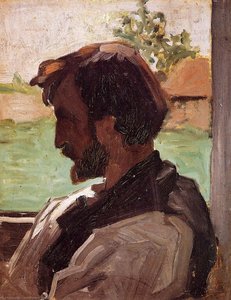
Self Portrait with Palette


Admire Frédéric Bazille's 'Self-Portrait with Palette' (1865). A poignant glimpse into the life of an Impressionist painter, capturing his dedication and artistic spirit in a striking self-portrait.
 Zobrazit více
Jean Frédéric Bazille (1841-1870) byl klíčový impresionista. Objevte jeho barevné krajinky, portréty a blízký vztah s Monetem & Renoirrem. Kvalitní reprodukce naleznete zde!
Získejte soubor připravený k tisku, který svou kvalitou výrazně převyšuje webový náhled. Každý prodávaný digitální obraz pochází z vysokorozlišeného originálu v naší databázi – obvykle o šířce 5 000 až 15 000 pixelů – díky čemuž můžete tisknout ve velkém formátu, provádět těsný střih nebo si s jistotou užít i ty nejjemnější detaily.
Žádný soubor neopustí naše studio bez úprav. Digitální expert kontroluje barvy v porovnání s původním malířským dílem a v případě potřeby je upravuje, poté pomocí profesionálních nástrojů pro retuš zvyšuje ostrost a detailnost — přičemž vždy zůstává věrný tahům štětcem a stylu umělce. Výsledkem je obraz, který vypadá jako malba, nikoliv jako naskenovaný snímek s filtrem.
Schvalování před dokončením: náš expert vám do 72 hodin zašle obraz e-mailem k revizi. Nejsste spokojeni? Můžete požádat o úpravy či opravy, nebo si můžete vyžádat vrácení peněz, pokud kvalita neodpovídá vašim očekáváním.
Tuto kvalitu využívají vydavatelství, designová studia, galerie i tiskárny.
Digitální obrazy
Stáhněte si soubor ve vysokém rozlišení pro osobní prohlížení, tisk nebo kreativní projekty. ( Přepnout na tisk Koupit ručně malovaný obraz)
Součást každé objednávky digitálního obrazu
Profesionální digitální doručení, zaručené
Když si vyberete TopImpressionists.com, nezískáváte pouze obrázek – získáváte digitální umělecké dílo s profesionálně vylepšenými detaily, zpracované s precizností a podpořené zárukou za spokojenost. Zde je vše, co vaše objednávka automaticky obsahuje:

Rychlé doručení e-mailem
Váš digitální obraz ve vysokém rozlišení vám bude zaslán e-mailem do 72 hodin od objednávky – připraven k okamžitému použití.

Digitální soubor s využitím AI
Vaše umělecké dílo je profesionálně optimalizováno pomocí pokročilých nástrojů umělé inteligence a manuální úpravy, což zajišťuje maximální úroveň detailu, ostrosti a přesnosti barev.

Doživotní bezplatné znovuodeslání digitálních obrazů
Soubor jste omylem smazali nebo ztratili? Žádný problém – kdykoliv vám ho znovu zašleme zcela zdarma.

Bez poplatků za dovoz – navždy
Užijte si své umělecké dílo okamžitě bez celních poplatků, daní nebo nákladů na dopravu – digitální stažení je vždy bez daňových povinností.

Záruka přesnosti barev
Díky profesionálním nástrojům a správě barev zajišťujeme, aby váš digitální obraz odrážel původní barvy co nejvěrněji.

100dená záruka spokojenosti
Pokud nebudete s digitálním obrázkem spokojeni, provedeme jeho revizi nebo vám vrátíme 100% platby do 100 dnů – bez jakýchkoliv dotazů.

100% záruka vrácení peněz
Nespokojeni? Získejte plnou náhradu peněz do 100 dnů od obdržení digitálního souboru – bez zbytečných dotazů.

Slevy při hromadných objednávkách
Koupě 3 obrazů ušetří 10% – Koupě 5 obrazů ušetří 15% – Koupě 10+ obrazů ušetří 20%. Ideální pro kreativní projekty, galerie a agentury.
A Moment Frozen in Time: Jean Frédéric Bazille’s “Self Portrait with Palette”
Jean Frédéric Bazille's "Self Portrait with Palette," painted in 1865, is more than just a depiction of an artist; it’s a poignant snapshot of ambition, vulnerability, and the burgeoning spirit of Impressionism. Created during a remarkably brief but intensely productive period in his career, this oil-on-canvas work offers a rare glimpse into the mind of a young man grappling with his artistic aspirations amidst the vibrant, transformative atmosphere of Paris. The painting resides within the esteemed collection of the Art Institute of Chicago, a testament to its enduring quality and significance.
The composition is strikingly direct and unadorned. Bazille, dressed in a dark suit and tie – attire indicative of his medical studies before embracing art full-time – stands before a simple, dark background. His gaze meets the viewer head-on, an almost disconcerting level of intimacy that immediately draws us into the scene. In his hand, he holds a palette brimming with vibrant pigments, hinting at the creative energy simmering beneath the surface. The subtle inclusion of brushes further emphasizes his profession and the tools of his trade. The painting’s stark simplicity—a deliberate choice by Bazille—forces us to confront the artist himself, stripping away any romanticized notions of artistic genius and presenting a raw, honest portrayal.
Impressionism in Miniature: Technique and Light
Bazille's technique is firmly rooted in the principles of Impressionism, though with a distinctly personal touch. He employs loose brushstrokes and a broken color palette—a hallmark of the movement—to capture the fleeting effects of light and atmosphere. Notice how he doesn’t meticulously render every detail; instead, he uses dabs and dashes of paint to suggest form and texture. The lighting is particularly noteworthy – it's diffused and naturalistic, casting soft shadows that contribute to the painting’s overall sense of immediacy. The artist was experimenting with *plein air* painting—working outdoors directly from nature—a technique championed by Monet and others during this period, aiming to capture the transient qualities of light and color.
Interestingly, Bazille utilized a mirror to create this self-portrait, a common practice among artists seeking to accurately represent their own features. This method allowed him to observe his posture, expression, and overall appearance with meticulous detail, ensuring a truthful representation of himself. The subtle asymmetry in the composition—a slight tilt of the head, for instance—adds to the painting’s sense of spontaneity and immediacy.
A Life Cut Short: Context and Symbolism
Understanding the historical context surrounding Bazille's life is crucial to appreciating this work fully. Born in Montpellier, France, in 1841, he initially pursued a medical career alongside his artistic inclinations, a compromise dictated by his family’s desire for financial security. However, drawn to the vibrant artistic community of Paris, he abandoned medicine in favor of painting, a decision that ultimately proved tragically short-lived. Bazille was killed during the Franco-Prussian War in 1870, at just twenty-eight years old – a devastating loss for the burgeoning Impressionist movement.
The “Self Portrait with Palette” can be interpreted as a symbolic representation of this young artist’s aspirations and anxieties. The palette itself represents his creative potential, while his direct gaze suggests a desire to connect with the viewer—to share his artistic vision. Some art historians suggest that Bazille's melancholy expression hints at the pressures he faced, balancing his artistic ambitions with societal expectations and the looming shadow of war. It’s a portrait not just of an artist, but of a man on the cusp of greatness, grappling with mortality and the uncertainties of his future.
A Legacy of Light: The Painting's Enduring Appeal
Despite its brevity, Bazille’s career left an indelible mark on the Impressionist movement. His work exemplifies the movement’s focus on capturing fleeting moments of light and color, as well as its rejection of traditional academic painting techniques. “Self Portrait with Palette” remains a powerful testament to his talent and vision—a poignant reminder of a brilliant artist whose life was tragically cut short. Reproductions of this iconic piece continue to resonate with art lovers today, offering a glimpse into the heart and soul of an Impressionist master.
Otázky a odpovědi
Mohu si objednat olejnou reprodukci díla "Self Portrait with Palette"?
„Self Portrait with Palette“ je dostupná jako ručně malovaná olejová reprodukce na lněném plátně. Objednávku můžete zadat na její stránce Ručně malovaná reprodukce, kde si můžete vybrat z různých rozměrů.
Jakým způsobem „Self Portrait with Palette“ od Jean Frédéric Bazille propojuje Impressionist Painting s rodnou zemí umělce?
Dílo „Self Portrait with Palette“ vytvořil/a Jean Frédéric Bazille, narozený/á v Francie, v rámci směru Impressionist Painting. Původ umělce/umělkyně propojuje toto dílo s Impressionist Painting, jak jej praktikují umělci z Francie.
Jaká technika byla u díla "Self Portrait with Palette" použita a v jakém roce vzniklo?
Technikou díla „Self Portrait with Palette“ od Jean Frédéric Bazille je Oil On Canvas a dílo pochází z roku 1865.
Podobná díla




Biografie umělce
The Brief Radiance of Jean Frédéric Bazille
Jean Frédéric Bazille’s story is one of immense promise tragically cut short, a fleeting yet significant contribution to the burgeoning Impressionist movement. Born in Montpellier, France, on December 6, 1841, into a prosperous Protestant family involved in wine production, Bazille initially seemed destined for a life far removed from the world of art. His parents, while supportive, insisted he pursue medical studies alongside his artistic inclinations – a compromise reflecting the societal expectations of the time and their desire for his financial security. This duality would shape his early years, dividing his attention between anatomical dissection and the captivating allure of color and light. However, it was within the vibrant atmosphere of Paris, where he relocated in 1862 to continue his medical training, that Bazille’s artistic path truly began to unfold.Forging a Path Amongst Giants
Paris proved to be a crucible for young Bazille. He quickly fell in with a circle of artists who would become synonymous with Impressionism: Claude Monet, Pierre-Auguste Renoir, and Alfred Sisley. Studying under Charles Gleyre provided him with formal training, but it was the shared passion and radical ideas exchanged amongst these friends that truly ignited his artistic vision. Bazille’s financial stability – a fortunate contrast to the often precarious existence of his companions – allowed him to generously support them, offering studio space and materials. This generosity wasn't merely practical; it stemmed from a deep camaraderie and belief in their collective potential. He became a vital hub for this emerging group, fostering an environment of experimentation and mutual encouragement. His early works, like *The Pink Dress* (c. 1864), already demonstrate a keen eye for capturing fleeting moments and the effects of light – hallmarks that would define Impressionism. He wasn’t simply mimicking established styles; he was actively participating in the creation of something entirely new. The influence of Eugène Delacroix, with his bold color palettes and dramatic compositions, is subtly present in Bazille's early work, yet he quickly moved beyond academic conventions to embrace a more modern sensibility.A Style Defined by Light and Friendship
Bazille’s artistic style, though developing rapidly, possessed a unique character within the broader Impressionist aesthetic. While sharing their fascination with *plein air* painting – working outdoors to directly capture the nuances of natural light – his compositions often exhibited a more structured quality than Monet’s or Renoir’s. He frequently combined figure painting with landscape, placing his subjects thoughtfully within their environment, as seen in masterpieces like *Family Reunion* (1867-1868). This work is not merely a depiction of familial gathering; it's an exploration of light filtering through the trees, animating the scene and imbuing it with a sense of warmth and intimacy. His paintings weren’t just about *what* he saw, but *how* he saw it – the emotional resonance evoked by color, form, and light. He was deeply influenced by Eugène Delacroix, whose vibrant use of color resonated with his own artistic sensibilities, yet he moved beyond academic conventions to embrace a more modern sensibility. Bazille’s approach to capturing human figures in natural settings was particularly innovative; he sought to integrate them seamlessly into the landscape, creating a sense of harmony and atmosphere.A Life Interrupted: Legacy and Remembrance
The blossoming career of Jean Frédéric Bazille was brutally interrupted by the Franco-Prussian War in 1870. Driven by a sense of patriotic duty, he joined a Zouave regiment just months after the conflict erupted. Tragically, he was killed in action on November 28, 1870, at the young age of 28, near Beaune-la-Rolande. His death sent shockwaves through the artistic community, robbing them of a talented friend and generous benefactor. His premature demise meant his work remained relatively unknown for many years. However, in recent decades, Bazille’s contributions have been increasingly recognized and celebrated. Today, his paintings are held in prestigious museums like the Musée d'Orsay in Paris, and reproductions allow art lovers worldwide to experience the beauty and innovation of his vision. Bazille’s legacy extends beyond his artistic output; he embodies the spirit of youthful idealism, unwavering dedication, and the power of friendship that defined the early days of Impressionism. He remains a poignant reminder of the potential lost, yet also a testament to the enduring impact of a brief but brilliant career.Key Works and Influences
Bazille’s artistic output was surprisingly limited during his lifetime – approximately sixty paintings are attributed to him. *The Pink Dress* (1864), a vibrant depiction of a young woman in a pink dress, is considered one of his most important early works, showcasing his burgeoning talent for capturing fleeting moments and the effects of light. *Family Reunion* (1867-1868) exemplifies his ability to integrate figures into landscapes with remarkable sensitivity, creating a sense of atmosphere and emotion. His work also demonstrates an interest in still life – particularly arrangements featuring flowers and fruit – often rendered with a delicate attention to detail. Bazille’s artistic development was significantly influenced by several key figures: Eugène Delacroix, whose dramatic use of color and dynamic compositions provided a foundation for Bazille's own style; Charles Gleyre, his formal training instructor who introduced him to the techniques of academic painting; and, crucially, his close friends Claude Monet, Pierre-Auguste Renoir, and Alfred Sisley, with whom he shared ideas and experimented with new approaches to painting. The legacy of these friendships profoundly shaped Bazille’s artistic trajectory.A Final Note
Despite his tragically short life, Frédéric Bazille left an indelible mark on the development of Impressionism. His innovative approach to capturing light, atmosphere, and human figures in natural settings paved the way for future generations of artists. His story serves as a reminder that even the briefest of flames can illuminate the path for others, and that the most enduring legacies are often forged in the crucible of friendship and artistic collaboration.
Jean Frédéric Bazille
1841 - 1870 , Francie
Stručné informace
- Artistic Movement Or Style: Impresionismus
- Artists Or Movements Influenced By This Artist: ['Impresionisté']
- Artists Who Influenced This Artist: ['Delacroix']
- Date Of Birth: 6. prosinec 1841
- Date Of Death: 28. listopad 1870
- Full Name: Jean Frédéric Bazille
- Nationality: Francouzský
- Notable Artworks:
- Růže růžová
- Rodinná shoda
- Place Of Birth: Montpellier, Francie