

 Náhled v interiéru
 Sdílet
 Sdílet
 Podrobnosti o díle
 Průvodce

 Stáhnout
 Podobné položky
 Rentgenové snímky
 Slideshow
 Otázky a odpovědi
 Statistiky
Man from Naples

- 244.0 x 122.0 cm


Explore Jean-Michel Basquiat's iconic 'Man from Naples' (1982). A powerful, layered painting reflecting themes of identity & urban life, now showcased at the Guggenheim Bilbao.
 Zobrazit více
Jean-Michel Basquiat: revoluční americký malíř s haitskými kořeny, známý graffiti, neoexpresionismus a kritiku společnosti. Jeho díla jsou plná emocí a sociálních komentářů.
Umělecké dílo zobrazené na této stránce je chráněno autorským zákonem, což znamená, že nemůžeme legálně vytvářet ani prodávat jeho identickou reprodukci. Tato ochrana je vymáhána na základě mezinárodních dohod, jako například Berberská úmluva a národními zákony, včetně těch stanovených v Americký autorský zákon – Díl 17. Všechna práva vyhrazena.
Tato metoda je plně v souladu s autorským právem, protože nezahrnuje kopírování ani duplikování chráněného díla. Jde o kreativní reinterpretaci – nový obraz, který je inspirován originálem, ale není s ním identický.
Giclée / Umělecký tisk
Giclée nebo plátěný tisk muzeální kvality s rychlou výrobou a širokou nabídkou povrchových úprav. ( Koupit ručně malovaný obraz Přepnout na digitální obraz)




P118B Kč10

P118H Kč10

P118W Kč10

P438Z Kč10

P508JH Kč12

P508YH Kč12

P805H Kč10

P805Z Kč10

P919BZ Kč10

P919G Kč10

P919XJ Kč10

P959ZH Kč10

P968JZ Kč12

W106C Kč8

W218G Kč10

W218JH Kč8

W218Y Kč10

W307PJ Kč10

W316G Kč10

W316PJ Kč8

W316Y Kč10

W398PJ Kč8

W4111J Kč10

W500HY Kč15

W500JH Kč15

W692G Kč12

W849H Kč8

W940BG Kč15

W953PJ Kč8




Standardní velikost
na zakázku
CM
INCH
Vyberte si z našich přednastavených velikostí, které odpovídají původním proporcím díla.
Loading sizes...

šířka
výška
Zadejte šířku a výšku, které potřebujete pro váš rám nebo stěnu. Tisk lze pouze oříznout, nikdy však nelze zvětšit obraz nad jeho původní rozměr, proto při výběru jiného formátu dochází ke ztrátě části obrazu. Před samotným tiskem vám zašleme digitální náhled k schválení. Obraz zobrazený na této stránce nenabízí skutečný výřez — ten uvidíte pouze v náhledu.
Celosvětové doručení () do 2 týdnů namísto standardních 4/5 týdnů. (7 listopad)

Zdarma celosvětová expresní doprava

Vysoce kvalitní lněné plátno

Kompletní pojištění přepravy

Záruka vrácení celního poplatku

Záruka věrného barevného souladu

100dení lhůta pro vrácení zboží (pouze při vadách výroby)

100% záruka vrácení peněz

Sleva při více objednávkách
 Skleněná varianta je dostupná pouze u rozměrů menších než 110 cm

Man from Naples
Giclée / Umělecký tisk
Rozměry reprodukce
-


Celková cena za vybrané možnosti reprodukcí
Kč 1524
A Fragmented Portrait of Naples: Jean-Michel Basquiat’s “Man from Naples” (1982)
Jean-Michel Basquiat's "Man from Naples," painted in 1982, isn’t merely a depiction of a face; it’s a visceral embodiment of the artist’s exploration of identity, power, and the complex social fabric of his time. Created during a pivotal period – immediately following his breakthrough as an artist and just before his most prolific output – this work serves as a crucial key to understanding Basquiat's evolving artistic language and his engagement with themes of race, class, and urban experience. The painting’s immediate impact is one of raw intensity; the subject’s gaze, rendered in bold, fragmented strokes of acrylic paint on wood, feels both defiant and vulnerable, immediately drawing the viewer into a silent confrontation.
The Language of Collage and Graffiti
Basquiat masterfully blends elements of collage with his signature graffiti-inspired style. The face itself is constructed from layers of acrylic paint, overlaid with fragments of newspaper clippings – snippets of text and images that hint at the subject’s background and the world he inhabits. These collaged elements aren't simply decorative; they actively contribute to the painting’s narrative, suggesting a layered history and a fragmented sense of self. The use of black brushstrokes against a muted blue backdrop creates a dramatic contrast, amplifying the intensity of the face and lending it an almost sculptural quality. The deliberate roughness of the surface – visible brushwork and uneven application – speaks to Basquiat’s rejection of traditional painting techniques and his embrace of street art aesthetics.
Naples: A City Steeped in History and Contradiction
The title, “Man from Naples,” immediately anchors the work within a specific geographical and cultural context. Naples, a city with a rich and turbulent history – a crossroads of Greek, Roman, Spanish, and Italian influences – is depicted not as a romanticized tourist destination but as a place of gritty reality, social inequality, and complex power dynamics. The painting subtly evokes the city’s layered past, its vibrant street life, and its inherent contradictions. The reference to Naples itself suggests themes of migration, displacement, and the search for identity within a larger historical narrative. It's a city that has long been associated with both beauty and hardship, and Basquiat seems to be grappling with this duality in his portrayal.
Symbolism and Emotional Resonance
Beyond its immediate visual impact, “Man from Naples” is rich in symbolic meaning. The fragmented face can be interpreted as a representation of the fractured identity of marginalized communities, struggling to navigate a world shaped by systemic inequalities. The subject’s intense gaze suggests resilience, defiance, and perhaps even a sense of vulnerability. The inclusion of newspaper clippings hints at the pervasive influence of media and information on shaping perceptions and narratives. Ultimately, the painting invites viewers to contemplate the complexities of human experience – the challenges of self-discovery, the weight of history, and the enduring search for belonging. It’s a powerful work that continues to resonate with audiences today, offering a glimpse into the mind of one of art's most compelling figures.
Size: 244 x 122 cm
Date: 1982
Artist: jean michel basquiat
Location: Guggenheim Museum Bilbao, Spain
Otázky a odpovědi
K kterému uměleckému směru patří „Man from Naples“ od Jean Michel Basquiat?
„Man from Naples“ je dílo z období Neo-Expressionism. Tento směr představuje uměleckou tradici, jejíž je dílo součástí.
V jaké technice je vytvořeno dílo „Man from Naples“ od Jean Michel Basquiat?
„Man from Naples“ je dílo vytvořené v technice Acrylic On Canvas.
Mohu si objednat olejnou reprodukci díla "Man from Naples"?
Ručně malované kopie díla „Man from Naples“ od Jean Michel Basquiat jsou k zakoupení na webu tato webová stránka: ručně malovaná olejová reprodukce na lněném plátně, a to prostřednictvím jeho stránky Ručně malovaná reprodukce.
Biografie umělce
A Brooklyn Beginning and the Rise of SAMO
Jean-Michel Basquiat erupted onto the 1980s art scene as a force of raw energy and intellectual depth, an impact that continues to resonate profoundly today. Born on December 22, 1960, in Brooklyn, New York, to a Haitian father and Puerto Rican mother, his upbringing was a vibrant tapestry woven with diverse cultures and languages—Spanish, English, and French filled his childhood home. This multilingual environment, coupled with his mother’s dedication to artistic pursuits—she enrolled him as a Junior Member of the Brooklyn Museum at age six—laid an early foundation for his creative journey. However, Basquiat's life wasn’t without hardship; a car accident at eight years old resulted in a splenectomy and a period of convalescence during which he became captivated by a copy of *Gray’s Anatomy* gifted by his mother. The book’s detailed illustrations would later profoundly influence the anatomical imagery that frequently appears in his work, becoming a haunting motif throughout his career. Before achieving recognition as a painter, Basquiat made his mark under the pseudonym SAMO, alongside friend Al Diaz. Together they covered Lower Manhattan with cryptic, poetic graffiti—epigrams challenging societal norms and questioning established power structures. These weren’t mere tags; they were thought-provoking statements that captured the spirit of the burgeoning hip-hop culture and the gritty energy of 1970s New York City. SAMO was more than just street art; it was a philosophical intervention, a visual disruption designed to provoke dialogue and challenge perceptions.
Neo-Expressionism and Artistic Innovation
By the early 1980s, Basquiat transitioned from graffiti to canvas, rapidly gaining recognition within the New York art world. His paintings weren’t easily categorized; they were a unique synthesis of influences ranging from Abstract Expressionism to tribal art, comic books, and historical painting. He became a central figure in the Neo-Expressionist movement, though he resisted easy labeling. His canvases are characterized by a frenetic energy—a chaotic layering of text, symbols, figures, and colors. Basquiat’s technique was deliberately raw and improvisational, often incorporating collage, scratching, and dripping paint. He wasn't interested in technical perfection; instead, he sought to convey emotion, ideas, and social commentary with visceral immediacy. Recurring motifs—crowns, skulls, anatomical diagrams, words crossed out or repeated—became his signature visual language. The crown, perhaps his most iconic symbol, has been interpreted as a representation of aspiration, self-mythologization, and the complexities of Black identity in America. His work frequently grappled with themes of wealth versus poverty, integration versus segregation, and the internal struggles of the individual within society. Paintings like *Piscine versus the Best Hotels (or various loin)* exemplify his ability to juxtapose seemingly disparate elements—luxury and deprivation, beauty and decay—creating a powerful commentary on social inequalities. Basquiat’s art was not merely about what he depicted but how he depicted it, creating a visual language that was both deeply personal and universally resonant.
Collaboration, Recognition, and a Tragic End
Basquiat’s ascent was meteoric. In 1982, at just twenty-one years old, he participated in Documenta in Kassel, Germany, becoming the youngest artist ever to exhibit there. The following year, he showcased his work at the Whitney Biennial, further solidifying his position within the art establishment. A pivotal moment came with his friendship and artistic collaboration with Andy Warhol. The two artists pushed each other creatively, exploring themes of consumerism, celebrity, and mass media in a series of collaborative paintings. While their partnership was complex and sometimes fraught with tension, it undoubtedly elevated both artists’ profiles. Despite achieving international acclaim and financial success, Basquiat struggled with the pressures of fame and his ongoing battle with drug addiction. His work became increasingly introspective and darker as he grappled with personal demons and societal injustices. Tragically, Jean-Michel Basquiat died on August 12, 1988, at the age of twenty-seven from a heroin overdose. His untimely death cemented his status as a tragic figure—a brilliant artist whose life was cut short by addiction and the complexities of navigating the art world.
Key Works & Themes
Here are some defining works that encapsulate Basquiat’s artistic vision:
- Untitled (Skull): A powerful representation of mortality and the African diaspora, achieving record-breaking auction prices.
- Piscine versus the Best Hotels (or various loin): Exemplifies Basquiat’s juxtaposition of wealth and poverty, showcasing his unique artistic style.
- Portrait of the Artist as a Young Derelict: A self-portrait that embodies themes of identity, alienation, and societal critique.
- Hollywood Africans: Explores African American history and culture through symbolic imagery and textual elements.
Basquiat’s art consistently addressed issues of racial inequality, the legacy of colonialism, and the complexities of Black identity. He used his platform to challenge dominant narratives and give voice to marginalized communities. His work remains profoundly relevant today, prompting viewers to confront uncomfortable truths about society and their own biases. He wasn't simply an artist; he was a cultural commentator, a poet, and a visionary who left an indelible mark on the art world and beyond.
Legacy and Lasting Influence
In the years since his death, Basquiat’s reputation has only grown. His work continues to captivate audiences with its raw energy, intellectual depth, and unflinching social commentary. In 2017, *Untitled* (1982), a powerful depiction of a skull, sold for $110.5 million at Sotheby's, setting a new record for any U.S. artist at auction—a testament to the enduring value and cultural significance of his work. Basquiat’s influence can be seen in the work of countless contemporary artists, particularly those who explore themes of identity, race, and social justice. He paved the way for a more diverse and inclusive art world, challenging traditional notions of artistic expression and representation. His ability to seamlessly blend high and low culture—graffiti, fine art, music, poetry—continues to inspire artists today. He remains a potent symbol of creative rebellion, intellectual curiosity, and the power of art to challenge the status quo.

Jean Michel Basquiat
1960 - 1988 , Spojené státy americké
Rychlé informace o umělci
- Artistic Movement Or Style: Neo-expresionismus
- Artists Or Movements Influenced By This Artist: ['Současný umělecký výtvor']
- Artists Who Influenced This Artist:
- Abstraktní expresionisté
- Tribální umění
- Komedie
- Date Of Birth: 22. prosince 1960
- Date Of Death: 12. srpna 1988
- Full Name: Jean-Michel Basquiat
- Nationality: Američan
- Notable Artworks:
- Untitled (Skull)
- Piscine vs. Hotely
- Portrét umělce jako mladého zchudlíka
- Place Of Birth: Brooklyn, USA
Související články
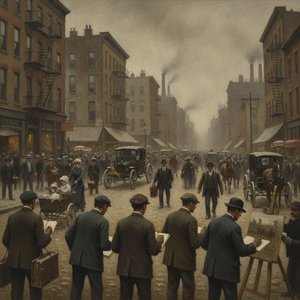
The Ashcan School: Capturing the Raw, Unfiltered Soul of Urban Life through American Realism
Discover the raw beauty of the Ashcan School. Explore how masters like Bellows and Henri captured the gritty, vibrant soul of early 20th-century New York through profound American Realism and evocative urban landscapes.

Basquiat & Raw Pop: The Electric Energy of Neo-Expressionism and the Legacy of Urban Rebellion
Explore the electric world of Jean-Michel Basquiat and Neo-Expressionism. Discover how raw urban energy and symbolic graffiti redefined contemporary art history through a deep, cultural lens.
Prozkoumejte umělecká díla uspořádaná podle témat, stylů a charakteristik.

