


 Zobrazit v interiéru
 Odeslat
 Sdílet
 Podrobnosti
 Průvodce

 Stáhnout obrázek
 Podobné kousky
 Rentgenové snímky
 Slideshow
 Statistiky
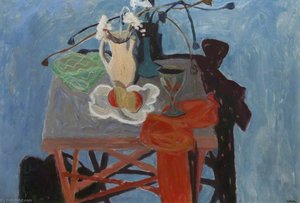
Blue Jar
 Modernism
 1945
1945 49.0 x 59.0 cm
 Government Art Collection
Discover 'Blue Jar' by Mary Potter (1945). A modernist still life featuring muted blues & greens, impasto texture, & subtle forms. Explore this evocative landscape painting.
Explore Mary Potter’s subtle, luminous paintings of landscapes & portraits. OBE-winning artist known for evocative color palettes & capturing fleeting moments.
 Přečíst si více
Umělecké dílo zobrazené na této stránce je chráněno autorským zákonem, což znamená, že nemůžeme legálně vytvářet ani prodávat jeho identickou reprodukci. Tato ochrana je vymáhána na základě mezinárodních dohod, jako například Berberská úmluva a národními zákony, včetně těch stanovených v Americký autorský zákon – Díl 17. Všechna práva vyhrazena.
Jako etickou a právní alternativu nabízíme vlastní, ručně malovaná umělecká díla inspirovaná originálem. Naši zdatní a profesionální umělci si pečlivě studují styl, náladu a uměleckou podstatu originálu, aby vytvořili nové, jedinečné dílo, které vyvolává stejný pocit – přičemž zůstává samostatným originálním tvůrčím dílem.
Tato metoda je plně v souladu s autorským právem, protože nezahrnuje kopírování ani duplikování chráněného díla. Jde o kreativní reinterpretaci – nový obraz, který je inspirován originálem, ale není s ním identický.
Ručně malovaná olejová reprodukce
Ručně malované olejné plátno v libovolném rozměru i s rámem, vyrobené našimi umělci na zakázku. ( Přepnout na tiskové verze Přepnout na digitální verzi obrazu)




































Standardní velikost
na zakázku
CM
INCH
Vyberte si z našich přednastavených velikostí, které odpovídají původním proporcím díla.
Loading sizes...

šířka
výška
Zadejte šířku a výšku, které potřebujete pro váš rám nebo stěnu. Protože se jedná o ruční malbu, při výběru jiného formátu může umělec kolem obrazu domalovat o něco více, nebo jej mírně oříznout — rozhodnete si vy. Před zahájením malby vám zašleme digitální náhled ke schválení. Obraz zobrazený na této stránce neodpovídá skutečnému výsledku — pouze digitální náhled jej zobrazuje.
Příklady možných změn: nahrazení obličeje vlastní fotografií; přidání domácího mazlíčka (např. nahrazení kočky psem); vložení skrytého vzkazu do pozadí; změna krajiny nebo prvků v pozadí.
Po přijetí objednávky vám tým TopImpressionists.com zašle e-mail s pokyny a poskytne náhledovou verzi.
Po přijetí objednávky vám tým TopImpressionists.com zašle e-mail s pokyny a poskytne náhledovou verzi.
Celosvětová doprava () za 3–4 týdny namísto standardních 5 týdnů. (21 říjen). Bez kompromisů v kvalitě.

Zdarma celosvětová expresní doprava

Vysoce kvalitní lněné plátno

Úplné pojištění přepravy

Záruka vrácení celního poplatku

Záruka věrného barevného shodu

100dení lhůta pro vrácení zboží (pouze při vadách výroby)

100% garance vrácení peněz

Sleva při více objednávkách
 Skleněná varianta je dostupná pouze u rozměrů menších než 110 cm

Blue Jar
Technika provedení
Velikost reprodukce
-


Celková cena
Kč 5717
Související díla




Biografie umělce
Mary Potter: A Subtle Master of Light and Landscape
Born Marian Anderson Attenborough in Beckenham, Kent, in 1900, Mary Potter’s life was one inextricably linked to the quiet beauty of the Suffolk countryside. Her early years were marked by a delicate health—a consequence of congenital heart and lung issues—which shaped her introspective nature and fostered a deep appreciation for stillness and observation. This sensitivity would become the cornerstone of her distinctive artistic style, characterized by a restrained palette, luminous colors, and an uncanny ability to capture fleeting moments of light and atmosphere.
Potter’s formal training began at the Beckenham School of Art and continued at the Slade School of Fine Art in London. There, she honed her skills under the tutelage of Henry Tonks, winning numerous prizes, including first place for portraiture. This early exposure to rigorous artistic principles laid the groundwork for her later development, but it was a conscious decision to move away from academic painting and embrace a more personal, expressive approach.
Early Career and Bohemian London
Potter’s career unfolded during a period of significant social and artistic change in early 20th-century England. She initially exhibited with groups like the New English Art Club and the London Group, engaging with the burgeoning avant-garde movement while maintaining her own distinct voice. Her early works often featured still lifes, portraits, and landscapes—a diverse range reflecting her broad interests. A pivotal period occurred during her time in Fitzrovia, a vibrant bohemian district of London, where she shared a studio space with fellow artists and experienced the energy of a creative community.
Her marriage to Stephen Potter in 1927 brought a new dimension to her life, providing companionship and mutual artistic support. However, their relationship eventually ended in divorce in 1955, an event that undoubtedly influenced her evolving artistic perspective. The move to Aldeburgh in 1951 proved transformative, offering the tranquility she needed to fully dedicate herself to her art.
The Development of a Unique Style
Potter’s distinctive style emerged gradually over several decades, rooted in a deep understanding of color and light. She eschewed bold brushstrokes and dramatic compositions, instead favoring a subtle, almost understated approach. A key element of her technique involved mixing paint with beeswax—a process that created a unique “chalky luminous quality,” as Kenneth Clark famously described it, resulting in paintings imbued with an ethereal glow. Her palette was consistently restrained, relying on pale, muted tones to evoke the atmosphere and mood of her subjects.
Her subject matter often centered around the landscapes of Suffolk—the rolling hills, windswept coastlines, and quiet meadows that surrounded her home. She also painted portraits, capturing the essence of her subjects with remarkable sensitivity and empathy. Potter’s work is not about literal representation; rather, it's an exploration of perception, memory, and emotion – a distillation of experience into evocative visual forms.
Recognition and Legacy
Despite initially working largely outside the mainstream art world, Mary Potter gained increasing recognition in the 1960s and 70s. Her work was exhibited at prestigious venues like the Tate Gallery and the Serpentine Gallery, and she received numerous awards, including an OBE in 1979 and the John Moores Prize in 1981. Her retrospective exhibitions—held in London and elsewhere—attracted critical acclaim and solidified her place as a significant figure in British art.
Mary Potter’s legacy extends beyond her individual paintings. Her quiet, contemplative approach to art offered a powerful counterpoint to the prevailing trends of the time, demonstrating that beauty could be found in subtlety and restraint. Her work continues to resonate with viewers today, offering a glimpse into a world of serene landscapes and intimate portraits—a testament to the enduring power of observation and artistic sensitivity.
Key Characteristics of Potter’s Art
- Restrained Palette:** Primarily utilizing pale, muted colors – blues, greens, browns, greys - creating a sense of tranquility and atmosphere.
- Luminous Quality:* The beeswax technique imparted a unique glow to her paintings, enhancing their ethereal quality.
- Emphasis on Atmosphere:** Potter prioritized capturing the mood and feeling of a scene over precise detail or realistic representation.
- Subtle Composition:* Her compositions were often simple and understated, allowing the colors and light to take center stage.
- Subject Matter:* Frequently depicted landscapes of Suffolk, as well as intimate portraits reflecting her personal observations.

Mary Potter
1900 - 1981
Rychlé informace
- Full Name: Mary Potter (painter)
- Nationality: English
- Date Of Birth: 1900
- Date Of Death: 1981
- Place Of Birth: Beckenham, Kent, UK
- Notable Artworks:
- Brighton Beach
- Regent's Park
- Joyce Grenfell
- Artistic Movement Or Style: Subtle color landscapes/portraits
- Artists Who Influenced This Artist: ['Henry Tonks']
- Artists Or Movements Influenced By This Artist: ['Victor Pasmore']
Související články

Deset ikonických obrazů v odstínech šedé modré: Umění a inspirace pro váš domov
Objevte deset ikonických obrazů v odstínech šedé modré od Van Gogha, Moneta a dalších mistrů. Ponořte se do příběhů umění, technik a inspirace pro váš interiér. Reprodukce obrazů nejvyšší kvality na TopImpressionists.com.

Azure Visions: Exploring Representations of the Blue Dress in Western Art History
Explore the rich history of the blue dress in Western art! Discover its symbolism, from Renaissance masterpieces to modern interpretations by artists like Martin & Schiele. Uncover cultural meanings and artistic techniques.

Silent Narratives: Exploring the Enduring Appeal of Still Life Painting Across Centuries
Explore the rich history of still life painting with TopImpressionists. Discover Dutch Masters, decode vanitas symbolism & learn about collecting timeless art. Expert insights and museum-quality reproductions.
The Allure of Azure: Exploring the Symbolic & Aesthetic Depths of Blue in Art History
Explore the rich history of blue in art! Discover its symbolism, from ancient pigments to modern masterpieces by Kandinsky & Seurat. Uncover the psychological impact and cultural meanings behind this captivating hue.

Od klasické zátiší k současné abstrakci: Pozvednutí reprezentačních prostor vily uměleckou reprodukcí
Objevte krásu uměleckých reprodukcí zátiší od holandských mistrů! Inspirujte se pro luxusní interiéry a pozvedněte prestiž vaší vily. Kvalitní olejomalby, personalizace a odborné poradenství na TopImpressionists.com.