
 Náhled v interiéru
 Sdílet
 Sdílet
 Podrobnosti o díle
 Průvodce

 Stáhnout
 Podobné položky
 Rentgenové snímky
 Slideshow
 Q&A
Q&A Statistiky
The Herald newspaper

- 43.0 x 57.0 cm


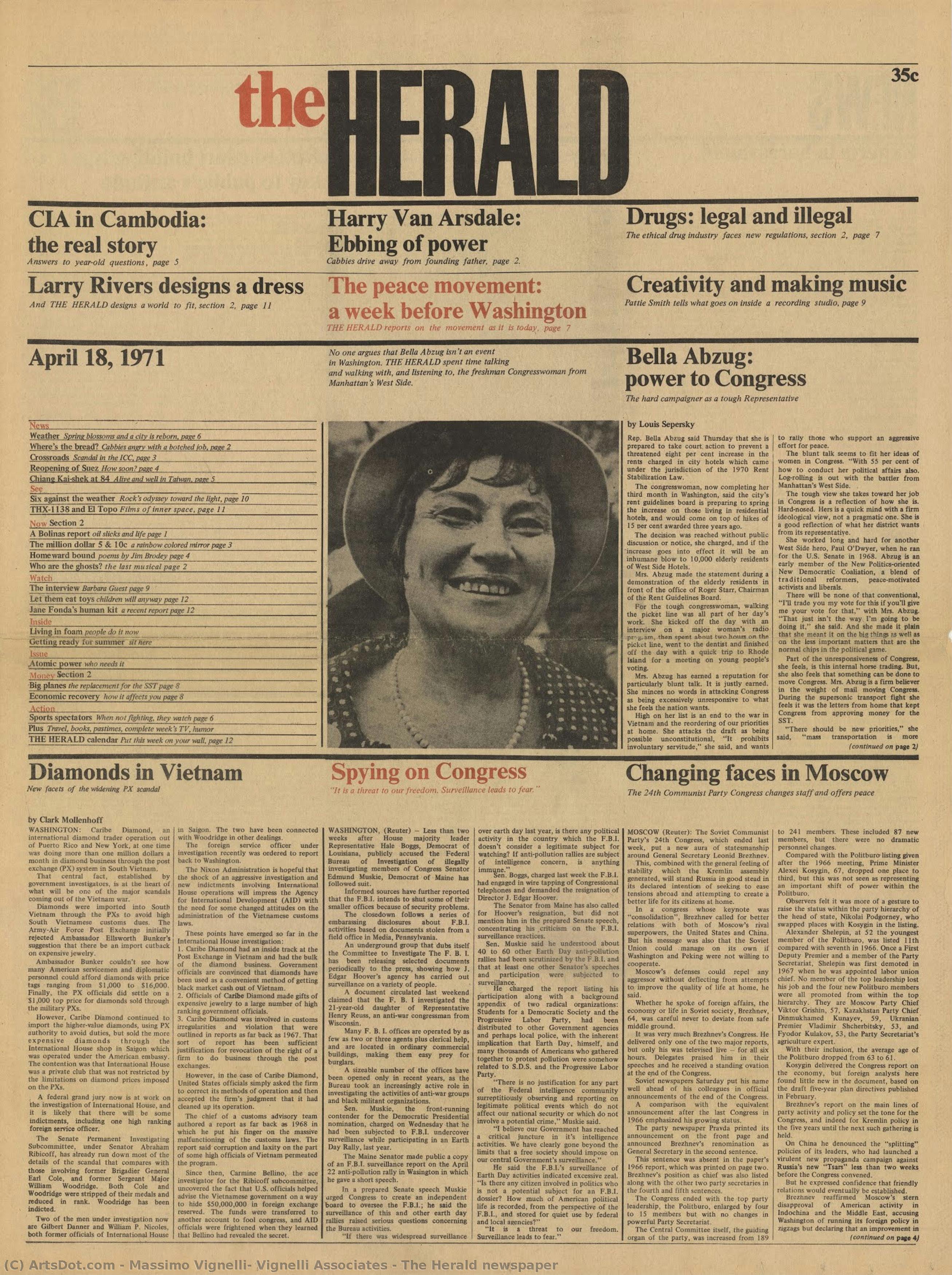
Experience the modernist grid design of The Herald newspaper by Massimo Vignelli (1971), showcasing vintage graphic communication art; discover this iconic piece today.
 Zobrazit více
Massimo Vignelli (1931-2014): Italensk designikon kendt for minimalist grafisk design, inklusive NYC tunnelnätet och företagsidentiteter. Utforska hans arv!
Umělecké dílo zobrazené na této stránce je chráněno autorským zákonem, což znamená, že nemůžeme legálně vytvářet ani prodávat jeho identickou reprodukci. Tato ochrana je vymáhána na základě mezinárodních dohod, jako například Berberská úmluva a národními zákony, včetně těch stanovených v Americký autorský zákon – Díl 17. Všechna práva vyhrazena.
Tato metoda je plně v souladu s autorským právem, protože nezahrnuje kopírování ani duplikování chráněného díla. Jde o kreativní reinterpretaci – nový obraz, který je inspirován originálem, ale není s ním identický.
Giclée / Umělecký tisk
Giclée nebo plátěný tisk muzeální kvality s rychlou výrobou a širokou nabídkou povrchových úprav. ( Koupit ručně malovaný obraz Přepnout na digitální obraz)




P118B Kč10

P118H Kč10

P118W Kč10

P438Z Kč10

P508JH Kč12

P508YH Kč12

P805H Kč10

P805Z Kč10

P919BZ Kč10

P919G Kč10

P919XJ Kč10

P959ZH Kč10

P968JZ Kč12

W106C Kč8

W218G Kč10

W218JH Kč8

W218Y Kč10

W307PJ Kč10

W316G Kč10

W316PJ Kč8

W316Y Kč10

W398PJ Kč8

W4111J Kč10

W500HY Kč15

W500JH Kč15

W692G Kč12

W849H Kč8

W940BG Kč15

W953PJ Kč8




Standardní velikost
na zakázku
CM
INCH
Vyberte si z našich přednastavených velikostí, které odpovídají původním proporcím díla.
Loading sizes...

šířka
výška
Zadejte šířku a výšku, které potřebujete pro váš rám nebo stěnu. Tisk lze pouze oříznout, nikdy však nelze zvětšit obraz nad jeho původní rozměr, proto při výběru jiného formátu dochází ke ztrátě části obrazu. Před samotným tiskem vám zašleme digitální náhled k schválení. Obraz zobrazený na této stránce nenabízí skutečný výřez — ten uvidíte pouze v náhledu.
Celosvětové doručení () do 2 týdnů namísto standardních 4/5 týdnů. (1 listopad)

Zdarma celosvětová expresní doprava

Vysoce kvalitní lněné plátno

Kompletní pojištění přepravy

Záruka vrácení celního poplatku

Záruka věrného barevného souladu

100dení lhůta pro vrácení zboží (pouze při vadách výroby)

100% záruka vrácení peněz

Sleva při více objednávkách
 Skleněná varianta je dostupná pouze u rozměrů menších než 110 cm

The Herald newspaper
Giclée / Umělecký tisk
Rozměry reprodukce
-


Celková cena za vybrané možnosti reprodukcí
Kč 1499
The Grid of Modern Communication: Vignelli's The Herald
To encounter this piece is to step directly into the vibrant, structured chaos of mid-century New York journalism. This reproduction of The Herald newspaper from April 1971, conceived by Massimo Vignelli and his associates, is far more than mere ephemera; it is a meticulously designed artifact of visual communication history. It captures a moment when design principles—simplicity, functionality, and rigorous structure—were being aggressively applied to the seemingly unruly medium of print journalism. The very act of presenting this newspaper front page transforms what might be considered disposable media into a profound study in modernist graphic discipline.
A Masterclass in Structured Design
Vignelli’s genius, always rooted in an almost architectural understanding of space, is on full display here. The description notes the structure: a rigid grid of six columns and sixteen modules per column. This underlying skeleton dictates every element—the placement of headlines like "Diamonds in Vietnam," the accompanying portrait of the smiling woman, and the smaller articles detailing everything from spying congress to changing leaves in Moscow. Vignelli’s commitment to using a single typeface, Times Roman, across various weights and sizes, speaks volumes about his belief in universal legibility. It is a powerful testament to the idea that restraint—the disciplined use of negative space and consistent typography—can generate an overwhelming sense of order and sophistication.
Historical Resonance and Materiality
The year 1971 places this work within a fascinating cultural nexus, post-war modernism grappling with the burgeoning media landscape. While the paper itself ultimately folded due to distribution issues, its surviving design remains potent. For the collector or designer, understanding this context is key. This piece speaks to an era obsessed with efficiency and clarity in information transfer. When considering a reproduction for your space, you are not just acquiring art; you are curating a dialogue about how we consume knowledge—a conversation between the fleeting headline and the enduring power of good design.
Symbolism of the Grid
The grid itself functions as the primary symbolic element. In an age where digital information often feels overwhelming, this physical manifestation of order offers a visual anchor. It symbolizes control, but not oppressive control; rather, it suggests that even complex narratives—the confluence of international events and local interest—can be organized into digestible, beautiful patterns. The interplay between the large, arresting photograph and the tightly packed textual modules creates a dynamic tension, mirroring the very energy of a bustling city like New York in that era.
Bringing Modernist Precision Home
For interior design or gallery display, this piece offers an unparalleled opportunity to inject intellectual rigor into a space. It pairs beautifully with minimalist furniture, mid-century modern accents, or any setting that appreciates the clean lines of 20th-century industrial aesthetics. Owning this reproduction is an homage to Massimo Vignelli’s lifelong dedication to elevating the mundane—the daily newspaper—into something enduringly beautiful and intellectually stimulating.
Otázky a odpovědi
K jakému stylu patří „The Herald newspaper“?
Umělecký směr, ke kterému patří dílo „The Herald newspaper“ od Massimo Vignelli, Vignelli Associates, je Modernism. Tato klasifikace toto dílo umísťuje mezi související umělce a další umělecká díla.
K jakému použití je doporučována tisková reprodukce díla „The Herald newspaper“?
Doporučené využití tisku díla „The Herald newspaper“ je Statement.
Jaký je poměr stran díla „The Herald newspaper“ od Massimo Vignelli, Vignelli Associates a jaké jsou jeho rozměry?
Formát díla „The Herald newspaper“ je Portrait a originál měří 43 x 57 cm. Obě informace jsou užitečné při plánování reprodukce.
Biografie umělce
Život zasvěcen formě: Svět Massima Vignelliho
Massimo Vignelli se narodil v roce 1931 v Miláně a jeho cesta byla příběhem neochvějné oddanosti principům modernistického designu. Již od útlaku projevoval vrozenou schopnost vizuální komunikace, kterou si prohloubil formálním vzděláním v architektuře na Politecnico di Milano a později na Università Iuav di Venezia. Skutečnou vášeň pro utváření světa skrze promyšlenou tvorbu však v něm zapálilo právě učednictví u vážených bratrů Castiglioni, průkopníků italského průmyslového designu. Tato raná zkušenost v něm zakořenila víru ve funkčnost, jednoduchost a sílu elegantních řešení každodenních problémů. On nevytvářel pouze objekty; on utkvaloval zážitky, zjednodušoval interakce a pozvedal to, co je všední, do podoby nezapomenutelné. Toto formativní období položilo základy kariéře, která by definovala vizuální kulturu napříč kontinenty.Z Itálie do New Yorku: Transatlantická vize
Vignelliho cesta ho v roce 1966 dovedla do Ameriky, kde se stal klíčovou postavou při založení newyorské pobočky společnosti Unimark International. Tento okamžik byl zásadní nejen pro jeho vlastní kariéru, ale i pro celou krajinu amerického designu. Společnost Unimark rychle získala význam a Vignelliho přínos – nejvýrazněji pak trvalé logo pro American Airlines – upevnil jeho pověst mistra korporátní identity. Rostoucí rozdíly v tvůrčí filozofii ho však podnítily k založení vlastního podnikání. V roce 1971 společně se svou manželkou a doživotní spolupracovnicí, Lellou Vignelli, založil studio Vignelli Associates. Toto partnerství se ukázalo jako neobyčejně plodné a stalo se synonymem pro sofistikovaná designová řešení zahrnující grafický design, interiér, produktový design i architekturu. Etos firmy bylo zakořeněno v přesvědčení, že dobrý design by měl být přístupný, nadčasový a hluboce užitečný – což byly principy, které po celou svou kariéru neúnavně prosazovali.Ikony tvorby: Odkaz jasnosti
Vliv Massima Vignelliho je pevně vžitý do tkaniny moderního života. Jeho nejznámějším úspěchem je snad redesign mapy metra New York City z roku 1972. Ačkoliv byl původně kontroverzní kvůli opuštění striktní geografické přesnosti, představoval odvážné prohlášení o jasnosti a použitelnosti. Vignelli upřednostnil čitelnost a intuitivní navigaci před doslovným zobrazením, čímž vytvořる diagrammatickou mapu, která i dnes denně vede miliony cestujících. Tento projekt je dokonalým příkladem jeho jádrové designové filozofie: upřednostňovat komunikaci nad vším ostatním. Kromě mapy metra zanechala společnost Vignelli Associates nezmazatelnou stopu v nekonečném množství značek a institucí. Jejich práce pro Bloomingdale’s – včetně ikonické hnědé papírové tašky s jednoduchým bílým logem – proměnila nákupní zážitek v prohlášení o stylu. Navrhovali nábytek pro Knoll, obaly pro Heller a korporátní identity, které se okamžitě staly rozpoznatelnými symboly kvality a inovace. Jeho Heller Rainbow Dinnerware stojí jako svědectví jeho minimalistické estetiky, která v čistých geometrických tvarech oslavuje živé barvy. Plakát Tredicesima Triennale di Milano představuje jeho odvážné využití barvy a tvaru, zatímco obálka Knoll Design demonstruje jeho schopnost vytvářet úchvatnou vizuální komunikaci pro světové značky.Trvalý dopad: Další rozměr než jen estetika
Dopad Massima Vignelliho sahá daleko za hranice jednotlivých projektů; on zásadně přetvořil způsob, jakým vnímáme samotný design. Byl neúprosným zastáncem typografické disciplíny a proslul svou obhajobou omezené palety písem – věřil totiž, že skutečná kreativita nespočívá v nekonečných možnostech, ale v mistrovské realizaci pomocí pečlivě vybraných nástrojů. Jeho kniha, The Vignelli Canon, se stala manifestem pro designéry, který shrnul jeho principy jasnosti, simplicity a trvalé elegance. Nesnažil se pouze vytvářet vizuálně příjemné objekty; usiloval o nastolení řádu z chaosu, o efektivní komunikaci a o pozvednutí lidské zkušenosti skrze promyšlený design. Jeho dílo i nadále inspiruje generace tvůrců a připomíná jim, že skutečná inovace spočívá v odstraňování toho nadbytečného a soustředění se na to podstatné. Vignelli Center for Design Studies na Rochester Institute of Technology slouží jako trvalý hold jeho odkazu, uchovávajícím rozsáhlé archivum jeho práce a podporujícím další zkoumání jeho průlomových myšlenek. Ačkoliv odešel v roce 2014, jeho design zůstává silně přítomen a utváří náš svět svou nesmrtelnou elegancí a neochvějným závazkem k jasnosti.
Massimo Vignelli, Vignelli Associates
1931 - 2014 , Itálie
Rychlé informace o umělci
- Artistic Movement Or Style: Modernismus
- Artists Or Movements Influenced By This Artist: ['Heinz Waibl']
- Artists Who Influenced This Artist:
- Achille Castiglioni
- Pier Giacomo Castiglioni
- Date Of Birth: 1931
- Full Name: Massimo Vignelli
- Nationality: Italský
- Notable Artworks:
- Mapa města New Yorku
- Logo společnosti American Airlines
- Place Of Birth: Milán
Související články

TopImpressionists.com F.A.Q.: Discover the Vibrant Beauty of Our Premium Art Poster Prints
Explore the technical excellence of TopImpressionists.com's premium art poster prints. Discover how our 12-color pigment system and archival inks capture the luminous beauty of Impressionist masterpieces with unmatched color fidelity and museum-grade durability for the discerning collector.
Prozkoumejte umělecká díla uspořádaná podle témat, stylů a charakteristik.


