

Zobrazeno: · Včetně rámu:
 Náhled v interiéru
 Sdílet
 Sdílet
 Podrobnosti o díle
 Průvodce

 Stáhnout
 Podobné položky
 Rentgenové snímky
 Slideshow
 Otázky a odpovědi
 Statistiky

Kč 5855
Ručně malovaná olejová reprodukce
Rukou malované olejné plátno v libovolném rozměru i s rámem, vyrobené našimi umělci na zakázku. ( Přepnout na tisk Přepnout na digitální obraz)
Velikost
·Standardní velikost
na zakázku
CM
INCH
Vyberte si z našich přednastavených velikostí, které odpovídají původním proporcím díla.
Načítání velikostí...

šířka
výška
Zadejte šířku a výšku, které potřebujete pro váš rám nebo stěnu. Protože se jedná o ruční malbu, při výběru jiného formátu může umělec kolem obrazu domalovat o něco více, nebo jej mírně oříznout — rozhodnete si vy. Před zahájením malby vám zašleme digitální náhled ke schválení. Obraz zobrazený na této stránce neodpovídá skutečnému výsledku — pouze digitální náhled jej zobrazuje.
 Více informací
Dokončit
·
Bílé okraje Kč1

Rozostřené okraje Kč1

Prodloužené okraje Kč1

P118B Kč10

P118H Kč10

P118W Kč10

P438Z Kč10

P508JH Kč12

P508YH Kč12

P805H Kč10

P805Z Kč10

P919BZ Kč10

P919G Kč10

P919XJ Kč10

P959ZH Kč10

P968JZ Kč12

W106C Kč8

W218G Kč10

W218JH Kč8

W218Y Kč10

W307PJ Kč10

W316G Kč10

W316PJ Kč8

W316Y Kč10

W398PJ Kč8

W4111J Kč10

W500HY Kč15

W500JH Kč15

W692G Kč12

W849H Kč8

W940BG Kč15

W953PJ Kč8

H24-GOLD Kč30

H24-SILVER Kč30

H36-GOLD Kč45

H36-SILVER Kč45
Dodáváno v ochranné tubě, připraveno k vlastním rámování.
Doplňkové služby
volitelnéCo všechno doplňky zahrnují?
Příklady možných změn: Nahrazení obličeje fotografií zákazníka; Přidání mazlíčka (např. výměna kočky za psa); Skrytá zpráva v pozadí; Změna krajiny nebo prvků v pozadí.
Po přijetí objednávky vám tým TopImpressionists.com pošle e-mail s instrukcemi a poskytne náhled návrhu
Po přijetí objednávky vám tým TopImpressionists.com pošle e-mail s instrukcemi a poskytne náhled návrhu
Celosvětová doprava () za 3–4 týdny namísto standardních 5 týdnů. (9 listopad). Bez kompromisů v kvalitě.
Ochranný lak
Popisek díla
Detaily ryté bronzové plakety
This elegant plaque features the artist's name and the title of the artwork, finely engraved for a timeless presentation.
It is made from bronze with a refined, elegant finish. The text is precisely laser-engraved for a sharp and permanent result. Measuring 9x2 cm, the plaque is compact yet easy to read. It's built to be durable and scratch-resistant, offering a professional, museum-quality look. Mounting is simple thanks to the included adhesive backing.
Detaily průhledné akrylové desky
The plaque includes essential engraved details such as the artist's name, the title of the artwork, the date it was created, the type of media used-like oil on canvas or watercolor-a brief description of the piece, and a QR code that links to the complete artwork information.
It is crafted from clear acrylic, offering a sleek, modern appearance. The text is UV-engraved in black to ensure strong visual contrast. With a size of 10x15 cm, it ensures optimal readability. It comes equipped with two metal hooks for secure wall mounting. The plaque is designed to be weather-resistant, making it suitable for various environments, and it includes interactive features that work seamlessly with smartphone scanning.
Detaily černé akrylové destičky
This elegant plaque includes engraved information such as the artist's name, the title of the artwork, the date it was created, the type of media used (like oil on canvas or watercolor), a short description of the artwork, and a QR code for quick access to more information.
The plaque itself is made from refined black acrylic with a premium finish. The text is laser-engraved in white for high contrast and readability. Its size is 10x15 cm, designed to be easy to read. It comes with two metal hooks for professional mounting. The design is sleek and fits any interior style. It is also weather-resistant and durable, with built-in digital integration for mobile compatibility.
Skleněná varianta je dostupná pouze u rozměrů menších než 110 cm
 Skleněná varianta je dostupná pouze u rozměrů menších než 110 cm
- Zdarma celosvětová expresní doprava
- Vysoce kvalitní lněné plátno
- Kompletní pojištění přepravy
- Záruka vrácení celního poplatku
- Záruka věrného barevného souladu
- 100dení lhůta pro vrácení zboží (pouze při vadách výroby)
- 100% záruka vrácení peněz
- Sleva při více objednávkách


Popis sbírného předmětu
Experience Paul Cézanne’s ‘Bibemus Quarry,’ a pivotal Cubist landscape exploring geometric forms and multiple perspectives. A masterpiece bridging Impressionism & modern art, now available as a stunning hand-painted reproduction.
Biografie umělce
Key Works and Recurring Motifs</h2> Cézanne’s oeuvre is remarkably diverse
O malbě
Bibemus Quarry: A Pioneering Vision of Space and Form
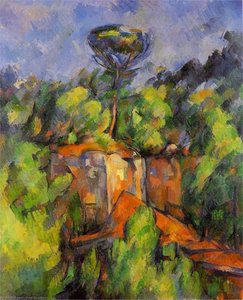
Paul Cézanne’s *Bibemus Quarry*, painted in 1900, stands as a pivotal work bridging the Impressionistic world he inherited with the nascent explorations of Cubism that would reshape modern art. More than simply a landscape depiction, it's a profound investigation into the very nature of seeing and representation – a testament to Cézanne’s revolutionary approach to capturing the essence of natural forms through geometric simplification and multiple perspectives. The painting invites us not just to *look* at a scene, but to *experience* it, to feel its solidity and depth as if we were standing within that sun-drenched Provençal hillside. The composition immediately draws attention to the central tree, its robust trunk emerging dramatically from the rocky terrain. Cézanne doesn’t render this tree with photographic accuracy; instead, he dissects it – breaking down its complex volume into a series of interlocking planes and angles. The rough texture of the bark, the sharp edges of the branches, are all rendered with an almost sculptural quality. This deliberate fragmentation is key to understanding Cézanne's ambition: to move beyond merely imitating nature and instead to reveal its underlying structure, its essential geometry. The background, a tapestry of distant trees and bushes, isn’t simply painted in the distance; it recedes into space through careful manipulation of color and form, creating an illusion of atmospheric perspective that adds immense depth to the scene. A small building, hinting at human presence, is strategically placed – not as a focal point, but as a subtle element contributing to the overall sense of scale and spatial relationships.Cubism’s Genesis: Cézanne's Groundbreaking Influence
Cézanne’s work served as a crucial catalyst for the development of Cubism, an art movement spearheaded by Pablo Picasso and Georges Braque. While these artists built upon Cézanne’s innovations, it was his relentless experimentation with perspective and form that laid the groundwork for their revolutionary approach. *Bibemus Quarry* exemplifies this transition perfectly. Unlike traditional landscape painting which typically presents a single, unified viewpoint, Cézanne offers us multiple perspectives simultaneously – as if we were shifting our position within the scene, constantly altering our perception of its spatial arrangement. This technique, anticipating Cubism’s deconstruction of form and fragmentation of space, was utterly groundbreaking at the time. It's no exaggeration to suggest that Cézanne’s work provided the conceptual framework for a complete reimagining of how artists could represent reality on canvas. The painting’s creation coincided with a period known as Proto-Cubism (1906-1910), characterized by an increasing emphasis on geometric abstraction and a reduction in color palettes. Artists like Juan Gris, Jean Metzinger, and Albert Gleizes were actively exploring these concepts, building upon Cézanne's legacy. This phase saw a gradual shift from the vibrant hues of Impressionism towards the more muted tones favored by the nascent Cubists – a move that mirrored Cézanne’s own evolving artistic language as he moved away from purely optical representation and toward a more conceptual approach to painting.A Bridge Between Eras: Cézanne's Enduring Legacy
The impact of Cézanne’s work extended far beyond the confines of Cubism, influencing a wide range of subsequent art movements, including Futurism, Suprematism, Dada, Constructivism, De Stijl, and even Art Deco. His emphasis on form, color, and spatial relationships profoundly impacted the development of abstract art, demonstrating that painting could be more than just a representation of external reality; it could be an exploration of internal structures and perceptions. Remarkably, Cézanne himself acknowledged his debt to earlier masters, particularly Michelangelo, stating that he sought to “paint like Michelangelo.” However, it was through his own unique vision – one rooted in the observation of nature and driven by a desire to capture its underlying geometry – that he truly revolutionized the art world. The influence of *Bibemus Quarry* is palpable in the works of artists who followed, including Henri Matisse and, significantly, Pablo Picasso, who famously declared Cézanne “the father of us all.” Cézanne’s legacy continues to resonate today, reminding us of the power of abstraction and the enduring relevance of his pioneering approach to painting.Bringing Cézanne's Vision Home: A TopImpressionists Reproduction
TopImpressionists offers meticulously crafted, hand-painted oil reproduction reproductions of *Bibemus Quarry*, allowing you to experience the depth and nuance of this iconic masterpiece in stunning detail. Each reproduction is created by skilled artists who painstakingly recreate Cézanne’s brushstrokes and color palette, ensuring an authentic representation of the original painting. Whether displayed in a contemporary setting or as part of a classic art collection, our *Bibemus Quarry* reproductions are a beautiful way to celebrate Cézanne's enduring legacy and bring his revolutionary vision into your home. Explore other paintings by Paul Cézanne at TopImpressionists.com.Otázky a odpovědi
Proč má dílo „Bibemus Quarry“ právě takový autorský status?
Dílo „Bibemus Quarry“ od Paul Cézanne spadá do volného užívání (v rámci volného užití – autorská práva vypršela). Autorské právo vyprší po určité době od úmrtí umělce, ke kterému došlo v roce 1906.
Do které éry tvorby Paul Cézanne spadá dílo "Bibemus Quarry"?
Dílo „Bibemus Quarry“ pochází z období Proto-Cubism v tvorbě umělce Paul Cézanne. Tato klasifikace dílo zasazuje do kontextu vývoje jeho tvůrčí dráhy.
Do které místnosti by se vzhledem k barevné paletě doporučovalo umístit dílo "Bibemus Quarry"?
Dílo „Bibemus Quarry“ od Paul Cézanne s svou paletou Tmavé tóny se doporučuje do Obývací pokoj. Barvy jsou jedním z důvodů tohoto doporučení.
Rychlá fakta a umělecký kvíz
O umělci Paul Cézanne

Paul Cézanne
1839 - 1906, Francie
Biografie umělce
Život a cesta Paula Cézanna: Od Aix-en-Provence k revoluci v malbě
Paul Cézanne, narozený roku 1839 v malebném Aix-en-Provence na jihu Francie, je bezesporu jednou z nejvýznamnějších postav přechodu mezi impresionismem a kubismem. Jeho umělecká dráha nebyla cestou okamžitého uznání; spíše to byla pomalá evoluce plná pochybností, kritiky a nakonec i trvalého dědictví, které navždy změnilo běh moderního umění. Cézanne pocházel z dobře situované rodiny – jeho otec byl původně kloboučník a později bankéř – což mu poskytlo finanční nezávislost neobvyklou pro začínajícího umělce, umožňující mu věnovat se své vášni bez existenčních starostí. Přestože ho otec zprvu směřoval ke studiu práva, neodolatelný tah k malířství zvítězil a Cézanne se rozhodl opustit právnickou kariéru, čímž si určil osud svého života. Mezi jeho rané inspirace patřil romantismus a krajinářská škola Barbizonské školy, ale klíčový zlom nastal díky setkáním s umělci jako Paul Gauguin a Georges Seurat, jejichž inovativní přístupy k barvě a formě Cézanna přivedly na jeho vlastní jedinečnou cestu.Hledání struktury: Evoluce Cézannova stylu
Raná tvorba Paula Cézanna často odrážela dramatická témata romantické malby – tmavé palety a expresivní štětec dominovaly jeho plátnům. Tato počáteční fáze však byla pouhým stupněm k radikálnějšímu přístupu. Nespokojen s pouhým zachycením pomíjivých dojmů světla, jak to preferovali impresionisté, Cézanne se vydal na cestu porozumění a reprezentace vnitřní struktury samotných objektů. Nesnažil se jen o zobrazení *co* vidí, ale i *jak* vnímá základní formy tvořící realitu. To ho vedlo k rozkladu přírodních tvarů na jejich geometrické ekvivalenty – kužele, válce, koule – předznamenávající kubistickou revoluci o desítky let později. Jeho technika se vyznačovala malými, opakujícími se tahy štětcem, pečlivě vrstvenými pro budování komplexních barevných a texturových ploch, čímž vytvářel pocit pevnosti a hloubky dosud v malbě nevídaný. Nezajímala ho iluzorní perspektiva; často prezentoval objekty z několika úhlů současně, což narušovalo tradiční představy o prostoru a nutilo diváka aktivně se zapojit do konstruované povahy jeho kompozic. Toto záměrné zkreslení nebylo náhodné, ale pokus o hlubší pochopení formy, reprezentující nejen okamžik v čase, ale i syntézu vnímání.Krajiny, zátiší a lidská postava: Klíčová díla a opakující se motivy
Cézannovo dílo je pozoruhodně rozmanité, zahrnuje krajiny, zátiší, portréty a zobrazení koupajících se žen, ale vše sjednocuje jeho jedinečný přístup k formě a barvě. Rybný rybník v Jas de Bouffan, namalovaný roku 1880, je příkladem jeho krajinářské tvorby, ukazující schopnost zachytit podstatu přírody pečlivým uspořádáním tvarů a tónů. Portrét Émila Zoly, vzniklý roku 1866, odhaluje jeho vyvíjející se styl a nabízí poutavý pohled do intelektuální intenzity jeho blízkého přítele a spisovatele. Jeho zátiší, například s jablky a dalším ovocem, nejsou pouhým zobrazením předmětů, ale spíše průzkumem objemu, světla a prostorových vztahů. Série Mont Sainte-Victoire se stala Cézannovou obsesí, opakujícím se motivem, který mu umožnil neúnavně zkoumat formu a perspektivu po celá desetiletí. Tyto obrazy nejsou pouhým zobrazením hory; jsou studiemi toho, jak vnímáme hloubku, objem a souhru světla a stínu. A konečně, jeho série Koupajících se žen, zobrazující nahé postavy v idylických krajinách, představuje hluboký průzkum lidské formy a jejího spojení s přírodou, často prosycené pocitem nadčasovosti a tichého rozjímání.Dědictví utvářené inovacemi: Vliv Cézanna na moderní umění
Vliv Paula Cézanna na následující generace umělců je nesmírný. Je všeobecně považován za „otce moderního umění“ pro jeho průkopnický přínos do obrazového jazyka, který připravil cestu mnoha významným uměleckým směrům 20. století. Pablo Picasso a Georges Braque byli hluboce zadluženi Cézannovu důrazu na geometrické formy a víceúhlou perspektivu, které se staly základními principy kubismu. Jeho odvážné používání barvy inspirovalo také fauvisty vedené umělci jako Henri Matisse, kteří přijali živé, nenápadné odstíny. Dokonce i surrealisté našli rezonanci v Cézannově průzkumu subjektivního vnímání a psychologické hloubky. Kromě konkrétních směrů Cézannova trvání na osobní vizi umělce a odmítání tradičních akademických omezení osvobodilo generace malířů k prozkoumávání nových forem vyjádření. Zpochybnil samotnou definici reprezentace, posunul důraz od napodobování reality ke konstrukci vizuální zkušenosti založené na základní struktuře a subjektivním vnímání. Jeho smrt roku 1906 neznamenala konec, ale začátek – úsvit nové éry v dějinách umění, hluboce formované jeho revoluční vizí.Rychlé informace o umělci Paul Cézanne
- Datum Narození: 19. ledna 1839
- Datum Úmrtí: 22. října 1906
- Místo Narození: Aix-en-Provence, Francie
- Národnost: Francouzská
- Ovlivnil Umělce/Směry:
- Kubismus
- Fauvismus
- Surrealismus
- Ovlivněno Umělci:
- Romantismus
- Barbizonská škola
- Paul Gauguin
- Georges Seurat
- Plné Jméno: Paul Cézanne
- Umělecký Směr: Postimpresionismus
- Významná Díla:
- Zalévka u Jas de Bouffan
- Portrét Émila Zoly
- Lesy
- Mont Sainte-Victoire
- Koupající se
Podobná díla


Prozkoumejte umělecká díla uspořádaná podle témat, stylů a charakteristik.


Paul Cézanne
Bibemus Quarry
() ·
Včetně rámu: · Ručně malováno olejem na plátně
Celkem