

Shown: · With its frame:
 Náhled v interiéru
 Sdílet
 Sdílet
 Podrobnosti o díle
 Průvodce

 Stáhnout
 Podobné položky
 Rentgenové snímky
 Slideshow
 Q&A
Q&A Statistiky
- 120.0 x 80.0 cm


Kč 5844
Ručně malovaná olejová reprodukce
Rukou malované olejné plátno v libovolném rozměru i s rámem, vyrobené našimi umělci na zakázku. ( Přepnout na tisk Přepnout na digitální obraz)
Size
·Standardní velikost
na zakázku
CM
INCH
Vyberte si z našich přednastavených velikostí, které odpovídají původním proporcím díla.
Loading sizes...

šířka
výška
Zadejte šířku a výšku, které potřebujete pro váš rám nebo stěnu. Protože se jedná o ruční malbu, při výběru jiného formátu může umělec kolem obrazu domalovat o něco více, nebo jej mírně oříznout — rozhodnete si vy. Před zahájením malby vám zašleme digitální náhled ke schválení. Obraz zobrazený na této stránce neodpovídá skutečnému výsledku — pouze digitální náhled jej zobrazuje.
 Více informací
Finish
·
White Kč1

Blurside Kč1

Extended Kč1

P118B Kč10

P118H Kč10

P118W Kč10

P438Z Kč10

P508JH Kč12

P508YH Kč12

P805H Kč10

P805Z Kč10

P919BZ Kč10

P919G Kč10

P919XJ Kč10

P959ZH Kč10

P968JZ Kč12

W106C Kč8

W218G Kč10

W218JH Kč8

W218Y Kč10

W307PJ Kč10

W316G Kč10

W316PJ Kč8

W316Y Kč10

W398PJ Kč8

W4111J Kč10

W500HY Kč15

W500JH Kč15

W692G Kč12

W849H Kč8

W940BG Kč15

W953PJ Kč8

H24-GOLD Kč30

H24-SILVER Kč30

H36-GOLD Kč45

H36-SILVER Kč45
Shipped in a protective tube, ready for your own framer.
Above 105 cm the frame is shipped as a kit for a professional framer — read the details.
Extras
optionalWhat do the extras include?
Examples of what can be changed: Replace face with customer photo; Add pet (e.g., replace cat with dog); Include hidden message in background; Change background landscape or elements.
After order, TopImpressionists.com team will email client for instructions and provide a mockup preview
After order, TopImpressionists.com team will email client for instructions and provide a mockup preview
Celosvětová doprava () za 3–4 týdny namísto standardních 5 týdnů. (1 listopad). Bez kompromisů v kvalitě.
Ochranný lak
Popisek díla
Detaily ryté bronzové plakety
This elegant plaque features the artist's name and the title of the artwork, finely engraved for a timeless presentation.
It is made from bronze with a refined, elegant finish. The text is precisely laser-engraved for a sharp and permanent result. Measuring 9x2 cm, the plaque is compact yet easy to read. It's built to be durable and scratch-resistant, offering a professional, museum-quality look. Mounting is simple thanks to the included adhesive backing.
Detaily průhledné akrylové desky
The plaque includes essential engraved details such as the artist's name, the title of the artwork, the date it was created, the type of media used-like oil on canvas or watercolor-a brief description of the piece, and a QR code that links to the complete artwork information.
It is crafted from clear acrylic, offering a sleek, modern appearance. The text is UV-engraved in black to ensure strong visual contrast. With a size of 10x15 cm, it ensures optimal readability. It comes equipped with two metal hooks for secure wall mounting. The plaque is designed to be weather-resistant, making it suitable for various environments, and it includes interactive features that work seamlessly with smartphone scanning.
Detaily černé akrylové destičky
This elegant plaque includes engraved information such as the artist's name, the title of the artwork, the date it was created, the type of media used (like oil on canvas or watercolor), a short description of the artwork, and a QR code for quick access to more information.
The plaque itself is made from refined black acrylic with a premium finish. The text is laser-engraved in white for high contrast and readability. Its size is 10x15 cm, designed to be easy to read. It comes with two metal hooks for professional mounting. The design is sleek and fits any interior style. It is also weather-resistant and durable, with built-in digital integration for mobile compatibility.
Skleněná varianta je dostupná pouze u rozměrů menších než 110 cm
 Skleněná varianta je dostupná pouze u rozměrů menších než 110 cm
- Zdarma celosvětová expresní doprava
- Vysoce kvalitní lněné plátno
- Kompletní pojištění přepravy
- Záruka vrácení celního poplatku
- Záruka věrného barevného souladu
- 100dení lhůta pro vrácení zboží (pouze při vadách výroby)
- 100% záruka vrácení peněz
- Sleva při více objednávkách


Popis sbírného předmětu
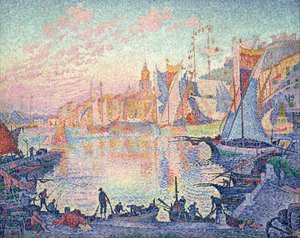
Explore Paul Signac's 'Antibes. Morning,' a stunning Neo-Impressionist seascape capturing the tranquil beauty of Antibes harbor with vibrant sailboats and a majestic lighthouse against rolling hills.
Biografie umělce
Paul Signac (1863-1935): Francouzský malíř, průkopník Pointillismu a Neo-Impressionismu. Jeho obrazy zachycují krásu pobřeží a přístavů s vědeckým přesností a bohatými barvami.
About the painting
Antibes. Morning: A Symphony of Light and Color by Paul Signac
Paul Signac’s “Antibes. Morning” stands as a cornerstone of Neo-Impressionism, embodying the movement's revolutionary approach to capturing visual experience through scientific observation and meticulous color theory. Painted in 1913–1914 during Signac’s formative years on the French Riviera—a period marked by intense artistic experimentation and collaboration with Georges Seurat—the canvas presents a tranquil seascape infused with vibrant hues that shimmer and dance under the influence of shifting sunlight. More than just a depiction of a picturesque coastal scene, “Antibes. Morning” represents Signac's unwavering commitment to unlocking the secrets of perception itself.The Science Behind Impressionism’s Evolution
Before delving into the artwork’s aesthetic qualities, it’s crucial to understand the intellectual impetus behind Neo-Impressionism. Following the groundbreaking innovations of Monet and Renoir—artists who championed Impressionism's focus on capturing fleeting moments of light—Signac and Seurat sought to transcend mere sensory representation. Inspired by Henri Poincaré’s theories on optics and color perception, they adopted Pointillism – a technique that deliberately eschewed blending brushstrokes altogether. Instead, artists painstakingly applied tiny dots of pure pigment onto the canvas, allowing the viewer's eye to synthesize these individual colors into a unified impression of light and atmosphere. This method wasn’t merely stylistic; it was a deliberate attempt to mimic how the human retina perceives color, grounding painting in scientific principles.A Detailed Examination of Composition and Technique
The painting’s composition is deceptively simple yet remarkably effective. Three sailboats dominate the foreground, positioned strategically against the backdrop of a rocky shoreline and punctuated by the prominent lighthouse beacon. Signac skillfully utilizes perspective to create depth, guiding the viewer's gaze from the boats towards the distant hills bathed in golden light. The artist’s meticulous application of Pointillism is evident throughout—a dense tapestry of minuscule dots meticulously arranged to reproduce the nuances of color and luminosity. Notice how Signac captures the subtle variations in hue as sunlight filters through the clouds, creating an ethereal glow that imbues the scene with a palpable sense of serenity.Symbolic Resonance: Antibes and Artistic Inspiration
Antibes itself holds significance beyond its visual beauty; it served as a crucible for artistic innovation during Signac’s time on the Riviera. The town welcomed artists like Monet and Cézanne, fostering an environment conducive to experimentation and intellectual discourse. Signac's fascination with the interplay of light and color—a preoccupation that permeates “Antibes. Morning”—reflects this broader cultural landscape. Furthermore, the lighthouse symbolizes guidance and vigilance, perhaps mirroring Signac’s own unwavering dedication to his artistic vision.Emotional Impact: Capturing Tranquility and Wonder
Ultimately, “Antibes. Morning” succeeds in conveying a profound sense of tranquility and wonder. The painting invites contemplation—encouraging viewers to immerse themselves in the beauty of nature and appreciate the transformative power of light. Signac’s masterful technique captures not just what he sees but how he feels—translating visual observation into an emotionally resonant experience that speaks to the enduring fascination with capturing sublime landscapes. It remains a testament to Signac's genius and a cornerstone of Neo-Impressionist legacy.Otázky a odpovědi
Jakým způsobem barvy díla „Antibes. Morning“ od Paul Signac navazují na jeho emoce?
„Antibes. Morning“ od Paul Signac kombinuje paletu Neutrals s Tranquil tónem.
Jak si mohu stáhnout obrázek díla „Antibes. Morning“ od Paul Signac?
Pro dílo „Antibes. Morning“ je k dispozici stažení: na stránce Stažení digitální verze si můžete pořídit stažení digitálního obrazu ve vysokém rozlišení.
S jakým pocitem je spojeno dílo "Antibes. Morning"?
„Antibes. Morning“ je spojováno s Tranquil pocity. Emocionální náboj díla popisuje dojem, který z něj vyzařuje.
Quick facts and art quiz
About Paul Signac

Paul Signac
1863 - 1935, Francie
Biografie umělce
The Harmonious Vision of Paul Signac
Paul Victor Jules Signac, narozen v Paříži roku 1863, se stal klíčovou postavou ve vývoji moderního umění, neodmyslitelně spojen s počátkem a rozvojem Neo-Impressionismu. Jeho rané zájmy o architekturu se setkaly s fascinací obrazy Claude Moneta, což ho vedlo k vášnivému proniknutí do malby – cesta, která změnila naše chápání barevné teorie a uměleckého vyjádření. Signac nebyl jen malíř; byl odhodlaný průzkumník světla, barvy a vědeckých principů, které stojí za vizuálním vnímáním. Jeho rané díla, i když ukazují impresionistické tendence, rychle evolucovaly pod hlubokým vlivem Georges Seurata, čímž vznikl partnerství, které porodilo Pointillismus – techniku charakterizovanou pečlivým aplikováním mikroskopických, jasně barevných bodů s cílem opticky se míchat ve zraku diváka. Nešlo jen o estetiku; šlo o snahu systematizovat malbu, zakotvit ji v vědeckých principech a podnítit konvence umělecké tvorby.Dialog s Seuratem a zrození Neo-Impressionismu
Setkání Signaca se Seuratem v roce 1884 bylo transformativní pro oba umělce. Sdíleli fascinaci psaním Eugena Delacroix o teorii barev, zejména jeho průzkumem doplňkových kontrastů a emocionálního dopadu odstínu. Společně se pustili do důkladního zkoumání těchto principů, přeloženo do revoluční malířské techniky. Signac s nadšením přijali Seuratovu vizi, opustil krátké štětcové tahy typické pro impresionismus a zaměřil se na přesné, vypočítavé aplikování barevných bodů. *Boulevard de Clichy* (1886) je raný důkaz této nové přístupnosti, který ukazuje Signacův pečlivý styl a jeho závazek zachytávat živost městského života prostřednictvím vědeckého pohledu. Nicméně jejich spolupráce nebyla jen technická; byla i intelektuální, poháněná společnou touhou po zvednutí malby na úroveň rigoróznosti vědy. Signac se stal oddaným obhájcem Seuratových myšlenek, neúnavně propagoval Neo-Impressionismus a bránil jeho principy proti kritice. Tragická raná smrt Seurata v roce 1891 zanechala Signaca jako hlavního propagátora jejich společného uměleckého vidění.Království pobřeží a umělecká nezávislost
Po smrti Seurata se Signacova umělecká cesta objevila novým směrem, hluboce ovlivněná jeho hlubokou láskou k plavení a lákání středomořského pobřeží. V roce 1892 objevil Saint-Tropez, kde si založil dům, který se stal útočištěm pro umělce a zdrojem neustálé inspirace. Sychravá voda, slunečné přístavy a malebné pobřežní krajiny poskytly ideální prostředí k prozkoumání interakce světla a barvy. *Červený kotva, Saint-Tropez* (1895) ukazuje tuto éru, demonstruje jeho mistrovství Pointillismu při zachycování živých barev a dynamické energie moře. Jeho technika se vyvíjela, stala se plynulejší a expresivnější, aniž by ztratila svůj vědecký základ. Začal experimentovat s většími štětcovými tahy a širší paletou, přesahoval přímé dodržování Seuratovy přesné techniky bodkování. Signacova cesta se rozprostřela za hranice Francie, zahrnovala Itálii, Nizozemsko a dokonce Konstantinopol, každá cesta obohatila jeho umělecký slovník a rozšířila jeho perspektivu.Ochránce avantgardy a trvalé dědictví
Kromě vlastního uměleckého úsilí Signac hrál klíčovou roli ve formování moderního umění prostřednictvím svého vedení v Société des Artistes Indépendants. Jako prezident od roku 1908 do své smrti v roce 1935 prosazoval uměleckou svobodu a poskytoval platformu pro nadcházející talenty, včetně Henriho Matisse, André Deraina a dalších průkopníků Fauvismu a Kubismu. Byl jedním z prvních, kteří uznali a podpořili jejich inovativní díla. Signacova oddanost inkluzi a jeho ochota přijmout inovace pomohly utvářet směr 20. století. Jeho teoretické eseje, zejména *Od Eugena Delacroix k Neo-Impressionismu* (1899), dále upevňovaly jeho pozici jako vedoucí intelektuální osobnosti v uměleckém světě.Klíčové milníky a úspěchy
- 1863: Narozen v Paříži, Francie.
- 1884: Spolu s Georgesem Seurat založil Société des Artistes Indépendants.
- 1886: Namaloval *Boulevard de Clichy*, klíčový příklad raného Pointillismu.
- 1895: Vytvořil *Červený kotva, Saint-Tropez*, který demonstruje jeho mistrovství při zachycování pobřežních scén.
- 1899: Publikoval *Od Eugena Delacroix k Neo-Impressionismu*, klíčovou práci o teorii barev.
- 1908 – 1935: Zastával postavu prezidenta Société des Artistes Indépendants, propagující avantgardní umělce.
- 1935: Zemřel v Paříži ve věku 72 let, zanechávaje si bohaté umělecké dědictví.
Quick facts about Paul Signac
- Artistic Movement Or Style: Neo-Impressionismus, Pointillismus
- Artists Or Movements Influenced By This Artist:
- Henri Matisse
- Fauvism
- Artists Who Influenced This Artist:
- Claude Monet
- Georges Seurat
- Date Of Birth: 11. listopadu 1863
- Date Of Death: 15. srpna 1935
- Full Name: Paul Victor Jules Signac
- Nationality: Francouzský
- Notable Artworks:
- Boulevard de Clichy
- La Valleuse
- The Red Buoy
- The Velodrome
- Place Of Birth: Paříž, Francie
Podobná díla




Prozkoumejte umělecká díla uspořádaná podle témat, stylů a charakteristik.


Paul Signac
Antibes. Morning
() ·
With its frame: · Hand-painted in oil on linen
Total