

Shown: · With its frame:
 Náhled v interiéru
 Sdílet
 Sdílet
 Podrobnosti o díle
 Průvodce

 Stáhnout
 Podobné položky
 Rentgenové snímky
 Slideshow
 Q&A
Q&A Statistiky


Kč 7477
Ručně malovaná olejová reprodukce
Rukou malované olejné plátno v libovolném rozměru i s rámem, vyrobené našimi umělci na zakázku. ( Přepnout na tisk Přepnout na digitální obraz)
Size
·Standardní velikost
na zakázku
CM
INCH
Vyberte si z našich přednastavených velikostí, které odpovídají původním proporcím díla.
Loading sizes...

šířka
výška
Zadejte šířku a výšku, které potřebujete pro váš rám nebo stěnu. Protože se jedná o ruční malbu, při výběru jiného formátu může umělec kolem obrazu domalovat o něco více, nebo jej mírně oříznout — rozhodnete si vy. Před zahájením malby vám zašleme digitální náhled ke schválení. Obraz zobrazený na této stránce neodpovídá skutečnému výsledku — pouze digitální náhled jej zobrazuje.
 Více informací
Finish
·
White Kč1

Blurside Kč1

Extended Kč1

P118B Kč10

P118H Kč10

P118W Kč10

P438Z Kč10

P508JH Kč12

P508YH Kč12

P805H Kč10

P805Z Kč10

P919BZ Kč10

P919G Kč10

P919XJ Kč10

P959ZH Kč10

P968JZ Kč12

W106C Kč8

W218G Kč10

W218JH Kč8

W218Y Kč10

W307PJ Kč10

W316G Kč10

W316PJ Kč8

W316Y Kč10

W398PJ Kč8

W4111J Kč10

W500HY Kč15

W500JH Kč15

W692G Kč12

W849H Kč8

W940BG Kč15

W953PJ Kč8

H24-GOLD Kč30

H24-SILVER Kč30

H36-GOLD Kč45

H36-SILVER Kč45
Shipped in a protective tube, ready for your own framer.
Above 105 cm the frame is shipped as a kit for a professional framer — read the details.
Extras
optionalWhat do the extras include?
Examples of what can be changed: Replace face with customer photo; Add pet (e.g., replace cat with dog); Include hidden message in background; Change background landscape or elements.
After order, TopImpressionists.com team will email client for instructions and provide a mockup preview
After order, TopImpressionists.com team will email client for instructions and provide a mockup preview
Celosvětová doprava () za 3–4 týdny namísto standardních 5 týdnů. (1 listopad). Bez kompromisů v kvalitě.
Ochranný lak
Popisek díla
Detaily ryté bronzové plakety
This elegant plaque features the artist's name and the title of the artwork, finely engraved for a timeless presentation.
It is made from bronze with a refined, elegant finish. The text is precisely laser-engraved for a sharp and permanent result. Measuring 9x2 cm, the plaque is compact yet easy to read. It's built to be durable and scratch-resistant, offering a professional, museum-quality look. Mounting is simple thanks to the included adhesive backing.
Detaily průhledné akrylové desky
The plaque includes essential engraved details such as the artist's name, the title of the artwork, the date it was created, the type of media used-like oil on canvas or watercolor-a brief description of the piece, and a QR code that links to the complete artwork information.
It is crafted from clear acrylic, offering a sleek, modern appearance. The text is UV-engraved in black to ensure strong visual contrast. With a size of 10x15 cm, it ensures optimal readability. It comes equipped with two metal hooks for secure wall mounting. The plaque is designed to be weather-resistant, making it suitable for various environments, and it includes interactive features that work seamlessly with smartphone scanning.
Detaily černé akrylové destičky
This elegant plaque includes engraved information such as the artist's name, the title of the artwork, the date it was created, the type of media used (like oil on canvas or watercolor), a short description of the artwork, and a QR code for quick access to more information.
The plaque itself is made from refined black acrylic with a premium finish. The text is laser-engraved in white for high contrast and readability. Its size is 10x15 cm, designed to be easy to read. It comes with two metal hooks for professional mounting. The design is sleek and fits any interior style. It is also weather-resistant and durable, with built-in digital integration for mobile compatibility.
Skleněná varianta je dostupná pouze u rozměrů menších než 110 cm
 Skleněná varianta je dostupná pouze u rozměrů menších než 110 cm
- Zdarma celosvětová expresní doprava
- Vysoce kvalitní lněné plátno
- Kompletní pojištění přepravy
- Záruka vrácení celního poplatku
- Záruka věrného barevného souladu
- 100dení lhůta pro vrácení zboží (pouze při vadách výroby)
- 100% záruka vrácení peněz
- Sleva při více objednávkách


Popis sbírného předmětu
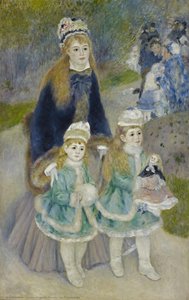
Renoir's 'La Promenade' captures a serene moment of familial leisure. A mother and daughters stroll through a park, showcasing Impressionism’s light & atmosphere.
Biografie umělce
Pierre-Auguste Renoir (1841-1919) byl francouzský impresionista, známý svými radostnými obrazy života, portréty a zářivou paletou barev. Objevte jeho umění!
About the painting
La Promenade: A Glimpse of Parisian Leisure
Pierre-Auguste Renoir's "La Promenade," painted in 1876, is a captivating snapshot of Parisian life during the Belle Époque. This oil on canvas exemplifies Impressionism’s focus on capturing fleeting moments and the effects of light, offering viewers a serene glimpse into a leisurely afternoon in a well-maintained public park.
Subject and Composition
The painting depicts a young woman gracefully leading two identically dressed little girls along a pathway. All three figures are elegantly attired for the cold weather, showcasing the height of fashion from the period. The eldest wears a striking blue velvet jacket with wide sleeves trimmed with red fox fur, while the children sport miniature versions in blue-green adorned with either swansdown or white mink. Renoir skillfully incorporates additional figures and playful dogs further down the path, creating a sense of bustling yet tranquil activity within the park setting. The composition is balanced, drawing the viewer's eye to the central group while still allowing for an appreciation of the surrounding environment.
Impressionistic Technique and Style
"La Promenade" embodies the core principles of Impressionism. Renoir utilizes loose, visible brushstrokes to capture the play of light and atmosphere rather than striving for precise detail. This technique creates a sense of movement and spontaneity, conveying the ephemeral quality of the scene. The colors are muted – predominantly blues, greens, and browns – with subtle touches of pink and white that enhance the overall harmony. The flattened perspective is characteristic of Impressionist works, prioritizing visual experience over strict realism. Renoir’s masterful use of color and light evokes a feeling of warmth and tranquility, inviting viewers to share in the peaceful moment depicted.
Historical Context and Symbolism
Painted during a period of significant social change in France, "La Promenade" reflects the burgeoning leisure culture of the middle class. Public parks became increasingly popular spaces for recreation and socializing, and Renoir’s painting captures this newfound accessibility to beauty and relaxation. The scene symbolizes domesticity, childhood innocence, and the simple joys of family life within a natural setting. The elegant attire of the figures hints at their social standing, while the overall atmosphere suggests a sense of contentment and well-being. It is believed that Renoir drew inspiration from earlier Rococo artists like Fragonard and Watteau, evident in the intimate portrayal of figures strolling through a woodland setting.
Emotional Impact and Legacy
"La Promenade" resonates with viewers due to its gentle beauty and nostalgic charm. The painting evokes a sense of serenity and quiet observation, inviting contemplation on the fleeting nature of time and the enduring power of familial bonds. Renoir’s ability to capture such an intimate moment with such sensitivity has cemented "La Promenade" as a beloved masterpiece of Impressionism, continuing to inspire art lovers and collectors alike.
Otázky a odpovědi
Je k dispozici prezentace pro „La Promenade“ od Pierre-Auguste Renoir?
Diaporama díla „La Promenade“ si můžete prohlédnout na stránce Slideshow.
Jakou techniku bylo použito pro dílo „La Promenade“ od Pierre-Auguste Renoir?
Technikou díla „La Promenade“ od Pierre-Auguste Renoir je Olej na plátně. Reprodukce mají za cíl věrně zachytit vzhled této techniky.
Jak se v díle „La Promenade“ od Pierre-Auguste Renoir propojují umělecký směr a doba?
Dílo "La Promenade" patří k období Impressionism, jehož tvůrce působil v éře – 19. století.
Quick facts and art quiz
About Pierre-Auguste Renoir

Pierre-Auguste Renoir
1841 - 1919, Francie
Biografie umělce
Život a počátky malířské dráhy Augusta Renoira
Pierre-Auguste Renoir, zrozený v roce 1841 v poklidném francouzském městě Limoges, nebyl od útlého věku předurčen k roli jednoho z nejvýznamnějších představitelů impresionismu. Jeho cesta od skromných začátků jako malíře porcelánu až po slávu a uznání je příběhem nezdolné píle a hluboké umělecké vize. Rodinný přesun do Paříže, motivovaný snahou o lepší ekonomické podmínky, zásadně ovlivnil jeho citové i estetické vnímání světa. Rušný život velkoměsta, s jeho pulzující atmosférou a rozmanitými postavami, se stal nevyčerpatelným zdrojem inspirace pro jeho budoucí tvorbu. Mladý Renoir, nucený živit rodinu, našel útočiště v precizní práci malíře porcelánu – praktická nutnost, která však zároveň podnítila jeho touhu po uměleckém vyjádření. Časté návštěvy Louvru mu otevřely dveře do světa starých mistrů, kde studoval jejich techniky a rozvíjel cit pro krásu, který se stal charakteristickým rysem jeho stylu. Tato raná zkušenost v něm zažehla vášeň přesahující pouhé řemeslo – volání zachytit pomíjivé kvality světla a života na plátně. Následné studium v ateliéru Charlese Gleyra se ukázalo jako klíčový moment, kdy navázal celoživotní přátelství s budoucími impresionisty Claude Monetem, Alfredem Sisleym a Frédéricem Bazillem – setkání, které položilo základy nového uměleckého hnutí.Od realismu k zářivým impresionistickým vizím
Umělecký vývoj Augusta Renoira byl fascinující proměnou ovlivněnou širokou škálou mistrů a vlivů. Zpočátku se přikláněl k realismu Gustava Courbeta a Édouarda Maneta, obdivoval jejich upřímnost a snahu o zobrazení současného života bez příkras. Skutečným zdrojem inspirace se však stali luminózní palety a smyslné formy Petra Paula Rubense a Jeana-Antoina Watteaua, které v jeho díle probudily hluboký cit pro krásu a sklon k zobrazování radostných a volnočasových scén. Tyto rané podněty se spojily, když Renoir začal formovat svůj jedinečný styl – charakterizovaný živými barvami, rozbitou malbou štětcem a zaměřením na zachycení prchavých efektů světla. Jeho účast v první impresionistické výstavě v roce 1874 znamenala zásadní zlomový bod, i když se setkala s kritikou ze strany tradičních uměleckých kruhů. Tento odvážný krok symbolizoval odmítnutí akademických konvencí a přijetí nové umělecké vize – snahy zachytit nejen to, co oko vidí, ale i to, jak se *cítí* prožívat daný okamžik. Obraz Tanec na Moulin de la Galette (1876) je dokonalým příkladem tohoto přístupu, vtahuje diváka do živé atmosféry pařížského nočního života s jeho hrajícím světlem a radostnými postavami.Zachycování pomíjivých okamžiků života: klíčová díla a témata
Dílo Augusta Renoira je oslavou prostých životních potěšení – intimních setkání, sluncem zalitých krajin a zářivé krásy lidského těla. Oběd lodníků (1880-81) patří k jeho nejznámějším dílům, zobrazuje společenství lidí užívajících si klidné odpoledne na Seině. Obraz je mistrovským dílem zachycení světla a pohybu, s postavami zalitými teplým slunečním svitem a třpytícími se odrazy na vodě. Po koupeli (1885-87) demonstruje Renoirovo výjimečné umění zobrazovat ženskou nahotu, zdůrazňuje jemné tóny pleti a ladné pózy. Jeho obrazy nejsou pouhými reprezentacemi reality; jsou plné tepla, intimity a radosti, které hluboce rezonují s diváky. Nezajímal se o velká historická vyprávění nebo dramatické alegorie; místo toho se soustředil na zachycení krásy přítomné v každodenním životě, povznášejíc obyčejné okamžiky na úroveň uměleckých děl. Tanec v Bougivalu, další oslavované dílo, dokazuje jeho schopnost zachytit prchavé dojmy a atmosférické efekty, vytvářející pocit pohybu a spontánnosti.Posun k formě a struktuře: pozdní léta a odkaz
V 90. letech 19. století prošel Renoirovo umění výraznou proměnou. I když nikdy zcela neopustil impresionistické kořeny, začal se posouvat směrem k sochařštějšímu a klasicističtějšímu přístupu, ovlivněnému cestami do Itálie a obnoveným zájmem o formu a strukturu. Tento posun byl částečně způsoben i fyzickými omezeními – artritida postupně omezovala jeho pohyblivost, což ho donutilo přizpůsobit svou techniku. Navzdory těmto výzvám Renoir pokračoval v malování s neochvějnou oddaností a vytvářel díla charakteristická plnějšími postavami a teplejší paletou barev. Jeho pozdní obrazy často odrážejí kontemplativnější náladu, přesto si zachovávají základní oslavu krásy, která definovala jeho ranější tvorbu. Kromě uměleckých úspěchů se Renoirovo dědictví rozšiřuje i prostřednictvím jeho rodiny; jeho syn Jean Renoir se stal renomovaným filmovým režisérem a nesl kreativního ducha do dalších generací. Pierre-Auguste Renoir zemřel v roce 1919, zanechal po sobě trvalé dílo, které neustále inspiruje a okouzluje publikum po celém světě. Zůstává jedním z nejmilovanějších umělců v dějinách umění, oslavován pro svou schopnost zachytit radost života a krásu lidské zkušenosti s bezkonkurenční citlivostí a grácií.Trvalý vliv
- Renoirovo působení na další generace umělců je nepopiratelné. Jeho důraz na světlo, barvu a zachycení pomíjivých okamžiků připravil cestu mnoha moderním uměleckým směrům.
- Jeho oslava krásy a smyslnosti rezonuje s publikem dodnes a činí jeho dílo univerzálně přitažlivým.
- Hrál zásadní roli při etablování impresionismu jako významné síly v dějinách umění, zpochybňoval tradiční konvence a otevíral nové možnosti pro umělecké vyjádření.
- Trvalá popularita jeho obrazů – reprodukovaných na nesčetných plakátech, kalendářích a dalších reklamních předmětech – svědčí o nadčasovosti jeho díla.
Quick facts about Pierre-Auguste Renoir
- Artistic Movement Or Style: Impresionismus
- Artists Or Movements Influenced By This Artist: ['Impresionismus']
- Artists Who Influenced This Artist:
- Rubens
- Watteau
- Courbet
- Manet
- Date Of Birth: 25. února 1841
- Date Of Death: 3. prosince 1919
- Full Name: Pierre-Auguste Renoir
- Nationality: Francouz
- Notable Artworks:
- Tanec v Moulin de la Galette
- Oběd lodníků
- Po koupeli
- Tanec v Bougival
- Place Of Birth: Limoges, Francie
Podobná díla


Prozkoumejte umělecká díla uspořádaná podle témat, stylů a charakteristik.


Pierre-Auguste Renoir
La Promenade
() ·
With its frame: · Hand-painted in oil on linen
Total