

Zobrazeno: · Včetně rámu:
 Náhled v interiéru
 Sdílet
 Sdílet
 Podrobnosti o díle
 Průvodce

 Stáhnout
 Podobné položky
 Rentgenové snímky
 Slideshow
 Otázky a odpovědi
 Statistiky

Kč 5856
Ručně malovaná olejová reprodukce
Rukou malované olejné plátno v libovolném rozměru i s rámem, vyrobené našimi umělci na zakázku. ( Přepnout na tisk Přepnout na digitální obraz)
Toto umělecké dílo je chráněno autorským právem
Umělecké dílo zobrazené na této stránce je chráněno autorským zákonem, což znamená, že nemůžeme legálně vytvářet ani prodávat jeho identickou reprodukci. Tato ochrana je vymáhána na základě mezinárodních dohod, jako například Berberská úmluva a národními zákony, včetně těch stanovených v Americký autorský zákon – Díl 17. Všechna práva vyhrazena.
Jako etická a právní alternativa nabízíme vlastní, ručně malovaná umělecká díla inspirovaná originálem. Naši zdatní a profesionální umělci si pečlivě studují styl, náladu a uměleckou podstatu originálu, aby vytvořili nové, jedinečné dílo, které vyvolává stejný pocit – přičemž zůstává samostatným originálním tvůrčím dílem.
Tato metoda je plně v souladu s autorským právem, protože nezahrnuje kopírování ani duplikování chráněného díla. Jde o kreativní reinterpretaci – nový obraz, který je inspirován originálem, ale není s ním identický.
 Více informací
Velikost
·Standardní velikost
na zakázku
CM
INCH
Vyberte si z našich přednastavených velikostí, které odpovídají původním proporcím díla.
Načítání velikostí...

šířka
výška
Zadejte šířku a výšku, které potřebujete pro váš rám nebo stěnu. Protože se jedná o ruční malbu, při výběru jiného formátu může umělec kolem obrazu domalovat o něco více, nebo jej mírně oříznout — rozhodnete si vy. Před zahájením malby vám zašleme digitální náhled ke schválení. Obraz zobrazený na této stránce neodpovídá skutečnému výsledku — pouze digitální náhled jej zobrazuje.
Dokončit
·
Bílé okraje Kč1

Rozostřené okraje Kč1

Prodloužené okraje Kč1

P118B Kč10

P118H Kč10

P118W Kč10

P438Z Kč10

P508JH Kč12

P508YH Kč12

P805H Kč10

P805Z Kč10

P919BZ Kč10

P919G Kč10

P919XJ Kč10

P959ZH Kč10

P968JZ Kč12

W106C Kč8

W218G Kč10

W218JH Kč8

W218Y Kč10

W307PJ Kč10

W316G Kč10

W316PJ Kč8

W316Y Kč10

W398PJ Kč8

W4111J Kč10

W500HY Kč15

W500JH Kč15

W692G Kč12

W849H Kč8

W940BG Kč15

W953PJ Kč8

H24-GOLD Kč30

H24-SILVER Kč30

H36-GOLD Kč45

H36-SILVER Kč45
Dodáváno v ochranné tubě, připraveno k vlastním rámování.
Doplňkové služby
volitelnéCo všechno doplňky zahrnují?
Příklady možných změn: Nahrazení obličeje fotografií zákazníka; Přidání mazlíčka (např. výměna kočky za psa); Skrytá zpráva v pozadí; Změna krajiny nebo prvků v pozadí.
Po přijetí objednávky vám tým TopImpressionists.com pošle e-mail s instrukcemi a poskytne náhled návrhu
Po přijetí objednávky vám tým TopImpressionists.com pošle e-mail s instrukcemi a poskytne náhled návrhu
Celosvětová doprava () za 3–4 týdny namísto standardních 5 týdnů. (10 listopad). Bez kompromisů v kvalitě.
Ochranný lak
Popisek díla
Detaily ryté bronzové plakety
This elegant plaque features the artist's name and the title of the artwork, finely engraved for a timeless presentation.
It is made from bronze with a refined, elegant finish. The text is precisely laser-engraved for a sharp and permanent result. Measuring 9x2 cm, the plaque is compact yet easy to read. It's built to be durable and scratch-resistant, offering a professional, museum-quality look. Mounting is simple thanks to the included adhesive backing.
Detaily průhledné akrylové desky
The plaque includes essential engraved details such as the artist's name, the title of the artwork, the date it was created, the type of media used-like oil on canvas or watercolor-a brief description of the piece, and a QR code that links to the complete artwork information.
It is crafted from clear acrylic, offering a sleek, modern appearance. The text is UV-engraved in black to ensure strong visual contrast. With a size of 10x15 cm, it ensures optimal readability. It comes equipped with two metal hooks for secure wall mounting. The plaque is designed to be weather-resistant, making it suitable for various environments, and it includes interactive features that work seamlessly with smartphone scanning.
Detaily černé akrylové destičky
This elegant plaque includes engraved information such as the artist's name, the title of the artwork, the date it was created, the type of media used (like oil on canvas or watercolor), a short description of the artwork, and a QR code for quick access to more information.
The plaque itself is made from refined black acrylic with a premium finish. The text is laser-engraved in white for high contrast and readability. Its size is 10x15 cm, designed to be easy to read. It comes with two metal hooks for professional mounting. The design is sleek and fits any interior style. It is also weather-resistant and durable, with built-in digital integration for mobile compatibility.
Skleněná varianta je dostupná pouze u rozměrů menších než 110 cm
 Skleněná varianta je dostupná pouze u rozměrů menších než 110 cm
- Zdarma celosvětová expresní doprava
- Vysoce kvalitní lněné plátno
- Kompletní pojištění přepravy
- Záruka vrácení celního poplatku
- Záruka věrného barevného souladu
- 100dení lhůta pro vrácení zboží (pouze při vadách výroby)
- 100% záruka vrácení peněz
- Sleva při více objednávkách


Popis sbírného předmětu
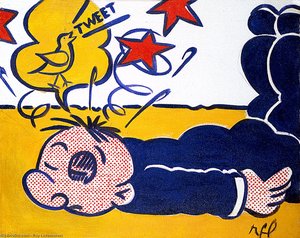
Roy Lichtenstein’s ‘Wimpy (Tweet)’ explodes with vibrant color and unsettling imagery—a striking depiction of social media's pressure on the human psyche during Pop Art’s influential era. Explore this iconic piece and bring Lichtenstein’s visionary style into your home.
Biografie umělce
Roy Lichtensteinova obrazová studie „Stepping Out“ je ikonickým dílem Pop Art stylu – živý a vizuálně působící kus umění vyjadřující energii americké kultury po válce. Používá výrazné barvy a grafickou techniku Ben-Dayových bodů.
O malbě
A Fractured Psyche: The Visceral Impact of Lichtenstein’s Vision
In the annals of twentieth-century art, few images possess the jarring, immediate power of Roy Lichtenstein’s 1961 masterpiece, "Wimpy (Tweet)." At first glance, the viewer is confronted with a scene of profound disorientation: a figure sprawled upon the ground, seemingly undone by an invisible force. While the aesthetic may initially suggest the playful detachment of a comic strip, a deeper gaze reveals a hauntingly modern metaphor for the fragmentation of the human spirit. The painting serves as an arresting visual commentary on the overwhelming pressures of contemporary existence—a precursor to our modern era of digital saturation. Through the depiction of a man whose very consciousness seems to be bursting under immense strain, Lichtenstein captures the precise moment where external stimuli overwhelm internal stability.
The emotional resonance of the piece lies in its ability to evoke both chaos and a strange, clinical stillness. The background, scattered with shimmering stars, provides an unsettling grandeur that contrasts sharply with the visceral distress of the subject. This juxtaposition creates a sense of cosmic indifference; the universe continues its silent, sparkling rotation while the individual undergoes a psychological collapse. For collectors and enthusiasts, this tension makes the work an incredibly provocative centerpiece, capable of sparking deep conversation about the boundaries between mass media consumption and personal mental well-being.
The Precision of Pop: Technique and Symbolic Language
Lichtenstein’s technical execution in "Wimpy (Tweet)" is a masterclass in the deliberate use of Pop Art aesthetics to convey complex psychological states. Eschewing the thick, emotive brushstrokes of Abstract Expressionism, Lichtenstein utilized the cold, mechanical language of commercial printing. His signature use of Ben-Day dots—those tiny, rhythmic patterns used in newspaper and comic book production—creates a flattened, graphic surface that denies the viewer the comfort of traditional depth. This technique is profoundly symbolic; by reducing a moment of intense human suffering to a series of standardized dots and bold, black outlines, Lichtenstein mirrors how mass media strips away the nuance of individual experience, turning tragedy into a digestible, two-dimensional commodity.
The color palette is equally calculated, employing vibrant, primary tones that feel both energetic and artificial. This "illusion of precision" forces the eye to confront the subject matter without the buffer of artistic subtlety. There is no soft shading to hide the violence of the imagery; instead, the starkness of the lines emphasizes the rupture of the figure's mind. For an interior designer, this piece offers a striking graphic element that commands attention through its high-contrast composition and clean, iconic silhouettes, making it an ideal choice for modern, avant-garde spaces that celebrate bold, intellectual statements.
Historical Resonance and the Modern Collector
Emerging during the zenith of the Pop Art movement, "Wimpy (Tweet)" stands as a critique of the burgeoning mass culture of the mid-twentieth century. As television and advertising began to reshape the collective consciousness, Lichtenstein was among the first to interrogate how these new media forms would impact the human psyche. Though painted decades before the advent of modern social media, the painting’s themes of information overload and the "bursting" of the self feel eerily prophetic in our current digital age. It captures the anxiety of a world where the boundaries between reality and representation are increasingly blurred.
Owning a high-quality reproduction of this work is more than an acquisition of fine art; it is an invitation to contemplate the intersection of technology, culture, and identity. Whether placed in a curated gallery setting or as a bold statement in a contemporary living space, "Wimpy (Tweet)" serves as a timeless reminder of the fragility of the human mind in an era of relentless stimulation. It remains a cornerstone for any serious collection focused on the transformative power of the Pop movement and the enduring relevance of Lichtenstein’s visionary gaze.
Otázky a odpovědi
Jak spolu v díle "Wimpy (Tweet)" ladí barvy?
„Wimpy (Tweet)“ od Roy Lichtenstein představuje Softly Mixed Palette barevnou harmonii.
Do které éry tvorby Roy Lichtenstein spadá dílo "Wimpy (Tweet)"?
Dílo „Wimpy (Tweet)“ pochází z období Mature Period v tvorbě umělce Roy Lichtenstein. Tato klasifikace dílo zasazuje do kontextu vývoje jeho tvůrčí dráhy.
Kde najdu průvodce k dílu "Wimpy (Tweet)"?
Pro dílo „Wimpy (Tweet)“ od Roy Lichtenstein je k dispozici stránka Průvodce pro studenty: tiskem připravený informační list o uměleckém díle, navržený pro studenty a použití ve výuce.
Rychlá fakta a umělecký kvíz
O umělci Roy Lichtenstein

Roy Lichtenstein
1923 - 1997, Spojojené státy americké
Biografie umělce
The Genesis of a Pop Visionary
Roy Fox Lichtenstein, narozený 27. října 1923 v pulzujícím New Yorku, nezměnil podstatně tvář dvacátého století umění. Jako klíčová postava pop-artového hnutí se neomezoval na odrážení své doby; aktivně ji zkoumal, transformací běžných obrazů v přesvědčivé umělecké prohlášení. Jeho výchova v prosperující židovské rodině ve střední třídě formovala jak kulturní povědomí, tak ranou uměleckou tendenci. Dětství strávené v muzeích a při koncertech, doplněné hlubokou oblibou jazzové hudby, položilo základy kreativního ducha, který by zpochybnil tradiční představy o vysokém umění. Ačkoli byl na počátku přitahován realistickým kreslením a malbou, Lichtensteinova formální podpora začala v roce 1939 na Art Students League v New Yorku pod vedením Reginalda Marshe, následovaná studiem na státní universitě v Ohiu – krátce přerušené vojenslou službou. Tyto zkušenosti poskytly robustní technickou základnu, kterou později brilantně zrekonstruoval skrze lupu masové kultury a komerčních estetických hodnot. Semínka jeho charakteristického stylu nebyla semena v zasvěcených prostorách umělecké tradice, ale spíše ve často přehlíženém světě každodenních obrazů, zejména komiksových stripů a reklamy.Od Abstraktního Výraznictví k Převzetí: Klíčový Překlápění
Raná tvorba Lichtensteina jasně ukazovala zapojení do abstraktního výjivrčího umění, odrážející dominantní estetické trendy po válce. Tato fáze však byla přechodná, průmyslový kámen k jeho revolučnímu stylu. Klíčový okamžik nastal během jeho působení na Rutgers University, kde potkal Allana Kaprowa, čímž se znovu rozsvítila Lichtensteinova zájem o proto-popové obrazy. Tato setkání vyvolala kritické posunutí v jeho uměleckém směru, vedoucí ho k zpochybnění stanovených hranic mezi „vysokým“ a „nízkým“ uměním. Začal hledat za hranice subjektivního vyjádření abstraktního výjivrčího umění a zaměřil se na objektivní jazyk populární kultury – konkrétně komiksových stripů a reklamy. Rok 1961 znamenal obrat s *Look Mickey*, dílem, které odvážně přebíralo postavy z Disneyových komiksů, signalizující začátek jeho charakteristického stylu. Nebyla to pouhá kopie komiksových stripů; byla to umělecký akt re-hodnocení, který posouval běžné obrazy na status vysokého umění. Nevytvořil jen kopie komiksových stripů; pečlivě je reprodukoval pomocí technik napodobujících komerční tiskové procesy, záměrně rozmazával hranice mezi původním uměleckým dílem a masovou produkcí. Toto přejímání nebylo o bezkritickém oslavování spotřebitelské kultury, ale spíše o zkoumání jejího všudypřítomného vlivu na americkou společnost a zpochybňování tradičních uměleckých hierarchií.Jazyk Ben-Dayových Bodů a Odvážných Čar
Lichtensteinův umělecký slovník je okamžitě rozpoznatelný: výrazné, primární barvy, silné černé obrysy a především Ben-Dayovy body – technika přímo vypůjčená z mechanického tisku komiksových stripů. Tyto body nebyly jen dekorativní; byly nedílnou součástí jeho koncepčního rámce, reprezentující samotný proces masové výroby a zpochybňující tradiční důraz na umělecké ruce. Jeho obrazy často zvětšovaly detaily z komiksových stripů do monumentálních rozměrů, nucíc diváky čelit estetickým kvalitám uměleckého projevu, který je obvykle odsouzen k triviálnosti. Díla jako *Whaam!* (1963), *Drowning Girl* (1963) a *Oh, Jeff…I Love You, Too…But…* (1964) se stala ikonickými reprezentacemi pop-artu, zachycujícími úzkosti a touhy americké společnosti v rychlé změně. Tyto díla nebyly jen zobrazení komiksových scén; byly komentáři témat války, romantiky a společenských očekávání, filtrované skrze vizuální jazyk masmédií. Jeho cílem bylo odstranit jakýkoliv umělecký subjektivní předpoklad, prezentovat svou práci jako objektivní odraz americké společnosti – zrcadlo, které se dívá na její vlastní vyrobenou realitu. Záměrná plochost a absence malířského gesta dále zdůrazňovaly toto oddělení, napodobujíc neosobnost komerčního tisku.Dědictví a Trvalý Dopad
Vliv Roye Lichtensteina se rozšiřuje daleko za hranice malby. Jeho inovativní použití komerčních technik a přejímání položil základy pro nové generace umělců, kteří zkoumali témata spotřebitelské kultury, mediální saturace a kulturní identity. Prodej *Masterpiece* v roce 2017 za 165 milionů dolarů upevnil jeho pozici mezi nejúspěšnějšími americkými umělci všech dob, ale jeho dědictví není definováno pouze finanční hodnotou. Zpochybnil tradiční představy o umělecké autorské právu a originalitě, nucíc k přehodnocení toho, co se považuje za „umění“ samotné. Jeho dílo nadále inspiruje grafické designéry, ilustrátory a vizuální umělce v různých oborech.- Klíčové úspěchy: Zavedl pop-artový styl; dosáhl mezinárodního uznání díky průkopnickým výstavám.
- Významná díla: *Whaam!*, *Drowning Girl*, *Oh, Jeff…I Love You, Too…But…*, *Masterpiece*.
- Pedagogická kariéra: Ovlivnil nadějné umělce na státní univerzitě v Oswegu a Rutgers University.
Rychlé informace o umělci Roy Lichtenstein
- Artistic Movement Or Style: Pop Art
- Artists Or Movements Influenced By This Artist:
- Grafici
- Ilustrátoři
- Artists Who Influenced This Artist:
- Reginald Marsh
- Allan Kaprow
- Date Of Birth: 27. října 1923
- Full Name: Roy Fox Lichtenstein
- Nationality: Američan
- Notable Artworks:
- Whaam!
- Drowning Girl
- Oh, Jeff…
- Place Of Birth: New York City, USA
Prozkoumejte umělecká díla uspořádaná podle témat, stylů a charakteristik.


Roy Lichtenstein
Wimpy (Tweet)
() ·
Včetně rámu: · Ručně malováno olejem na plátně
Celkem