
Shown: · With its frame:
 Náhled v interiéru
 Sdílet
 Sdílet
 Podrobnosti o díle
 Průvodce

 Stáhnout
 Podobné položky
 Rentgenové snímky
 Slideshow
 Q&A
Q&A Statistiky

Kč 5847
Ručně malovaná olejová reprodukce
Rukou malované olejné plátno v libovolném rozměru i s rámem, vyrobené našimi umělci na zakázku. ( Přepnout na tisk Přepnout na digitální obraz)
Size
·Standardní velikost
na zakázku
CM
INCH
Vyberte si z našich přednastavených velikostí, které odpovídají původním proporcím díla.
Loading sizes...

šířka
výška
Zadejte šířku a výšku, které potřebujete pro váš rám nebo stěnu. Protože se jedná o ruční malbu, při výběru jiného formátu může umělec kolem obrazu domalovat o něco více, nebo jej mírně oříznout — rozhodnete si vy. Před zahájením malby vám zašleme digitální náhled ke schválení. Obraz zobrazený na této stránce neodpovídá skutečnému výsledku — pouze digitální náhled jej zobrazuje.
 Více informací
Finish
·
White Kč1

Blurside Kč1

Extended Kč1

P118B Kč10

P118H Kč10

P118W Kč10

P438Z Kč10

P508JH Kč12

P508YH Kč12

P805H Kč10

P805Z Kč10

P919BZ Kč10

P919G Kč10

P919XJ Kč10

P959ZH Kč10

P968JZ Kč12

W106C Kč8

W218G Kč10

W218JH Kč8

W218Y Kč10

W307PJ Kč10

W316G Kč10

W316PJ Kč8

W316Y Kč10

W398PJ Kč8

W4111J Kč10

W500HY Kč15

W500JH Kč15

W692G Kč12

W849H Kč8

W940BG Kč15

W953PJ Kč8

H24-GOLD Kč30

H24-SILVER Kč30

H36-GOLD Kč45

H36-SILVER Kč45
Shipped in a protective tube, ready for your own framer.
Above 105 cm the frame is shipped as a kit for a professional framer — read the details.
Extras
optionalWhat do the extras include?
Examples of what can be changed: Replace face with customer photo; Add pet (e.g., replace cat with dog); Include hidden message in background; Change background landscape or elements.
After order, TopImpressionists.com team will email client for instructions and provide a mockup preview
After order, TopImpressionists.com team will email client for instructions and provide a mockup preview
Celosvětová doprava () za 3–4 týdny namísto standardních 5 týdnů. (31 říjen). Bez kompromisů v kvalitě.
Ochranný lak
Popisek díla
Detaily ryté bronzové plakety
This elegant plaque features the artist's name and the title of the artwork, finely engraved for a timeless presentation.
It is made from bronze with a refined, elegant finish. The text is precisely laser-engraved for a sharp and permanent result. Measuring 9x2 cm, the plaque is compact yet easy to read. It's built to be durable and scratch-resistant, offering a professional, museum-quality look. Mounting is simple thanks to the included adhesive backing.
Detaily průhledné akrylové desky
The plaque includes essential engraved details such as the artist's name, the title of the artwork, the date it was created, the type of media used-like oil on canvas or watercolor-a brief description of the piece, and a QR code that links to the complete artwork information.
It is crafted from clear acrylic, offering a sleek, modern appearance. The text is UV-engraved in black to ensure strong visual contrast. With a size of 10x15 cm, it ensures optimal readability. It comes equipped with two metal hooks for secure wall mounting. The plaque is designed to be weather-resistant, making it suitable for various environments, and it includes interactive features that work seamlessly with smartphone scanning.
Detaily černé akrylové destičky
This elegant plaque includes engraved information such as the artist's name, the title of the artwork, the date it was created, the type of media used (like oil on canvas or watercolor), a short description of the artwork, and a QR code for quick access to more information.
The plaque itself is made from refined black acrylic with a premium finish. The text is laser-engraved in white for high contrast and readability. Its size is 10x15 cm, designed to be easy to read. It comes with two metal hooks for professional mounting. The design is sleek and fits any interior style. It is also weather-resistant and durable, with built-in digital integration for mobile compatibility.
Skleněná varianta je dostupná pouze u rozměrů menších než 110 cm
 Skleněná varianta je dostupná pouze u rozměrů menších než 110 cm
- Zdarma celosvětová expresní doprava
- Vysoce kvalitní lněné plátno
- Kompletní pojištění přepravy
- Záruka vrácení celního poplatku
- Záruka věrného barevného souladu
- 100dení lhůta pro vrácení zboží (pouze při vadách výroby)
- 100% záruka vrácení peněz
- Sleva při více objednávkách


Popis sbírného předmětu
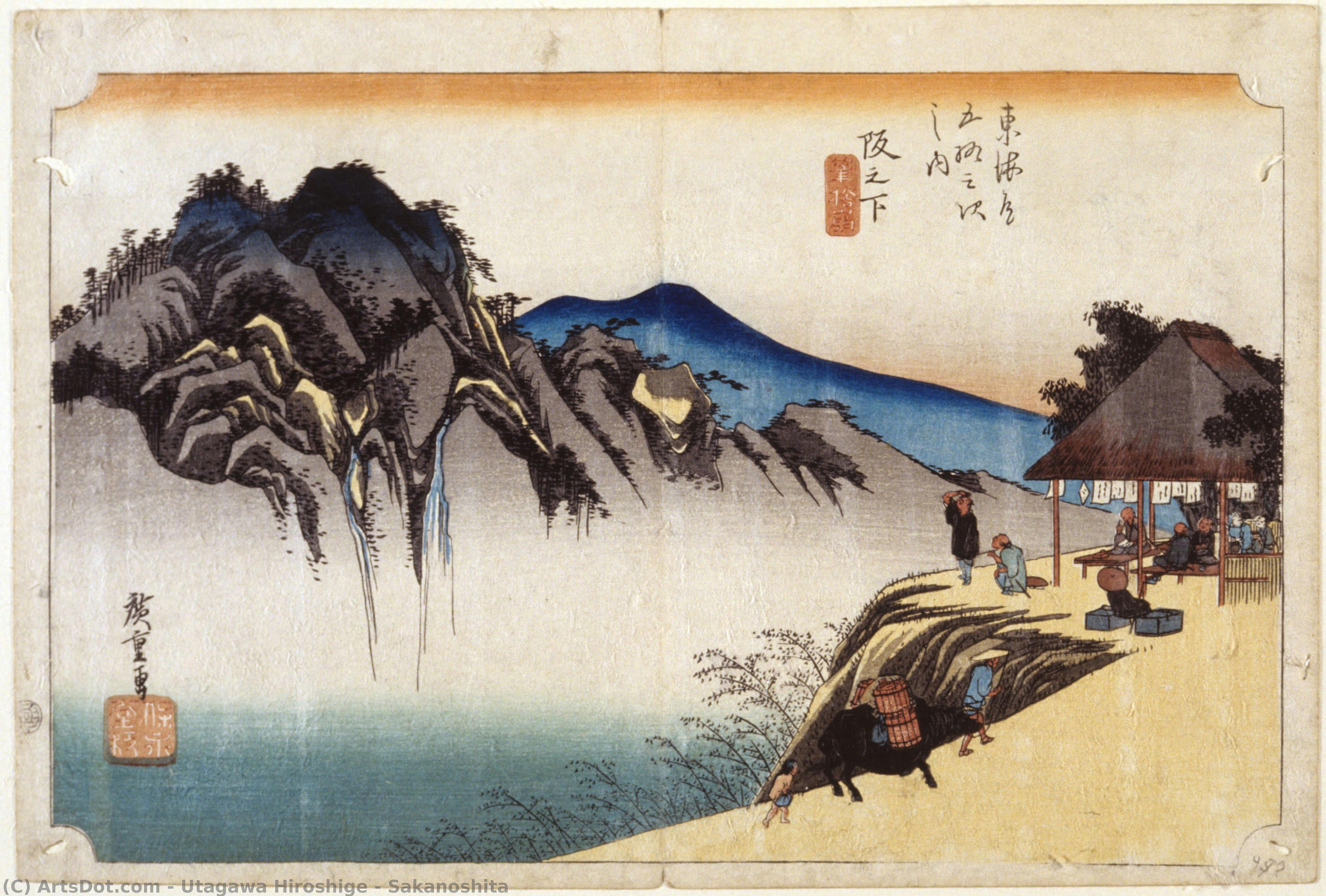
Experience Hiroshige's 'Sakanoshita': A stunning ukiyo-e print capturing the rugged beauty of the Tōkaidō road & Fudesute Mountain. Explore Edo Japan's poetic landscapes!
Biografie umělce
Utagawa Hiroshige (1797-1858) byl japonský malíř a tesař, mistr ukiyo-e, známý svými poetickými krajinami, zejména sérií Fifty-three Stations of the Tōkaidō. Jeho díla ovlivnila impresionisty a Van Gogha, definovala estetiku Japonisme a zachycuje krásu Edo období.
About the painting
A Poetic Glimpse of Edo Japan: Exploring Utagawa Hiroshige's "Sakanoshita"
Utagawa Hiroshige’s “Sakanoshita,” part of his renowned series The Fifty-three Stations of the Tōkaidō, offers more than just a scenic view; it provides a window into the heart of Edo period Japan. This evocative woodblock print captures a moment in time along one of the nation's most vital trade routes, transforming a practical thoroughfare into a landscape imbued with profound beauty and subtle narrative. The scene unfolds near Sakanoshita, a particularly challenging stretch of the Tōkaidō road known for its steep inclines and rugged terrain – a reality reflected in Hiroshige’s masterful depiction.
The Journey and the Landscape: Context and Technique
Completed during the Edo period (1603-1868), a time of relative peace and prosperity under the Tokugawa shogunate, “Sakanoshita” reflects a burgeoning interest in travel and landscape art. The Tōkaidō itself was more than just a road; it was a lifeline connecting Edo, the political heart of Japan, with Kyoto, its former imperial capital. Hiroshige’s series documented this journey, not merely as a geographical record but as an exploration of the emotional and aesthetic experiences encountered along the way. The print exemplifies ukiyo-e, meaning "pictures of the floating world," a genre that celebrated everyday life, landscapes, and popular culture. Hiroshige's approach within this tradition was particularly poetic, moving beyond simple representation to capture atmosphere and feeling. His technique involved meticulous carving on woodblocks by skilled artisans, followed by multiple layers of color printing—a process demanding precision and artistry. The subtle gradations of blue and green, achieved through the skillful application of bokashi (color gradation), create a sense of depth and distance that draws the viewer into the scene.
Symbolism in Stone and Shadow: A Narrative Unfolds
Beyond its visual appeal, “Sakanoshita” is rich with symbolic meaning. The towering presence of Fudesute-yama, or "Brush-Discarding Mountain," dominates the composition. Legend has it that a frustrated painter, unable to capture the mountain's beauty, threw his brush away in despair – a poignant reminder of the limitations of human artistry and the overwhelming power of nature. The travelers depicted on the winding path represent the constant flow of life along the Tōkaidō—merchants, pilgrims, government officials—all engaged in their own journeys. Their small size relative to the landscape emphasizes humanity’s place within a vast and timeless world. Even the dog accompanying one of the figures adds a touch of domesticity and companionship amidst the ruggedness of the terrain. The overall impression is not merely of a scenic view but of a microcosm of Edo period society, interwoven with the grandeur of the natural world.
An Enduring Legacy: Emotion and Influence
Hiroshige’s “Sakanoshita” resonates deeply because it transcends mere representation; it evokes a feeling—a sense of quiet contemplation, perhaps tinged with melancholy. The atmospheric perspective, the subtle color palette, and the carefully composed arrangement of elements all contribute to an emotional richness that continues to captivate viewers today. The print’s influence extended far beyond Japan, profoundly impacting Western artists like Vincent van Gogh and Claude Monet, who were captivated by its innovative compositions and poetic sensibility. It stands as a testament to Hiroshige's genius—a master of capturing the fleeting beauty of the natural world and transforming it into an enduring work of art.
Otázky a odpovědi
Jsou barvy díla „Sakanoshita“ od Utagawa Hiroshige syté, nebo tlumené?
Nasycení barevné palety díla "Sakanoshita" je na úrovni Subtle Color.
Jakou barvu v kompozici díla „Sakanoshita“ od Utagawa Hiroshige dominuje?
Hlavní barvou díla „Sakanoshita“ od Utagawa Hiroshige je Putty (#e6ddc9).
Kde si mohu koupit ručně malovanou reprodukci díla „Sakanoshita“ od Utagawa Hiroshige?
Ručně malovanou reprodukci díla „Sakanoshita“ od Utagawa Hiroshige si můžete objednat přímo na jeho stránce Ručně malovaná reprodukce: ručně malovaná olejová reprodukce na lněném plátně, vyrábíme na zakázku.
Quick facts and art quiz
About Utagawa Hiroshige

Utagawa Hiroshige
1797 - 1858, Japonsko
Biografie umělce
A Poetic Vision of Edo Japan: The Life and Art of Utagawa Hiroshige
Utagawa Hiroshige, narozený Andō Tokutarō v roce 1797 v rušném městě Edo (moderní Tokio), se jeví jako klíčová postava světa *ukiyo-e*, nebo “obrazů plovoucího světa”. I když je hluboce zakořeněn v tradicích japonského dřevokutí, Hiroshige překonal pouhé replikování a obdařil své krajiny poetickým citlivostí, která rezonovala hluboko jak v samotné Japonsku, tak později napříč západním uměleckým světem. Jeho život se odehrával za období relativního míru a prosperity pod Tokugawa šogunátu, přesto i za doby, která byla poznamenána rostoucím společenským vývojem a konečným západním vlivem – síly, které nakonec přispěly k úpadku *ukiyo-e*, i když zároveň zesilovaly jeho trvalé dědictví. Původně určený pro konvenčnější cestu do samurajské rodiny – jeho otec sloužil jako strážce ohně –, Hiroshigeho umělecké sklony ho vedly k stáže u Utagawy Toyohiro, mistra školy Utagawa. To se ukázalo jako klíčový obrat, který ho odklonil od populárních vyobrazení kurtek a herců, které preferovali mnozí *ukiyo-e* umělci, směrem k krajině, žánru, který nakonec přetvořil.Od Žánrových Scén Obdařujících Krajiny
Hiroshigeho rané dílo bylo v souladu s konvencemi jeho školy a zahrnovalo portréty a scény z každodenního života. Nicméně, jeho přijetí krajiny skutečně odlišilo jeho práci. Vlivem byli dřívější mistři jako Hokusai – jehož *Třicet šest výhledů na horu Fujijama* již okouzalo publikum – Hiroshige vyvinul jedinečný styl charakterizovaný atmosférickou perspektivou, jemnými barevnými paletami a hlubokou citlivostí k měnícím se ročním obdobím. Nevytvářel jen místa; evokoval jejich atmosféru, zachycoval podstatu konkrétního okamžiku v čase. Série *Pedesát tři stanice Tokaidó* (1833–1834), možná jeho nejvýznamnější dílo, ilustruje tento přístup. Tato monumentální práce dokumentovala cestu po Tokaidó, hlavní trase spojující Edo a Kjóto, nikoli jako prostou cestopisnou knihu, ale jako sérii sugestivních vize – náhlá dešťová bouře ve Shono, vzdálený pohled na horu Fujijama z Kanaya, rušná aktivita na Odawar. Každé tisknutí je nabité pocitem mezitímosti a klidu, vyzývá diváky, aby se vydali na cestu společně s cestovateli. Mistr Hiroshige často využíval *bokashi*, techniku zahrnující více tisků pro jedinou barvu, což mu umožňovalo vytvářet jemné gradace barev a atmosférické efekty, které bylo velmi obtížné napodobit.Mistr Atmosféry a Techniky
Hiroshigeho technická zručnost byla stejně pozoruhodná jako jeho umělecké vize. Nevytvářel jen přesnou reprezentaci; hledal zachycení *pocitu* místa. Jeho používání barev, i když často restriktivní ve srovnání s některými jeho současníky, bylo zásadní pro dosažení tohoto efektu. Často využíval více bloků pro jednu barvu, což mu umožňovalo vytvářet nuancované odstíny a atmosférické efekty, které byly velmi obtížné napodobit. Jemné modré tóny v jeho vyobrazeních deště nebo mlhy, teplé tóny podzimní pampelišek – to nebylo náhodné; byly pečlivě promyšlenými prvky navrženými k evokaci specifických emocí a pocitů. Kromě *bokashi* byl Hiroshige zručný v používání volného prostoru – *ma*, konceptu klíčového pro japonské estetiku, který umožňoval oblastím tisku „dýchat“ a zvyšoval celkový pocit klidu. Jeho série *Sto slavných výhledů na Edo* (1856–1858) dále ukázala jeho mistrovství, nabízejíc intimní pohledy do života a krajin svého milovaného města.Vliv a Trvalé Dědictví
I když tradice *ukiyo-e* začínala ustupovat po Hiroshigeově smrti v roce 1858 – úpadek zrychlený Meijiho restrikcí a následným přílivem západní kultury – jeho vliv na umělecké svět se ukázal být překvapivě trvalý. V pozdních 19. letech japonské tisky zaplavily Evropu, což vyvolalo jev známý jako *Japonisme*. Umělci jako Édouard Manet, Claude Monet a Edgar Degas byli okouzleni odvážnými kompozicemi, zploštělou perspektivou a nekonvenčními barevnými paletami *ukiyo-e*, které začali integrovat do své vlastní tvorby. Vincent van Gogh byl zvláště nadšený Hiroshigeho tisky, vytvořil kopie několika z nich, včetně „Plum Park in Kameido“, demonstrujíc tak hluboké obdiv k Hiroshigeově mistrovství v používání barev a kompozice. Hiroshigeho vliv se rozprostřel za hranice malby; lze jej vidět v architektuře, designu a dokonce i literatuře. Dnes je Utagawa Hiroshige zapamatován nejen jako brilantní umělec, ale také jako kulturní ambasador, který pomohl most mezi východem a západem, zanechávaje nezapomenutelný odkaz v historii umění.Významné díla
- Pedesát tři stanice Tokaidó: Hiroshigeho nejznámější série, zobrazující cestu po hlavní trase spojující Edo a Kjóto.
- Sto slavných výhledů na Edo: Zaujetý pohled do života a krajin jeho milovaného města.
- Vliv na sérii Japonaiserie Vincenta van Gogha: Včetně „Plum Park in Kameido“, demonstrující Van Goghův hluboký obdiv k Hiroshigeově mistrovství v používání barev a kompozice.
Quick facts about Utagawa Hiroshige
- Artistic Movement Or Style: *Ukiyo-e*
- Artists Or Movements Influenced By This Artist:
- Manet
- Monet
- Artists Who Influenced This Artist: ['Hokusai']
- Date Of Birth: 1797
- Date Of Death: 1858
- Full Name: Utagawa Hiroshige
- Nationality: Japonský
- Notable Artworks:
- 53 Station Tōkaidō
- 100 View Edo
- Place Of Birth: Tokyo, Japonsko
Prozkoumejte umělecká díla uspořádaná podle témat, stylů a charakteristik.




Utagawa Hiroshige
Sakanoshita
() ·
With its frame: · Hand-painted in oil on linen
Total