

Zobrazeno: · Včetně rámu:
 Náhled v interiéru
 Sdílet
 Sdílet
 Podrobnosti o díle
 Průvodce

 Stáhnout
 Podobné položky
 Rentgenové snímky
 Slideshow
 Otázky a odpovědi
 Statistiky

Kč 6943
Ručně malovaná olejová reprodukce
Rukou malované olejné plátno v libovolném rozměru i s rámem, vyrobené našimi umělci na zakázku. ( Přepnout na tisk Přepnout na digitální obraz)
Velikost
·Standardní velikost
na zakázku
CM
INCH
Vyberte si z našich přednastavených velikostí, které odpovídají původním proporcím díla.
Načítání velikostí...

šířka
výška
Zadejte šířku a výšku, které potřebujete pro váš rám nebo stěnu. Protože se jedná o ruční malbu, při výběru jiného formátu může umělec kolem obrazu domalovat o něco více, nebo jej mírně oříznout — rozhodnete si vy. Před zahájením malby vám zašleme digitální náhled ke schválení. Obraz zobrazený na této stránce neodpovídá skutečnému výsledku — pouze digitální náhled jej zobrazuje.
 Více informací
Dokončit
·
Bílé okraje Kč1

Rozostřené okraje Kč1

Prodloužené okraje Kč1

P118B Kč10

P118H Kč10

P118W Kč10

P438Z Kč10

P508JH Kč12

P508YH Kč12

P805H Kč10

P805Z Kč10

P919BZ Kč10

P919G Kč10

P919XJ Kč10

P959ZH Kč10

P968JZ Kč12

W106C Kč8

W218G Kč10

W218JH Kč8

W218Y Kč10

W307PJ Kč10

W316G Kč10

W316PJ Kč8

W316Y Kč10

W398PJ Kč8

W4111J Kč10

W500HY Kč15

W500JH Kč15

W692G Kč12

W849H Kč8

W940BG Kč15

W953PJ Kč8

H24-GOLD Kč30

H24-SILVER Kč30

H36-GOLD Kč45

H36-SILVER Kč45
Dodáváno v ochranné tubě, připraveno k vlastním rámování.
Doplňkové služby
volitelnéCo všechno doplňky zahrnují?
Příklady možných změn: Nahrazení obličeje fotografií zákazníka; Přidání mazlíčka (např. výměna kočky za psa); Skrytá zpráva v pozadí; Změna krajiny nebo prvků v pozadí.
Po přijetí objednávky vám tým TopImpressionists.com pošle e-mail s instrukcemi a poskytne náhled návrhu
Po přijetí objednávky vám tým TopImpressionists.com pošle e-mail s instrukcemi a poskytne náhled návrhu
Celosvětová doprava () za 3–4 týdny namísto standardních 5 týdnů. (7 listopad). Bez kompromisů v kvalitě.
Ochranný lak
Popisek díla
Detaily ryté bronzové plakety
This elegant plaque features the artist's name and the title of the artwork, finely engraved for a timeless presentation.
It is made from bronze with a refined, elegant finish. The text is precisely laser-engraved for a sharp and permanent result. Measuring 9x2 cm, the plaque is compact yet easy to read. It's built to be durable and scratch-resistant, offering a professional, museum-quality look. Mounting is simple thanks to the included adhesive backing.
Detaily průhledné akrylové desky
The plaque includes essential engraved details such as the artist's name, the title of the artwork, the date it was created, the type of media used-like oil on canvas or watercolor-a brief description of the piece, and a QR code that links to the complete artwork information.
It is crafted from clear acrylic, offering a sleek, modern appearance. The text is UV-engraved in black to ensure strong visual contrast. With a size of 10x15 cm, it ensures optimal readability. It comes equipped with two metal hooks for secure wall mounting. The plaque is designed to be weather-resistant, making it suitable for various environments, and it includes interactive features that work seamlessly with smartphone scanning.
Detaily černé akrylové destičky
This elegant plaque includes engraved information such as the artist's name, the title of the artwork, the date it was created, the type of media used (like oil on canvas or watercolor), a short description of the artwork, and a QR code for quick access to more information.
The plaque itself is made from refined black acrylic with a premium finish. The text is laser-engraved in white for high contrast and readability. Its size is 10x15 cm, designed to be easy to read. It comes with two metal hooks for professional mounting. The design is sleek and fits any interior style. It is also weather-resistant and durable, with built-in digital integration for mobile compatibility.
Skleněná varianta je dostupná pouze u rozměrů menších než 110 cm
 Skleněná varianta je dostupná pouze u rozměrů menších než 110 cm
- Zdarma celosvětová expresní doprava
- Vysoce kvalitní lněné plátno
- Kompletní pojištění přepravy
- Záruka vrácení celního poplatku
- Záruka věrného barevného souladu
- 100dení lhůta pro vrácení zboží (pouze při vadách výroby)
- 100% záruka vrácení peněz
- Sleva při více objednávkách


Popis sbírného předmětu
Explore Walter Ufer’s ‘Sleep,’ a poignant oil painting of Native American women in Taos. Discover realism, rich detail & cultural symbolism – a unique 20th-century artwork.
Biografie umělce
Walter Ufer (1876–1936) byl americký umělec německého původu, proslulý evokativními malbami života původních obyvatel v Taos, New Mexico. Klíčový člen skupiny 'Taos Ten', známý žánrovými scénami a živými krajinami.
O malbě
The Weight of Tradition: An Encounter with Walter Ufer’s “Sleep”
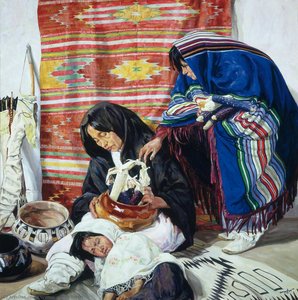
Walter Ufer's "Sleep," painted in 1923, isn’t merely a depiction of three Native American women; it’s an immersion into a world steeped in ritual and profound reverence. The painting immediately draws the viewer in with its rich tapestry of color – predominantly warm reds, oranges, and browns that evoke the earth itself, grounded by cooler blues and greens woven through the textiles and pottery. This palette isn't simply decorative; it speaks to the cultural heritage of the subjects, hinting at a deep connection to the land and ancestral traditions. The composition is carefully orchestrated, centering on the kneeling woman as a focal point, yet subtly inviting us into the periphery of the scene, suggesting an active participation in this sacred space.
Ufer’s masterful technique reveals layers of painstaking detail. He employs a layered oil painting approach, building up texture with deliberate brushstrokes that create a palpable sense of roughness on the clothing – perhaps representing the wear and tear of daily life intertwined with ceremonial garb – while simultaneously rendering the pottery with smooth, almost polished surfaces. This juxtaposition speaks to the duality inherent in Native American culture: the balance between practicality and spirituality, the tangible and the intangible. The lighting, soft and diffused, isn’t dramatic; it's deliberately muted, casting subtle shadows that lend a sense of solemnity and depth to the figures and objects, as if illuminating a secret whispered within a sacred space.
A Window into Taos: Contextualizing Ufer’s Vision
To fully appreciate “Sleep,” it's crucial to understand its historical context. Painted in 1923, during his time in Taos Pueblo, New Mexico, the artwork represents a pivotal moment in Walter Ufer’s career and his deep engagement with Native American culture. He was part of the "Taos Ten," a group of artists who sought to document and celebrate the lives and traditions of the region's indigenous communities. This wasn’t simply an act of observation; it was a deliberate attempt at understanding and portraying these cultures with respect and authenticity, a rare undertaking for American art at the time.
Ufer’s background as a German-born artist profoundly shaped his approach. His training in Europe instilled a meticulous attention to detail and a sophisticated understanding of composition – elements he skillfully translated into his depictions of Native American life. However, it was his immersion within the Taos community that truly informed his work, allowing him to capture not just appearances but also the spirit and essence of these traditions. The painting’s realism is tempered by an underlying sense of mystery, inviting viewers to contemplate the deeper meanings embedded within the scene.
Symbolism Woven into the Fabric
The details within “Sleep” are laden with symbolic significance. The intricately patterned rug serves as a visual anchor, framing the central figures and providing a rich backdrop that speaks to the importance of storytelling and communal life within Native American culture. The pottery, often adorned with geometric designs and natural motifs, represents both artistic skill and spiritual connection – a tangible link to ancestors and the earth. The women themselves, engaged in what appears to be a ritualistic activity, are not simply subjects; they embody generations of tradition, wisdom, and connection to the divine.
The act depicted—kneeling in reverence—suggests healing or a profound spiritual ceremony. The quiet dignity of the figures, coupled with the muted colors and soft lighting, evokes a sense of solemnity and timelessness. It’s an image that transcends mere representation, offering a glimpse into a world governed by ancient beliefs and deeply rooted traditions.
A Legacy of Authenticity: Reproductions and Beyond
Walter Ufer's "Sleep" remains a powerful testament to the beauty and complexity of Native American culture. TopImpressionists offers high-quality, hand-painted reproductions that faithfully capture the painting’s rich detail and evocative atmosphere. These reproductions are more than just images; they are windows into another world—a world of sacred rituals, profound traditions, and enduring wisdom. Investing in a reproduction is an investment in preserving this important piece of American art history and honoring the legacy of Walter Ufer's insightful portrayal.
Otázky a odpovědi
Jak "Sleep" vyvažuje světlo a stín?
Zaznamenané hodnoty pro dílo „Sleep“ od Walter Ufer jsou: jas bright, luminance Gentle Luminance.
Jakou náladu vyjadřuje „Sleep“ od Walter Ufer v rámci směru Contemporary Realism?
Melancholic emoce díla „Sleep“ je doprovázena jeho stylem, který patří k Contemporary Realism.
Kdo je autorem díla "Sleep" a do kterého uměleckého směru patří?
Dílo "Sleep" vytvořil/a Walter Ufer v rámci stylu Contemporary Realism. Autor/ka i toto umělecké směřování definují tradici tohoto díla.
Rychlá fakta a umělecký kvíz
O umělci Walter Ufer

Walter Ufer
1876 - 1936, Německo
Biografie umělce
Duše jihozápadu: Život a odkaz Waltera Ufera
Walter Ufer představuje klíčovou postavu amerického impresionismu, malíř, jehož tahy štětcem dělaly mnohem víc než jen zachytávání světla; zachycovaly samotné tlukot srdce jedné kultury. Narodil se v roce 1876 v německém Hückeswagenu a jeho cesta k vysokým pouštinám Nového Mexika byla vybudována na přísném evropském vzdělání a hluboké zvědavosti vůči lidské existenci. Jeho raná léta formovala německo-americká diaspora v Louisville v Kentucky, kde začal nasávat bohaté textury svého dědictví. Toto základní období, poznačené studiem litografie a grafiky, mu darovalo technickou preciznost, která mu později umožnila ovládat složitosti světla a stínu s bezprecedentním mistrovstvím.
Jeho snaha o uměleckou dokonalost ho dovedla na transformativní odysei po celé Evropě. Jako putující tovaryš se Ufer ponořil do rozmanitých uměleckých tradic kontinentu a zdokonaloval svou techniku na prestižních akademiích v Hamburku a Drážďanech. Toto období intenzivní intelektuální a tvůrčí expanze vyvrcholilo jeho působením v Mnichově, kde se věnoval intenzivní ateliérové praxi. Když se v roce 1911 konečně vrátil do Spojených států, nesl s sebou sofistikovanou evropskou citivost, která byla připravena na hluboké setkání s drsnou, sluncem zalitou krajinou amerického Západu.
Vizionář skupiny Taos Ten
Rok 1914 znamenal rozhodující zlom v Uferově životě i v celém směru amerického umění. Když vstoupil do Taos Pueblo v Novém Mexiku, stal se součástí neobvyklé umělecké revoluce. Připojením k vlivné skupině známé jako „Taos Ten“ se Ufer stal ústřední postavou kolektivu, který se snažil překročit pouhé malování krajin směrem k autentičtějšímu, visceraálnímu zobrazení života původních obyvatel Ameriky. Na rozdíl od mnoha svých současníků, kteří vnímali jihozápad skrze romantizovanou nebo koloniální optiku, ke svým tématům přistupoval s hlubokým respektem a citem pro důstojnost každodenního bytí.
Jeho dílo se stalo mostem mezi evropskými impresionistickými technikami a syrovou, duchovní energií lidu Pueblo. Nebyl pouhým pozorovatelem, ale kronikářem rituálů, krajin a tichých rytmů komunitního života. Ústřední roli v této tvůrčí evoluci hrál jeho vztah s Jimem Mirabalem, Indiánem z Taos, který sloužil Uferovi jako muza i spolupracovník. Díky tomuto spojení získal Ufer intimní porozumění kulturním nuancím definujícím tento region, což mu umožnilo vdechnout svým plátnům pocit prožitá pravdy, který rezonoval daleko za hranice Nového Mexika.
Technika, symbolismus a historický význam
Uferovo dílo je charakteristické mistrovským ovládáním barvy a odvážným, expresivním nanášením barvy. Jeho styl, ačkoliv zakořeněný v principech amerického impresionismu, se často přikláněl k robustnějšímu a texturovanějšímu přístupu, který zachytil žár pouštního slunce i tíhu země. Světlo nevyužíval pouze k osvětlení tvarů, ale k vyvolání emocí – vytvářel scény, kde atmosféra působí těžce historií a tradicí.
Historický význam Waltera Ufera spočívá v jeho schopnosti povýšit žánrové malířství na hluboké společenské a kulturní vyjádření. Mezi jeho úspěchy patří:
- Autentická reprezentace: Odklon od „pittoreských“ stereotypů života původních obyvatel k představování nuancovanějšího a lidštějšího portrétu lidí z Taos.
- Umělecká syntéza: Úspěšné spojení formálního akademického vzdělání z Německa s živoucí, nezkrocenou energií amerického jihozápadu.
- Odkaz Taos Ten: Klíčová role při budování Taos jako prestižní destinace pro americký modernismus a vitalního centra umění zaměřeného na původní kulturu.
Dnes zůstávají Uferovy malby trvalým svědectvím o období intenzivních kulturních střetů. Jeho schopnost protkat technickou preciznost svého evropského vzdělání se spirituální hloubkou kultury Pueblo zajišťuje, že jeho dílo nadále fascinuje a zve moderní diváky, aby skrze jeho evokativní a mistrovské oči mohli být svědky nadčasového ducha údolí Taos.
Rychlé informace o umělci Walter Ufer
- Artistic Movement Or Style: Taosský impresionismus
- Artists Or Movements Influenced By This Artist: ['']
- Artists Who Influenced This Artist: ['']
- Date Of Birth: 1876
- Date Of Death: 1936
- Full Name: Walter Ufer
- Nationality: Německo-americký
- Notable Artworks:
- Její dcera
- Budovatelé pouště
- Po nich
- Place Of Birth: Hückeswagen, Německo


Walter Ufer
Sleep
() ·
Včetně rámu: · Ručně malováno olejem na plátně
Celkem