

Zobrazeno: · Včetně rámu:
 Náhled v interiéru
 Sdílet
 Sdílet
 Podrobnosti o díle
 Průvodce

 Stáhnout
 Podobné položky
 Rentgenové snímky
 Slideshow
 Otázky a odpovědi
 Statistiky


Kč 5861
Ručně malovaná olejová reprodukce
Rukou malované olejné plátno v libovolném rozměru i s rámem, vyrobené našimi umělci na zakázku. ( Přepnout na tisk Přepnout na digitální obraz)
Velikost
·Standardní velikost
na zakázku
CM
INCH
Vyberte si z našich přednastavených velikostí, které odpovídají původním proporcím díla.
Načítání velikostí...

šířka
výška
Zadejte šířku a výšku, které potřebujete pro váš rám nebo stěnu. Protože se jedná o ruční malbu, při výběru jiného formátu může umělec kolem obrazu domalovat o něco více, nebo jej mírně oříznout — rozhodnete si vy. Před zahájením malby vám zašleme digitální náhled ke schválení. Obraz zobrazený na této stránce neodpovídá skutečnému výsledku — pouze digitální náhled jej zobrazuje.
 Více informací
Dokončit
·
Bílé okraje Kč1

Rozostřené okraje Kč1

Prodloužené okraje Kč1

P118B Kč10

P118H Kč10

P118W Kč10

P438Z Kč10

P508JH Kč12

P508YH Kč12

P805H Kč10

P805Z Kč10

P919BZ Kč10

P919G Kč10

P919XJ Kč10

P959ZH Kč10

P968JZ Kč12

W106C Kč8

W218G Kč10

W218JH Kč8

W218Y Kč10

W307PJ Kč10

W316G Kč10

W316PJ Kč8

W316Y Kč10

W398PJ Kč8

W4111J Kč10

W500HY Kč15

W500JH Kč15

W692G Kč12

W849H Kč8

W940BG Kč15

W953PJ Kč8

H24-GOLD Kč30

H24-SILVER Kč30

H36-GOLD Kč45

H36-SILVER Kč45
Dodáváno v ochranné tubě, připraveno k vlastním rámování.
Doplňkové služby
volitelnéCo všechno doplňky zahrnují?
Příklady možných změn: Nahrazení obličeje fotografií zákazníka; Přidání mazlíčka (např. výměna kočky za psa); Skrytá zpráva v pozadí; Změna krajiny nebo prvků v pozadí.
Po přijetí objednávky vám tým TopImpressionists.com pošle e-mail s instrukcemi a poskytne náhled návrhu
Po přijetí objednávky vám tým TopImpressionists.com pošle e-mail s instrukcemi a poskytne náhled návrhu
Celosvětová doprava () za 3–4 týdny namísto standardních 5 týdnů. (6 listopad). Bez kompromisů v kvalitě.
Ochranný lak
Popisek díla
Detaily ryté bronzové plakety
This elegant plaque features the artist's name and the title of the artwork, finely engraved for a timeless presentation.
It is made from bronze with a refined, elegant finish. The text is precisely laser-engraved for a sharp and permanent result. Measuring 9x2 cm, the plaque is compact yet easy to read. It's built to be durable and scratch-resistant, offering a professional, museum-quality look. Mounting is simple thanks to the included adhesive backing.
Detaily průhledné akrylové desky
The plaque includes essential engraved details such as the artist's name, the title of the artwork, the date it was created, the type of media used-like oil on canvas or watercolor-a brief description of the piece, and a QR code that links to the complete artwork information.
It is crafted from clear acrylic, offering a sleek, modern appearance. The text is UV-engraved in black to ensure strong visual contrast. With a size of 10x15 cm, it ensures optimal readability. It comes equipped with two metal hooks for secure wall mounting. The plaque is designed to be weather-resistant, making it suitable for various environments, and it includes interactive features that work seamlessly with smartphone scanning.
Detaily černé akrylové destičky
This elegant plaque includes engraved information such as the artist's name, the title of the artwork, the date it was created, the type of media used (like oil on canvas or watercolor), a short description of the artwork, and a QR code for quick access to more information.
The plaque itself is made from refined black acrylic with a premium finish. The text is laser-engraved in white for high contrast and readability. Its size is 10x15 cm, designed to be easy to read. It comes with two metal hooks for professional mounting. The design is sleek and fits any interior style. It is also weather-resistant and durable, with built-in digital integration for mobile compatibility.
Skleněná varianta je dostupná pouze u rozměrů menších než 110 cm
 Skleněná varianta je dostupná pouze u rozměrů menších než 110 cm
- Zdarma celosvětová expresní doprava
- Vysoce kvalitní lněné plátno
- Kompletní pojištění přepravy
- Záruka vrácení celního poplatku
- Záruka věrného barevného souladu
- 100dení lhůta pro vrácení zboží (pouze při vadách výroby)
- 100% záruka vrácení peněz
- Sleva při více objednávkách


Popis sbírného předmětu
Kandinsky’s artistic journey began with a transformative encounter with Monet’s Haystacks, sparking his fascination with color symbolism and influencing his exploration of musical composition. His Bauhaus teaching experience solidified his commitment to geometric abstraction and experimental art forms.
Biografie umělce
Wassily Kandinsky (1866-1944) - revolucionář moderního umění, zakladatel abstrakce. Jeho díla vyjadřují emoce a duchovní svět barvami a tvary. Objevte jeho ikonické obrazové světy!
O malbě
Division -Unit: A Symphony of Color and Spirit
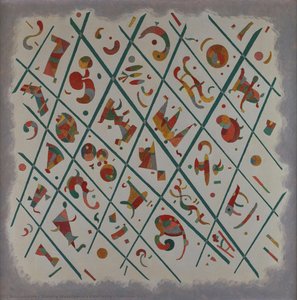
Wassily Kandinsky’s “Division - Unite,” created in 1934 during his formative Parisian period, stands as an emblem of abstract expressionism and a testament to the artist's relentless pursuit of spiritual resonance within visual art. Born in Moscow in 1866, Kandinsky embarked on a transformative artistic odyssey fueled by encounters with Impressionist painting—particularly Claude Monet’s “Haystacks”—and profoundly moved by Wagner’s opera "Lohengrin." These experiences instilled within him an unwavering conviction that art could transcend mere representation and communicate directly with the soul. This conviction would become the cornerstone of his groundbreaking approach to abstraction, forever altering the landscape of modern artistic endeavor. Early influences extended beyond purely visual stimuli; Kandinsky absorbed the vibrant hues and symbolic narratives of Russian folk art, gleaned from expeditions into the Vologda region. He meticulously documented these observations, recognizing their capacity to evoke emotional responses akin to musical harmonies—a concept he would champion throughout his career. This intellectual framework underpinned his artistic explorations, guiding him toward a deliberate rejection of conventional pictorial conventions in favor of forms that prioritized color and composition as primary expressive vehicles. The painting itself presents a striking visual experience: a square grid serves as the foundational structure for an astonishing array of organic shapes—circles, squares, triangles—interwoven with scattered letters. These elements are not uniformly distributed; rather, they cluster and overlap, generating a palpable sense of controlled chaos that belies Kandinsky’s meticulous planning. Diagonal lines intersect the grid, injecting dynamism into the composition and reinforcing the feeling of movement. The color palette is extraordinarily rich and diverse, encompassing reds, greens, blues, yellows, oranges, and purples—applied in both solid blocks and blended areas to create subtle gradations that heighten visual interest. Dominating the background is a pale grey or off-white hue, allowing the vibrant colors of the shapes to command attention and radiate luminosity. Kandinsky’s technique reflects his unwavering commitment to capturing inner experience. Executed primarily with oil paints on canvas—likely stretched taut—the application appears remarkably smooth, minimizing visible brushstrokes and prioritizing tonal harmony. This deliberate restraint underscores Kandinsky's belief that color alone could convey profound emotional significance. The resulting surface possesses a subtle textural quality, suggestive of the paper-like texture of his preparatory sketches, hinting at the artist’s ongoing engagement with traditional drawing methods alongside his pioneering explorations of abstraction. “Division - Unite” embodies Kandinsky’s mature abstract style—characterized by its rejection of representational imagery and its masterful manipulation of color relationships to evoke spiritual contemplation. It aligns seamlessly with the tenets of Abstract Expressionism, a movement that championed spontaneous gesture and emotional intensity as paramount considerations in artistic creation. More than just a visual spectacle, this artwork invites viewers into a realm where form and color coalesce to communicate unspoken truths—a legacy that continues to inspire artists and collectors alike.Composition & Structure
The square grid serves as the central organizing principle of “Division - Unite,” providing a framework for the arrangement of disparate elements while simultaneously fostering a sense of controlled dynamism. Unlike traditional perspectival representations, Kandinsky eschews depth illusion, opting instead for a flattened surface that emphasizes color and form as independent expressive forces. Diagonal lines intersect the grid, injecting movement into the composition and disrupting any potential static equilibrium. This deliberate disruption mirrors Kandinsky’s philosophical conviction that art should transcend rational thought and tap into primal instincts—a core tenet of his spiritual worldview.Color Palette & Harmony
Kandinsky's masterful use of color is arguably the painting's most striking feature. The palette encompasses a spectrum of hues—reds, greens, blues, yellows, oranges, and purples—each carefully positioned to create visual harmony and convey specific emotional resonances. Solid blocks of color coexist with blended areas, generating subtle gradations that enrich the overall tonal range. The dominant off-white background serves as a counterpoint to the vibrant shapes, maximizing their luminosity and enhancing their impact on the viewer’s eye. Kandinsky's meticulous attention to color theory—informed by Goethean aesthetics—demonstrates his profound understanding of how color can stimulate sensory perception and evoke psychological responses.Technique & Materials
The painting was crafted using oil paints on canvas, a medium favored by Kandinsky for its ability to achieve exceptional tonal fidelity and textural nuance. The application technique prioritizes smoothness and tonal consistency, minimizing visible brushstrokes and emphasizing the artist’s commitment to capturing inner experience through visual form. This deliberate restraint underscores Kandinsky's belief that color alone could convey profound emotional significance—a conviction that underpinned his entire artistic practice.Symbolic Significance & Emotional Impact
“Division - Unite” transcends mere aesthetic beauty; it embodies Kandinsky’s aspiration to communicate spiritual truths through abstraction. The scattered letters within the composition serve as visual anchors, grounding the organic shapes in a realm of intellectual contemplation—a reflection of Kandinsky's engagement with philosophical ideas and his belief that art could illuminate hidden dimensions of human consciousness. Ultimately, this painting invites viewers into a meditative state—a testament to Kandinsky’s enduring legacy as one of the foremost pioneers of abstract expressionism and a visionary artist who dared to explore the uncharted territories of visual perception.Historical Context
Created in 1934, “Division - Unite” emerged during Kandinsky's Parisian period—a time marked by profound intellectual ferment and artistic experimentation. The painting reflects the influence of Bauhaus, where Kandinsky taught from 1922 to 1933, and embodies the broader ethos of Abstract Expressionism—a movement that championed spontaneity and emotional intensity as paramount considerations in artistic creation. It stands as a pivotal work within Kandinsky’s oeuvre, solidifying his reputation as one of the most innovative and influential artists of the 20th century.Size & Dimensions
Unknown Date: 1934Otázky a odpovědi
Jak sytá je paleta díla "Division -Unit"?
Dílo „Division -Unit“ od Wassily Wassilyevich Kandinsky je zachyceno s Ztlumené saturací.
Patří „Division -Unit“ od Wassily Wassilyevich Kandinsky do volného tisku?
Dílo „Division -Unit“ od Wassily Wassilyevich Kandinsky spadá do v rámci volného užití – autorská práva vypršela. Tento stav určuje pravidla pro reprodukci obrazu tohoto díla.
Jakou luminanci má dílo „Division -Unit“ od Wassily Wassilyevich Kandinsky?
Barvy díla „Division -Unit“ vykazují jas o hodnotě Střední jas.
Rychlá fakta a umělecký kvíz
O umělci Wassily Wassilyevich Kandinsky

Wassily Wassilyevich Kandinsky
1866 - 1944, Rusko
Biografie umělce
A Life Immersed in Color and Spirit
Wassily Wassilyevich Kandinsky, narozený v Moskvě roku 1866, byl revoluční postava, která nezměnila průběh moderního umění. Jeho cesta nebyla cestou k okamžitému uměleckému povolání; původně určený k právní a ekonomické kariéře na Univerzitě v Moskvě, to byla hluboká zkušenost s impresionistickým malířstvím – konkrétně Monetův obraz „Háje“ – a dojemné pozorování opery “Lohengrin” Richarda Wagnera, které v něm vzbudilo neodolatelní touhu po umění. Tento klíčový okamžik, který nastal kolem věku 30 let, neznamenal jen změnu kariéry, ale kompletní proměnu perspektivy, která ho posunula na cestu k průkopnické abstrakci. Brzy se přestěhovala do Mnichova a zapsala se na prestižní Akademii umění, kde studovala pod vedením Franze von Stucka, i když i v rámci formálního vzdělávání toužila Kandinsky po prozkoumání za hranice konvencí.
Rané vlivy zahrnovaly ruský lidový styl, získaný z etnografické výpravy do oblasti Vologda v roce 1889, což vyvolalo fascinaci barevnými paletami a symbolickým obrazem. Tato základna se ukázala být klíčová, jakmile začal rozvíjet svůj jedinečný umělecký jazyk. Tyto rané průzkumy však nebyly jen otázkou estetického vkusu; byly zakořeněny v hlubokém kulturním spojení a rostoucím porozuměním, jak může umění komunikovat za hranicemi doslovnosti.
The Dawn of Abstraction: From Expressionism to Inner Necessity
Rané díla Kandinského silně odrážejí expresionistický směr, charakterizovaný výraznými barvami a emocionální intenzitou – dílo „Papeln (Poplars)” z roku 1902 je toho příkladem. Nicméně nebyl spokojen s pouhým zobrazením vnějšího světa; toužil vyjádřit vnitřní realitu, duchovní pravdy, které přesahují pouhé vizuální znázornění. Tato snaha ho postupně odpojila od reprezentativního umění a vedla k revolučnímu prozkoumávání barvy, formy a jejich emocionálního dopadu.
Začal věřit, že barvy mají v sobě inherentní psychologické účinky, schopné vyvolávat specifické pocity a vjemy u diváka. Toto přesvědčení bylo úzce spjato s jeho rostoucím zájmem o teosofii, spirituální hnutí zdůrazňující esoterickou znalost a univerzální bratrství. Jak se prohluboval v těchto ideích, díla Kandinského stále více odkláněla rozpoznatelné formy od abstrakce, zaměřovala se na dynamiku barev a tvarů, aby vyjádřila vnitřní harmonii a energii. Nebyla to jen o opuštění reprezentace; šlo o objevování nového vizuálního jazyka schopného vyjadřovat nehmotné oblasti emocí a spirituality. Snažil se vytvořit vizuální ekvivalent hudby, kde barvy a tvary harmonizovaly k evokaci hlubokých emocionálních reakcí.
Geometric Harmony and Spiritual Resonance
Období po jeho zapojení do vlivné umělecké skupiny Der Blaue Reiter (Modrý jezdci), kterou spoluzaložil v Mnichově v roce 1911, vedlo k další evoluci Kandinského stylu. Zatímco raná díla často obsahovala plynulé, organické tvary, začal prozkoumávat geometrickou abstrakci, zaměřoval se na interakci mezi kruhy, trojúhelníky a čtverce. „Several Circles” (140 x 140 cm) je toho příkladem – dynamická kompozice, kde barvy a tvary interagují v harmonii, ale s energií. Tato díla ukazují silný vliv impresionistů, zejména Claude Moneta, zvláště v kontrastu světla a stínu na slunném svahu. Ambiguity tvaru jezdce na koni v různých barvách předznamenává jeho zájem o abstrakci. Téma koně a jezdce se objevilo ve mnoha jeho pozdějších dílech. Pro Kandinského toto znázorňovalo odpor k konvenčním estetickým hodnotám, stejně jako možnosti čistšího, duchovnějšího života prostřednictvím umění.
Tato geometrická abstrakce nebyla chladná nebo sterilní; byla nabita duchovní symbolikou. Kandinsky věřil, že geometrické tvary mají v sobě inherentní symbolický význam a jejich uspořádání v plátně mohlo vyvolat specifické emocionální reakce. Jeho teoretické eseje, zejména „Concerning the Spiritual in Art” (1911), formulovala tato přesvědčení a položila základy pro nové chápání abstrakce jako prostředku k vyjádření hlubokých duchovních pravd. Argumentoval tím, že umění by nemělo mít za cíl napodobovat přírodu, ale spíše odhalit vnitřní svět umělce a spojit se s divákem na hlubší, intuitivnější úrovni.
Bauhaus Influence and Lasting Legacy
Rozruchající první světová válka přinutila Kandinského vrátit se do Ruska v roce 1914, ale po ruské revoluci se ocitl stále více v rozporu s převládajícím uměleckým klimatem. V roce 1920 přijmul učitelskou pozici na Bauhaus ve Francii, kde významně ovlivnil generace umělců svými teoriemi o barvě, formě a abstrakci. Bauhaus poskytl ideální prostředí pro Kandinského k dalšímu rozvoji svých myšlenek a prozkoumání nových kreativních cest.
Pokračoval v experimentování s geometrickými tvary a živými barvami, často používal techniky vrstvení impasta, aby vytvořil texturované povrchy, které přidaly hloubku a komplexitu svým kompozicím – jak je vidět na pozdějších dílech jako „An Intimate Party” (1942). Po uzavření Bauhaus nacistickým režimem v roce 1933 se Kandinsky přesunul do Francie, kde žil zbytek svého života. Jeho dopad na moderní umění je nezměřitelný; je široce uznáván jako průkopník abstrakce a klíčová postava vývoje neprezentativního malířství. Jeho díla jsou vystavována v předních muzeích po celém světě, včetně Tretyakovské galerie v Moskvě, která uchovává jeho monumentální „Composition VII“, důkaz jeho umělecké vize a trvalého dědictví.
Kandinského prozkoumávání barvy, formy a spirituality nadále inspiruje umělce dnes, solidifikující jeho místo mezi nejvýznamnějšími postavami 20. století. Nevytvořil jen obrazy; vytvořil emoce, myšlenky a samotnou podstatu lidské duše.
Rychlé informace o umělci Wassily Wassilyevich Kandinsky
- Artistic Movement Or Style: Abstraktní umění, Expressionismus
- Artists Or Movements Influenced By This Artist: ['Abstraktní expresionismus']
- Artists Who Influenced This Artist:
- Monet
- Wagner
- Date Of Birth: 1866
- Date Of Death: 1944
- Full Name: Wassily Wassilyevich Kandinsky
- Nationality: Rusky, Francouzsky
- Notable Artworks:
- Kompozice VII
- Murnau s duhou
- Čtyři kruhy
- Place Of Birth: Moskva, Rusko
Prozkoumejte umělecká díla uspořádaná podle témat, stylů a charakteristik.


Wassily Wassilyevich Kandinsky
Division -Unit
() ·
Včetně rámu: · Ručně malováno olejem na plátně
Celkem