Ateliér — Doprava po celém světě zdarma — Dodání za 2–6 týdnů
      William Hogarth, 1697 – 1764

      William Hogarth's 100 Most Famous Paintings

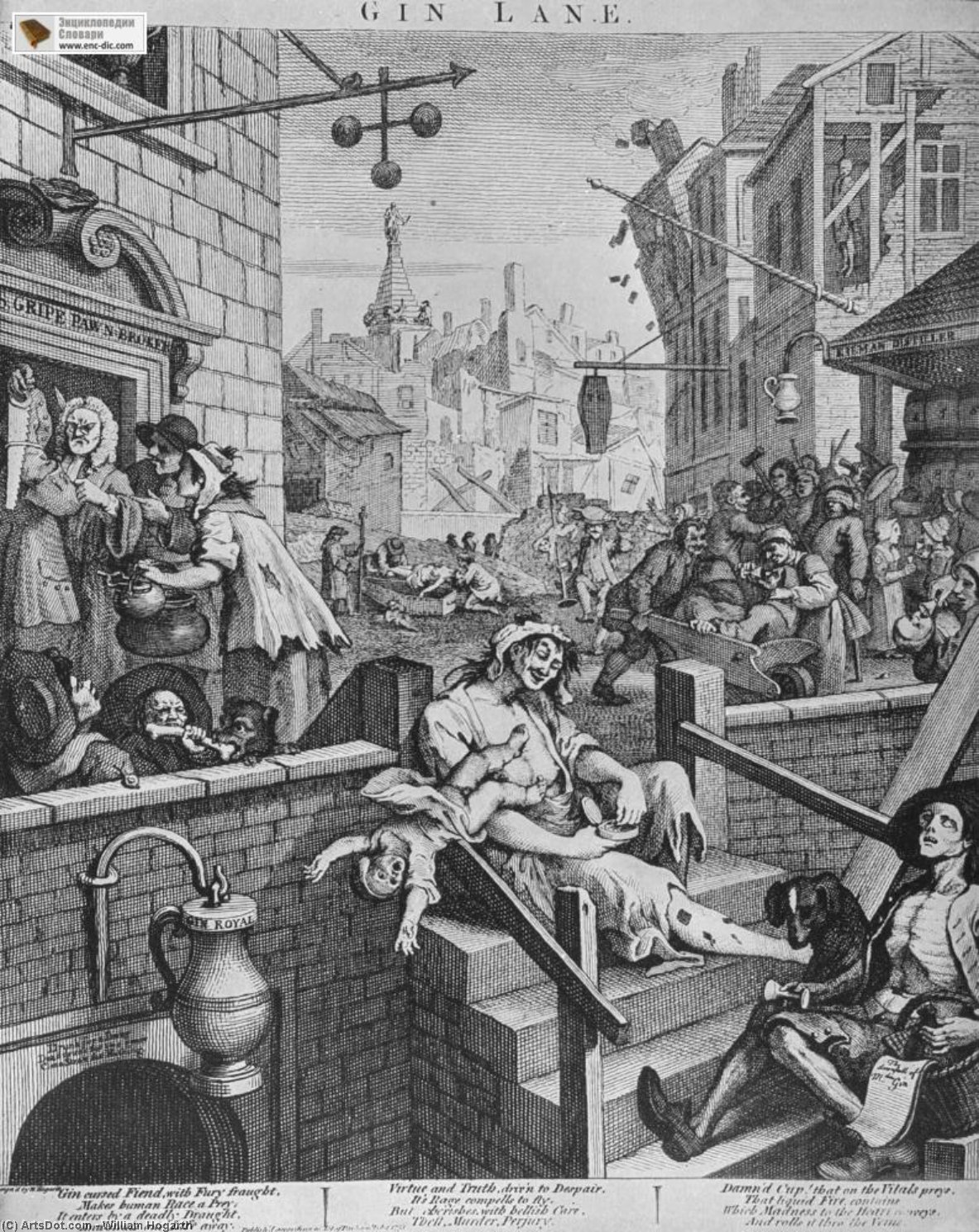
      Desková jedna, z A Rake's Progress is the painting William Hogarth is best remembered for. Šestá deska z "Rake's Progress" and Gin Lane (1750) complete the trio of best-loved canvases. Our catalogue counts 307 works by William Hogarth. Here are the 100 most famous, with the year, the museum and the story of each canvas.

      Seřazeno podle našeho skóre popularity, které kombinuje počet vyhledávání, návštěv a objednávek u každého díla. Aktualizováno říjen 2026. Each painting on this page can be ordered as an oil reproduction painted by hand on linen canvas, or as a fine art print, made to the size you choose.

      Portrét William Hogarth
      William Hogarth · 1697 – 1764
      Narozen · zemřel
      1697 – 1764, Londýn
      Díla v našem katalogu
      307
      Nejslavnější
      Desková jedna, z A Rake's Progress
      Nejvíce děl v
      Sir John Soane's Museum

      The ten best-loved paintings by William Hogarth

      Desková jedna, z A Rake's Progress od William Hogarth
      1

      Desková jedna, z A Rake's Progress

      Rytina

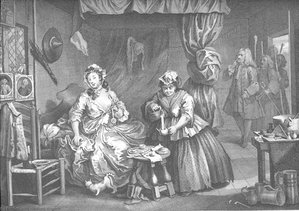
      Ponořte se do pulzující energie umělecké dílny s obrazem „Plate one, from A Rake’s Progress“. Tento složitý lept od Williama Hogartha zachycuje rušné scény plné aktivity a detailů. V centru pozornosti stojí muž v elegantním oblečení, obklopený postavami pracujícími nebo konverzujícími. Kompozice je bohatá na vrstvy interakcí – od umělce u jeho pultu po ženy diskutující o obrazech, vytvářející dynamický pohled na kolaborativní kreativitu. Tento obraz není jen reprodukce; je…

      Šestá deska z "Rake's Progress" od William Hogarth
      2

      Šestá deska z "Rake's Progress"

      Rytina

      Ponořte se do chaotické energie "Plátu šestého z A Rake's Progress," mistrovského leptu od Williama Hogartha. Tato složitá černobílá scéna zachycuje živou atmosféru rušné hospody, nabízející živý pohled na společenské a morální komentáře 18. století. Jedná se o dílo, které vypráví příběh rozumu a zkázy, a zároveň je to ostrá kritika společnosti té doby.

      Gin Lane (1750) od William Hogarth
      3

      Gin Lane

      1750 · Engraving

      In the heart of 18th-century London, amidst the swirling fog and the growing shadows of social upheaval, William Hogarth captured a moment of profound human tragedy that continues to haunt the viewer centuries later. His masterpiece, Gin Lane, is far more than a mere engraving; it is a visceral, breathing chronicle of a city in the throes of moral and physical decay. Completed in 1751, this work serves as a…

      The Marriage Contract (1745) od William Hogarth
      4

      The Marriage Contract

      1745 · Acrylic On Canvas

      A Window Into Georgian Society In the heart of 1745, William Hogarth captured more than a mere domestic arrangement; he froze a pivotal moment of social negotiation in "The Marriage Contract." This meticulously crafted tableau invites the viewer into a room thick with the palpable anxieties and lofty aspirations of Georgian England. As we gaze upon the central table where a man proposes to his prospective bride, we are not…

      Hostina (1755) od William Hogarth
      5

      Hostina

      1755 · Olej na plátně · Sir John Soane's Museum, Londýn

      Obraz představuje rušnou scénu hostiny, která pulzuje životem díky postavám zapleteným do nejrůznějších činností – od jídla a pití přes hraje hudbu až po živé rozhovory a obecné radováni z veselosti. Pravděpodobně se jedná o zachycení bohaté rodiny nebo společenského kruhu, kteří si společně užívají oslavné jídlo. Samotný počet jednotlivců stísněných v rámci kompozice vytváří dojmem přebýdající aktivity a živé interakce. Ačkoliv není v obraze výslovně vyjádřen žádný konkrétní příběh,…

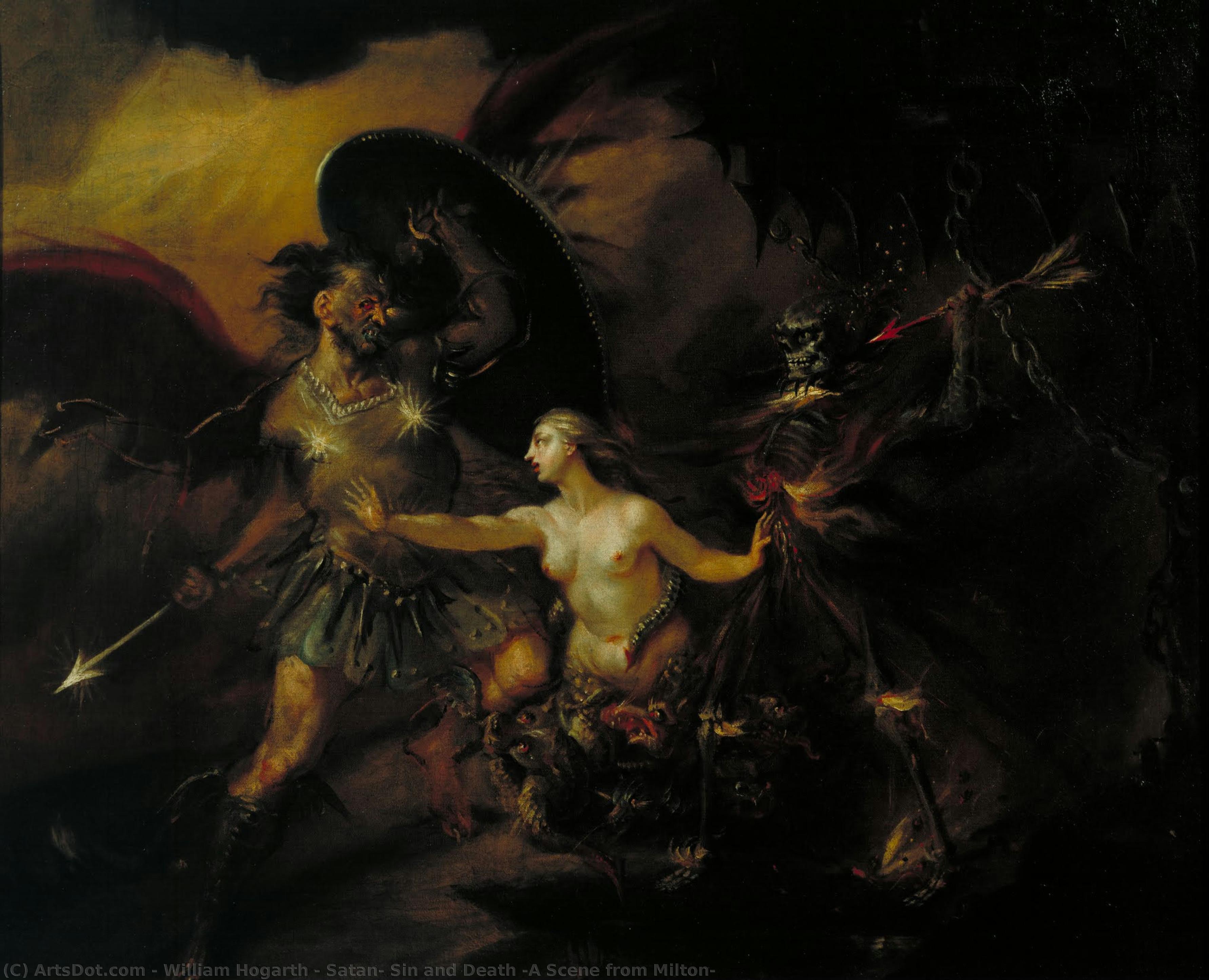
      Satan, hřích a smrt (Scéna z Miltona) (1735) od William Hogarth
      6

      Satan, hřích a smrt (Scéna z Miltona)

      1735 · Olej na plátně · Tate Britain, Londýn

      Dílo „Satan, hřích a smrt“ od Williama Hogartha, vytvořené v roce 1735, je mnohem víc než jen pouhou ilustrací k epické básni Johna Miltona, Ztracený ráj; je to pečlivě utkaná morální alegorie, která vtahuje diváka do světa pokušení, následků a věčného konfliktu. Tento olej na plátně, který je nyní uložen v galerii Tate Britain v Londýně, měří 7ittää 74 x 61 cm a nabízí neuvěřitelně intimní pohled do Hogarthova hlubokého…

      The Painter and his Pug (1745) od William Hogarth
      7

      The Painter and his Pug

      1745 · Oil On Canvas · Tate Gallery, Londýn

      A Portrait of Intimacy: William Hogarth’s ‘The Painter and his Pug’ Subject & Composition: This captivating 1745 portrait by William Hogarth offers a charmingly informal glimpse into the artist's personal life. It depicts Hogarth himself, seated and gazing directly at the viewer, accompanied by his beloved pug, Trump. The composition is remarkably balanced; Hogarth occupies the central space while Trump rests comfortably to his right, creating an intimate and relaxed…

      Útěk hraběnky od William Hogarth
      8

      Útěk hraběnky

      Olej na plátně

      William Hogarthova „Útěk hraběnky“ – Zázrak Rococo Kritiky „Útěk hraběnky“ od Williama Hogartha představuje vrcholné dílo série „Sňatek módní“, která dokazuje nejen mistrovskou techniku malíře, ale především jeho schopnost vyprávět příběh prostřednictvím obrazu. Tento obraz vytvořil mezi lety 1743 a 1745 a slouží jako dramatické zakončení rozsáhlého vyobrazení následků manželství založených na finančním prospěchu, nikoliv na opravdové lásce – což byl základní kámen Hogarthova uměleckého projevu. Jeho dílo není jen…

      The Four Times of Day: Night (1738) od William Hogarth
      9

      The Four Times of Day: Night

      1738 · Acrylic On Canvas · Clevelandské muzeum umění, Cleveland

      William Hogarth's "The Four Times of Day: Night," painted in 1738, isn’t merely a depiction of a London street scene; it’s a meticulously crafted window into the social and moral landscape of eighteenth-century England. This remarkable work, now immortalized through WahooArt’s hand-painted reproductions, captures a moment of revelry – or perhaps reckless abandon – with an unparalleled level of detail and satirical observation that defines Hogarth's unique artistic legacy. The…

      A Harlot's Progress: Quarrels with her Jewish Protector (1743) od William Hogarth
      10

      A Harlot's Progress: Quarrels with her Jewish Protector

      1743 · Oil On Canvas · Ascott House, Leighton Buzzard

      The room holds a sudden, sharp noise. A tea-table tilts, porcelain clatters, and the heavy weight of an argument settles over the fine fabrics. Mary, known as Moll Hackabout, moves with a violent intent, her arm a decisive line against the opulent interior. She kicks at the furniture to draw eyes away from the doorway, where a lover slips quietly into the shadows. A black serving boy stands near, a…

      William Hogarth: canvases 11 to 100 of the ranking

      Autoportrét (1757) od William Hogarth
      #11

      Autoportrét

      1757 · National Portrait Gallery

      Hogarthův Autoportrét, namalovaný v roce 1757, nabízí fascinující okno do života a umělecké praxe jednoho z nejvýznamnějších britských malířů. Toto olejné plátno o rozměrech 45 x 42 cm…

      Bring this light home →
      Soliciting Votes (1754) od William Hogarth
      #12

      Soliciting Votes

      1754 · Sir John Soane's Museum

      William Hogarth's "Soliciting Votes," completed in 1754, stands as a masterful distillation of Enlightenment satire and a poignant reflection on the burgeoning political landscape of London. More than…

      Bring this light home →
      The heir (1735) od William Hogarth
      #13

      The heir

      1735 · Sir John Soane's Museum

      William Hogarth’s “The Heir,” completed in 1735, is more than simply a depiction of a domestic scene; it’s a meticulously crafted social commentary rendered with the precision and…

      Bring this light home →
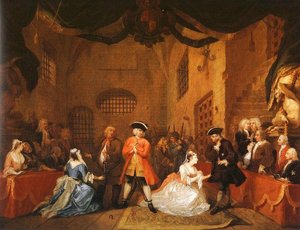
      A Scene from The Beggar's Opera (1729) od William Hogarth
      #14

      A Scene from The Beggar's Opera

      1729 · National Gallery of Art

      William Hogarth's "A Scene from The Beggar’s Opera," painted in 1729, isn’t merely a depiction of a theatrical performance; it’s a meticulously crafted snapshot of 18th-century London life…

      Have it painted by hand →
      South Sea Scheme od William Hogarth
      #15

      South Sea Scheme

      In the swirling currents of 1721 London, amidst a fever of unbridled greed and financial delirium, William Hogarth unleashed a visual critique that would forever etch itself into…

      Order this canvas →
      Sňatek v módě (1743) od William Hogarth
      #16

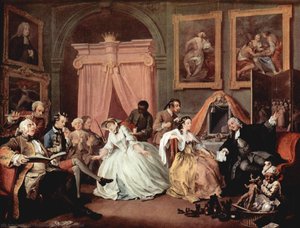
      Sňatek v módě

      1743 · National Gallery

      V grandiózní tapiserii britského umění eighteenth století má jen málo děl tak ostravou výčitku a narativní hloubku jako Marriage à la Mode od Williama Hogartha. Tato mimořádná série,…

      Bring this light home →
      Hudibras od William Hogarth
      #19

      Hudibras

      William Hogarth's *Hudibras*, specifically the frontispiece and related engravings from Samuel Butler’s satirical poem, offers far more than a simple illustration; it’s a meticulously crafted social commentary frozen…

      Have it painted by hand →
      Návštěva u šarlatána (1745) od William Hogarth
      #20

      Návštěva u šarlatána

      1745

      V živobném, a přitom drsném světě osmnáctéstoletního Londýna se dílo Williama Hogartha „Návštěva u šarlatána“ vynáší jako hluboký teatrální výkon zachycený na plátně. Toto dílo z éry rokoka,…

      Order this canvas →
      The Times, plate 2 (1763) od William Hogarth
      #22

      The Times, plate 2

      1763

      The Pulse of an Era: London Unveiled In the year 1763, as the gears of the Industrial Revolution began to turn and the streets of London swelled with…

      Order this canvas →
      Autoportrét (1745) od William Hogarth
      #24

      Autoportrét

      1745

      Autoportrét Williama Hogartha z roku 1745 není pouze prostým podobenstvím; je to pečlivě vypracované okno do mysli jednoho z nejvtipnějších a nejostřejších satirických pozorovatelů Anglie. Dílo vzniklé v…

      Order this canvas →
      Miss Mary Edwards (1742) od William Hogarth
      #25

      Miss Mary Edwards

      1742 · The Frick Collection

      A Portrait of Privilege and Virtue: Examining William Hogarth’s Miss Mary Edwards William Hogarth's "Miss Mary Edwards," completed in 1742, stands as an emblem of Enlightenment England—a meticulously…

      Have it painted by hand →
      The Battle of the Pictures (1743) od William Hogarth
      #26

      The Battle of the Pictures

      1743

      William Hogarth's "The Battle of the Pictures," completed in 1743, isn’t merely an engraving; it’s a vibrant, chaotic microcosm of 18th-century London’s art world – a scene brimming…

      Order this canvas →
      Suicide of the Countess (1745) od William Hogarth
      #27

      Suicide of the Countess

      1745

      Georgian England was gripped by a fervor for moral reform following the Enlightenment. Writers like Jonathan Swift satirized aristocratic excesses and championed reason over superstition, influencing artists like…

      Bring this light home →
      Canvassing for Votes od William Hogarth
      #28

      Canvassing for Votes

      William Hogarth’s “Canvassing for Votes” isn't merely a painting; it’s a meticulously crafted social commentary, a vibrant snapshot of corruption and manipulation embedded within the seemingly convivial atmosphere…

      Have it painted by hand →
      The Countess's Morning Levee (1745) od William Hogarth
      #29

      The Countess's Morning Levee

      1745

      William Hogarth’s “The Countess’s Morning Levee,” completed around 1745, stands as a cornerstone of Rococo art and a masterful distillation of Enlightenment observation. More than just a depiction…

      Bring this light home →
      The Ball (1745) od William Hogarth
      #30

      The Ball

      1745

      To stand before William Hogarth's depiction of "The Ball" is to be instantly transported across the threshold of time, directly into the glittering heart of an 18th-century London…

      Order this canvas →
      The Bench (1758) od William Hogarth
      #31

      The Bench

      1758

      A Gathering of Characters: Decoding Hogarth’s ‘The Bench’ Subject & Narrative: William Hogarth's 1758 engraving, ‘The Bench’, presents a tightly composed group of six men, each meticulously rendered…

      Order this canvas →
      The Denunciation (1729) od William Hogarth
      #33

      The Denunciation

      1729

      A Scene of Accusation: Unveiling Hogarth’s ‘The Denunciation’ William Hogarth's *The Denunciation*, painted in 1729, is far more than a depiction of a social gathering; it’s a meticulously…

      Bring this light home →
      Self-Portrait od William Hogarth
      #36

      Self-Portrait

      National Gallery of Ireland

      A middle-aged man gazes directly from an oval vignette, his expression calm and steady. He wears a soft red cap and a patterned blue robe, the heavy silk…

      Have it painted by hand →
      The triumph of Representatives (1755) od William Hogarth
      #38

      The triumph of Representatives

      1755 · Sir John Soane's Museum

      A Window Into Georgian Society: Examining William Hogarth’s “The Triumph of Representatives” William Hogarth's "The Triumph of Representatives," completed in 1755, isn’t merely a depiction of an event;…

      Bring this light home →
      Second stage of cruelty (1751) od William Hogarth
      #42

      Second stage of cruelty

      1751

      This powerful engraving, created by William Hogarth in 1751, offers a chilling glimpse into the realities of 18th-century England. Far from idealized landscapes or flattering portraits, this work…

      Have it painted by hand →
      The Reward of Cruelty (1751) od William Hogarth
      #45

      The Reward of Cruelty

      1751

      The Reward of Cruelty William Hogarth’s “The Reward of Cruelty,” published in 1751 as part of his monumental *Four Stages of Cruelty*, stands as a chilling indictment of…

      Bring this light home →
      Simon Lord Lovat od William Hogarth
      #46

      Simon Lord Lovat

      Simon Lord Lovat – Významný Portrét Jacobitské Éry Simon Lord Lovat představuje fascinující okamžik v historii britonského umění a společnosti. Tento obraz vytvořil William Hogarth, jeden z nejvýznamnějších…

      Order this canvas →
      Scholars at a Lecture od William Hogarth
      #48

      Scholars at a Lecture

      A Window Into Enlightenment: Examining William Hogarth’s “Scholars at a Lecture” The etching by William Hogarth, "Scholars at a Lecture," transcends mere depiction; it's an exquisitely crafted snapshot…

      Have it painted by hand →
      Sarah Malcolm in Prison od William Hogarth
      #50

      Sarah Malcolm in Prison

      Sarah Malcolm in Prison: A Portrait of Crime and Vulnerability William Hogarth’s *Sarah Malcolm in Prison* stands as a chilling testament to the moral anxieties of Georgian England,…

      Bring this light home →
      Gin Lane (1751) od William Hogarth
      #52

      Gin Lane

      1751

      In the heart of 18th-century London, amidst the swirling fog and the growing shadows of social upheaval, William Hogarth captured a moment of profound human tragedy that continues…

      Have it painted by hand →
      The murder of the count (1745) od William Hogarth
      #53

      The murder of the count

      1745

      William Hogarth’s “The Murder of the Count,” completed in 1745, is not merely a depiction of violence; it’s a meticulously constructed moral fable, a searing indictment of societal…

      Bring this light home →
      The Enraged Musician (1741) od William Hogarth
      #54

      The Enraged Musician

      1741

      In the heart of 1741 London, amidst the burgeoning energy of the Enlightenment, William Hogarth captured a moment of pure, unadulterated sensory overload. The Enraged Musician is not…

      Bring this light home →
      The Bathos od William Hogarth
      #55

      The Bathos

      William Hogarth's *The Bathos*, a powerfully unsettling engraving created towards the end of his life, is not merely an artwork; it’s a visual lament—a darkly satirical reckoning with…

      Bring this light home →
      The Beggar's Opera (1729) od William Hogarth
      #59

      The Beggar's Opera

      1729 · Yale Center for British Art

      A Window Into Georgian Society: Exploring Hogarth's "The Beggar's Opera" William Hogarth’s “The Beggar’s Opera,” completed in 1729, transcends mere visual representation; it serves as a meticulously crafted…

      Order this canvas →
      Lame theater od William Hogarth
      #62

      Lame theater

      William Hogarth’s “Lame Theater,” completed around 1730, stands as a cornerstone of English Rococo satire and a remarkably astute observation of the social landscape of Georgian London. More…

      Order this canvas →
      Southwark Fair od William Hogarth
      #63

      Southwark Fair

      Step into the swirling, sensory overload of William Hogarth’s Southwark Fair, a masterpiece that serves as a vivid, unvarnished window into the heart of 1730s London. This is…

      Order this canvas →
      Self Portrait od William Hogarth
      #64

      Self Portrait

      In the quiet intimacy of his studio, William Hogarth presents us with more than just a likeness; he offers a profound window into the very essence of Enlightenment…

      Bring this light home →
      Tyburn Large od William Hogarth
      #72

      Tyburn Large

      “Tyburn Large,” painted by William Hogarth in 1746, isn't merely a depiction of an execution; it’s a meticulously rendered snapshot of 18th-century London life, brimming with social commentary…

      Order this canvas →
      The Mackinen Children (1747) od William Hogarth
      #77

      The Mackinen Children

      1747 · National Gallery of Ireland

      “The Mackinen Children,” painted by William Hogarth in 1747, stands as a cornerstone of British Rococo art and exemplifies the artist’s masterful command of classical principles. More than…

      Order this canvas →
      Engraving of John Wilkes od William Hogarth
      #78

      Engraving of John Wilkes

      A Portrait of Moral Decay: Examining Hogarth’s Engraving of John Wilkes William Hogarth's "Engraving of John Wilkes" stands as a cornerstone of 18th-century British art and satire, capturing…

      Bring this light home →
      Richard Mouteney (1746) od William Hogarth
      #83

      Richard Mouteney

      1746 · Bavarské státní sbírky malby

      The Weight of Presence A man sits in the center of a dark void. He wears a heavy black robe that swallows the light, its folds thick and…

      Order this canvas →
      Times of the Day: Morning od William Hogarth
      #86

      Times of the Day: Morning

      William Hogarth’s “Times of the Day – Morning,” a cornerstone of his celebrated series, isn’t merely a depiction of a London street; it’s a meticulously crafted observation of…

      Order this canvas →
      Satire on False Perspective od William Hogarth
      #87

      Satire on False Perspective

      Satire on False Perspective William Hogarth’s *Satire on False Perspective*, created in 1754 for Joshua Kirby's pamphlet *Method of Perspective*, stands as a masterful demonstration of artistic critique…

      Order this canvas →
      Analýza krásy od William Hogarth
      #89

      Analýza krásy

      Analýza Krásy William Hogarthův dílo „Analýza krásy“ z roku 1753 představuje komplexní grafickou výstup, který je satirickým komentářem konceptu krásy a jeho různých projevů prostřednictvím objektů, postav a…

      Order this canvas →
      Thomas Pellett, M.D. (1737) od William Hogarth
      #93

      Thomas Pellett, M.D.

      1737

      An elderly gentleman, Thomas Pellett, M.D., occupies the center of this 1737 oil portrait. The composition utilizes a dark, oval vignette to focus attention on the subject's face…

      Bring this light home →
      Self-Portrait (1735) od William Hogarth
      #95

      Self-Portrait

      1735 · Yale Center for British Art

      In this 1735 self-portrait, we encounter the artist not as a distant figure, but in an intimate, eye-level encounter. The composition focuses on a bust-length view of a…

      Order this canvas →
      The Lottery od William Hogarth
      #96

      The Lottery

      The image is a black and white painting of a theater scene featuring a group of people gathered around a stage. The main focus of the painting is…

      Have it painted by hand →
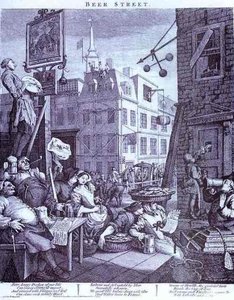
      Beer Street (1751) od William Hogarth
      #99

      Beer Street

      1751

      Beer Street, an iconic engraving created by William Hogarth in 1751, is a masterpiece that showcases the artist's ability to blend social commentary with artistic finesse. This work…

      Bring this light home →
      Rake's Progress' The Gaming House (1735) od William Hogarth
      #100

      Rake's Progress' The Gaming House

      1735 · Sir John Soane's Museum

      A Window into Georgian Society: Examining Hogarth’s “Rake’s Progress” William Hogarth's "Rake's Progress," completed in 1735, stands as a cornerstone of British Baroque art and a searing indictment…

      Order this canvas →

      William Hogarth's canvases, period by period

      What William Hogarth painted most

      The four subjects that return most often on these canvases, each with its best-loved example.

      Where William Hogarth's canvases hang

      8 muzea, v nichž je umístěno nejvíce obrazů z této stránky.

      Muzea Město Díla autora William Hogarth Obrazy z tohoto seznamu
      Sir John Soane's Museum, LondýnSir John Soane's Museum Londýn 14 Hostina, Soliciting Votes, The heir
      Yale Center for British Art, New HavenYale Center for British Art New Haven 11 The Beggar's Opera, The Family of John, 2nd Duke of Montagu and an attendant, William Augustus, Duke of Cumberland
      National Gallery of Ireland, DublinNational Gallery of Ireland Dublin 7 Self-Portrait, The Mackinen Children
      Upton House, BanburyUpton House Banbury 3 The Four Times of Day: Night, Gerard Anne Edwards Hamilton (1732–1773) in his Cradle
      Ascott House, Leighton BuzzardAscott House Leighton Buzzard 2 A Harlot's Progress: Quarrels with her Jewish Protector, An Unknown Lady, possibly Miss Woodley, later Mrs Henry Vaughan (not Mrs Jane Hogarth)
      National Gallery of Art, WashingtonNational Gallery of Art Washington 2 A Scene from The Beggar's Opera, A Scene from the Beggar's Opera
      National Gallery, LondýnNational Gallery Londýn 9 Sňatek v módě
      Fitzwilliam MuseumFitzwilliam Museum 9 A prisoner of the Fleet being examined before a committee of the House of Commons

      William Hogarth's most famous canvas, decade after decade

      1. 1720s
        A Scene from The Beggar's Opera (1729) od William Hogarth
        Canvas 14 of 100

        A Scene from The Beggar's Opera

        Věk 23 – 32 · National Gallery of Art

        William Hogarth's "A Scene from The Beggar’s Opera," painted in 1729, isn’t merely a depiction of a theatrical performance; it’s a meticulously crafted snapshot of 18th-century London life…

      2. 1730s
        Satan, hřích a smrt (Scéna z Miltona) (1735) od William Hogarth
        6 of 100

        Satan, hřích a smrt (Scéna z Miltona)

        Věk 33 – 42 · Tate Britain

        Dílo „Satan, hřích a smrt“ od Williama Hogartha, vytvořené v roce 1735, je mnohem víc než jen pouhou ilustrací k epické básni Johna Miltona, Ztracený ráj; je to…

      3. 1740s
        The Marriage Contract (1745) od William Hogarth
        Ranked 4 of 100

        The Marriage Contract

        Věk 43 – 52

        A Window Into Georgian Society In the heart of 1745, William Hogarth captured more than a mere domestic arrangement; he froze a pivotal moment of social negotiation in…

      4. 1750s
        Gin Lane (1750) od William Hogarth
        Canvas 3 of 100

        Gin Lane

        Věk 53 – 62

        In the heart of 18th-century London, amidst the swirling fog and the growing shadows of social upheaval, William Hogarth captured a moment of profound human tragedy that continues…

      5. 1760s
        The Times, plate 2 (1763) od William Hogarth
        22 of 100

        The Times, plate 2

        Věk 63 – 67

        The Pulse of an Era: London Unveiled In the year 1763, as the gears of the Industrial Revolution began to turn and the streets of London swelled with…

      William Hogarth's canvases, question by question

      Which canvas is William Hogarth most remembered for?Read the answer

      Desková jedna, z A Rake's Progress, followed by Šestá deska z "Rake's Progress" and Gin Lane (1750).

      What are William Hogarth's ten most famous canvases?Read the answer

      Desková jedna, z A Rake's Progress, Šestá deska z "Rake's Progress", Gin Lane, The Marriage Contract, Hostina, Satan, hřích a smrt (Scéna z Miltona), The Painter and his Pug, Útěk hraběnky, The Four Times of Day: Night a A Harlot's Progress: Quarrels with her Jewish Protector. Each canvas in the ranking above comes with its year and its museum.

      How many paintings did William Hogarth create?Read the answer

      307 works by William Hogarth are in our catalogue, dated 1721 to 1763.

      Where do William Hogarth's most famous canvases hang today?Read the answer

      Mostly in Sir John Soane's Museum (Londýn), Yale Center for British Art (New Haven) a National Gallery of Ireland (Dublin); the list above names each museum and its canvases.

      When did William Hogarth paint the most famous canvases?Read the answer

      In 1740s, which gave 18 of the 100 works on this page, The Marriage Contract among them.

      Which famous William Hogarth canvas came first, and which came last?Read the answer

      The earliest canvas here is Emblematical print of the South Sea Scheme (1721); the latest is The Times, plate 2 (1763).

      Which subjects did William Hogarth paint most?Read the answer

      Social commentary (27), 18th century (26) a Satire (24), across the 100 works on this page.

      Which medium appears most in William Hogarth's paintings?Read the answer

      Acrylic On Canvas, used in 29 of the 100 works on this page.

      Which paintings by William Hogarth are held by the Sir John Soane's Museum?Read the answer

      The Sir John Soane's Museum, Londýn holds 5 of the works on this page, among them Hostina, Soliciting Votes a The heir.

      Where can I buy a reproduction of a William Hogarth painting?Read the answer

      Yes. Every painting on this page can be ordered from its own page as an oil reproduction painted by hand, or as a fine art print, in the size you choose.

      Meet the painter: William Hogarth

      Život Williama Hogartha

      Londýn, 1697. Vzduch v Bartholomew Close je hustý zvukem rostoucí metropole. Zde William Hogarth vstupuje do světa nejisté stability. Jeho otec, Richard Hogarth, se snaží vydělat na živobytí jako učitel latiny a autor učebnic. Rodinné finance kolísají; v jednom okamžiku čelí Richardova tvrdé realitě vězení za dluhy v Fleet Prison. Tato raná zkušenost s nestabilitou městského života zanechává hlubokou stopu. William Hogarth vyráží v čase, kdy pozoruje propast mezi sociálními třídami – perspektiva, která mu v budoucnu definuje kariéru malíře, rytíře, satyrika, karikaturisty i spisovatele.

      Cesta tohoto chlapce není cestou dědictví nebo snadného patronátu. Je to spíše život utvářený drsností města. Prochází ulicemi Londýna a pozoruje postavy, které zaplňují kavárny i jarmarky. Jeho matka, Anne Gibbons, představuje domácí kotvu v životě, který je často poznamenán ekonomickými změnami dané éry. Ve chvíli, kdy začíná prosazovat své jméno, je již mužem mnoha disciplín, který používá inkoust a barvy k tomuto, že dekonstruuje společnost, která ho vychovala.

      • A Harlot's Progress (1731/1732)
      • A Rake's Progress (1735)
      • Marriage A-la-Mode (1743–1745)

      Raný život, rodina a vzdělání

      Londýn, rok 1697. William, syn Richarda Hogartha, učitele latiny a příležitostného spisovatele, vyrůstá v doprovodu kolísajícího osudu muže, který se snaží udržet si jistou pozici v neustále se měnícím městě. Nestabilita domácího prostředí nabývá drastického obratu, když je Richard kvůli nezaplaceným dluhům na pět let uvězněn ve Fleet Prison. Toto období strádání, charakterizované nejistotou rodinných financí, zanechává nezastupitelnou stopu v mysli mladého pozorovatele metropole.

      K roku 1714 se pozornost přesouvá k technickým aspektům řemesla. Hogarth nastupuje v apprenticeském výcviku u Ellise Gambella, rytíře pracujícího s motivem zlata a stříbra v oblasti Leicester Fields. Učí se preciznosti, která je nezbytná pro výrobu obchodních karet a podobných produktů, čímž si osvojuje základní ovládnutí měděné desky. Tento technický základ mu poskytne nástroje pro kariéru, která se v budoucnu vymete z rámce pouhé komerční reprodukce.

      Její trajektorie se však mění, jak se blíží k formálnímu studiu výtvarného umění. V roce 1720 se zapisuje do St Martin's Lane Academy. Jeho vzdělání se dále rozšiřuje pod vedením Sir James Thornhill, královského malíře Jiřího I. Pod Thornhillem se středisko zájmu posouvá od drobnosahé preciznosti rytiny k širším složitostem malířství a kompozice. William tak přechází od pečlivé práce řemeslníka k velkolepému měřítu vysokého umění.

      Technika a umělecký styl

      William Hogarth se pohybuje na hraně mezi precizností realistického portrétu a rychlou, sekvenční energií něčeho, co připomíná dnešní komiksový pás. On však pouze nemalí; on konstruuje příběhy. Tento přístup dosahuje svého vrcholu v jeho konceptu „moderních morálních témat“ – metodě, v níž využívá vizuální vyprávění k hluboké kritice společenské struktury. Plátno i měděná deska pro něj nejsou jen plochami pro barvy, ale stage pro odehrávání dramatických dějů, kde často využívá směs humoru a ostravé satiry, aby své myšlenky předtlačil s maximální silou.

      Technickým základem jeho díla je naprosté mistrovství v rytině. William Hogarth dokonale rozumí váze každé linie a síle grafiky, která dokáže oslovit široké publikum. V roce 1753 se jeho zájem přesouvá od toho vizuálního k tomu teoretickému vydáním díla Analysis of Beauty. Zde se vzdal pouhého pozorování a pokusil se kodifikovat své estetické teorie, přičemž klade důraz zejména na význam „serpentinové linie“ jako základního principu krásy a pohybu.

      • A Harlot's Progress (1731/1732)
      • A Rake's Progress (1735)
      • Marriage A-la-Mode (1743–1745)

      Klíčová díla a série

      Narrativní síla jeho tvorby dosahuje svého vrcholu v tzv. „moderních morálních tématech“, což je série obrazů navržených tak, aby fungovaly podobně jako vizuální romány. V letech 1731/1732 sleduje A Harlot's Progress tragický pád mladé ženy, která přichází do Londýna, jen aby nakonec podlehla jeho svodným pokušení. Tento vzorec společenského úpadku pokračuje v roce 1735 s dílem A Rake's Progress, které doprovází Toma Rakeweella na jeho cestě, kdy promarní dědictví v hazardních hrách a dekadenci. Tato díla pouze nepředstavují jednotlivé scény; ona mapují následky morálního rozkladu prostřednictvím precizních detailů a bohaté symboliky.

      Bod zájmu se následně přesouvá od individuálního úpadku k nárazu sociálních tříd v sérii Marriage A-la-Mode, vytvořené v letech 1743–1745. Zde umělec ostře kritizuje katastrofální důsledky arrangerovaných manželství a slepou snahu o společenský status. Napětí mezi opulentními interiéry bohatých a skvrnitou realitou chudých se stává jeho opakovaným tématem. I v pozdějších letech zůstává jeho komentář nekompromisní. V roce 1748 se v díle O the Roast Beef of Old England věnuje otázce národní identity, zatímco v roce 1750 představuje The March of the Guards to Finchley chaotický a hlučný pohled na vojenský život, který staví do protikladu disciplinované řady v dálce s rozhýleným a hlučným chováním vojáků v popředí.

      • A Harlot's Progress (1731/1732)
      • A Rake's Progress (1735)
      • Marriage A-la-Mode (1743–1745)
      • O the Roast Beef of Old England (1748)
      • The March of the Guards to Finchley (1750)

      Odkaz a trvalý dopad

      18. století svědčí na zrod typicky britské školy výtvarného umění, jejíž vznik podpořil právě William Hogarth svým odmítnutím spoléhat na kontinentální vzory. Místo pouhého napodobování cizích stylů se mu podařilo vytvořit vlastní vizuální jazyk, jehož kořeny sahají přímo do rušných ulic Londýna. Tento posun byl zásadní; stal se nejdůležitějším anglickým umělcem své generace. Jeho vliv byl tak hluboký a všudypřítomný, že se do jazyka stal dokonce termín „hogarthovský“, který dnes používáme pro označení jeho specifického způsobu satirického pozorování světa.

      Obrovský komerční úspěch však s sebou přinesl i nový druh konfliktů. Jakmile se jeho rytiny staly masově populárními, začaly je doprovázet vlny neautorizovaných reprodukcí. Plagiátství se stalo neustálou hrozbou pro jeho živobytí. Toto napětí vyústilo v právní střet, který navždy změnil vnímání duševního vlastnictví. William Hogarth se aktivně zasadil za přijetí zákona o autorském právu z roku 1735, což byl krok, který zajistil práva tvůrců proti těm, kteří by se snažili neoprávněně profitovat z jejich práce.

      Jeho způsob vyprávění příběhů prostřednictvím sekvenční obrazové řeči vytvořil základní plán pro budoucí média. Působí jako přímý předchůdce moderní politické karikatury a komiksu. Díky využití série obrazů k rozboru sociálního chování poskytl vzor pro vizuální narativy, které vyžadují od diváka spíše čtení a interpretaci než pouhé sledování. Jeho vliv se táhne od satirických rytin 18. století až k samotným základům současné popkultury.

      Kde dnes spatřit jeho díla

      Fyzické stopy Hogarthových sociálních kritik jsou stále rozptýleny v nejvýznamnějších institucích po celém světě. V Londýně hostí National Gallery díla z série Marriage à la Mode, kde je zachována vizuální narrativa o společenském rozkladu. Nedaleko od nich, v galerii Tate Britain, lze spatřit dílo Satan, Sin and Death (A Scene from Milton, které podlightkou představuje jeho schopnost převádět komplexní literární témata do podoby vizuální podoby. V Londýně má svou stopu i Foundling Museum, které uchovává The March of the Guards to Finchley, dílo zachycující chaotickou energii vojenského života 18. století.

      Dosah jeho tvorby však sahá daleko za hranice Spojeného království. V New Yorku si the Frick Collection uchovává Miss Mary Edwards, portrét, který odráží jeho mistrovství v zachycení individuálního charakteru. Tyto sbírky nabízejí jedinečnou příležitost setkat se s detailními nuancemi jeho rytin a obrazů v jejich původním kontextu. Návštěvníci mohou pocítit jeho vliv i způsobem, jakým tyto instituce pracují s napětím mezi vysokým uměním a populární satirou.

      Všechna díla od William Hogarth: 307 →