

 Se i rummet
 Del som kort
 Del
Del
 Detaljer
 Guide
Guide

 Download
 Lignende værker
 Røntgenundersøgelse
 Diasshow
 Spørgsmål og svar
 Statistikker
Pavilion

- 23.0 x 16.0 cm


Abanindranath Tagore's 'Pavilion' is a stunning pencil sketch capturing a majestic building with iconic domes, reflecting Mughal and Rajput influences & Swadeshi values. A masterpiece of Indian art.
 Vis mere
Oplev Abanindranath Tagore (1871-1951), pioner inden for moderne indisk kunst og grundlægger af Bengal School! Udforsk hans Mughal, Rajput og orientalistiske malerier, der afspejler Swadeshi-værdier og lyrisk skønhed.
Giclée / Kunsttryk
Giclée- eller lærredstryk i museumskvalitet med hurtig produktion og fleksible muligheder for finish. ( Køb håndmalet maleri Skift til digitalt billede)




P118B Dkr10

P118H Dkr10

P118W Dkr10

P438Z Dkr10

P508JH Dkr12

P508YH Dkr12

P805H Dkr10

P805Z Dkr10

P919BZ Dkr10

P919G Dkr10

P919XJ Dkr10

P959ZH Dkr10

P968JZ Dkr12

W106C Dkr8

W218G Dkr10

W218JH Dkr8

W218Y Dkr10

W307PJ Dkr10

W316G Dkr10

W316PJ Dkr8

W316Y Dkr10

W398PJ Dkr8

W4111J Dkr10

W500HY Dkr15

W500JH Dkr15

W692G Dkr12

W849H Dkr8

W940BG Dkr15

W953PJ Dkr8




Standardstørrelse
speciallavet
CM
INCH
Vælg mellem vores forudindstillede størrelser, der matcher kunstværkets originale proportioner.
Loading sizes...

bredde
højde
Indtast den bredde og højde, du har brug for, så det passer til din ramme eller din væg. Et print kan kun beskæres, aldrig gøres større end selve billedet, så en størrelse med et andet format vil medføre, at dele af motivet går tabt. Vi sender dig en digital mockup til godkendelse, før vi printer noget. Billedet vist på denne side viser ikke den faktiske beskæring — det er kun mockuppen, der gør.
Verdensomspændende levering () på 2 uger i stedet for de sædvanlige 4/5 uger. (9 november)

Gratis ekspresforsendelse til hele verden

Lærred af linned i høj kvalitet

Fuld transportforsikring

Garanti for refusion af told og importafgifter

Garanti for præcis farvegengivelse

100 dages returret ved fabrikationsfejl

100% fuld returret

Mængderabat ved flere køb
 Glasmulighed er kun tilgængelig i størrelser under 110 cm

Pavilion
Giclée / Kunsttryk
Størrelse på reproduktion
-


Samlet pris
Dkr 467
Abanindranath Tagore’s “Pavilion”: A Bridge Between East and West
The artwork presented here, Abanindranath Tagore's "Pavilion," isn’t merely a depiction of a building; it’s a carefully constructed visual poem, a pivotal moment in the history of Indian art. Painted in 1907, during a period of intense nationalistic fervor and artistic experimentation, this work represents Tagore’s audacious attempt to synthesize traditional Indian aesthetics with Western influences – a strategy that fundamentally reshaped the landscape of modern Indian painting. It's a piece brimming with symbolism, inviting viewers to contemplate themes of spirituality, identity, and the evolving relationship between tradition and modernity.
Tagore, deeply influenced by the Japanese aesthetic—particularly its emphasis on calligraphy and flattened perspective—and inspired by the Mughal and Rajput miniature traditions, sought to create an art form that resonated with Indian sensibilities. He deliberately rejected the academic realism prevalent in Western art schools, which he viewed as cold and devoid of spiritual depth. Instead, he drew upon the rich visual vocabulary of ancient India – its vibrant colors, stylized forms, and symbolic imagery—and infused it with a distinctly modern sensibility. “Pavilion” exemplifies this approach perfectly; it’s not a photographic representation but rather an evocative interpretation, prioritizing mood and feeling over strict adherence to reality.
A Symphony of Color and Symbolism
The painting immediately captivates the eye with its rich palette—a deliberate departure from the muted tones favored by Western artists. Deep blues and greens dominate the composition, evoking a sense of tranquility and spirituality, while bursts of crimson, gold, and saffron inject vibrancy and energy. These colors aren’t simply decorative; they carry profound symbolic weight. Blue represents the heavens and spiritual realms, red signifies passion and life force, and gold embodies divinity and enlightenment. The use of these hues is deeply rooted in Hindu iconography and reflects Tagore's desire to reconnect with India’s ancient spiritual heritage.
The pavilion itself—a structure reminiscent of Mughal palaces but imbued with a distinctly Indian character—is rendered with a flattened perspective, echoing the style of Japanese woodblock prints. The arched doorway, framed by intricate floral motifs and stylized clouds, serves as a focal point, drawing the viewer’s eye into the heart of the composition. Notice the deliberate simplification of forms – a hallmark of both Mughal and Japanese art—which contributes to the painting's serene and contemplative atmosphere. The figures depicted within the pavilion are not realistically rendered but rather presented as stylized silhouettes, further emphasizing the work’s symbolic nature.
Historical Context and Artistic Significance
“Pavilion” was created during a crucial period in Indian history—the early 20th century—a time marked by growing nationalist sentiment and a desire to reclaim India's cultural identity after centuries of colonial rule. Tagore’s art played a significant role in this movement, providing a visual language for expressing Indian values and traditions. He founded the Bengal School of Art, which championed a distinctly Indian style of painting that drew inspiration from both ancient and contemporary sources. This school challenged the dominance of Western artistic styles and paved the way for a new generation of Indian artists.
Tagore’s work wasn't without its critics. Some accused him of diluting traditional Indian art by incorporating Western elements, while others praised his innovative approach to blending Eastern and Western aesthetics. However, “Pavilion” remains a testament to Tagore’s artistic vision—a bold and ambitious attempt to create an art form that was both deeply rooted in India's cultural heritage and open to new influences. It stands as a pivotal work in the development of modern Indian painting, demonstrating the power of art to shape national identity and express complex ideas.
A Timeless Masterpiece for Your Space
Reproduced on high-quality canvas or paper, Abanindranath Tagore’s “Pavilion” offers a captivating glimpse into India's rich artistic heritage. Its serene composition, vibrant colors, and evocative symbolism make it an ideal addition to any home or office space. Whether you are drawn to its spiritual depth, its historical significance, or simply its aesthetic beauty, this artwork is sure to inspire contemplation and add a touch of timeless elegance to your surroundings. Consider commissioning a hand-painted reproduction from TopImpressionists.com for a truly authentic experience.
Spørgsmål og svar
Hvilken farvepalette er brugt i "Pavilion" af Abanindranath Tagore?
Farverne i "Pavilion" udgør en Neutrals palet. Denne klassificering beskriver de dominerende farvefamilier.
Hvad anbefales en reproduktion af "Pavilion" af Abanindranath Tagore til?
En reproduktion af "Pavilion" af Abanindranath Tagore anbefales til Statement. Denne anbefaling er baseret på værkets motiv, stemning og farver.
Hvad deler "Pavilion" med resten af Abanindranath Tagores produktion?
"Pavilion" deler med Abanindranath Tagores øvrige værker sin Bengal School of Art-stil og de gennemgående temaer: mughal, rajput, indian traditions, swadeshi values, nationalist art, colonial calcutta, urban life, tagore’s artistic synthesis”.
Kunstnerbiografi
Tidligt liv og baggrund
- Født: 7. maj 1861, Joransanko, Calcutta, Britisk Indien
- Død: 5. december 1951
- Familie: Medlem af den fremtrædende Tagore-familie; nevø til Rabindranath Tagore. Hans bedstefar var Girindranath Tagore, og hans far var Gunendranath Tagore.
- Uddannelse: Studerede ved Sanskrit College, Kolkata i 1880'erne og blev senere elev ved Calcutta School of Art.
Kunstnerisk udvikling og indflydelser
- Tidlig træning: Lærte pastelfarver af O. Ghilardi og oliemaling af Charles Palmer ved Calcutta School of Art.
- Mughal- og Rajput-stilarter: Stræbte efter at modernisere disse stilarter ved at afvise vestlige kunstmodeller.
- Swadeshi-værdier: Indarbejdede Swadeshi-værdier i sin kunst for at fremme indiske traditioner.
- Whistlers æsteticisme: Påvirket af Whistlers æstetiske principper.
- Japansk indflydelse: Indarbejdede senere kinesiske og japanske kalligrafiske traditioner i sin stil efter mødet med kunstnerne Tikan og Hesida.
Værker og kunstneriske bidrag
- Rohini II: Et bemærkelsesværdigt værk, der fremviser hans kunstneriske dygtighed.
- Passing of Shajahan: Endnu et betydningsfuldt maleri, der afspejler hans stil.
- Season Flower in a Vase: Demonstrerer hans tekniske mesterskab og evne til at vælge motiver.
- Arabian Nights-serien (1930): Betragtes som en af hans største bedrifter, hvor han brugte historierne fra Tusind og en nats eventyr til at udforske det koloniale Calcutta.
- Bharat Mata: Et betydningsfuldt maleri, der symboliserer Moder Indien.
- Grundlægger af Bengal School of Art: Spillede en afgørende rolle i formningen af moderne indisk maleri og fremme af nationalistisk kunst.
- Indian Society of Oriental Art (1907): Grundlagde dette selskab for at fremme traditionelle indiske kunstformer.
Eftermæle og historisk betydning
- Pioner inden for moderne indisk maleri: Anerkendt som en nøglefigur i udviklingen af moderne indisk kunst.
- Indflydelse på efterfølgende kunstnere: Mentor for bemærkelsesværdige kunstnere som Nandalal Bose, Asit Halder, Kshitindranath Majumdar og Jamini Roy.
- Genoplivning af traditionelle kunstformer: Talte for en tilbagevenden til traditionelle indiske teknikker og stilarter.
- Indflydelse på bengalsk børnelitteratur: Skrev indflydelsesrige børnebøger som Rajkahini, Budo Angla, Nalak og Khirer Putul.
- Nationale kunstskatte: Hans værker betragtes som nationale kunstskatte.

Abanindranath Tagore
1871 - 1951 , Indien
Kort om kunstneren
- Artistic Movement Or Style: Bengal School of Art
- Artists Or Movements Influenced By This Artist:
- Nandalal Bose
- Kshitindranath Majumdar
- Jamini Roy
- Artists Who Influenced This Artist:
- Whistler
- Mughal-kunstnere
- Rajput-kunstnere
- Date Of Birth: 7. maj 1871
- Date Of Death: 5. december 1951
- Full Name: Abanindranath Tagore
- Nationality: Indisk
- Notable Artworks:
- Rohini II
- Passing of Shajahan
- Season Flower in a Vase
- Place Of Birth: Jorasanko, Indien
Relaterede artikler

Raja Ravi Varma: Bridging Tradition & Modernity in 19th-Century Indian Art
Explore the life & art of Raja Ravi Varma, a pioneer who fused European techniques with Indian iconography. Discover his iconic paintings, lasting legacy, and influence on modern Indian art at TopImpressionists.

Shadow Catcher: Edward S. Curtis & the Ethnographic Portraiture of a Vanishing West
Explore the life & work of Edward S. Curtis, the 'Shadow Catcher,' and his groundbreaking photographic documentation of Native American cultures. Discover iconic images from *The North American Indian* and a critical look at his lasting legacy.
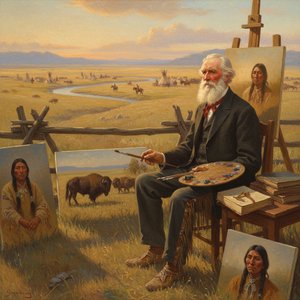
Joseph Henry Sharp: Capturing the Spirit of the Plains – Life, Art & Legacy
Explore the life & art of Joseph Henry Sharp, a founding member of the Taos Society of Artists renowned for his realistic depictions of Native American culture and Western landscapes. Discover his legacy with TopImpressionists.

Thomas Daniell: Navigating Light, Landscape & Cultural Exchange in Early 19th-Century India
Explore the captivating landscapes of Thomas Daniell, a pioneering artist who documented India's beauty in the 19th century. Discover his 'Oriental Scenery,' aquatint technique & lasting legacy. Hand-painted reproductions available at TopImpressionists.

Marianne Norths Top 25 Kunstværker: En Botanisk Rejse i Farver | TopImpressionists.dk
Oplev Marianne Norths 25 mest ikoniske malerier – en fascinerende rejse i botanisk kunst og victoriansk farvepragt. Find inspiration til dit hjem med smukke reproduktioner af hendes eksotiske landskaber & blomster på TopImpressionists.com.
Udforsk kunstværker organiseret efter temaer, stilarter og karakteristika.
