

Vist: · Inklusive ramme:
 Se i rummet
 Del som kort
 Del
Del
 Detaljer
 Guide
Guide

 Download
 Lignende værker
 Røntgenundersøgelse
 Diasshow
 Spørgsmål og svar
 Statistikker


Dkr 1794
Håndlavet oliereproduktion
Håndmalet olie på lærred i din valgte størrelse og ramme, udført efter bestilling af vores kunstnere. ( Skift til printsalg Skift til digitalt billede)
Størrelse
·Standardstørrelse
speciallavet
CM
INCH
Vælg mellem vores forudindstillede størrelser, der matcher kunstværkets originale proportioner.
Indlæser størrelser...

bredde
højde
Indtast den bredde og højde, du har brug for, så det passer til din ramme eller din væg. Da dette er håndmalet, kan kunstneren ved en anden form på størrelsen male lidt mere rundt om billedet eller skære lidt væk — det er op til dig. Vi sender dig et digitalt mockup til godkendelse, før maleriet påbegyndes. Billedet, der vises på denne side, viser ikke det endelige resultat — det er kun mockuppet, der gør.
 Læs mere
Afslut
·
Hvid kant Dkr1

Udvasket kant Dkr1

Fortsat motiv Dkr1

P118B Dkr10

P118H Dkr10

P118W Dkr10

P438Z Dkr10

P508JH Dkr12

P508YH Dkr12

P805H Dkr10

P805Z Dkr10

P919BZ Dkr10

P919G Dkr10

P919XJ Dkr10

P959ZH Dkr10

P968JZ Dkr12

W106C Dkr8

W218G Dkr10

W218JH Dkr8

W218Y Dkr10

W307PJ Dkr10

W316G Dkr10

W316PJ Dkr8

W316Y Dkr10

W398PJ Dkr8

W4111J Dkr10

W500HY Dkr15

W500JH Dkr15

W692G Dkr12

W849H Dkr8

W940BG Dkr15

W953PJ Dkr8

H24-GOLD Dkr30

H24-SILVER Dkr30

H36-GOLD Dkr45

H36-SILVER Dkr45
Sendes i et beskyttende rør, klar til at blive indrammet hos din egen indrammer.
Over 105 cm sendes rammen som et sæt til en professionel indrammer — læs detaljerne.
Tillægsydelser
valgfritHvad indeholder de ekstra tilvalg?
Eksempler på hvad kan ændres: Udskift ansigt med kundens eget foto; Tilføj kæledyr (f.eks. udskift kat med hund); Inkluder skjult besked i baggrunden; Skift baggrundslandskab eller elementer.
Efter bestilling vil TopImpressionists.com-teamet sende en e-mail til kunden for at få instruktioner og levere et udkast til forhåndsvisning
Efter bestilling vil TopImpressionists.com-teamet sende en e-mail til kunden for at få instruktioner og levere et udkast til forhåndsvisning
Verdensomspændende levering () på 3-4 uger i stedet for de standard 5 uger. (8 november). Ingen kompromiser med kvaliteten.
Beskyttende fernis
Navneskilt
Detaljer om indgraveret bronzeskilt
This elegant plaque features the artist's name and the title of the artwork, finely engraved for a timeless presentation.
It is made from bronze with a refined, elegant finish. The text is precisely laser-engraved for a sharp and permanent result. Measuring 9x2 cm, the plaque is compact yet easy to read. It's built to be durable and scratch-resistant, offering a professional, museum-quality look. Mounting is simple thanks to the included adhesive backing.
Detaljer om gennemsigtig akrylplade
The plaque includes essential engraved details such as the artist's name, the title of the artwork, the date it was created, the type of media used-like oil on canvas or watercolor-a brief description of the piece, and a QR code that links to the complete artwork information.
It is crafted from clear acrylic, offering a sleek, modern appearance. The text is UV-engraved in black to ensure strong visual contrast. With a size of 10x15 cm, it ensures optimal readability. It comes equipped with two metal hooks for secure wall mounting. The plaque is designed to be weather-resistant, making it suitable for various environments, and it includes interactive features that work seamlessly with smartphone scanning.
Detaljer om sort akrylplade
This elegant plaque includes engraved information such as the artist's name, the title of the artwork, the date it was created, the type of media used (like oil on canvas or watercolor), a short description of the artwork, and a QR code for quick access to more information.
The plaque itself is made from refined black acrylic with a premium finish. The text is laser-engraved in white for high contrast and readability. Its size is 10x15 cm, designed to be easy to read. It comes with two metal hooks for professional mounting. The design is sleek and fits any interior style. It is also weather-resistant and durable, with built-in digital integration for mobile compatibility.
Glasmulighed er kun tilgængelig i størrelser under 110 cm
 Glasmulighed er kun tilgængelig i størrelser under 110 cm
- Gratis ekspresforsendelse til hele verden
- Lærred af linned i høj kvalitet
- Fuld transportforsikring
- Garanti for refusion af told og importafgifter
- Garanti for præcis farvegengivelse
- 100 dages returret ved fabrikationsfejl
- 100% fuld returret
- Mængderabat ved flere køb


Beskrivelse af samlerobjektet
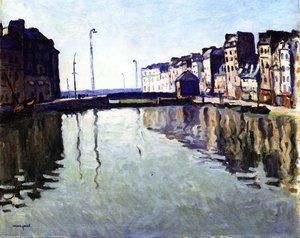
Albert Marquet's "Dock at Havre" (1906) captures the bustling activity of Le Havre’s harbor. This vibrant painting showcases boats, people, and a dynamic scene reflecting early 20th-century maritime life.
Kunstnerbiografi
Albert Marquet (1875-1947) var en fransk maler kendt for sine stillefarvede landskaber og havnemiljøer fra et vinduesperspektiv. Han var med i Fauvism og udviklede senere en personlig, naturalistisk stil præget af lysets atmosfære og en skønhed, der stadig fascinerer.
Om maleriet
A Window on Havre’s Soul: Albert Marquet's "Dock at Havre"
Albert Marquet’s “Dock at Havre” (1906) isn’t merely a depiction of a harbor; it’s a vibrant, almost palpable distillation of late 19th-century France – a moment suspended between industry and leisure, tradition and modernity. Painted during a period of rapid transformation for Le Havre, the port city itself, this canvas captures an extraordinary confluence of light, atmosphere, and human activity, offering a glimpse into a pivotal era of French history.
Marquet, a key figure in the transition from Fauvism to a more personal brand of naturalistic painting, masterfully employs his signature technique. He abandons strict realism in favor of an intensely subjective interpretation of light and color. The scene is bathed in a warm, golden glow, seemingly originating not just from the sun but also reflecting off the wet surfaces of the docks and boats. Notice how he uses broken brushstrokes – short, choppy marks that create a shimmering effect—particularly evident in the water, conveying both its movement and the play of light upon it. This deliberate manipulation of paint is crucial to the painting’s overall impression of dynamism and life.
The Industrial Heartbeat
Le Havre in 1906 was a city undergoing a dramatic metamorphosis. Once primarily a center for shipbuilding and trade, fueled by the slave trade and later by burgeoning international commerce, it was now grappling with the challenges and opportunities presented by industrialization. Marquet’s painting perfectly encapsulates this duality. The bustling dockworkers, identifiable by their dark clothing and purposeful movements, are juxtaposed against the elegant sailboats gliding across the water – a visual representation of the city's evolving identity.
The presence of numerous figures engaged in various activities—loading cargo, repairing vessels, socializing—adds to the sense of a thriving community. These aren’t simply background details; they are integral to the painting’s narrative, suggesting a vibrant and complex social fabric. The detail with which Marquet renders these individuals – their postures, expressions, and interactions – speaks volumes about his keen observation skills and his ability to capture the essence of everyday life.
Symbolism in Light and Composition
Beyond its straightforward depiction of a harbor scene, “Dock at Havre” is rich with symbolic meaning. The light itself—that pervasive golden hue—can be interpreted as representing prosperity and optimism, reflecting the city’s burgeoning economic growth. However, there's also an underlying sense of melancholy, perhaps hinting at the social inequalities inherent in this period of rapid industrialization. The composition, too, is carefully considered. Marquet uses a strong diagonal line created by the boats to draw the viewer’s eye into the heart of the scene, while the receding docks and buildings establish a sense of depth and perspective.
Furthermore, the inclusion of the distant silhouette of the Eiffel Tower – a relatively new landmark at the time – subtly anchors the painting in its specific historical context. It serves as a reminder of France’s industrial prowess and its embrace of modernity, while simultaneously highlighting the contrast between urban progress and the enduring beauty of the natural world.
A Legacy of Light and Color
“Dock at Havre” is more than just a beautiful painting; it's a powerful testament to Albert Marquet’s artistic vision. His ability to capture the fleeting effects of light, his masterful use of color, and his insightful portrayal of human life have cemented this work as a cornerstone of French Impressionism. Reproductions of this piece offer an exceptional opportunity to bring this evocative scene into any space, inviting viewers to contemplate the complexities of a rapidly changing era and appreciating the enduring power of art to capture both the beauty and the spirit of a place.
Spørgsmål og svar
Er "Dock at Havre" af Albert Marquet et velkendt kunstværk?
Popularitetsniveauet for "Dock at Havre" af Albert Marquet er Recognized.
Hvilken stemning og hvilke følelser udtrykker "Dock at Havre" af Albert Marquet?
I "Dock at Havre" ledsages en Calm stemning af en Reflective følelse.
Hvilken placering passer bedst til formatet på "Dock at Havre" af Albert Marquet?
Formatet Landscape af "Dock at Havre" af Albert Marquet anbefales til en Living Room. Format og rumstørrelse er tilsammen vejledende for placeringen af en reproduktion.
Hurtige fakta og kunstquiz
Om Albert Marquet

Albert Marquet
1875 - 1947, Frankrig
Kunstnerbiografi
Albert Marquet: En Lysende Betragter af Verden
Albert Marquet, født i Bordeaux i 1875 og død i Paris i 1947, var en fransk maler, hvis kunst rejser sig over tidens strømninger og etablerer sig som en unik fortolkning af lys, atmosfære og det naturlige landskab. Hans rejse begyndte med den ekspressive energi hos Fauvismen, men udviklede sig til en dybt personlig stil præget af enestående kontrol over farve og form. Marquet var ikke blot en maler; han var en betragter, der forsøgte at fange essensen af øjeblikket i sine værker.Tidlige År og Fauvismens Indflydelse
Marquets tidlige liv tog en markant drejning, da han som teenager flyttede til Paris og blev optaget på École des Arts Décoratifs. Her mødte han Henri Matisse, et møde der ville forme hans kunstneriske udvikling i årtier fremover. De to unge kunstnere delte ikke blot et atelier, men også en fælles fascination for farve og form – en symbiotisk relation, hvor de konstant påvirkede og inspirerede hinanden. I 1905 deltog Marquet sammen med Matisse og andre fauvister i Salon d'Automne, en udstilling der skabte sensation og fik dem døbt "les fauves" – de vilde dyr. Selvom han omfavnede Fauvistens farverige palet, bevarede Marquet en subtil kontrol over sine penselstrøg og lysets spil, hvilket antydede den stilistiske udvikling, der lå forude. Han var ikke blot en maler af farver; han var en mester i at skabe illusionen af lys og skygge.Fra Ekspression til Naturlighed
Omkring 1910 begyndte Marquet gradvist at distancere sig fra den fuldstændige ekspressivitet hos Fauvismen, og vendte i stedet sin opmærksomhed mod landskaber som sit primære emne. Han begav sig ud på omfattende rejser gennem Europa og Nordafrika, søgende efter inspiration i de havner, kystlinjer og bylandskaber, der ville blive centrale elementer i hans senere værker. Disse rejser var ikke blot en måde at samle billedmateriale; det var en dybdegående udforskning af lysets skiftende karakter og atmosfærens subtile nuancer. Han var fascineret af, hvordan lys påvirkede landskabet gennem dagen og året, og forsøgte at fange disse flygtige øjeblikke i sine malerier. Denne udvikling markerede et skifte fra den rå farve til en mere raffineret og betragtende stil.Lysets Dans: Teknik og Stil
Marquets kunst er kendetegnet ved enestående følsomhed over for lys og atmosfære. Hans landskaber er ikke blot gengivelser af steder, men snarere stemninger og fornemmelser. Han mestrer kunsten at fange skinnende refleksioner på vandoverflader, den tågede glans af sollys, der filtrerer gennem tåge, og de subtile farver, der definerer en bestemt tid på dagen eller årstiden. Hans teknik var præget af korte, præcise penselstrøg, der skabte en illusion af bevægelse og lys. Han brugte en dæmpet palet – gråtoner, blå nuancer og ocher – for at fremhæve atmosfæren og formen med effektivitet. Han var ikke interesseret i at gengive verden som den er, men snarere som den *føles*. Hans malerier er fyldt med en stille ro og en dyb forståelse for naturens skønhed.Et Arv af Lys og Betragtning
Albert Marquet døde i 1947, men hans kunst fortsætter med at fascinere os med sin stille skønhed og subtile følelsesmæssige dybde. Hans værker er repræsenteret i nogle af verdens mest prestigefyldte museer, herunder Musée d'Orsay i Paris og Tate Gallery i London, hvilket vidner om hans varige betydning for moderne kunst. Marquet var mere end blot en maler; han var en betragter, der lærte os at se verden med nye øjne – at finde skønhed i det simple, at værdsætte lysets magt og at forstå naturens stille poesi. Hans kunst minder os om, at ægte kunst handler om mere end blot at gengive virkeligheden; det handler om at fange essensen af et øjeblik og dele den med verden. Han er en bekræftelse på, at det er muligt at være både moderne og traditionel, at være farverig uden at miste kontrollen og at finde dybde i det tilsyneladende simple.Hurtige fakta om Albert Marquet
- Artistic Movement Or Style: Fauvisme, Naturalisme
- Artists Or Movements Influenced By This Artist: ['Impressionister']
- Artists Who Influenced This Artist:
- Henri Matisse
- Gustave Moreau
- Date Of Birth: 1875
- Date Of Death: 1947
- Full Name: Albert Marquet
- Nationality: Fransk
- Notable Artworks:
- Havnebilleder
- Landskaber
- Place Of Birth: Bordeaux, Frankrig
Lignende kunstværker


Albert Marquet
Dock at Havre
() ·
Inklusive ramme: · Håndmalet med olie på lærred
Totalbeløb