

 Se i rummet
 Send
Send Del
Del
 Detaljer
 Studieguide til kunstværker

 Download
 Lignende værker
 Røntgenundersøgelse
 Se diasshow
 Statistik
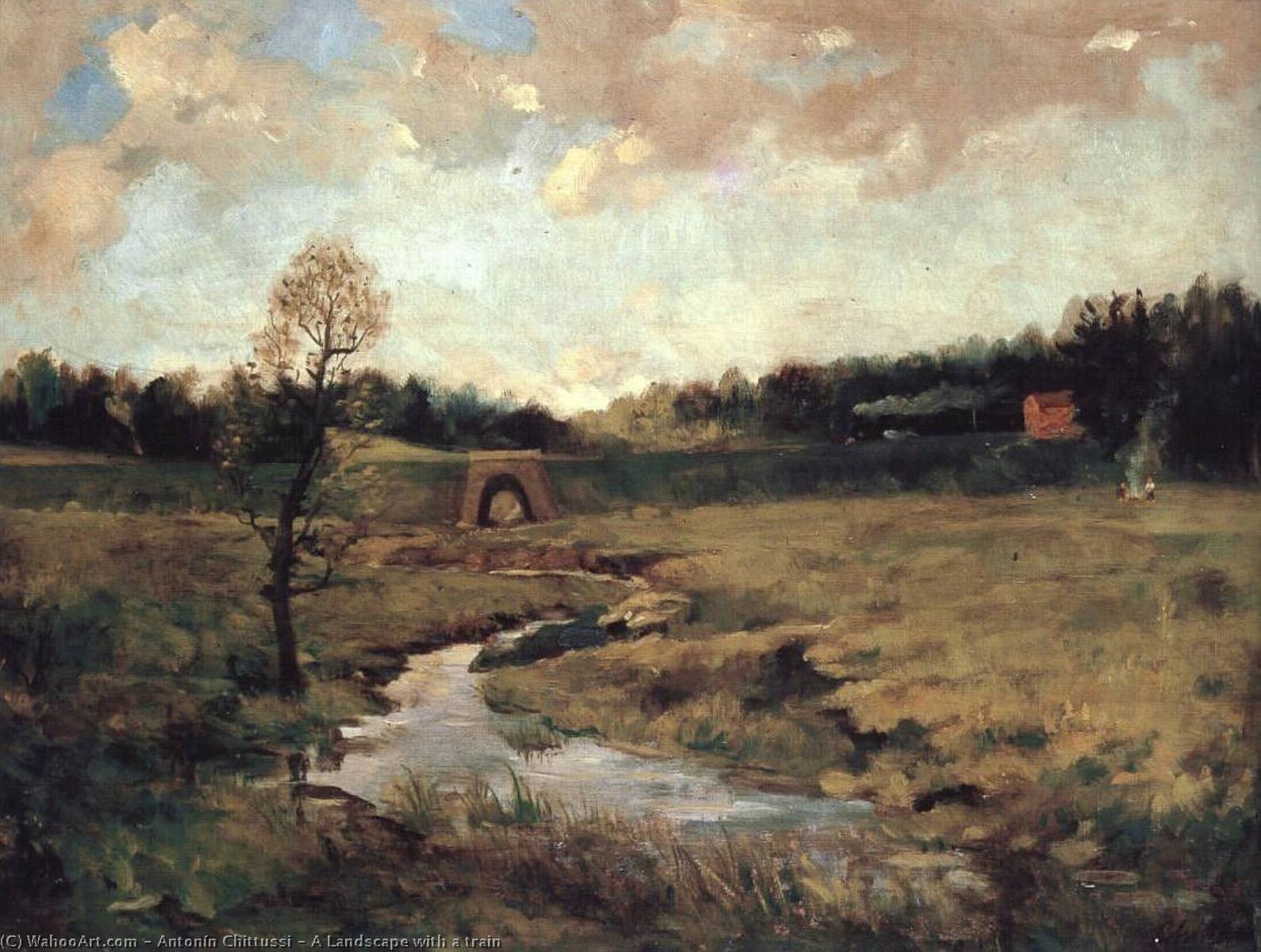
A Landscape with a train
 1884
1884 30.0 x 41.0 cm
 Národní Galerie v Praze
Discover Antonín Chittussi (1847-1891), a Czech Impressionist painter known for evocative landscapes & cityscapes. Explore his art, influenced by Barbizon School & Parisian styles.
 Læs mere
Køb et højopløst, optimeret digitalt billede i en kvalitet, der er langt overlegen i forhold til online-forhåndsvisningen.
Hver fil er omhyggeligt forberedt af vores interne specialister ved hjælp af avancerede værktøjer og ekspertmæssig manuel retuschering. Vi sikrer, at hvert billede har enestående klarhed, præcis farvegengivelse og fine detaljer.
Den endelige fil leveres via e-mail inden for 72 timer og er optimeret til øjeblikkelig brug i professionelle, redaktionelle og trykte miljøer. Det er den samme kvalitet, som førende designstudier, forlag og gallerier har tillid til.
Digitalt billede
Download en højopløselig fil til personlig fremvisning, print og kreative projekter. ( Skift til printversion Bestil håndmalet reproduktion)
Inkluderet i alle ordrer på digitale billeder
Professionel digital levering, garanteret
Når du vælger TopImpressionists.com, får du ikke blot et billede – du modtager et professionelt optimeret digitalt kunstværk, skabt med præcision og sikret med en tilfredshedsgaranti. Her er alt, hvad din ordre automatisk indeholder:

Hurtig levering via e-mail
Din højtopløselige digitale billedfil sendes til din e-mail inden for 72 timer efter bestilling – klar til øjeblikkelig brug.

AI-forbedret digital fil
Dit kunstværk optimeres professionelt ved hjælp af avancerede AI-værktøjer og manuel redigering, hvilket sikrer maksimal detaljegrad, klarhed og farvenøjagtighed.

Gratis livslang genlevering
Har du ved en fejl slettet eller mistet din fil? Ingen bekymring – vi sender den igen til enhver tid, helt gratis.

Ingen importgebyrer – nogensinde
Nyd dit kunstværk med det samme uden told, afgifter eller leveringsgebyrer – digitale downloads er altid skattefrie.

Garanteret farvenøjagtighed
Vi sikrer, at dit digitale billede gengiver de originale farver så præcist som muligt ved hjælp af professionelle værktøjer og farvestyring.

100 dages tilfredshedsgaranti
Hvis du ikke er tilfreds med dit digitale billede, vil vi revidere det eller refundere 100% inden for 100 dage – uden spørgsmål.

100% Pengene tilbage-garanti
Ik tilfreds? Få fuld refusion inden for 100 dage efter modtagelse af din digitale fil – uden spørgsmål.

Mængderabat ved storkøb
Køb 3 billeder, spar 10% - Køb 5, spar 15% - Køb 10+, spar 20%. Ideelt til kreative projekter, gallerier og bureauer.
Kunstnerbiografi
The Soul of the Bohemian Landscape: The Life of Antonín Chittussi
In the tapestry of nineteenth-century European art, few threads are as delicately woven as those of Antonín Chittussi. Born on December 1, 1847, in the quiet town of Ronov nad Doubravou, Chittussi was a painter whose very essence seemed to bridge the gap between the rustic, grounded traditions of the Barbizon School and the shimmering, light-drenched innovations of Parisian Impressionism. His lineage was one of movement and commerce; born to an Italian father from a merchant family that had migrated to Bohemia during the Napoleonic Wars, Chittussi carried within him a cosmopolitan spirit that would later drive him far beyond the borders of his homeland. Though his early life in Bohemia suggested a path toward the family business or perhaps engineering, a profound, innate talent for capturing the nuances of light and shadow beckoned him toward the easel.
His formative years were marked by a restless search for artistic truth. After initial studies in Kutná Hora under František Bohumír Zvěřina, where he mastered the foundational rigors of drawing, Chittussi found himself at odds with the rigid academicism prevalent in Prague. This dissatisfaction propelled him toward Munich and eventually to the heart of the art world: France. It was during his years spent in France, particularly between 1879 and 1884, that his style truly blossomed. Immersed in the atmosphere of the French landscape movement, he became a successor to the Barbizon masters, learning to observe the subtle shifts in atmospheric perspective and the tonal harmonies of the natural world. His work began to breathe with a new vitality, capturing not just the scenery, and landscapes, but the very air that surrounded them.
A Legacy Forged in Light and Defiance
Chittussi’s career was not merely a pursuit of aesthetic beauty; it was also deeply intertwined with the turbulent political currents of his era. He was a man of conviction, a trait famously demonstrated in 1876 when he participated in a courageous student protest against the nationalist sentiments of Professor Alfred Woltmann at Charles University. This act of defiance led to his expulsion from the Academy and even a brief period of imprisonment alongside the renowned Mikoláš Aleš. Such moments of historical friction served to galvanize his artistic identity, pushing him to seek independence and refine a voice that was uniquely his own—one that could navigate both the patriotic social circles of Prague and the avant-garde salons of Paris.
As his technique matured, Chittussi’s oeuvre became a testament to the beauty of plein air realism. His landscapes and cityscapes are characterized by an evocative ability to render the ephemeral qualities of light—the way it filters through a canopy of trees or reflects off a quarry at Champigny. Through his work, he contributed decisively to the establishment of landscape painting as a leading genre within the Czech context, elevating it from mere topographical recording to a profound emotional experience. His later years, spent working in both Bohemia and France, saw him perfecting a style that celebrated the quiet majesty of the natural world, leaving behind a legacy that remains a cornerstone of modern Czech art.
The enduring significance of his contributions can be summarized through several key artistic pillars:
- Synthesis of Styles: The seamless integration of Barbizon-style tonalism with the burgeoning dynamism of Impressionist light.
- Plein Air Mastery: A dedicated commitment to painting outdoors, capturing the authentic, unmediated essence of the landscape.
- Cultural Bridge: Acting as a vital link between the French landscape tradition and the development of Czech national art.
- Emotional Resonance: The ability to transform simple subjects—a train passing through a valley or a quiet quarry—into profound meditations on nature and time.

Antonín Chittussi
1847 - 1891
Hurtige fakta
- Artistic Movement Or Style: Impressionism
- Artists Or Movements Influenced By This Artist: ['Parisian styles']
- Artists Who Influenced This Artist:
- František Bohumír Zwěřina
- Barbizon School
- Date Of Birth: 1847
- Date Of Death: 1891
- Full Name: Antonín Chittussi
- Nationality: Czech
- Notable Artworks:
- A Landscape with a Quarry at Champigny
- A Landscape with a train
- Place Of Birth: Ronov nad Doubravou, Bohemia