


 Send
Send Del
Del
 Detaljer
 Studieguide til kunstværker

 Download
 Lignende værker
 Se diasshow
 Statistik
Venus and Mars


Marvel at Antonio Canova's 'Venus and Mars,' a neoclassical sculpture celebrating peace & harmony. This iconic marble masterpiece, commissioned by the Prince Regent, embodies love and war’s union.
 Læs mere
Antonio Canova var en genial italiensk skulptør, der revolutionerede Neoklassisk kunst med sine smukke og følelsesfulde marmorstatuer som "Cupid & Psyche" og "De Tre Gracer". Hans værker afspejler klassiske idealer og har vundet international anerkendelse.
Håndlavet oliereproduktion
Håndmalet olie på lærred i din valgte størrelse og ramme, udført efter bestilling af vores kunstnere. ( Skift til printversion Skift til digitalt billede)




































Standardstørrelse
speciallavet
CM
INCH
Vælg mellem vores forudindstillede størrelser, der matcher kunstværkets originale proportioner.
Loading sizes...

bredde
højde
Du kan indtaste dine egne mål for at passe til en bestemt ramme eller plads. Hvis den valgte størrelse ikke stemmer overens med det originale billedes proportioner, vil vi enten beskære kunstværket eller udvide maleriet med yderligere håndmalede elementer. En digital skitse sendes til din godkendelse, før produktionen påbegyndes.
Bemærk venligst, at forhåndsvisningen på skærmen ikke afspejler den faktiske beskæring eller udvidelse. Kun skitsen vil nøjagtigt vise den endelige komposition.
Selvom specialmål er mulige, anbefaler vi at vælge en dimension fra den foruddefinerede liste for at bevare de originale proportioner.
Eksempler på tilpasningsmuligheder: Udskift ansigt med kundens eget foto; Tilføj kæledyr (f.eks. udskift kat med hund); Inkluder en skjult besked i baggrunden; Ændr baggrundslandskab eller elementer.
Efter bestilling vil TopImpressionists.com team sende en e-mail til kunden for at indhente instruktioner og fremsende et udkast til gennemgang.
Efter bestilling vil TopImpressionists.com team sende en e-mail til kunden for at indhente instruktioner og fremsende et udkast til gennemgang.
Levering i hele verden () på 3-4 uger i stedet for de standard 5 uger. (10 oktober). Ingen kompromiser med kvaliteten.

Gratis ekspresforsendelse til hele verden

Lærred af linned i høj kvalitet

Komplet transportforsikring

Garanti for refusion af told og importafgifter

Garanti for autentisk farvegengivelse

100 dages returret ved fabrikationsfejl

100% fuld returret

Mængderabat ved flere køb
 Glasmulighed er kun tilgængelig i størrelser under 110 cm

Venus and Mars
Reproduktionsmateriale
Reproduktionsstørrelse
-


Samlet pris
Dkr 1734
A Moment of Divine Union: Antonio Canova’s “Venus and Mars”
Antonio Canova's "Venus and Mars," completed in 1822, is more than just a sculpture; it’s a carefully orchestrated tableau of opposing forces achieving an unexpected harmony. This magnificent marble work, currently residing within the Royal Collection at Buckingham Palace, offers a profound meditation on love, war, peace, and the enduring power of artistic creation. Commissioned by Prince Regent George IV during his visit to London, the sculpture represents a pivotal moment in Canova’s career – a bold departure from the rigid formality of Neoclassicism while firmly rooted in classical ideals.
The subject matter itself is strikingly original for its time. Rather than depicting Venus and Mars engaged in battle or mythological drama, as was common in earlier representations, Canova presents them in an intimate embrace. The goddess Venus, a figure synonymous with beauty, fertility, and love, is rendered with exquisite sensuality – her flesh soft and yielding, her limbs draped in delicate folds of fabric that hint at both vulnerability and power. Her gaze is directed towards Mars, the god of war, creating a dynamic tension within the composition. Mars, traditionally portrayed as a stern and imposing figure, stands powerfully upright, his musculature meticulously sculpted to convey strength and resolve. He holds his spear firmly in one hand, a symbol of his dominion over conflict, yet his posture suggests a willingness to yield to the allure of Venus’s affection.
The Neoclassical Masterstroke: Technique and Form
Canova's mastery of marble carving is immediately evident. The sheer scale of “Venus and Mars” – standing nearly two meters tall – commands attention, while the intricate detail of each muscle fiber, wrinkle, and drapery fold speaks to his unparalleled skill. The sculpture exemplifies the Neoclassical style, drawing inspiration from the idealized forms and balanced compositions of ancient Greek and Roman art. However, Canova transcends mere imitation; he infuses these classical elements with a profound sense of emotion and psychological depth. The smooth, polished surface of the marble creates an illusion of life, capturing the subtle nuances of human expression and movement.
The technique employed is particularly noteworthy. Canova utilized a subtractive method, carefully removing material from a larger block of Carrara marble to reveal the desired form. This process demanded immense patience and precision, allowing him to achieve an astonishing level of realism and anatomical accuracy. The subtle gradations in tone – achieved through meticulous polishing and shading – further enhance the sculpture’s three-dimensionality, creating a captivating interplay of light and shadow.
A Symbol of Reconciliation: Historical Context and Meaning
The creation of “Venus and Mars” coincided with the Congress of Vienna (1814–1815), an international conference that reshaped Europe after Napoleon’s defeat. The sculpture, therefore, can be interpreted as a potent symbol of reconciliation – a visual representation of the end of war and the dawn of a new era of peace. Venus, representing love and harmony, gently embraces Mars, signifying the triumph of diplomacy over conflict. This theme resonated deeply with Prince George IV, who commissioned the work to celebrate the restored stability of Europe.
Furthermore, Canova’s choice of depicting the figures in the nude was a deliberate artistic statement. In classical art, nudity served as a means of celebrating human beauty and virtue, stripping away artificial conventions to reveal the inherent dignity of the human form. By presenting Venus and Mars unclothed, Canova elevates their union to a realm of pure emotion and spiritual significance.
An Enduring Legacy: Emotional Impact and Artistic Significance
“Venus and Mars” continues to captivate viewers with its profound emotional resonance. The sculpture’s inherent tension – the interplay between love and war, beauty and strength – invites contemplation on the complexities of human nature. The figures' embrace is not merely a physical gesture; it represents a merging of opposing forces, suggesting that even the most seemingly irreconcilable elements can find harmony within themselves.
Beyond its historical and symbolic significance, “Venus and Mars” stands as a testament to Canova’s artistic genius. It remains one of his most celebrated works, admired for its technical brilliance, emotional depth, and enduring beauty. Reproductions of this iconic sculpture offer an opportunity to experience the power and grace of Canova's vision in any setting – a timeless reminder of the transformative potential of art.
Spørgsmål & svar
Hvor kan jeg downloade "Venus and Mars" af Antonio Canova?
En download er tilgængelig for "Venus and Mars": kunstværkets Download side tilbyder et højtopløseligt digitalt billeddownload.
Hvem er ophavsmanden til "Venus and Mars", og i hvilken stilart?
"Venus and Mars" blev skabt af Antonio Canova i Neoclassical Sculpture-stil. Kunstneren og stilen identificerer værkets tradition.
Hvornår blev "Venus and Mars" skabt?
"Venus and Mars" af Antonio Canova blev skabt i 1816.
Hvem har skabt "Venus and Mars"?
"Venus and Mars" tilskrives Antonio Canova.
Hvor kendt er "Venus and Mars" af Antonio Canova?
"Venus and Mars" af Antonio Canova har et Iconic popularitetsniveau. Denne klassificering afspejler, hvor udbredt værket er anerkendt.
Hvor gammel var Antonio Canova, da Venus and Mars blev skabt i 1816?
Antonio Canova var 59 år gammel, da vedkommende skabte "Venus and Mars" i 1816. Alderen er beregnet ud fra kunstnerens fødselsår, 1757.
Er "Venus and Mars" af Antonio Canova i det offentlige domæne?
Ophavsretsstatus for "Venus and Mars" af Antonio Canova: værket er i det offentlige domæne – ophavsretten er udløbet. Dette afgør, om der frit må foretages reproduktioner af billedet.
Om kunstneren
Antonio Canova: Et liv i marmor
- Født: Possagno, Italien (1757)
- Død: 1822
Antonio Canova står som en monumentale skikkelse i den vestlige kunsthistorie og betragtes i vid udstrækning som den fremmeste neoklassiske skulptør. Hans mesterskab i marmorhugning og hans evne til at besjæle klassiske former med dyb emotion sikrede ham en plads blandt alle tiders største kunstnere. Canova blev født i Possagno, Italien, som søn af Pietro Canova, en stenhugger, og hans tidlige liv blev formet af det kunstneriske miljø, der omgav ham.
Tidligt liv og uddannelse
- Familiemæssig baggrund: Hans fars erhverv gav ham en indledende eksponering for stenhuggerkunst, og hans bedstefar, Pasino Canova, en skulptør specialiseret i altertavler og lavrelieffer, spillede en afgørende rolle i at pleje hans talent.
- Tidlig kunstnerisk udvikling: Allerede før tiårsalderen udviste Canova bemærkelsesværdige færdigheder ved at skabe små marmorskrin, der fremviste hans medfødte evner. Han var i lære hos Giuseppe Bernardi ('Torretto') og Giovanni Ferrari, hvilket yderligere forfinede hans teknik.
- Studier ved akademiet: Hans studier ved Accademia di Belle Arti di Venezia indbragte adskillige priser, hvilket cementerede hans ry som en lovende ung kunstner. Et værksted i et kloster gav ham de nødvendige rammer til at udvikle sit håndværk.
- Tidlige bestillingsopgaver: Tidlige værker, såsom statuerne af Orpheus og Eurydice til senator Giovanni Falier (1775-1777), udviste en spirende rokoko-stil, der varslede hans senere neoklassiske raffinement.
Vejen til berømmelse og den neoklassiske stil
- Definitionen af neoklassicisme: Canovas arbejde er kendetegnet ved elegante former, idealiserede figurer og en tilbagevenden til de æstetiske principper fra det antikke Grækenland og Rom. Han undgik dygtigt barokkens melodrama, samtidig med at han modstod den kulde, der ofte var forbundet med tidligere forsøg på klassisk genfødelse.
- Hovedværker og anerkendelse: Skulpturer som Cupido og Psyke (ca. 1787-1793), Den angrende Magdalene og Herkules og Lichas etablerede hans ry i hele Europa. Hans værker var i høj kurs hos både kongehuse og adelen.
- Promovering af sit ry: Canova promoverede strategisk sin karriere gennem udgivelse af graveringer af sine værker og ved at skabe marmorversioner af gipsafstøbninger, hvilket sikrede en vidtgående udbredelse af hans kunst.
- International hyldest: Bestillingsopgaver fra hele Europa, herunder en statue af Theseus og Minotauren til Girolamo Zulian (den venetianske ambassadør i Rom), cementerede hans status som en af de mest fejrede kunstnere i Europa.
Store værker og eftermæle
- Bemærkelsesværdige skulpturer: Udover de allerede nævnte inkluderer Canovas betydningsfulde værker Venus Italica,
La Musa Polyhymnia, De tre gracer dansende og hans rørende skildring af Eurydice. - Monumentale bestillingsopgaver: Han modtog prestigefyldte opgaver vedrørende gravmæler, mest bemærkelsesværdigt det detaljerede Gravmæle for pave Clement XIII i Peterskirken i Rom – et vidnesbyrd om hans færdigheder inden for både skulptur og arkitektonisk design.
- Gipsoteca Antonio Canova: Museet Gipsoteca Antonio Canova huser den mest betydningsfulde samling af hans værker, hvilket giver et uvurderligt indblik i hans kreative proces og kunstneriske udvikling.
- Indflydelse på efterfølgende generationer: Canovas indflydelse rakte langt ud over hans egen levetid; han formede retningen for neoklassisk skulptur og inspirerede generationer af kunstnere med sin tekniske mesterlighed og ekspressive kraft.
Historisk betydning
- Kroppen af neoklassicismen: Antonio Canova blev synonym med den neoklassiske bevægelse og legemliggjorde dens idealer om orden, klarhed og en tilbagevenden til antikken.
- Hofskulptør og diplomat: Hans position som hofskulptør for talrige europæiske herskere gav ham betydelig politisk indflydelse og gjorde det muligt for ham at forme den kunstneriske smag på tværs af kontinentet.
- Teknisk innovation: Canovas uovertrufne evne til at udhugge marmor sprængte grænserne for, hvad der blev anset for muligt, og satte en ny standard for skulpturel ekspertise.
- Vedvarende kunstnerisk arv: Hans skulpturer fortsætter med at fange publikum over hele verden og cementerer hans plads som en af de vigtigste og mest indflydelsesrige kunstnere i historien.

Antonio Canova
1757 - 1822 , Italien
Hurtige fakta
- Artistic Movement Or Style: Neoklassisk
- Artists Or Movements Influenced By This Artist: ['Senbarok']
- Artists Who Influenced This Artist: ['Barokskulptører']
- Date Of Birth: 1757
- Date Of Death: 1822
- Full Name: Antonio Canova
- Nationality: Italiensk
- Notable Artworks:
- Cupid & Psyche
- De tre Grå
- Penitent Magdalene
- Place Of Birth (City And Country): Possagno, Italien
Relaterede artikler
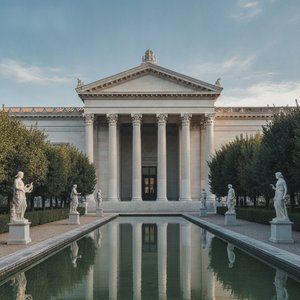
Neoclassicism Unveiled: Discovering the Timeless Elegance and Rational Order of Classical Art
Unveil the timeless elegance of Neoclassicism. Journey through an era defined by reason, order, and the revival of Greco-Roman ideals. Our expert exploration offers a sophisticated look at the transition from Rococo excess to classical precision for the true art enthusiast.

The Timeless Elegance of Academic Classicism: A Journey Through Order, Precision, and the Pursuit of Perfection
Explore the profound beauty of Academic Classicism. Discover how masters used order, precision, and classical ideals to achieve timeless perfection in art history, from Neoclassical portraits to the pursuit of ideal beauty.

The Eternal Beauty of Marble: A Guide to Sculpting Light, Stone, and the Soul of Art History
Explore the sublime artistry of marble sculpture. From Greek antiquity to the masters of light, discover how stone captures the eternal essence of human beauty and emotion through expert craftsmanship and historical mastery.
Udforsk kunstværker organiseret efter temaer, stilarter og karakteristika.
