Atelier — Gratis fragt til hele verden — Levering: 2–6 uger
      Se i rummet Se i AR Skift til printversion Skift til digitalt billede Send
      Detaljer Studieguide til kunstværker Tilføj til favoritter Download Lignende værker Røntgenundersøgelse Se diasshow Statistik

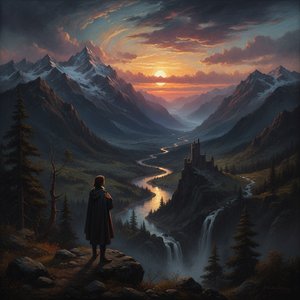
      Ud af Eibsee

      Oplev Rottmanns betagende Eibsee-landskab! Dette ikoniske værk af den tyske romantiker præsenteres som en detaljeret reproduktion, perfekt til kunstnere og entusiaster.

      Explore the evocative landscapes of Carl Rottmann – German Romanticism master! Discover his mythical scenes & Bavarian vistas. A key figure in 19th-century art.

      Håndlavet oliereproduktion

      Håndmalet olie på lærred i din valgte størrelse og ramme, udført efter bestilling af vores kunstnere. ( Skift til printversion Skift til digitalt billede)

      Corner sample of the P118B picture frame: moulded polystyrene, 5 cm wide and 3 cm thick
      P118B Dkr10
      Corner sample of the P118H picture frame: moulded polystyrene, 5 cm wide and 3 cm thick
      P118H Dkr10
      Corner sample of the P118W picture frame: moulded polystyrene, 5 cm wide and 3 cm thick
      P118W Dkr10
      Corner sample of the P438Z picture frame: moulded polystyrene, 5.5 cm wide and 3.5 cm thick
      P438Z Dkr10
      Corner sample of the P508JH picture frame: moulded polystyrene, 7 cm wide and 3.5 cm thick
      P508JH Dkr12
      Corner sample of the P508YH picture frame: moulded polystyrene, 7 cm wide and 3.5 cm thick
      P508YH Dkr12
      Corner sample of the P805H picture frame: moulded polystyrene, 5 cm wide and 3.5 cm thick
      P805H Dkr10
      Corner sample of the P805Z picture frame: moulded polystyrene, 5 cm wide and 3.5 cm thick
      P805Z Dkr10
      Corner sample of the P919BZ picture frame: moulded polystyrene, 7 cm wide and 3.5 cm thick
      P919BZ Dkr10
      Corner sample of the P919G picture frame: moulded polystyrene, 7 cm wide and 3.5 cm thick
      P919G Dkr10
      Corner sample of the P919XJ picture frame: moulded polystyrene, 7 cm wide and 3.5 cm thick
      P919XJ Dkr10
      Corner sample of the P959ZH picture frame: moulded polystyrene, 5 cm wide and 3 cm thick
      P959ZH Dkr10
      Corner sample of the P968JZ picture frame: moulded polystyrene, 6 cm wide and 4 cm thick
      P968JZ Dkr12
      Corner sample of the W106C picture frame: solid wood, 5 cm wide and 3 cm thick
      W106C Dkr8
      Corner sample of the W218G picture frame: solid wood, 5 cm wide and 3 cm thick
      W218G Dkr10
      Corner sample of the W218JH picture frame: solid wood, 5 cm wide and 3 cm thick
      W218JH Dkr8
      Corner sample of the W218Y picture frame: solid wood, 5 cm wide and 3 cm thick
      W218Y Dkr10
      Corner sample of the W307PJ picture frame: solid wood, 6 cm wide and 3 cm thick
      W307PJ Dkr10
      Corner sample of the W316G picture frame: solid wood, 6 cm wide and 3 cm thick
      W316G Dkr10
      Corner sample of the W316PJ picture frame: solid wood, 6 cm wide and 3 cm thick
      W316PJ Dkr8
      Corner sample of the W316Y picture frame: solid wood, 6 cm wide and 3 cm thick
      W316Y Dkr10
      Corner sample of the W398PJ picture frame: solid wood, 5 cm wide and 3 cm thick
      W398PJ Dkr8
      Corner sample of the W4111J picture frame: solid wood, 6.5 cm wide and 3.5 cm thick
      W4111J Dkr10
      Corner sample of the W500HY picture frame: solid wood, 7 cm wide and 5 cm thick
      W500HY Dkr15
      Corner sample of the W500JH picture frame: solid wood, 7 cm wide and 5 cm thick
      W500JH Dkr15
      Corner sample of the W692G picture frame: solid wood, 8 cm wide and 4 cm thick
      W692G Dkr12
      Corner sample of the W849H picture frame: solid wood, 5 cm wide and 3 cm thick
      W849H Dkr8
      Corner sample of the W940BG picture frame: solid wood, 7.5 cm wide and 4.5 cm thick
      W940BG Dkr15
      Corner sample of the W953PJ picture frame: solid wood, 6 cm wide and 3.5 cm thick
      W953PJ Dkr8

      Standardstørrelse
      speciallavet
      CM
      INCH

      Vælg mellem vores forudindstillede størrelser, der matcher kunstværkets originale proportioner.

      bredde
      højde

      Du kan indtaste dine egne mål for at passe til en bestemt ramme eller plads. Hvis den valgte størrelse ikke stemmer overens med det originale billedes proportioner, vil vi enten beskære kunstværket eller udvide maleriet med yderligere håndmalede elementer. En digital skitse sendes til din godkendelse, før produktionen påbegyndes.
      Bemærk venligst, at forhåndsvisningen på skærmen ikke afspejler den faktiske beskæring eller udvidelse. Kun skitsen vil nøjagtigt vise den endelige komposition.
      Selvom specialmål er mulige, anbefaler vi at vælge en dimension fra den foruddefinerede liste for at bevare de originale proportioner.

      Eksempler på tilpasningsmuligheder: Udskift ansigt med kundens eget foto; Tilføj kæledyr (f.eks. udskift kat med hund); Inkluder en skjult besked i baggrunden; Ændr baggrundslandskab eller elementer.
      Efter bestilling vil TopImpressionists.com team sende en e-mail til kunden for at indhente instruktioner og fremsende et udkast til gennemgang.

      Levering i hele verden () på 3-4 uger i stedet for de standard 5 uger. (10 oktober). Ingen kompromiser med kvaliteten.

      Gratis ekspresforsendelse til hele verden
      Lærred af linned i høj kvalitet
      Komplet transportforsikring
      Garanti for refusion af told og importafgifter
      Garanti for autentisk farvegengivelse
      100 dages returret ved fabrikationsfejl
      100% fuld returret
      Mængderabat ved flere køb

      Samlet pris

      Dkr 1734

      Ud af Eibsee

      Reproduktionsmateriale

      Reproduktionsstørrelse

      -

      Samlet pris

      Dkr 1734

      Kort om værket

      • Influences: Joseph Anton Koch
      • Notable elements or techniques: Sweeping horizontals; Dramatic light.
      • Location: Bavarian State Painting Collections
      • Dimensions: 76 x 100 cm
      • Subject or theme: Mountains; Bavarian landscape
      • Movement: Romanticism
      • Title: View of the Eibsee

      Kunstquiz

      Der er kun ét korrekt svar på hvert spørgsmål.

      Spørgsmål 1:
      What artistic movement is Carl Rottmann primarily associated with?
      Spørgsmål 2:
      The painting depicts a landscape featuring what prominent natural element?
      Spørgsmål 3:
      What is the dominant technique employed by Rottmann in ‘View of the Eibsee’?
      Spørgsmål 4:
      The painting's composition emphasizes the grandeur and sublimity of nature by contrasting it with...
      Spørgsmål 5:
      Rottmann’s depiction of ‘View of the Eibsee’ reflects a broader trend during the Romantic era – an interest in...

      A Sublime Vision of Bavarian Tranquility: Exploring Rottmann’s “View of the Eibsee”

      Carl Anton Joseph Rottmann's "View of the Eibsee," painted in 1825, stands as a cornerstone of German Romantic landscape painting. More than just a depiction of a picturesque Alpine lake, it embodies the spirit of its era—a yearning for untamed beauty and an embrace of the sublime—captured with masterful precision and imbued with profound emotional resonance.

      Born in Handschuhsheim, Bavaria, Rottmann (1797-1850) emerged from the artistic milieu fostered by Joseph Anton Koch’s influence at the Neue Pinakothek. This formative encounter instilled in him a dedication to observing and translating nature's grandeur onto canvas, establishing him as one of the foremost landscape artists of his time.

      Technical Brilliance: Rottmann’s Pioneering Approach

      Rottmann distinguished himself from many of his contemporaries through an innovative technique—a deliberate rejection of academic conventions in favor of a more expressive style. He eschewed meticulous detail, prioritizing instead the conveyance of atmosphere and emotion. The painting utilizes broad horizontal brushstrokes to dominate the composition, effectively mirroring the expansive panorama of the Eibsee mountains. This technique wasn’t merely stylistic; it reflected a philosophical shift toward perceiving nature as an overwhelming force capable of inspiring awe.

      The artist skillfully employs chiaroscuro—the dramatic interplay between light and shadow—to heighten the visual impact. Rottmann meticulously studied Koch's paintings, recognizing the importance of capturing the ephemeral qualities of light on mountain surfaces. This careful observation is evident in the subtle gradations of color that illuminate the peaks and valleys, creating a sense of depth and realism without resorting to photographic accuracy.

      Symbolism Within Landscape: Reflecting Romantic Ideals

      "View of the Eibsee" transcends mere topographical representation; it speaks to core tenets of Romantic thought. The solitary figure on the outcrop—a small human element dwarfed by the immensity of the mountains—symbolizes humanity’s insignificance in comparison to the sublime power of nature. This motif underscores the Romantic preoccupation with confronting mortality and experiencing transcendent beauty.

      Furthermore, the stillness of the lake itself serves as a counterpoint to the rugged peaks, representing serenity and contemplation amidst chaos. Rottmann's deliberate omission of human habitation reinforces this symbolic message—nature alone possesses the capacity for profound spiritual insight. The painting invites viewers to contemplate their place within the universe and to appreciate the majesty of the natural world.

      A Legacy Enduring Through Reproduction

      Today, a high-quality reproduction of Rottmann’s “View of the Eibsee” offers an unparalleled opportunity to experience the artist's vision firsthand. TopImpressionists.com presents meticulously crafted reproductions that faithfully capture the painting’s luminosity and textural richness—allowing collectors and interior designers alike to bring this iconic landscape into their homes, fostering a connection with the artistic spirit of Romantic Bavaria.

      Spørgsmål & svar

      Er "Ud af Eibsee" af Carl Anton Joseph Rottmann et lyst eller et mørkt kunstværk?

      "Ud af Eibsee" af Carl Anton Joseph Rottmann er registreret med en lysstyrke på dyb skygge og en luminans på Blød skygge.

      Hvad er den anbefalede anvendelse af et print af "Ud af Eibsee"?

      Den foreslåede anvendelse af "Ud af Eibsee" af Carl Anton Joseph Rottmann er Accent. Den kan dog også tjene andre formål.

      Hvilken størrelse anbefales det at printe "Ud af Eibsee" i?

      "Ud af Eibsee" anbefales i en trykstørrelse på Stor. Andre størrelser er tilgængelige med de samme proportioner.

      Hvordan forenes kontrast og harmoni i "Ud af Eibsee"?

      Farveanalysen af "Ud af Eibsee" af Carl Anton Joseph Rottmann registrerer en Udsagn kontrast og en Uharmonisk farvepalette harmoni.

      I hvilket år blev "Ud af Eibsee" af Carl Anton Joseph Rottmann skabt?

      "Ud af Eibsee" af Carl Anton Joseph Rottmann er skabt i 1825.

      Hvem har skabt "Ud af Eibsee"?

      Kunstneren bag "Ud af Eibsee" er Carl Anton Joseph Rottmann. Værket er katalogiseret under Carl Anton Joseph Rottmanns navn.

      Hvor gammel var Carl Anton Joseph Rottmann, da vedkommende skabte "Ud af Eibsee"?

      Da "Ud af Eibsee" blev skabt i 1825, var Carl Anton Joseph Rottmann – født i 1797 – 28 år gammel.


      Om kunstneren

      The Visionary Landscapes of Carl Rottmann

      Born in the tranquil setting of Handschuhsheim, Germany, in 1797, Carl Anton Joseph Rottmann emerged as a profound voice within the movement of German Romanticism. His life and artistry were deeply intertwined with the shifting landscapes of 19th-century Europe, reflecting a period where the sublime beauty of nature met the burgeoning spirit of national identity. Unlike many of his contemporaries who focused on the intimate or the domestic, Rottmann possessed an expansive vision, seeking to capture the monumental scale of the world through sweeping vistas and mythic atmospheres. His journey was one of constant movement, traveling through the rugged terrains of Greece, Italy, and the Bavarian Alps, each location leaving an indelible mark on his palette and his perception of the divine within the natural world.

      The development of Rottmann’s style was a masterful evolution from classical precision to a more emotive, atmospheric approach. Influenced by the grand traditions of landscape painting, he moved beyond mere topographical accuracy to embrace the sublime—that specific Romantic quality of awe and terror inspired by the vastness of nature. His technique involved a sophisticated understanding of light and shadow, using them not just to define form, and shape, but to evoke a sense of historical weight and mythic presence. In his hands, a mountain range was never just stone and ice; it was a silent witness to antiquity, a stage for the legends of old. This ability to infuse physical geography with spiritual and historical narrative became the hallmark of his mature period.

      A Legacy of Light and Myth

      Rottmann’s achievements are most notably seen in his ability to bridge the gap between the tangible world and the realm of imagination. His works often serve as windows into a lost era, where the ruins of ancient civilizations seem to breathe under the soft glow of a Mediterranean sun or the misty shroud of a northern forest. Through his meticulous attention to the interplay of light upon textures—the roughness of weathered stone, the translucency of water, and the softness of clouds—he achieved a level of luminosity that captivated the art world of his time.

      The historical significance of his oeuvre lies in its role as a cornerstone of Romantic landscape art. His contributions can be summarized through several key artistic pillars:

      • The Synthesis of History and Nature: He pioneered a method of painting where the landscape itself acts as a vessel for historical memory, blending archaeological interest with poetic expression.
      • Mastery of Atmospheric Perspective: His use of color temperature and clarity to create depth allowed viewers to feel immersed in the vastness of his depicted scenes.
      • Cultural Documentation: Through his travels, he provided a visual record of the European landscapes that were central to the Romantic identity, particularly the Greek and Bavarian vistas.

      Ultimately, the work of Carl Rottmann remains a testament to the power of the gaze to transform the ordinary into the extraordinary. He did not merely paint what he saw; he painted what he felt in the presence of greatness. His legacy continues to resonate with those who find beauty in the monumental and meaning in the silent, enduring features of our earth, ensuring his place as a vital figure in the tapestry of 19th-century European art.

      Carl Anton Joseph Rottmann

      Carl Anton Joseph Rottmann

      1797 - 1850 , Germany

      Hurtige fakta

      • Full Name: Joseph Wright of Derby
      • Nationality: English
      • Date Of Birth: 1797
      • Date Of Death: 1850
      • Place Of Birth: Handschuhsheim, Germany
      • Notable Artworks:
        • An Experiment on a Bird in the Air Pump
        • The Slaughtered Horse
        • A Man Defending His Cart
      • Artistic Movement Or Style: Romanticism, Neoclassicism
      • Artists Who Influenced This Artist:
        • Janys Zedres
        • Rembrandt
      • Artists Or Movements Influenced By This Artist:
        • Joshua Reynolds
        • Romanticism
      Udforsk kunstværker organiseret efter temaer, stilarter og karakteristika.
      © TopImpressionists.com — Alle rettigheder forbeholdes  ·  100% Håndmalet · Tilfredshed garanteret · Gratis fragt i hele verden
      VISA MASTERCARD