


 Se i rummet
 Send
Send Del
Del
 Detaljer
 Studieguide til kunstværker

 Download
 Lignende værker
 Røntgenundersøgelse
 Se diasshow
 Statistik
The Lomond Hills
 Impressionism
 1926
1926 51.0 x 61.0 cm
Admire Douglas Gordon Shields’ "The Lomond Hills" (1926). This impressionistic landscape captures serene Scottish hills & village life with visible brushstrokes & atmospheric depth.
Explore the evocative portraits & landscapes of Douglas Gordon Shields, renowned Scottish painter capturing Victorian society & natural beauty. Discover his legacy!
 Læs mere
Kunstværket vist på denne side er beskyttet af ophavsretsloven, hvilket betyder, at vi ikke lovligt kan skabe eller sælge en identisk reproduktion. Denne beskyttelse håndhæves i henhold til internationale aftaler som f.eks. den Bernerkonventionen og af nationale love, herunder de bestemmelser, der er fastlagt i Amerikansk ophavsretslov - Titel 17.
Som et respektfuldt og lovligt alternativ tilbyder vi skræddersyede, håndmalede kunstværker inspireret af originalen. Vores dygtige og professionelle kunstnere studerer omhyggeligt originalens stil, stemning og kunstneriske essens for at skabe et nyt, unikt værk, der fremkalder den samme følelse – samtidig med at det forbliver en original skabelse i egen ret.
Denne metode overholder fuldt ud ophavsretsreglerne, da den ikke indebærer kopiering eller duplikering af det beskyttede kunstværk. I stedet er der tale om en kreativ nytolkning – et nyt maleri, som er inspireret af det oprindelige, men ikke identisk med det.
Håndlavet oliereproduktion
Håndmalet olie på lærred i din valgte størrelse og ramme, udført efter bestilling af vores kunstnere. ( Skift til printversion Skift til digitalt billede)




































Standardstørrelse
speciallavet
CM
INCH
Vælg mellem vores forudindstillede størrelser, der matcher kunstværkets originale proportioner.
Loading sizes...

bredde
højde
Indtast den bredde og højde, du har brug for, så det passer til din ramme eller din væg. Da dette er håndmalet, kan kunstneren ved en anden form på størrelsen male lidt mere rundt om billedet eller skære lidt væk — det er op til dig. Vi sender dig et digitalt mockup til godkendelse, før maleriet påbegyndes. Billedet, der vises på denne side, viser ikke det endelige resultat — det er kun mockuppet, der gør.
Eksempler på tilpasningsmuligheder: Udskift ansigt med kundens eget foto; Tilføj kæledyr (f.eks. udskift kat med hund); Inkluder en skjult besked i baggrunden; Ændr baggrundslandskab eller elementer.
Efter bestilling vil TopImpressionists.com team sende en e-mail til kunden for at indhente instruktioner og fremsende et udkast til gennemgang.
Efter bestilling vil TopImpressionists.com team sende en e-mail til kunden for at indhente instruktioner og fremsende et udkast til gennemgang.
Levering i hele verden () på 3-4 uger i stedet for de standard 5 uger. (22 oktober). Ingen kompromiser med kvaliteten.

Gratis ekspresforsendelse til hele verden

Lærred af linned i høj kvalitet

Komplet transportforsikring

Garanti for refusion af told og importafgifter

Garanti for autentisk farvegengivelse

100 dages returret ved fabrikationsfejl

100% fuld returret

Mængderabat ved flere køb
 Glasmulighed er kun tilgængelig i størrelser under 110 cm

The Lomond Hills
Reproduktionsmateriale
Reproduktionsstørrelse
-


Samlet pris
Dkr 1763
Lignende kunstværker


Om kunstneren
The Visionary of the Highlands: The Life and Art of Douglas Gordon Shields
In the tapestry of Scottish art history, few threads are as richly colored or as evocative as those woven by Douglas Gordon Shields. Born in Glasgow in 1888, Shields emerged during a transformative era, a time when the lingering romanticism of the Victorian age began to dance with the burgeoning light and movement of modernism. His life, spanning from the late nineteenth century to his passing in 1940, serves as a bridge between two worlds: the disciplined, academic traditions of the Glasgow School of Art and the ethereal, atmospheric freedom of Impressionism. To look upon a Shields canvas is to witness a profound dialogue between the meticulous observation of reality and the emotional resonance of the Scottish landscape.
Shields’ artistic foundation was laid within the prestigious halls of the Glasgow School of Art, where he immersed himself in the rigorous techniques of academic painting. This period of his life was defined by a disciplined pursuit of mastery, learning to render textures, light, and form with an almost scientific precision. His early training instilled in him a reverence for detail that would later allow him to excel in the demanding genre of portraiture. As he began to establish his reputation, Shields became a sought-after chronicler of the Scottish elite. His portraits were far more than mere likenesses; they were psychological studies imbued with dignity and grace. Whether capturing the stern resolve of an industrialist or the delicate elegance of a lady, such as in his hauntingly beautiful The Lady in the Blue Cloak, Shields possessed a rare ability to translate the very essence of his subjects onto the canvas through subtle tonal gradations and masterful handling of fabric.
A Symphony of Light and Landscape
While the structured world of portraiture provided him with professional prominence, it was the wild, untamed beauty of the Scottish Highlands that truly captured Shields’ soul. As his career progressed, a stylistic metamorphosis began to take hold, driven by an undeniable passion for the fleeting moments of nature. Influenced by the luminous innovations of Claude Monet and Frédéric Bazille, Shields moved away from the rigid boundaries of academic realism toward the soft, breathing edges of Impressionism. He began to prioritize the way light dances across a glen or how mist clings to a mountain peak, favoring loose, expressive brushstrokes over exacting lines.
This shift allowed him to create works that felt less like static images and more like living memories. His depictions of the Lomond Hills stand as quintessential examples of this late-period mastery. In these landscapes, one can sense the atmospheric depth and the vibrant, shifting color palettes that convey a profound sense of immediacy. He did not merely paint the land; he painted the air surrounding it, the moisture in the breeze, and the quiet, rhythmic pulse of Highland life. This ability to blend the structural integrity of his early training with an Impressionistic sensitivity to light is what elevates his landscape work from mere scenery to poetic expression.
Legacy and Artistic Significance
The oeuvre of Douglas Gordon Shields, comprising approximately 150 significant paintings, remains a testament to a life dedicated to the pursuit of visual truth. His significance lies in his unique position as a transitional figure who could navigate the complexities of both the formal and the fluid. He honored the traditions of his predecessors—the Pre-Raphaelite aesthetics and Romantic idealism that shaped his youth—while fearlessly embracing the modern impulse to capture the ephemeral.
Today, his work continues to resonate with those who seek the sublime in the natural world and the profound in the human countenance. His legacy is found in:
- The mastery of texture: His ability to render the weight of velvet and the roughness of stone with equal brilliance.
- Atmospheric storytelling: The way his landscapes evoke the specific, haunting moods of the Scottish climate.
- Cultural preservation: His role in documenting the faces and the vistas of a Scotland caught between the Victorian era and the modern age.
Through his eyes, we are invited to rediscover the Highlands not just as a geographical location, but as an emotional landscape of light, shadow, and enduring beauty.

Hurtige fakta
- Artistic Movement Or Style: Victorian Art
- Artists Or Movements Influenced By This Artist: ['Impressionism']
- Artists Who Influenced This Artist: ['Pre-Raphaelites']
- Date Of Birth: 1888
- Full Name: Douglas Gordon Shields
- Nationality: Scottish
- Notable Artworks:
- The Lady in the Blue Cloak
- Glassford Walker
- The Lomond Hills
- Place Of Birth: Glasgow, Scotland
Relaterede artikler
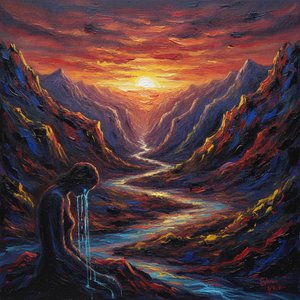
Capturing Emotion: A Journey Through the Soul of Expressionist Landscapes
Explore the profound emotional depth of Expressionist landscapes. Discover how Post-Impressionist masters moved beyond light to capture the soul through vibrant color and form. A curated journey for true art lovers seeking the beauty of expressive mastery.

Whispers of the Meadow: Capturing the Serenity of the Quiet Countryside in Impressionist Masterpieces
Embark on a visual journey through Impressionist masterpieces. Discover how masters like Monet and Renoir captured the serene beauty of the countryside through light, color, and emotion. Explore timeless landscapes designed to bring tranquility and cultural elegance to your home sanctuary.

Beyond the Light: Capturing Raw Emotion and Subjective Vision in Post-Impressionist Landscapes
Explore the profound emotional depth of Post-Impressionist landscapes. Discover how masters like Van Gogh moved beyond light to capture raw human feeling through vibrant color and expressive texture in this expert art history retrospective.

Capturing the Soul: The Most Emotionally Moving Impressionist and Post-Impressionist Masterpieces
Discover the profound emotional depth of Impressionist and Post-Impressionist masterpieces. Explore how legends like Monet, Van Gogh, and Gauguin captured light and soul through evocative landscapes and vibrant brushwork for a timeless connection to art history.