


 Se i rummet
 Send
Send Del
Del
 Detaljer
 Studieguide til kunstværker

 Download
 Lignende værker
 Røntgenundersøgelse
 Se diasshow
 Statistik
The Dead Mother and Child
 Etching
- Expressionism
 1901
1901- Modern
 32.0 x 49.0 cm
 Kunsthalle Bremen
A hauntingly visceral encounter with grief defines Edvard Munchs 1901 Expressionist masterpiece The Dead Mother and Child, a profound exploration of mortality that invites you to experience its raw emotional depth.
 Læs mere
Edvard Munch (1863-1944): En norsk maler kendt for 'Skriget' og sin ekspressive skildring af angst, sorg og menneskets skrøbelighed. Se hans ikoniske værker!
Giclée / Kunsttryk
Giclée- eller lærredstryk i museumskvalitet med hurtig produktion og fleksible muligheder for finish. ( Bestil håndmalet reproduktion Skift til digitalt billede)




P118B Dkr10

P118H Dkr10

P118W Dkr10

P438Z Dkr10

P508JH Dkr12

P508YH Dkr12

P805H Dkr10

P805Z Dkr10

P919BZ Dkr10

P919G Dkr10

P919XJ Dkr10

P959ZH Dkr10

P968JZ Dkr12

W106C Dkr8

W218G Dkr10

W218JH Dkr8

W218Y Dkr10

W307PJ Dkr10

W316G Dkr10

W316PJ Dkr8

W316Y Dkr10

W398PJ Dkr8

W4111J Dkr10

W500HY Dkr15

W500JH Dkr15

W692G Dkr12

W849H Dkr8

W940BG Dkr15

W953PJ Dkr8




Standardstørrelse
speciallavet
CM
INCH
Vælg mellem vores forudindstillede størrelser, der matcher kunstværkets originale proportioner.
Loading sizes...

bredde
højde
Indtast den bredde og højde, du har brug for, så det passer til din ramme eller din væg. Et print kan kun beskæres, aldrig gøres større end billedet, så en størrelse med en anden form vil miste en del af motivet. Vi sender dig en digital mockup til godkendelse, før vi printer noget. Billedet vist på denne side viser ikke den faktiske beskæring — det er kun mockuppen, der gør.
Verdensomspændende levering () på 2 uger i stedet for de sædvanlige 4/5 uger. (26 oktober)

Gratis ekspresforsendelse til hele verden

Lærred af linned i høj kvalitet

Komplet transportforsikring

Garanti for refusion af told og importafgifter

Garanti for autentisk farvegengivelse

100 dages returret ved fabrikationsfejl

100% fuld returret

Mængderabat ved flere køb
 Glasmulighed er kun tilgængelig i størrelser under 110 cm

The Dead Mother and Child
Giclée / Kunsttryk
Reproduktionsstørrelse
-


Samlet pris
Dkr 459
A Visceral Encounter with Grief
In the quiet, somber depths of Edvard Munch’s 1901 masterpiece, The Dead Mother and Child, viewers are not merely observers of a scene, but witnesses to an intimate tragedy. This haunting work stands as one of the most evocative pillars of the Expressionist movement, stripping away the decorative comforts of art to reveal a raw, unflinching confrontation with existential dread. The painting captures a moment of profound stillness—a heavy, suffocating silence that follows the departure of life. Through a stark, almost monochromatic palette of earthy browns and muted beiges, Munch establishes an atmosphere of deep melancholy, mirroring the artist’s own turbulent inner landscape and his lifelong preoccupation with the fragility of human existence.
The composition is masterfully engineered to evoke a sense of confinement and vulnerability. By utilizing a horizontal format, Munch emphasizes the daunting length of the bed, creating a visual path that leads the eye across the lifeless form of the mother toward the small, trembling figure of the child. There is a deliberate imbalance in this arrangement; the child stands slightly off-center, a solitary figure caught in the shadow of loss. This spatial tension reflects the isolation inherent in grief, making the artwork an incredibly powerful piece for those who appreciate art that explores the profound complexities of the human psyche and the weight of shared sorrow.
The Language of Line and Symbolism
Munch’s technique in this work transcends mere representation, moving into the realm of psychological portraiture. He employs a dualistic approach to line that serves as a visual metaphor for emotional states. The mother’s face is rendered with smoother, more tranquil lines, suggesting a peaceful surrender to death and a release from suffering. In stark contrast, the child’s presence is defined by jagged, chaotic, and agitated strokes. These restless lines weave through the child's hair and clothing, acting as a visual embodiment of fear, confusion, and the frantic energy of a spirit unable to comprehend the permanence of loss.
Every element within the frame is laden with symbolic weight. Perhaps the most poignant gesture is that of the child covering their eyes—a desperate, instinctive attempt to shield themselves from the unbearable reality of death. This movement transforms the painting from a simple depiction of a funeral scene into a universal symbol of the human struggle to face mortality. For collectors and interior designers, this piece offers more than just aesthetic value; it provides a profound narrative depth that can serve as a focal point in spaces dedicated to contemplation, intellectual rigor, or the celebration of emotive, historical storytelling.
An Enduring Legacy of Expressionism
To understand The Dead Mother and Child is to understand the birth of modern emotional expression. Emerging from a period of disillusionment with the fleeting light of Impressionism, Munch sought to capture what lay beneath the surface—the "inner life" that remains when all pretenses are stripped away. The artwork’s stylistic roots in Expressionism allow it to resonate across generations, as its themes of loss and the vulnerability of childhood remain timelessly relevant. The heavy use of etching-like lines and tonal variations gives the piece a textured, almost tactile quality that brings the somber mood into the physical space of the viewer.
Whether displayed as a high-quality reproduction in a curated gallery or as a soulful addition to a sophisticated residential collection, this work continues to command attention. It is an invitation to sit with discomfort, to acknowledge the shadows, and to find beauty in the honest portrayal of the human condition. For those seeking to decorate with intention, Munch’s work offers an unparalleled opportunity to integrate a piece of art history that is as intellectually stimulating as it is emotionally transformative.
Spørgsmål & svar
Hvilke farver bruger "The Dead Mother and Child"?
Farvepaletten i "The Dead Mother and Child" af Edvard Munch beskrives som Neutrals. Det er en kompakt beskrivelse af værkets farver.
Hvornår blev "The Dead Mother and Child" skabt?
"The Dead Mother and Child" af Edvard Munch er skabt i 1901.
Hvilken printstørrelse og orientering anbefales til "The Dead Mother and Child"?
Til "The Dead Mother and Child" er den anbefalede printopsætning en størrelse på Small og en Landscape orientering.
Om kunstneren
Et liv i skyggens tegn: Edvard Munchs verden
Edvard Munch, født i 1863 midt i Norges barske landskaber, blev en kunstner hvis arbejde hurtigt kom til at symbolisere moderne tids angst og emotionelle uro. Hans liv var dybt præget af tab og en gennemtrængende melankoli, som blev kilden til hans udtryksfulde kunst. Fra en barndom overskygget af tidlig død – både moderen og søsteren døde af tuberkulose – udviklede Munch en hjemsøgende optagethed af dødelighed, sygdom og menneskets skrøbelige eksistens. Disse oplevelser var ikke blot biografiske detaljer; de blev kernen i hans kunstneriske vision, der drev en utrættelig udforskning af frygtens, sorgens og længslens indre landskab. Faderens strenge religiøse overbevisninger og Munchs egne mentale kampe bidrog yderligere til en følelse af fortvivlelse, som gennemsyrede hans verden og formede ikke blot hans personlige liv, men også det symbolske sprog i hans malerier. Han nøjedes ikke med at gengive scener; han eksternaliserede en indre tilstand, oversatte psykisk nød til visuel form.
Fra tidlig træning til sjælmaling
Munchs kunstneriske rejse begyndte med formel undervisning på Statens Kunstakademi i Kristiania (Oslo), men det var hans møde med det boheme miljø og Hans Jægers nihilistiske filosofi, der virkelig tændte hans kreative ild. Jæger opfordrede Munch til at forlade konventionelle akademiske stilarter og i stedet dykke ned i sin egen subjektive oplevelse – et koncept han kaldte “sjælmaling”. Dette afgørende skift markerede begyndelsen på Munchs karakteristiske stil, der er præget af rå følelser, forvrængede former og en afvisning af naturalistisk gengivelse. Hans rejser til Paris i 1890’erne udsatte ham for den spirende postimpressionisme, hvor han absorberede indflydelser fra kunstnere som Paul Gauguin, Vincent van Gogh og Henri de Toulouse-Lautrec. Den dristige brug af farver, ekspressive penselstrøg og psykologiske intensitet hos disse mestre resonerede dybt med Munchs egne kunstneriske tilbøjeligheder. Han imiterede ikke blot deres teknikker; han syntetiserede dem til noget unikt sit eget – et visuelt sprog der var i stand til at formidle de mest dybe og foruroligende menneskelige følelser. Hans tid i Berlin viste sig også afgørende, da han kom i kontakt med dramatikeren August Strindberg, hvis udforskning af psykologiske temaer yderligere stimulerede Munchs kunstneriske undersøgelser.
Ikoniske visioner: Hovedværker og deres symbolske vægt
Munchs oeuvre er befolket af billeder, der er blevet dybt indgraveret i den kollektive bevidsthed. Skriget, måske hans mest ikoniske værk, transcenderer sin status som maleri og bliver et universelt symbol på eksistentiel angst. Det hvirvlende, flammende landskab og figurens forvrængede ansigt legemliggør et ur-skrig mod universets ligegyldighed. Madonna, et kontroversielt og dybt personligt stykke, udforsker temaer som seksualitet, moderskab og dødelighed med urovækkende ærlighed. Gengående motiver som Det syge barn – inspireret af tabet af hans søster Sophie – tjener som gribende påmindelser om Munchs barndomstraume og den evigt tilstedeværende dødsskygge. Melankoli I & II, kraftfulde fremstillinger af dyb sorg og isolation, afslører en sårbarhed, der er både personlig og universelt relaterbar. Disse værker er ikke blot repræsentationer af den ydre virkelighed; de er vinduer ind i kunstnerens sjæl, der tilbyder beskueren et kompromisløst blik på menneskets psykes mørkeste kroge. Munch sigtede ikke efter at skabe smukke billeder; han søgte at formidle sandheden – selvom den var smertefuld og urovækkende.
En varig arv: Historisk betydning og vedvarende indflydelse
Edvard Munchs bidrag til moderne kunst er umåleligt. Han står som en central figur i udviklingen af ekspressionismen, der banede vejen for kunstnere, der prioriterede subjektiv følelse over objektiv gengivelse. Hans utrættelige udforskning af universelle menneskelige oplevelser – kærlighed, tab, angst og død – fortsætter med at resonere hos publikum i dag og cementerer hans plads som en af de mest indflydelsesrige og varige figurer i kunsthistorien. Hans arbejde har haft dybtgående virkninger på efterfølgende generationer af kunstnere og påvirket bevægelser som tysk ekspressionisme og videre. Han turde konfrontere menneskets tilstands mørkere aspekter, udfordre konventionelle forestillinger om skønhed og kunstnerisk repræsentation. Selv efter at have opnået berømmelse og anerkendelse – kulminerende i etableringen af Munch-museet i Oslo – forblev hans personlige liv turbulent, præget af perioder med mental ustabilitet og isolation. Alligevel fortsatte han med at skabe, og efterlod sig et oeuvre der fortsætter med at provokere, udfordre og inspirere. Munchs arv handler ikke kun om malerierne selv; det handler om modet til at konfrontere menneskets eksistens kompleksitet og at oversætte disse oplevelser til kunst, der taler til de dybeste dele af vores væsen.

Edvard Munch
1863 - 1944 , Sverige
Hurtige fakta
- Bemærkelsesværdige Værker:
- The Scream
- Madonna
- The Sick Child
- Dødsdato: 23. januar 1944
- Fulde Navn: Edvard Munch
- Fødested: Ådalsbruk, Sverige
- Fødselsdato: 12. december 1863
- Inspireret Af Kunstnere:
- Paul Gauguin
- Van Gogh
- Toulouse-Lautrec
- Kunstnerisk Stil: Ekspressionisme
- Nationalitet: Norsk
- Påvirkede Kunstnere/Bevægelser: ['Tysk ekspressionisme']
Relaterede artikler

De 10 mest ikoniske malerier i svampefarver – Kunst til dit hjem | TopImpressionists.dk
Oplev de 10 mest ikoniske malerier i smukke svampefarver! Fra Monet til Van Gogh – lær historierne bag disse tidløse kunstværker og find inspiration til dit hjem. Køb museumskvalitets reproduktioner på TopImpressionists.com.

Top 10 Berømte Malerier i Sandbrune Nuancer – Kunst & Indretning
Oplev 10 berømte malerier domineret af sandbrune nuancer! Fra Rembrandts portrætter til Monets landskaber – dyk ned i kunsthistorien og find inspiration til din indretning. Køb museumskvalitets reproduktioner på TopImpressionists.com.

Egon Schiele: Top 25 Kunstværker – En Dybdegående Guide til Mesteren af Ekspressionismen
Oplev Egon Schiele's 25 mest ikoniske kunstværker. Dyk ned i ekspressionismens intensitet, portrætter og nøgenkunst. Find inspiration til din boligindretning & køb museumskvalitets reproduktioner på TopImpressionists.com.
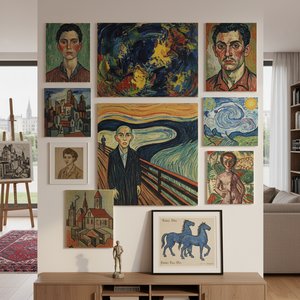
Top 10 Ekspressionistiske Mesterværker: Kunst der Rører Sjælen – TopImpressionists.dk
Oplev de 10 mest ikoniske ekspressionistiske malerier! Fra Munchs Skrig til Kandinskys abstraktion – dyk ned i kunstens sjæl og intensitet. Find museumskvalitets reproduktioner & inspiration til din indretning på TopImpressionists.com

Rosy Brown i Kunsten: Top 10 Malerier der Fascinerer | TopImpressionists.dk
Oplev skønheden i 'rosy brown' toner! Udforsk top 10 berømte malerier fra impressionismen til klassiske portrætter. Find inspiration og køb museumskvalitets reproduktioner på TopImpressionists.dk – din kilde til tidløs kunst & interiør.
Udforsk kunstværker organiseret efter temaer, stilarter og karakteristika.


