

Vist: · Inklusive ramme:
 Se i rummet
 Del som kort
 Del
Del
 Detaljer
 Guide
Guide

 Download
 Lignende værker
 Røntgenundersøgelse
 Diasshow
 Spørgsmål og svar
 Statistikker

Dkr 1794
Håndlavet oliereproduktion
Håndmalet olie på lærred i din valgte størrelse og ramme, udført efter bestilling af vores kunstnere. ( Skift til printsalg Skift til digitalt billede)
Dette kunstværk er ophavsretsbeskyttet
Kunstværket vist på denne side er beskyttet af ophavsretsloven, hvilket betyder, at vi ikke lovligt kan skabe eller sælge en identisk reproduktion. Denne beskyttelse håndhæves i henhold til internationale aftaler som f.eks. den Bernerkonventionen og af nationale love, herunder de bestemmelser, der er fastlagt i Amerikansk ophavsretslov - Titel 17.
Som et respektfuldt og lovligt alternativ tilbyder vi skræddersyede, håndmalede kunstværker inspireret af originalen. Vores dygtige og professionelle kunstnere studerer omhyggeligt originalens stil, stemning og kunstneriske essens for at skabe et nyt, unikt værk, der fremkalder den samme følelse – samtidig med at det forbliver en original skabelse i egen ret.
Denne metode overholder fuldt ud ophavsretsreglerne, da den ikke indebærer kopiering eller duplikering af det beskyttede kunstværk. I stedet er der tale om en kreativ nytolkning – et nyt maleri, som er inspireret af det oprindelige, men ikke identisk med det.
 Læs mere
Størrelse
·Standardstørrelse
speciallavet
CM
INCH
Vælg mellem vores forudindstillede størrelser, der matcher kunstværkets originale proportioner.
Indlæser størrelser...

bredde
højde
Indtast den bredde og højde, du har brug for, så det passer til din ramme eller din væg. Da dette er håndmalet, kan kunstneren ved en anden form på størrelsen male lidt mere rundt om billedet eller skære lidt væk — det er op til dig. Vi sender dig et digitalt mockup til godkendelse, før maleriet påbegyndes. Billedet, der vises på denne side, viser ikke det endelige resultat — det er kun mockuppet, der gør.
Afslut
·
Hvid kant Dkr1

Udvasket kant Dkr1

Fortsat motiv Dkr1

P118B Dkr10

P118H Dkr10

P118W Dkr10

P438Z Dkr10

P508JH Dkr12

P508YH Dkr12

P805H Dkr10

P805Z Dkr10

P919BZ Dkr10

P919G Dkr10

P919XJ Dkr10

P959ZH Dkr10

P968JZ Dkr12

W106C Dkr8

W218G Dkr10

W218JH Dkr8

W218Y Dkr10

W307PJ Dkr10

W316G Dkr10

W316PJ Dkr8

W316Y Dkr10

W398PJ Dkr8

W4111J Dkr10

W500HY Dkr15

W500JH Dkr15

W692G Dkr12

W849H Dkr8

W940BG Dkr15

W953PJ Dkr8

H24-GOLD Dkr30

H24-SILVER Dkr30

H36-GOLD Dkr45

H36-SILVER Dkr45
Sendes i et beskyttende rør, klar til at blive indrammet hos din egen indrammer.
Over 105 cm sendes rammen som et sæt til en professionel indrammer — læs detaljerne.
Tillægsydelser
valgfritHvad indeholder de ekstra tilvalg?
Eksempler på hvad kan ændres: Udskift ansigt med kundens eget foto; Tilføj kæledyr (f.eks. udskift kat med hund); Inkluder skjult besked i baggrunden; Skift baggrundslandskab eller elementer.
Efter bestilling vil TopImpressionists.com-teamet sende en e-mail til kunden for at få instruktioner og levere et udkast til forhåndsvisning
Efter bestilling vil TopImpressionists.com-teamet sende en e-mail til kunden for at få instruktioner og levere et udkast til forhåndsvisning
Verdensomspændende levering () på 3-4 uger i stedet for de standard 5 uger. (8 november). Ingen kompromiser med kvaliteten.
Beskyttende fernis
Navneskilt
Detaljer om indgraveret bronzeskilt
This elegant plaque features the artist's name and the title of the artwork, finely engraved for a timeless presentation.
It is made from bronze with a refined, elegant finish. The text is precisely laser-engraved for a sharp and permanent result. Measuring 9x2 cm, the plaque is compact yet easy to read. It's built to be durable and scratch-resistant, offering a professional, museum-quality look. Mounting is simple thanks to the included adhesive backing.
Detaljer om gennemsigtig akrylplade
The plaque includes essential engraved details such as the artist's name, the title of the artwork, the date it was created, the type of media used-like oil on canvas or watercolor-a brief description of the piece, and a QR code that links to the complete artwork information.
It is crafted from clear acrylic, offering a sleek, modern appearance. The text is UV-engraved in black to ensure strong visual contrast. With a size of 10x15 cm, it ensures optimal readability. It comes equipped with two metal hooks for secure wall mounting. The plaque is designed to be weather-resistant, making it suitable for various environments, and it includes interactive features that work seamlessly with smartphone scanning.
Detaljer om sort akrylplade
This elegant plaque includes engraved information such as the artist's name, the title of the artwork, the date it was created, the type of media used (like oil on canvas or watercolor), a short description of the artwork, and a QR code for quick access to more information.
The plaque itself is made from refined black acrylic with a premium finish. The text is laser-engraved in white for high contrast and readability. Its size is 10x15 cm, designed to be easy to read. It comes with two metal hooks for professional mounting. The design is sleek and fits any interior style. It is also weather-resistant and durable, with built-in digital integration for mobile compatibility.
Glasmulighed er kun tilgængelig i størrelser under 110 cm
 Glasmulighed er kun tilgængelig i størrelser under 110 cm
- Gratis ekspresforsendelse til hele verden
- Lærred af linned i høj kvalitet
- Fuld transportforsikring
- Garanti for refusion af told og importafgifter
- Garanti for præcis farvegengivelse
- 100 dages returret ved fabrikationsfejl
- 100% fuld returret
- Mængderabat ved flere køb


Beskrivelse af samlerobjektet
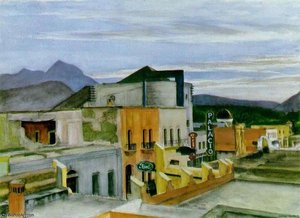
Edward Hopper's "El Palacio" captures urban solitude with striking realism—a black-and-white depiction of a city street, evoking quiet contemplation and the essence of American modern life.
Kunstnerbiografi
Edward Hopper: En amerikansk maler kendt for sin ensomme stil og ikoniske billeder af amerikanske byer og landskaber. Udforsk hans lys og skygge-malerier!
Om maleriet
A Silent Cityscape: Unveiling Edward Hopper's "El Palacio"
Edward Hopper’s 1946 painting, “El Palacio,” isn’t merely a depiction of a city street; it’s a carefully constructed tableau of urban solitude and the quiet anxieties of modern life. Rendered in stark black and white, the image immediately draws the viewer into a scene brimming with understated tension. The composition is dominated by towering buildings on either side, their windows like watchful eyes observing the few figures that populate the street below. The painting’s power lies not in dramatic action or vibrant color—rather, it resides in the subtle details and the palpable sense of detachment that permeates every element.
Hopper masterfully employs light and shadow to create a mood of melancholic introspection. The strong directional lighting emphasizes the textures of the buildings and casts deep shadows, contributing to the painting’s overall feeling of confinement. The open windows invite glimpses into private lives, yet they simultaneously reinforce the sense that these individuals are isolated within their own worlds. The signs visible in the scene—including the prominent “El Palacio”—add a layer of mystery, hinting at a grand establishment and perhaps suggesting a world beyond the immediate view.
The Painter’s Palette: Technique and Style
“El Palacio” exemplifies Hopper's signature style – a blend of realism and psychological insight. He was known for his ability to capture fleeting moments of human experience, often focusing on scenes of loneliness or alienation. Hopper’s technique is characterized by precise observation and meticulous detail. The buildings are rendered with remarkable accuracy, capturing their architectural forms and the subtle variations in surface texture. His use of line is particularly noteworthy; he employs clean, confident lines to define shapes and create a sense of solidity, while simultaneously suggesting movement through the arrangement of elements within the composition.
The painting’s monochromatic palette—a deliberate choice by Hopper—heightens its emotional impact. The absence of color forces the viewer to focus on form, light, and shadow, intensifying the feeling of isolation and emphasizing the starkness of the urban environment. Hopper's approach was rooted in a desire to represent reality as he perceived it, unburdened by sentimentality or romanticism. He sought to capture the essence of American life—its beauty, its challenges, and its inherent loneliness—with unflinching honesty.
Historical Context: The Post-War Landscape
“El Palacio” was created in 1946, a period marked by significant social and cultural shifts following World War II. America was grappling with the aftermath of conflict, experiencing rapid urbanization, and confronting new anxieties about identity and purpose. Hopper’s work resonated deeply with this mood, reflecting the growing sense of alienation and disillusionment that characterized the post-war era. The painting can be seen as a commentary on the changing nature of American society—a world increasingly defined by anonymity, isolation, and the breakdown of traditional social structures.
Interestingly, Hopper himself described the scene as “suggested by a restaurant on Greenwich Avenue where two streets meet.” This anecdote reveals his meticulous approach to composition and his desire to capture not just a literal representation but also an emotional truth. The painting’s enduring appeal lies in its ability to evoke a sense of familiarity—a recognition of the quiet, often overlooked moments that shape our lives.
Symbolism and Emotional Resonance
Beyond its realistic depiction of a city street, “El Palacio” is rich in symbolic meaning. The towering buildings represent the impersonal forces of urban life, while the open windows symbolize both opportunity and isolation. The figures within the scene—their faces obscured by shadow—suggest a sense of anonymity and detachment. Hopper’s masterful use of light and shadow creates a powerful emotional atmosphere, evoking feelings of loneliness, longing, and perhaps even a touch of melancholy.
Ultimately, “El Palacio” is a poignant meditation on the human condition – a reminder that even in the midst of bustling urban environments, we can still experience profound solitude. It’s a painting that invites contemplation and encourages us to consider our own place within the larger narrative of American life.
Spørgsmål og svar
Hvor mættet er farvepaletten i "el palacio"?
Farverne i "el palacio" af Edward Hopper har en Subtle Color mætning. Mætning beskriver, hvor livlige eller dæmpede farverne er.
Findes der værker, der ligner "el palacio"?
Se lignende værker til "el palacio" på siden Lignende værker.
Hvem sælger håndmalede kopier af "el palacio" af Edward Hopper?
Håndmalede kopier af "el palacio" af Edward Hopper kan købes hos denne hjemmeside: en håndmalet oliereproduktion på lærred af hør, via deres Håndmalet reproduktion-side.
Hurtige fakta og kunstquiz
Om Edward Hopper

Edward Hopper
1931 - 1967, USA
Kunstnerbiografi
Edward Hopper: En Poet af Lys og Skygge
Edward Hopper, et navn der uadskilligt er forbundet med den stille melankoli og det underliggende ro, der prægede amerikansk liv i det 20. århundrede, var mere end blot en maler af scener; han var en digter af lys og skygge, en skildrer af moderne isolation. Født i Nyack, New York, i 1882, til forældre med baggrund i Holland, gav Hoppers tidlige liv ham et stabilt fundament, der nærede hans kunstneriske ambitioner. Fra barndomstegninger, omhyggeligt datere og underskrevet, blev det tydeligt, at skarpt observationsevne og en iboende talent for tegning var centrale for hans væren. Selvom han i første omgang blev opmuntret til at forfølge kommerciel illustration – et pragmatisk råd fra sine forældre – drev Hoppers ambitioner mod fin kunst, hvilket førte ham til New York School of Art, hvor han studerede under William Merritt Chase og Robert Henri. Disse formative år indgydede ikke kun teknisk dygtighed, men også en værdsættelse af realisme og et engagement i at skildre verden som han så den – upoleret og ærlig. Ralph Waldo Emersons skrifter resonerede dybt hos Hopper, hvilket forstærkede hans følelse af individualitet og skarpsindighed – kvaliteter, der ville blive kendetegnende for hans kunstneriske vision. Tidlige rejser til Paris udsatte ham for Impressionismen, men Hopper hurtigt afveg fra dets flygtige penselstrøg, og skabte en vej, der var unikt hans egen.At Finne Sin Stemme: Realisme og den Amerikanske Scene
Hoppers kunstneriske rejse var ikke øjeblikkelig eller let. Han kæmpede med at opdage sin distinkte stemme, eksperimenterede med forskellige stilarter, før han endelig fandt sig selv i realismen, der ville definere hans karriere. Dette var ikke blot en kopi af virkeligheden; det var en destillation af dens essens, der fjernede unødvendige detaljer for at afsløre underliggende følelsesmæssige sandheder. Hans malerier begyndte at fokusere på hverdagsscener – huse, dinerer, kontorer, hotelværelser – præget af en følelse af stilstand og ofte ensomhed. Han besad en ekstraordinær evne til at fange de psykologiske tilstande hos sine emner, der antydede fortællinger uden eksplicit at sige dem. Den præcise gengivelse af lys og skygge blev afgørende – ikke blot som beskrivende elementer, men som følelsesmæssige signaler, der skabte atmosfærer, der var både fængslende og ubehagelige. *House by the Railroad* (1925), et tidligt mesterværk, illustrerer dette princip – en tilsyneladende simpel komposition, der udstråler en dyb følelse af isolation og mystik. Hoppers printmaking, ofte overset, løb parallelt med hans maleri, og delte lignende temaer og stilistiske kvaliteter, hvilket demonstrerede hans mesterskab på tværs af medier. Han var ikke interesseret i store historiske fortællinger eller allegoriske symbolik; han fokuserede på det almindelige, og hævede det til noget ekstraordinært gennem omhyggelig observation og følelsesmæssig resonans. Hans kone, *Josephine Nivison Hopper*, spillede en afgørende rolle ikke kun som hans livslange følgesvend, men også som en hyppig model, der bidrog væsentligt til karakteriseringen af hans kvindelige figurer.Ikoniske Visioner: Nighthawks og Udover
Selvom Hoppers karriere udviklede sig gradvist, så nogle værker katapultere ham til bred genkendelse. *Nighthawks* (1942), sandsynligvis hans mest berømte maleri, blev øjeblikkeligt et ikon af amerikansk kultur. Den sene nattidsscene i dineren, badet i skarpt fluorescerende lys, fanger perfekt den alienation og anonymitet, der kendetegner moderne byliv. Figurerne indenfor er tabt i deres egne tanker, afkoblede fra hinanden på trods af deres nærhed – en hjerteskærende kommentar til det menneskelige tilstand. *Gas* (1940), med sin slående skildring af en tankstation ved vejen, viser Hoppers fascination over for amerikansk landskab og den voksende bilkultur. Andre bemærkelsesværdige værker som *Automat*, *Office in a Small City* og *Summertime* tilbyder hver især unikke indsigter i kompleksiteten af det 20. århundredes amerikanske samfund. Disse malerier var ikke blot skildringer af steder; de var udforskninger af stemning, psykologi og de subtile dramaer, der udspiller sig i almindelige omgivelser. Hans evne til at fange essensen af det moderne amerikanske liv med ærlighed, følsomhed og en distinkt kunstnerisk vision sikrer hans plads som en af de vigtigste kunstnere i det 20. århundrede.Temaer og Arv: En Vedvarende Indflydelse
Flere tilbagevendende temaer gennemstrømmer Hoppers værk. Urban isolation er måske det mest fremtrædende – følelsen af ensomhed, oplevet af individer midt i folkemængder. Han udforskede det amerikanske landskab, både landligt og urbant, ofte understreger dets skarphed og tomhed. Hans arbejde dykker ned i psykologisk realisme, undersøger de indre liv hos hans emner med en følsomhed, der overgår blot repræsentation. Der er også en underliggende nostalgi for en enklere fortid, der står i kontrast til en erkendelse af kompleksiteterne og bekymringerne ved moderne liv. Hoppers indflydelse på efterfølgende kunstnere er uomtvistelig. Hans unikke stil har inspireret utallige malere, herunder Pierre Sanford Ross, og fortsætter med at resonere med nutidige kunstnere, der søger at fange essensen af menneskelig erfaring. Hans malerier er blevet ikoniske repræsentationer af amerikansk kultur, ofte brugt til at symbolisere de bekymringer og aspirationer, der kendetegner det 20. århundrede – og ud over.- Hans arv ligger ikke kun i skønheden i hans malerier, men også i deres vedvarende evne til at provokere tanke, vække følelser og minde os om den stille ensomhed, der ofte definerer vores liv.
- Hoppers arbejde fortsætter med at fange publikums opmærksomhed, fordi det taler til universelle temaer om ensomhed, isolation og søgen efter mening i en hurtigt foranderlig verden.
- Hans malerier er blevet ikoniske repræsentationer af amerikansk kultur, ofte brugt til at symbolisere de bekymringer og aspirationer, der kendetegner det 20. århundrede – og ud over.
- Hoppers æstetik har dybt påvirket filmskabere (som Alfred Hitchcock) og forfattere, hvilket har inspireret utallige værker, der udforsker lignende temaer om alienation og psykologisk spænding.
Hurtige fakta om Edward Hopper
- Artistic Movement Or Style: Realisme
- Artists Or Movements Influenced By This Artist: ['Pierre Sanford Ross']
- Artists Who Influenced This Artist:
- William Chase
- Robert Henri
- Date Of Birth: 22. juli 1882
- Date Of Death: 15. maj 1967
- Full Name: Edward Hopper
- Nationality: Amerikansk
- Notable Artworks:
- Nighthawks
- House by the Railroad
- Gas
- Place Of Birth: Nyack, USA
Udforsk kunstværker organiseret efter temaer, stilarter og karakteristika.




Edward Hopper
el palacio
() ·
Inklusive ramme: · Håndmalet med olie på lærred
Totalbeløb