Se i rummet
 Del som kort
 Del
Del
 Detaljer
 Guide
Guide

 Download
 Lignende værker
 Røntgenundersøgelse
 Diasshow
 Spørgsmål og svar
 Statistikker
untitled


 Vis mere
Kunstværket vist på denne side er beskyttet af ophavsretsloven, hvilket betyder, at vi ikke lovligt kan skabe eller sælge en identisk reproduktion. Denne beskyttelse håndhæves i henhold til internationale aftaler som f.eks. den Bernerkonventionen og af nationale love, herunder de bestemmelser, der er fastlagt i Amerikansk ophavsretslov - Titel 17.
Denne metode overholder fuldt ud ophavsretsreglerne, da den ikke indebærer kopiering eller duplikering af det beskyttede kunstværk. I stedet er der tale om en kreativ nytolkning – et nyt maleri, som er inspireret af det oprindelige, men ikke identisk med det.
Giclée / Kunsttryk
Giclée- eller lærredstryk i museumskvalitet med hurtig produktion og fleksible muligheder for finish. ( Køb håndmalet maleri Skift til digitalt billede)




P118B Dkr10

P118H Dkr10

P118W Dkr10

P438Z Dkr10

P508JH Dkr12

P508YH Dkr12

P805H Dkr10

P805Z Dkr10

P919BZ Dkr10

P919G Dkr10

P919XJ Dkr10

P959ZH Dkr10

P968JZ Dkr12

W106C Dkr8

W218G Dkr10

W218JH Dkr8

W218Y Dkr10

W307PJ Dkr10

W316G Dkr10

W316PJ Dkr8

W316Y Dkr10

W398PJ Dkr8

W4111J Dkr10

W500HY Dkr15

W500JH Dkr15

W692G Dkr12

W849H Dkr8

W940BG Dkr15

W953PJ Dkr8




Standardstørrelse
speciallavet
CM
INCH
Vælg mellem vores forudindstillede størrelser, der matcher kunstværkets originale proportioner.
Loading sizes...

bredde
højde
Indtast den bredde og højde, du har brug for, så det passer til din ramme eller din væg. Et print kan kun beskæres, aldrig gøres større end selve billedet, så en størrelse med et andet format vil medføre, at dele af motivet går tabt. Vi sender dig en digital mockup til godkendelse, før vi printer noget. Billedet vist på denne side viser ikke den faktiske beskæring — det er kun mockuppen, der gør.
Verdensomspændende levering () på 2 uger i stedet for de sædvanlige 4/5 uger. (8 november)

Gratis ekspresforsendelse til hele verden

Lærred af linned i høj kvalitet

Fuld transportforsikring

Garanti for refusion af told og importafgifter

Garanti for præcis farvegengivelse

100 dages returret ved fabrikationsfejl

100% fuld returret

Mængderabat ved flere køb
 Glasmulighed er kun tilgængelig i størrelser under 110 cm

untitled
Giclée / Kunsttryk
Størrelse på reproduktion
-


Samlet pris
Dkr 467
A Quietude Steeped in American Light
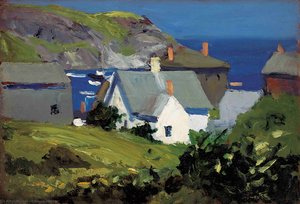
Edward Hopper’s “untitled,” often referenced as “House by the Railroad” (1925), is more than just a depiction of architecture; it's an evocation of a distinctly American mood, a stillness that resonates with both familiarity and a subtle sense of melancholy. The painting presents a large Victorian-era house, rendered not with photographic precision but through the softened lens of Impressionism. Loose brushstrokes define its ornate details – the decorative columns, arched windows, and varied window shapes – creating an impression of solidity tempered by transience. The house isn’t simply *there*; it exists within a specific quality of light and atmosphere, a feeling that Hopper masterfully captures.
Decoding the American Landscape
Hopper's artistic journey was deeply rooted in his observations of the evolving American landscape, both urban and rural. Born in 1882, he came of age during a period of rapid industrialization and social change. While initially influenced by French Impressionists like Manet and Degas – artists who captured fleeting moments of modern life – Hopper ultimately forged his own path, rejecting European aesthetics in favor of a uniquely American realism. “House by the Railroad” exemplifies this shift. The house itself, with its intricate Victorian detailing, speaks to an earlier era, while the painting’s overall mood hints at a growing sense of isolation and anonymity that characterized modern life. It's not merely a portrait of a building; it’s a commentary on the changing face of America.
Technique and Emotional Resonance
The muted color palette employed in “untitled” – dominated by earthy tones in the lower portion, giving way to a lighter blue sky – contributes significantly to its emotional impact. Hopper wasn't interested in vibrant displays of color; instead, he used tone and light to create atmosphere and evoke feeling. The absence of figures within the scene is also crucial. The house stands alone, a silent sentinel against an expansive sky. This emptiness isn’t necessarily bleak, but rather invites contemplation. It allows the viewer to project their own emotions onto the scene, to experience the quietude as a space for introspection. Hopper's skill lies in his ability to suggest narrative without explicitly telling a story; he presents us with fragments of life and leaves it to us to complete the picture.
A Legacy of Solitude
Though often associated with urban scenes like “Nighthawks,” Hopper’s rural landscapes, such as this one, are equally compelling. They reveal his consistent preoccupation with themes of loneliness, isolation, and the search for meaning in a rapidly changing world. “House by the Railroad” is a testament to Hopper's ability to transform ordinary subjects into powerful statements about the human condition. It’s a painting that lingers in the mind long after viewing, prompting us to consider our own place within the vastness of the American landscape and the complexities of modern life. The work currently resides in the esteemed collection of The Museum of Modern Art in New York, solidifying its position as an iconic representation of 20th-century American art.
Spørgsmål og svar
Hvilken størrelse passer bedst til "untitled" i mit værelse?
Til et Living Room anbefales "untitled" i en trykstørrelse på Medium.
Hvordan passer "untitled" ind i Edward Hoppers temaer og stil?
"untitled" er et værk fra Edward Hoppers American Realism-periode, hvis gennemgående temaer inkluderer impressionism, american realism, modernity, urban isolation, social commentary, anonymity, hopper’s signature style”,, solitude.
Hvordan forbinder "untitled" af Edward Hopper American Realism med kunstnerens hjemland?
"untitled" forbinder American Realism-bevægelsen med USA gennem skaberens fødested.


Kunstnerbiografi
Edward Hopper: En Poet af Lys og Skygge
Edward Hopper, et navn der uadskilligt er forbundet med den stille melankoli og det underliggende ro, der prægede amerikansk liv i det 20. århundrede, var mere end blot en maler af scener; han var en digter af lys og skygge, en skildrer af moderne isolation. Født i Nyack, New York, i 1882, til forældre med baggrund i Holland, gav Hoppers tidlige liv ham et stabilt fundament, der nærede hans kunstneriske ambitioner. Fra barndomstegninger, omhyggeligt datere og underskrevet, blev det tydeligt, at skarpt observationsevne og en iboende talent for tegning var centrale for hans væren. Selvom han i første omgang blev opmuntret til at forfølge kommerciel illustration – et pragmatisk råd fra sine forældre – drev Hoppers ambitioner mod fin kunst, hvilket førte ham til New York School of Art, hvor han studerede under William Merritt Chase og Robert Henri. Disse formative år indgydede ikke kun teknisk dygtighed, men også en værdsættelse af realisme og et engagement i at skildre verden som han så den – upoleret og ærlig. Ralph Waldo Emersons skrifter resonerede dybt hos Hopper, hvilket forstærkede hans følelse af individualitet og skarpsindighed – kvaliteter, der ville blive kendetegnende for hans kunstneriske vision. Tidlige rejser til Paris udsatte ham for Impressionismen, men Hopper hurtigt afveg fra dets flygtige penselstrøg, og skabte en vej, der var unikt hans egen.At Finne Sin Stemme: Realisme og den Amerikanske Scene
Hoppers kunstneriske rejse var ikke øjeblikkelig eller let. Han kæmpede med at opdage sin distinkte stemme, eksperimenterede med forskellige stilarter, før han endelig fandt sig selv i realismen, der ville definere hans karriere. Dette var ikke blot en kopi af virkeligheden; det var en destillation af dens essens, der fjernede unødvendige detaljer for at afsløre underliggende følelsesmæssige sandheder. Hans malerier begyndte at fokusere på hverdagsscener – huse, dinerer, kontorer, hotelværelser – præget af en følelse af stilstand og ofte ensomhed. Han besad en ekstraordinær evne til at fange de psykologiske tilstande hos sine emner, der antydede fortællinger uden eksplicit at sige dem. Den præcise gengivelse af lys og skygge blev afgørende – ikke blot som beskrivende elementer, men som følelsesmæssige signaler, der skabte atmosfærer, der var både fængslende og ubehagelige. *House by the Railroad* (1925), et tidligt mesterværk, illustrerer dette princip – en tilsyneladende simpel komposition, der udstråler en dyb følelse af isolation og mystik. Hoppers printmaking, ofte overset, løb parallelt med hans maleri, og delte lignende temaer og stilistiske kvaliteter, hvilket demonstrerede hans mesterskab på tværs af medier. Han var ikke interesseret i store historiske fortællinger eller allegoriske symbolik; han fokuserede på det almindelige, og hævede det til noget ekstraordinært gennem omhyggelig observation og følelsesmæssig resonans. Hans kone, *Josephine Nivison Hopper*, spillede en afgørende rolle ikke kun som hans livslange følgesvend, men også som en hyppig model, der bidrog væsentligt til karakteriseringen af hans kvindelige figurer.Ikoniske Visioner: Nighthawks og Udover
Selvom Hoppers karriere udviklede sig gradvist, så nogle værker katapultere ham til bred genkendelse. *Nighthawks* (1942), sandsynligvis hans mest berømte maleri, blev øjeblikkeligt et ikon af amerikansk kultur. Den sene nattidsscene i dineren, badet i skarpt fluorescerende lys, fanger perfekt den alienation og anonymitet, der kendetegner moderne byliv. Figurerne indenfor er tabt i deres egne tanker, afkoblede fra hinanden på trods af deres nærhed – en hjerteskærende kommentar til det menneskelige tilstand. *Gas* (1940), med sin slående skildring af en tankstation ved vejen, viser Hoppers fascination over for amerikansk landskab og den voksende bilkultur. Andre bemærkelsesværdige værker som *Automat*, *Office in a Small City* og *Summertime* tilbyder hver især unikke indsigter i kompleksiteten af det 20. århundredes amerikanske samfund. Disse malerier var ikke blot skildringer af steder; de var udforskninger af stemning, psykologi og de subtile dramaer, der udspiller sig i almindelige omgivelser. Hans evne til at fange essensen af det moderne amerikanske liv med ærlighed, følsomhed og en distinkt kunstnerisk vision sikrer hans plads som en af de vigtigste kunstnere i det 20. århundrede.Temaer og Arv: En Vedvarende Indflydelse
Flere tilbagevendende temaer gennemstrømmer Hoppers værk. Urban isolation er måske det mest fremtrædende – følelsen af ensomhed, oplevet af individer midt i folkemængder. Han udforskede det amerikanske landskab, både landligt og urbant, ofte understreger dets skarphed og tomhed. Hans arbejde dykker ned i psykologisk realisme, undersøger de indre liv hos hans emner med en følsomhed, der overgår blot repræsentation. Der er også en underliggende nostalgi for en enklere fortid, der står i kontrast til en erkendelse af kompleksiteterne og bekymringerne ved moderne liv. Hoppers indflydelse på efterfølgende kunstnere er uomtvistelig. Hans unikke stil har inspireret utallige malere, herunder Pierre Sanford Ross, og fortsætter med at resonere med nutidige kunstnere, der søger at fange essensen af menneskelig erfaring. Hans malerier er blevet ikoniske repræsentationer af amerikansk kultur, ofte brugt til at symbolisere de bekymringer og aspirationer, der kendetegner det 20. århundrede – og ud over.- Hans arv ligger ikke kun i skønheden i hans malerier, men også i deres vedvarende evne til at provokere tanke, vække følelser og minde os om den stille ensomhed, der ofte definerer vores liv.
- Hoppers arbejde fortsætter med at fange publikums opmærksomhed, fordi det taler til universelle temaer om ensomhed, isolation og søgen efter mening i en hurtigt foranderlig verden.
- Hans malerier er blevet ikoniske repræsentationer af amerikansk kultur, ofte brugt til at symbolisere de bekymringer og aspirationer, der kendetegner det 20. århundrede – og ud over.
- Hoppers æstetik har dybt påvirket filmskabere (som Alfred Hitchcock) og forfattere, hvilket har inspireret utallige værker, der udforsker lignende temaer om alienation og psykologisk spænding.

Edward Hopper
1931 - 1967 , USA
Kort om kunstneren
- Artistic Movement Or Style: Realisme
- Artists Or Movements Influenced By This Artist: ['Pierre Sanford Ross']
- Artists Who Influenced This Artist:
- William Chase
- Robert Henri
- Date Of Birth: 22. juli 1882
- Date Of Death: 15. maj 1967
- Full Name: Edward Hopper
- Nationality: Amerikansk
- Notable Artworks:
- Nighthawks
- House by the Railroad
- Gas
- Place Of Birth: Nyack, USA
Relaterede artikler

Capturing the Light: A Journey Through the Soul of American Impressionism and the Hudson River School
Explore the luminous beauty of American Impressionism and the Hudson River School. Discover a curated journey through light, landscape, and history, celebrating the enduring legacy of masters through exquisite, hand-painted oil reproductions for the discerning art lover.

The Unvarnished Truth: A Cultural Journey Through the Soul of American Realism
Explore the profound beauty of American Realism. From the Ashcan School's urban grit to intimate portraits, discover how artists captured the authentic soul of a nation through unvarnished truth and masterful observation.
Udforsk kunstværker organiseret efter temaer, stilarter og karakteristika.